
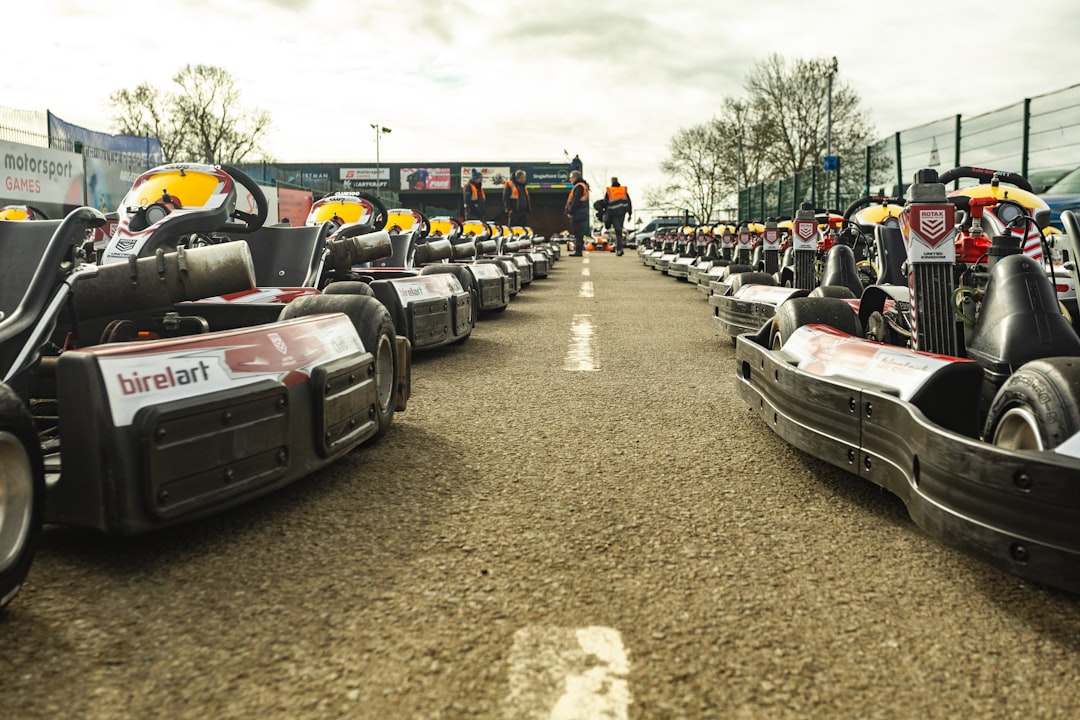
How fast do go-karts go? It depends almost entirely on the type of kart. Kids’ electric models are capped near walking or jogging pace, rental karts run roughly 25 to 45 mph, sprint race karts reach 50 to 75 mph, shifter karts can top 80 mph, and long-circuit superkarts go well beyond 100 mph. This guide gives realistic top-speed ranges for every kind of kart, explains the factors that set that ceiling, shows how speed scales with cost, and covers how to add speed safely. It also explains why even 30 or 40 mph feels genuinely fast from a seat an inch off the ground.
Part of our Go-Karting for Beginners guide — explore the full guide →
Typical Go-Kart Top Speeds by Type
The ranges below are typical figures, not guarantees. Gearing, driver weight, track length, surface, and how well the kart is maintained all move the real number up or down.
| Kart type | Typical top speed | Acceleration | Who it is for |
|---|---|---|---|
| Kids’ electric karts | 2-15 mph | Gentle | Young children, usually speed-limited |
| Recreational / yard karts | 20-35 mph | Moderate | Backyard, trail, and casual use |
| Rental / arrive-and-drive | 25-45 mph | Moderate | Indoor and outdoor track sessions |
| Off-road and larger gas karts | 30-45 mph | Strong low-end | Trails, dirt, and rough ground |
| Adult electric performance karts | 25-50 mph | Instant torque | Private lots and tracks |
| Sprint race karts (single-speed) | 50-75 mph | Very quick | Club and national sprint racing |
| Shifter karts (125cc) | 65-90 mph | Extreme | Experienced racers |
| Superkarts (250cc) | 100+ mph | Extreme | Long-circuit racing |
Speeds by Kart Type, Explained
Kids’ electric karts are deliberately slow. Toddler models run 2 to 5 mph, and karts for older children typically reach 8 to 15 mph, almost always with a parent-controlled limiter so a child can start gently and earn the faster settings.
Recreational and yard karts usually settle in the 20 to 35 mph range. A typical 5 to 6.5 hp single-cylinder engine moves an adult kart to roughly 25 to 35 mph, and these machines prioritize durability and torque over outright pace.
Rental karts feel quick because the circuits are tight, but most are governed. Indoor electric rentals commonly run in the 25 to 40 mph range, and some outdoor gas rental fleets reach the mid-40s. Tracks usually offer slower modes for juniors and first-timers. It is the cornering, not the straights, that makes them fun.
Off-road and larger gas karts with 200cc-class engines and up generally reach 30 to 45 mph, with the torque to handle dirt, grass, and inclines that would stop a low-slung race kart.
Adult electric performance karts deliver instant torque from a standstill. Ready-to-run consumer models commonly land between 25 and 50 mph, and custom high-voltage builds go considerably faster. Our best electric go-karts for adults roundup covers the fastest ready-to-run options.
Sprint race karts are where most competitive karting happens. Single-speed four-stroke classes such as LO206 sit at the lower end, typically around 50 to 55 mph, while 100cc and 125cc two-stroke classes such as Rotax and X30 run roughly 65 to 75 mph on a sprint circuit, with serious cornering grip.
Shifter karts are the fastest mainstream karts. A 125cc two-stroke with a six-speed sequential gearbox typically reaches 65 to 90 mph depending on track length and gearing, and accelerates to 60 mph in roughly three to four seconds, with cornering loads around 2 g or more. See shifter kart top speed for the detail.
Superkarts are long-circuit karts with 250cc engines, aerodynamic bodywork, and wings, raced on full-size road courses. They routinely exceed 100 mph, with figures well beyond that reported on long straights. Our superkart top speed guide covers the numbers.
Record karts are one-off machines, some electric and some jet or turbine powered, built purely for straight-line speed on runways. They have gone well past 100 mph, but they are engineering exercises, not racing or recreational tools.
What Affects a Go-Kart’s Speed
Engine power and gearing set the ceiling, but they are only half the story. These factors interact, which is why a manufacturer’s top-speed figure is only a starting point.
- Power-to-weight ratio: karts weigh so little that even modest engines produce startling acceleration. A light chassis with 15 hp can feel quicker than a heavy one with twice the power.
- Gearing: the ratio between the engine (clutch) sprocket and the rear axle sprocket decides how engine RPM becomes wheel speed. A smaller axle sprocket or larger engine sprocket raises top speed but blunts acceleration; the reverse sharpens launch but caps out early. A tooth or two makes a noticeable difference, which is why racers gear for each track.
- Driver weight: a lighter driver accelerates harder, climbs better, and carries more corner speed. That is why racing classes set minimum combined kart-and-driver weights.
- Tires and surface: slick racing tires on asphalt put power down far better than hard turf tires on grass or loose dirt. Grip decides how early you can get back to full throttle out of a corner.
- Drag and friction: at higher speeds, aerodynamic drag and driveline friction matter. Correct tire pressure, clean bearings, and a properly tensioned, lubricated chain preserve speed a neglected kart bleeds away.
- Track layout: on a short or twisty circuit a kart may never reach its top speed. Cornering speed usually matters more to lap time than outright pace.
Engine displacement gives a rough guide, but gearing and weight can swing results widely. Our engine-specific guides break down the numbers, including 200cc go-kart top speed, and the fastest go-kart engines explains which powerplants lead each category.
Why Karts Feel Faster Than They Are
You sit an inch or two off the ground with no bodywork around you and no suspension, so every bump and every mile per hour is transmitted straight to your body. The result is that 30 mph in a kart feels far quicker than 30 mph in a car, and 40 mph can feel like highway speed. Most adults find 30 mph genuinely exciting in a kart.
That low seating position and direct feedback is exactly why karting is such addictive and effective practice for motorsport, and why professional drivers keep karting long after they move up to cars.
How Speed Relates to Cost
Speed is not free, and the relationship is far from linear. Moving from a 15 mph kids’ kart to a 30 mph rec kart is cheap; moving from 45 mph to 65 mph demands a different class of components and ongoing spending.
As typical ranges, entry recreational and yard karts capable of 20 to 35 mph run roughly $400 to $1,500 new. Faster off-road and adult karts in the 35 to 45 mph range land around $1,500 to $4,000. A used sprint race kart often costs $2,000 to $4,000 for the kart alone, and a competitive new shifter package can run $8,000 to $15,000 or more. On top of that come safety gear, transport, track fees, race entries, tires, fuel, and engine rebuilds. High-performance two-stroke engines need top-end and bottom-end service at intervals set by the engine manufacturer, often measured in a few dozen hours of running.
Electric karts flip the equation somewhat: the purchase price can be higher, but running costs are lower and there is little maintenance beyond tires, brakes, and eventually the battery.
How to Choose the Right Speed for You
Chasing the highest number is a mistake for most buyers. Speed you cannot control is not fun, and it raises injury risk sharply. A useful rule is to pick a top speed you can comfortably manage in the environment where you will actually drive.
- Backyard or first adult kart: 25 to 35 mph is plenty and still thrilling.
- Kids: keep governed speeds age-appropriate and adjustable, and never put a child on a high-speed adult kart.
- Surface: a kart that feels controllable on smooth asphalt can be a handful on gravel or grass, where grip drops and stopping distances grow.
- Racing: join a local club first and let its class structure set your target. Classes exist to keep drivers of similar pace together, and matching the field beats owning an expensive outlier nobody races against.
- Skill: a beginner is quicker and safer on a controllable 50 mph chassis than an intimidating shifter.
If you are new to the sport, start with our complete beginner’s guide to go-karting.
How to Make a Go-Kart Faster Safely
Start with free and cheap gains: correct tire pressure, a clean and lubricated chain at the right tension, a fresh air filter, free-spinning bearings, and reduced weight. Next comes gearing, the cheapest real change; a smaller rear sprocket raises top speed at the cost of acceleration and adds no stress the frame was not built for.
Tires and setup are the quiet speed multipliers. Fresh tires with the right compound and pressure, plus basic adjustments to seat position and chassis setup, often cut more lap time than extra horsepower. Larger power upgrades, such as a performance carburetor, a torque converter, or an engine swap, deliver the biggest jumps but demand matching upgrades elsewhere. Our guide on how to make a go-kart faster walks through each step.
The rule that keeps builders safe: upgrade brakes, tires, and steering before adding power, never after. A kart doing 40 mph on brakes designed for 20 mph is a genuine hazard. Confirm the frame and driveline are rated for the extra load, and raise speed gradually in an open, controlled area so you learn braking distances before you find them by accident.
Safety Gear at Speed
Once a kart passes roughly 20 mph, a full-face helmet certified to a recognized standard such as Snell or DOT, gloves, closed shoes, and abrasion-resistant clothing are the minimum. Racers add a kart suit, neck support, and rib protection; our kart racing gear complete guide covers what to buy. Check brakes, tire condition, wheel nuts, steering hardware, and that the throttle snaps closed before every fast session. Go-karts are for tracks and private property; in almost all areas they are not street legal.
Pros and Cons
Higher speed brings real rewards and real trade-offs.
Pros
- Incredible acceleration thanks to low weight
- Genuine motorsport experience and transferable skills
- Gearing and weight tweaks add speed cheaply
- Electric options deliver strong torque with low upkeep
Cons
- Sharply higher injury risk without proper gear
- Costs rise steeply past recreational speeds
- Power upgrades require brake, tire, and steering upgrades
- Top speed is often unusable on short tracks
Frequently Asked Questions
How fast does a normal go-kart go?
What is the fastest type of go-kart?
How fast does a 200cc go-kart go?
Are electric go-karts faster than gas?
Does driver weight affect go-kart speed?
What is the cheapest way to make a go-kart faster?
Is a fast go-kart safe for beginners or kids?
Final Thoughts
There is no single answer to how fast go-karts go: the range runs from a walking-pace kids’ kart to a 100 mph-plus superkart. Match your expectations to the type, choose a speed you can control where you will actually drive, and remember that in karting, cornering speed usually matters more than top speed. When you want specific numbers, our shifter kart top speed and 200cc top speed guides go deeper.