
Kart racing gear is what stands between you and the track when something goes wrong, and good gear also helps you drive better by keeping you comfortable, focused and in control. This hub covers every item in a karting kit: helmets, suits, gloves, shoes and boots, rib protectors and neck support. It explains what each piece does, how to get the fit right, how certification labels work in general terms, what a sensible budget looks like, and which items you should always buy new. It is written for adult beginners, parents kitting out a young driver and club racers upgrading their kit. Always confirm the exact requirements with your track, club or sanctioning body before you buy.
Top picks
If you want to go straight to proven gear, these are standout picks from our racing gear roundups.
| Product | Best for | Key features | Price | Buy |
|---|---|---|---|---|
| RaceQuip PRO25 | Best overall |
| $304.95as of Oct 26, 2026 5:01 am EDT | Buy now →Check current price |
| Alpinestars KMX-9 V2 | Best overall CIK-FIA Level 2 suit |
| $154.98as of Oct 26, 2026 5:58 am EDT | Buy now →Check current price |
| K1 RaceGear RS1 | Best karting glove overall |
| $39.00as of Oct 25, 2026 11:25 pm EDT | Buy now →Check current price |
| Sparco K-Pole | Best dedicated kart shoe |
| $112.18as of Oct 26, 2026 7:16 am EDT | Buy now →Check current price |


Prices are Amazon’s listed prices as of the date and time shown and are subject to change; the price on Amazon at the time of purchase applies. As an Amazon Associate we earn from qualifying purchases.
Start with the best kart helmets, since the helmet is the most important purchase for every driver. For racers who need a homologated suit, the best kart racing suits compares CIK-FIA Level 2 and SFI options. Anyone who wants better grip and feel on the wheel should read the best kart racing gloves, and drivers still racing in sneakers should check the best karting shoes for thin-soled options.
What gear you need, in order of priority
Requirements depend on where you drive. Rental tracks usually supply a helmet and sometimes a suit, and only ask you to wear closed shoes. Club and national racing typically require a certified helmet, a karting suit, gloves and boots or racing shoes, with rib and neck protection strongly recommended or required depending on age and series.
If you are building a kit from scratch, buy in this order: helmet first, then a suit, gloves and shoes, then a rib protector, then extras such as a neck support, balaclava and rain suit. Spend most of your budget on the helmet and on fit. A cheaper suit that fits well is more useful than an expensive one in the wrong size.
Young drivers need the same core items, in sizes and standards made for children. Our guide to kids’ kart racing gear covers the complete junior kit and how to size for growth. For the bigger picture of classes and series, the go-kart racing hub explains how to get started.
Helmets
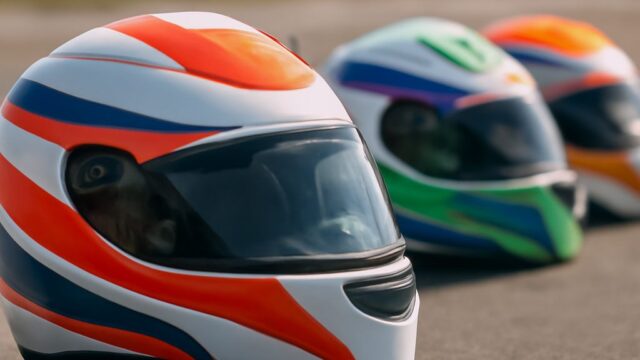
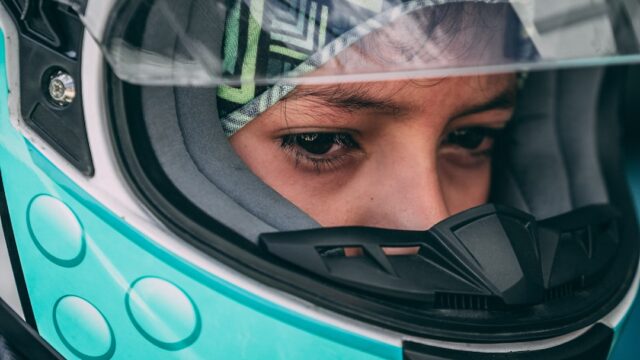
A karting helmet must be a full-face design with a shell and energy-absorbing liner rated to a recognized standard. Fit matters as much as rating: the helmet should be snug all round with no pressure points, should not rotate when you twist it, and the chin strap should be fastened firmly. Sizes vary between brands, so measure your head and check each manufacturer’s chart.
Our guide to go-kart helmets covers shell materials, visors and fitting, and karting helmets goes deeper into ventilation, weight and the features that matter on track. If you already own a motorcycle helmet, read go-kart helmet vs motorcycle helmet before using it; many clubs do not accept motorcycle ratings for competition.
Children need helmets built for lighter necks. The guide to go-kart helmets for kids explains junior standards, fit and when to move up a size. For premium brands, see our guides to the Arai karting helmet and the Bell karting helmet.
Replace a helmet after any significant impact, even if it looks fine, and follow the manufacturer’s guidance on age. Never buy a used helmet, because you cannot verify its history.
Suits
A karting suit is designed mainly to resist abrasion if you slide along the track surface. It is not the same as a fire-resistant car racing suit, although some series and some kart types call for fire-resistant clothing. Our kart racing suit guide explains materials, construction and certification labels, and go-kart fire suits explains when a fire-rated suit is relevant and when it is not.
Fit decides comfort and protection. The suit should allow full arm and leg movement in a seated driving position without being baggy enough to flap or bunch. Our guide to the kart suit covers sizing, and karting suit compares one-piece and two-layer designs, ventilation and liners.
Many drivers eventually want their own colors or sponsor logos. The guide to the custom go-kart suit covers lead times, design choices and how to keep certification intact. For wet race days, a karting rain suit worn over your race suit keeps you dry and warmer.
Junior suits come in specific youth sizes, and growing drivers often need a new one every season or two. See kids’ kart racing suits for sizing and value, and the kids karting suit guide for buying tips.
Gloves
Karting gloves protect your hands and improve grip and feel on the steering wheel. Kart-specific gloves are usually lighter and thinner than car racing gloves, with grippy palms and external or reverse stitching to avoid pressure points. A good fit is snug at the fingertips with no loose fabric in the palm.
Our guide to karting gloves covers materials, closures and fit. For young drivers, kids’ kart racing gloves explains sizing for small hands, which many adult ranges do not cover.
Gloves wear out faster than other kit because of constant friction on the wheel. Replace them when the palm material thins, seams open or grip fades.
Shoes and boots
Kart shoes have thin, flexible soles so you can feel the pedals in a narrow footwell, and a slim profile so your feet do not catch on the chassis. Most have ankle support or a high-top design. Regular sneakers are usually too wide, too thick-soled and not allowed in most racing.
The guide to kart racing shoes covers sole thickness, closures and sizing, and go-kart boots compares higher-cut designs and when they make sense. Junior options are covered in kids’ kart racing shoes.
Try shoes with the socks you race in. A shoe that feels slightly snug when new usually loosens with use, but one that pinches will only get worse during a long session.
Rib protectors and neck support
Karts have no suspension, and the seat transmits cornering loads and bumps directly into your ribcage. Rib injuries are a well-known risk in karting, especially for drivers running competitive lap times or using a seat that fits poorly. A rib protector spreads those loads and absorbs impacts.
Rib protectors range from soft padded vests to rigid shells. Our kart racing rib protector guide explains the types, how to fit one and typical costs, and the best karting rib protectors compares adult and youth models. Many series require rib protection for younger drivers, so check your rules.
Neck braces and collars reduce the strain of supporting your head and helmet through long corners and can limit sudden head movement in a crash. They are more common among junior drivers and on bumpy tracks. Compare options in the best karting neck braces, and treat any claims about injury prevention cautiously; a neck brace supports, it does not guarantee protection.
Certifications explained
Gear labels can look like alphabet soup, but the idea is simple: a certification shows the product was made to a published standard by an independent body. Requirements vary by country, club, series and age group, and standards are updated every few years, so this section stays general. Your rulebook is the final word.
For helmets, the most common labels in karting come from Snell, which publishes separate standards for auto racing, karting and children, and from the FIA, which approves helmets for international competition. Junior drivers are often required to wear helmets made to a children’s standard because they are lighter and designed for smaller necks. Helmet standards are dated, and many clubs only accept recent versions, so check the year on the label before buying.
For suits, international karting usually uses CIK-FIA homologation, which tests abrasion resistance, while many US car and some dirt and oval series refer to SFI ratings for fire resistance. Gloves and shoes may carry SFI labels too. A suit rated for one use is not automatically accepted for another, so confirm which label your series wants. Parents should also read the kids go-karts hub for junior safety, and anyone budgeting for a first kart and kit together can use our go-kart cost guide.
Budget, buying used and care
A complete beginner racing kit, with a certified helmet, suit, gloves and shoes, typically costs somewhere around $500 to $900. Adding a rib protector and neck support pushes a mid-level kit toward $1,000 or more. Premium helmets and custom suits can take the total much higher. Treat these as rough ranges; prices vary by brand and region.
Used suits, shoes and kit bags can be good value, especially for growing children, as long as you can inspect condition and confirm the certification is still accepted. Always buy helmets and rib protectors new, since damage to their protective layers is not always visible.
Care is simple. Air your suit and gloves after each session, wash them according to the label, store your helmet in a padded bag away from heat and chemicals, and clean the visor with a gentle cleaner. For the kart itself, our go-kart maintenance hub covers the routine jobs.
Explore every kart racing gear guide
Helmets



Suits



Gloves, shoes and protection




Gear for young drivers


Frequently Asked Questions
How much does a full set of kart racing gear cost?
Do I need a special helmet for karting?
Is a rib protector really necessary?
Can I use car racing gloves for karting?
What is the difference between a karting suit and a fire suit?
Can I wear regular sneakers to race a kart?
How often should I replace my helmet?
Final Thoughts
Buy the helmet first, buy it new, and make sure it fits. Then add a suit, gloves and shoes that suit your series, and a rib protector once you start pushing. Our kart helmet roundup is the best next step, and the beginner’s guide covers everything else about getting started.