
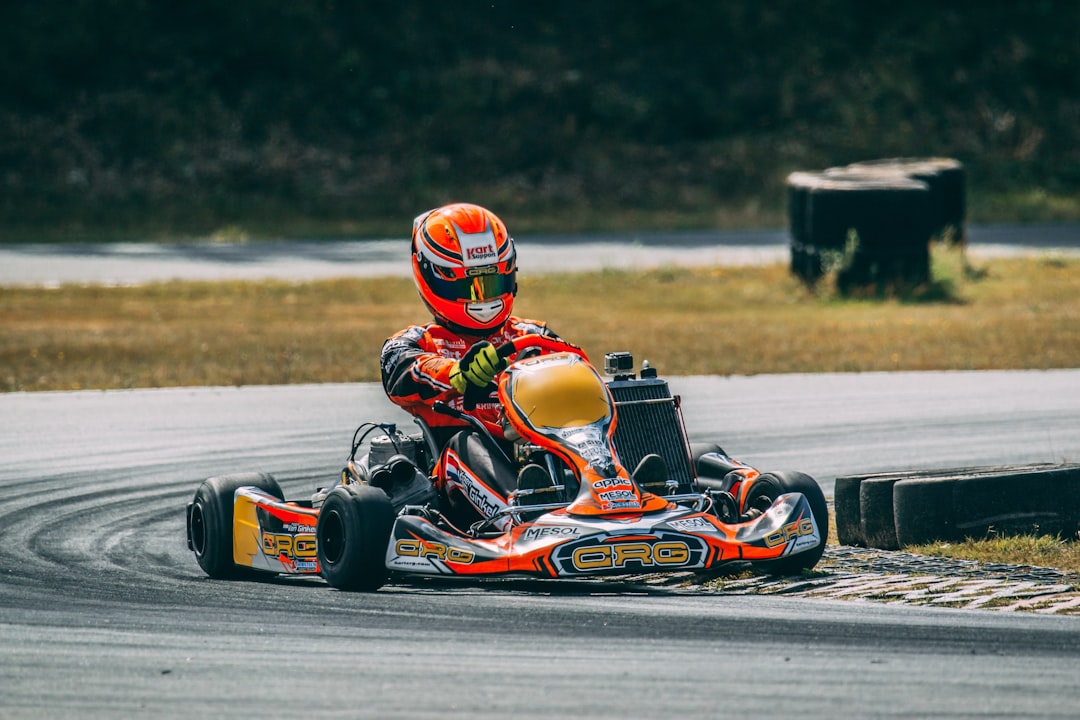
To drift a go-kart, you make the rear tires lose grip on purpose while the front tires keep theirs, then hold the slide with counter-steer and throttle. The easiest way to start is lift-off oversteer: turn in a little faster than normal, lift sharply off the throttle, and catch the rear as it steps out. Karts have a solid rear axle, no suspension, and a short wheelbase, so they rotate quickly and snap back just as fast. This guide explains how to drift a go kart step by step: the weight-transfer physics, the main techniques, how to hold and exit a slide, which surfaces and karts suit it, how to stay safe, and why drifting is usually slower than gripping on a race track.
Part of our Drift Karts & Drift Trikes guide — explore the full guide →
How a Go-Kart Drifts: Weight Transfer Basics
A kart drifts when the rear tires reach their grip limit before the fronts do. The rear end then swings outward and the kart rotates around its front axle. Your job is to start that rotation on purpose and keep it under control.
Most karts have no differential. The rear axle is one solid shaft, so both rear wheels always turn at the same speed. In a corner the inside rear wheel travels a shorter path, so a well-set-up kart flexes its chassis and lifts that wheel slightly. That built-in balance is easy to upset, and once you upset it, the rear lets go.
Weight transfer is your main control. Lift off the throttle or touch the brake and weight moves forward. The front tires get more load and more grip, and the rears get less. Add steering input at that moment and the kart rotates. Every drift technique below is a different way of moving weight forward, or of overpowering the rear tires directly.
Three things decide how easily a kart will slide:
- Grip level. Hard, worn, or cold tires and smooth or dusty surfaces slide easily. Fresh soft tires on rubbered-in asphalt resist sliding.
- Power. A kart with plenty of power can spin the rear tires under throttle. Most low-power recreational and rental karts cannot do that on asphalt.
- Chassis design. Purpose-built drift karts use caster or low-grip rear wheels made to slide. Race karts are built to grip.
How to Drift a Go Kart: Step by Step
Learn this in a wide open area, at low speed, with nothing nearby to hit. Every technique follows the same three phases: start the slide, hold it, and exit it.
1. Set up the entry. Approach the corner from the outside edge, slightly faster than you would on a normal grip lap. Keep your eyes on where you want the kart to end up, not on the nose.
2. Turn in with commitment. Use one quick, decisive steering input. A slow, hesitant input lets the tires keep their grip, while a crisp one loads the front and gets the rear moving.
3. Break the rear loose. Lift sharply off the throttle (lift-off oversteer), add power hard (power-over), or use a counter-flick (see below). The rear will step out.
4. Counter-steer immediately. As soon as you feel the rear move, turn the wheel toward the direction the rear is sliding. With a kart’s quick steering, small and fast corrections work better than big ones. If you’re late here, the kart spins.
5. Balance with the throttle. Ease back onto the power to keep the rear sliding. More throttle generally widens the angle and less lets the rear grip up again. You’re looking for a steady throttle position where the angle stays constant.
6. Exit cleanly. As the corner opens, unwind the counter-steer and squeeze the throttle progressively so the rear tires regain grip smoothly. If you lift abruptly here, the kart can snap back the other way.
The Best Drift Karts: our top 3 picks
| Product | Best for | Key features | Price | Buy |
|---|---|---|---|---|
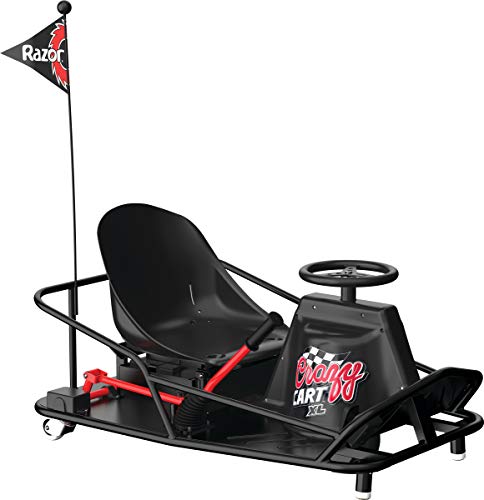
| Razor Crazy Cart XL | Best overall drift kart for adults |
| $999.00as of Oct 25, 2026 3:48 am EDT | Buy now →Check current price |
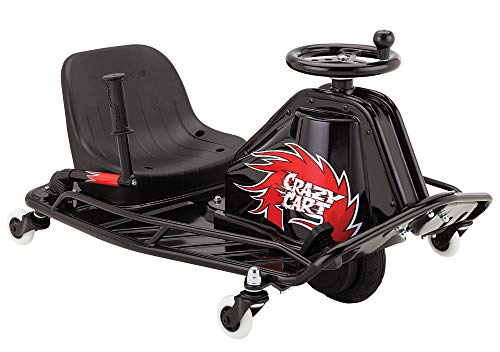
| Razor Crazy Cart DLX | Best for kids 9 and up |
| $593.39as of Oct 25, 2026 4:16 am EDT | Buy now →Check current price |
| First Ride On McLaren 48V | Best drift kart for teens |
| $1,399.99as of Oct 25, 2026 5:12 am EDT | Buy now →Check current price |

Prices are Amazon’s listed prices as of the date and time shown and are subject to change; the price on Amazon at the time of purchase applies. As an Amazon Associate we earn from qualifying purchases.
The Main Drift Techniques
Lift-off oversteer (start here). Turn in, then lift abruptly off the throttle. Weight shifts forward, the rear unloads, and the kart rotates. It works on almost any kart and any surface, it needs no extra power, and it’s the most repeatable technique to practice.
Power-over. Turn in and add hard throttle mid-corner so the rear tires spin and break loose. It only works if the engine can overpower rear grip. That makes it practical on dirt, polished concrete, or wet surfaces, and on higher-powered karts. Most entry-level gas and rental karts can’t do it on grippy asphalt.
Brake-induced rotation. A short stab of brake at turn-in shifts weight forward much like a lift does. On karts with rear-only brakes it can also lock the rear wheels, which starts a slide quickly but is harder to control. Use it gently and only once you can catch a lift-off slide every time.
The Scandinavian flick. Steer briefly away from the corner, then quickly back into it while lifting. The pendulum motion throws weight across the chassis and produces big, fast rotation. Save it for later. It needs space, quick hands, and a surface that forgives mistakes.
Drift Techniques Compared
| Technique | How it starts the slide | Difficulty | Power needed | Best surface |
|---|---|---|---|---|
| Lift-off oversteer | Throttle lift shifts weight forward | Beginner | Low | Any, including asphalt |
| Power-over | Throttle overpowers rear grip | Intermediate | Moderate to high | Dirt, polished concrete, wet |
| Brake-induced | Brake stab loads the front or locks the rear | Intermediate | Low | Smooth, low-grip surfaces |
| Scandinavian flick | Pendulum weight swing from a counter-flick | Advanced | Low to moderate | Low grip, lots of open space |
Choosing the Right Kart and Surface for Drifting
The machine and the surface matter more than technique. Trying to drift a grippy kart on grippy asphalt is hard and rough on equipment, and slides snap back violently.
Purpose-built drift karts. Electric drift karts usually have a powered front wheel (or a front drive unit) and free-spinning caster or slick rear wheels. They’re designed to hold large angles at low, manageable speeds on smooth concrete, and they’re the easiest way to learn car control without wearing out a race kart. Our drift kart guide explains how the main designs work, and the Razor Crazy Cart guide covers the best-known example of the caster-wheel layout.
Gas recreational karts. A typical yard kart with a centrifugal clutch can slide on dirt, gravel, or wet grass using lift-off and some power-over. Some owners fit harder, low-grip rear tires or plastic sleeves to make sliding easier. Our guide to go-kart drift tires covers the options and their trade-offs.
Race and rental karts. These are built for grip. Expect only short lift-off slides on asphalt, and remember that most rental tracks don’t allow deliberate sliding.
For surfaces, smooth sealed or polished concrete in a private space you have permission to use is ideal for drift karts. Hard-packed dirt is forgiving for gas karts. Fresh, grippy asphalt is the hardest place to start a slide and the most abrupt when grip returns.
The Honest Truth: Drifting Is Usually Slower
On a grippy outdoor sprint track, big slides cost lap time. A tire that’s sliding sideways produces less cornering force than one working at the edge of grip, and every slide scrubs off speed. A low-powered kart then takes a long time to win that speed back. Fast kart drivers carry momentum and keep slides small and brief. If lap times are your goal, put your effort into the karting racing line instead.
Drift practice still teaches something useful. Drivers who have caught hundreds of deliberate slides react faster when a race kart steps out on cold tires or a damp patch, so the catch reflex carries over even though the drift itself is slow.
If sliding is the whole point for you, use a machine built for it. A purpose-built drift kart on smooth concrete is far more fun than a rental kart fighting for grip, and it’s gentler on your wallet and your neck.
Safety When Drifting a Go-Kart
Drifting adds risk. A sliding kart can catch a tire on a curb, a rut, or a sudden patch of grip, and that can tip it over. Spins are frequent while you’re learning. Keep these basics non-negotiable:
- Helmet every time. Your head sits close to the ground and close to anything the kart might hit.
- Gloves and abrasion-resistant clothing. A common injury is putting a hand or elbow out during a spin. Keep both hands on the wheel.
- Open space with runoff. No poles, walls, parked cars, or curbs within sliding distance, and no spectators in the runoff zone.
- Private property only. Never practice on public roads or in lots you don’t have permission to use.
- Build speed slowly. Learn the catch at walking-pace-plus speeds before adding entry speed.
- Follow the manufacturer’s limits. Check the rider age, weight, and surface guidance for your kart, especially for kids’ drift karts.
Our kart racing gear guide covers helmets, gloves, and protective clothing in detail. If you’re new to karts in general, start with the complete beginners guide to go-karting before you try to drift one.
Maintenance: What Drifting Wears Out
Sliding is hard on parts. Rear tires and sleeves wear quickly, so check tread and wheel condition after each session. Repeated slides load steering components sideways, so check tie rods, spindles, and wheel bearings for play. On gas karts, power-over drifting works the clutch and chain harder than usual, so inspect chain tension and clutch wear more often. On electric drift karts, keep the caster wheels clean and free-spinning and watch battery temperature during long sessions.
Pros and Cons of Learning to Drift a Kart
Pros
- Builds real car control and oversteer catch reflexes
- Huge fun factor at low and relatively safe speeds
- Teaches weight transfer better than any classroom
- Cheap to practice on a drift kart or a dirt lot
Cons
- Slower than gripping on any competitive track
- Wears rear tires and steering parts quickly
- Spins and snap-backs are common while learning
- Most low-power rental karts cannot slide on grippy asphalt
Frequently Asked Questions
Can you drift a rental go-kart?
Is drifting a go-kart faster around a corner?
What is the easiest way to start a drift in a kart?
Do I need a special kart to drift?
Why does my kart spin instead of drifting?
Is drifting a go-kart dangerous?
Final Thoughts
Learning how to drift a go kart starts with lift-off oversteer. Throttle control and quick counter-steer turn it into a repeatable skill, and the catch reflexes it builds help you in any kart. Just be realistic about what it’s for. On a grippy race track, grip is fast and drifting is slow. On the right surface with the right machine, though, sliding a kart is great fun. If that’s the driving you want, our best drift karts roundup covers machines built for exactly that.