
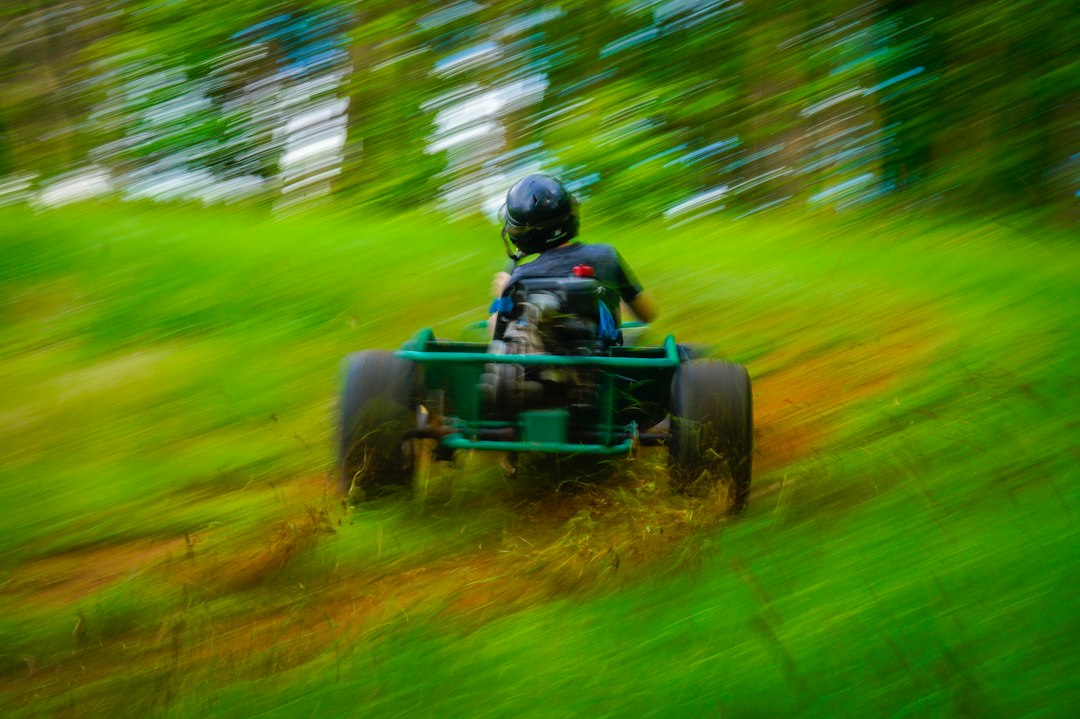
A two seater go kart with roll cage is the most popular family off-road machine: a driver and passenger sit side by side inside a tubular steel frame, usually behind a 200cc to 300cc-class engine with an automatic transmission. The cage changes the safety picture, but only if it is designed and used correctly, with proper belts, nets, and helmets for both occupants. This guide focuses on what makes a caged two-seater safe and practical: cage design, restraints, engines, weight limits, typical prices, inspection points for new and used karts, and maintenance. For a general overview of caged karts, including single-seaters, see our go-kart with roll cage guide.
Part of our Build a Go-Kart guide — explore the full guide →
What Is a Two Seater Go Kart with Roll Cage?
These karts are built around a full tube frame that rises above both occupants, often with side bars, a front hoop, and a rear section that also protects the engine. Seats sit side by side, typically with lap or multi-point belts. Most use a rear-mounted four-stroke engine, a continuously variable transmission (CVT) or torque converter, and off-road tires. Many add suspension at all four corners.
They sit between small yard karts and full utility task vehicles (UTVs). They are smaller, lighter, and cheaper than UTVs, but more capable off-road than open-frame karts. For two-seat karts without cages, see our two seater go-kart guide.
Types of Caged Two-Seat Karts
Youth and family two-seaters. Smaller frames with engines often in the 125cc to 200cc class, speed limiters, and lower weight limits. They suit a teen driver with a younger passenger or a parent riding along.
Adult recreational two-seaters. Larger frames with engines commonly in the 200cc to 300cc class, higher weight limits, and better suspension. These are the most common caged two-seaters for adults.
Dune buggy style karts. Longer frames with more ground clearance and travel, sometimes with larger engines. They blur the line between karts and buggies. Our guide comparing dune buggy vs go-kart explains the distinction.
DIY caged builds. Home-built karts using purchased frame plans or kits. Quality depends entirely on materials, welding, and design, so they need especially careful inspection.
Best Two Seater Go-Kart: our top 3 picks
| Product | Best for | Key features | Price | Buy |
|---|---|---|---|---|
| X-PRO E-Rover 60V | Best overall two-seater |
| $1,399.00as of Oct 25, 2026 4:58 am EDT | Buy now →Check current price |
| Belmonte Venom 125cc | Best gas two-seater for young adults |
| $2,749.99as of Oct 25, 2026 4:58 am EDT | Buy now →Check current price |
| Belmonte Safari 200cc | Best full-size adult two-seater |
| $3,899.99as of Oct 25, 2026 4:58 am EDT | Buy now →Check current price |


Prices are Amazon’s listed prices as of the date and time shown and are subject to change; the price on Amazon at the time of purchase applies. As an Amazon Associate we earn from qualifying purchases.
Two Seater Go Kart with Roll Cage Options Compared
| Type | Typical Engine Class | Typical Occupants | Suspension | Best For |
|---|---|---|---|---|
| Youth and family | 125cc to 200cc | Teen plus child or parent | Basic or rear only | Backyards and trails with supervision |
| Adult recreational | 200cc to 300cc | Two adults | Often four-wheel | Trails and acreage |
| Dune buggy style | Larger engines | Two adults | Long-travel | Rough terrain and sand |
| DIY build | Varies | Varies | Varies | Experienced builders |
Cage Design: What Actually Protects You
Tube size and material. Cages are typically mild steel or chromoly tube. Thicker wall and larger diameter tube resists bending better. Manufacturers rarely publish full specifications, but visible quality, such as clean welds and no thin or flattened tubes, is a good sign.
Head clearance. Both occupants, wearing helmets and sitting normally with belts on, should have clearance between the helmet and the cage roof. Tall adults often find cheaper karts too short.
Side protection. Side bars or door bars help keep arms and legs inside the kart in a rollover. Window nets or arm restraints are an important addition, because a natural reaction in a rollover is to put a hand out.
Welds and joints. Look for continuous welds at joints with no cracks, porosity, or rust at the seams. Bolted cage sections should have high-grade bolts and no movement.
A cage only works when occupants stay inside it. Without belts and nets, it can still cause injury. Our guide to the go-kart roll cage explains cage construction in more depth.
Restraints for Both Seats
Every caged kart needs working belts for both occupants. Many entry-level karts use lap belts or three-point belts; higher-end and racing-style karts use four or five-point harnesses. Harnesses keep the upper body in place far better in a rollover.
Belts should be anchored to the frame, not the seat alone, and adjusted snugly for each occupant. A passenger who is too small for the belts should not ride. Our go-kart seat belts guide covers types, anchoring, and fit.
Engines, Transmissions and Brakes
Carrying two people means more weight for the engine to move, so caged two-seaters usually have more displacement than single-seat yard karts. Most use air-cooled four-stroke singles with a CVT that removes the need to shift. Some include reverse, which is very useful when backing out of a tight spot on a trail. Check whether the engine has a governor or adjustable limiter, especially for younger drivers.
Braking matters more with two aboard. Many budget karts use a single rear disc or drum brake. Better karts add hydraulic brakes and sometimes front brakes. Test braking with both seats occupied before you trust the kart on slopes, and treat weak or spongy brakes as a reason to walk away from a used purchase.
Cost
New youth and family caged two-seaters typically cost about $1,500 to $3,000. Adult recreational models usually run about $2,500 to $5,500. Larger buggy-style karts often exceed $6,000. Used caged two-seaters commonly sell for roughly half to two-thirds of the new price, depending on age, hours, and condition.
Budget for two helmets, eye protection, gloves, and possibly window nets or harness upgrades. Spare belts, tires, and a basic maintenance kit add to the first-year cost.
How to Choose
Match riders to weight limits. Add both occupants weights and check the total against the kart rating. Overloading reduces braking, stresses the frame, and affects handling.
Check speed controls. Family karts often include a throttle limiter or governor. These are valuable when a teen drives with a younger passenger.
Look at the terrain. Rough trails call for real suspension and ground clearance. Flat acreage needs less.
Test the fit. Sit in both seats with helmets on and belts fastened. Check head clearance, pedal reach, and elbow room.
Consider parts support. Brands with dealer networks or good parts availability are much easier to keep running than obscure imports.
Inspecting a Used Caged Two-Seater
Look for bent tubes, cracked welds, and fresh paint over damage, which can hide a past rollover. Check that belts are not frayed, sun-damaged, or missing buckles. Test brakes on both rear wheels, look for oil leaks, check the CVT belt for glazing or cracking, and listen for knocking from the engine. Inspect suspension bushings and tie rod ends for play.
Maintenance
Check cage welds and bolts after every rough ride and any rollover. Inspect belts each season and replace them if worn or after a significant impact. Follow the engine manual for oil changes, air filter cleaning, and valve checks. Grease suspension and steering points, and check tire pressures before each outing.
Safety Rules for Two Occupants
Both occupants should wear helmets, eye protection, and closed shoes. Keep arms and legs inside the cage. Avoid steep side slopes, which are the most common cause of rollovers. Do not carry more people than there are seats, and never drive on public roads unless the vehicle is specifically registered and legal to do so.
Pros and Cons
A caged two-seater is a strong family choice, with some practical considerations.
Pros
- Cage and belts add real rollover protection
- Shared driving and riding experience
- Automatic transmissions are easy to learn
- Many models offer speed limiters
Cons
- Cheaper cages may lack head clearance for tall adults
- Heavier and wider than single-seat karts
- Restraints and gear for two add cost
- Rollovers remain possible on slopes
Frequently Asked Questions
Does a roll cage make a go-kart safe?
What engine size do caged two-seat karts use?
Can a child ride as a passenger?
How much does a two-seat go-kart with roll cage cost?
Do I need window nets?
Are caged two-seat karts street legal?
Final Thoughts
A two seater go kart with roll cage gives families and friends a shared off-road experience with meaningful protection, as long as the cage is sound and both occupants are belted and geared up. Check fit, weight limits, and cage quality before buying. To compare specific models, see our roundup of the best two seater go-karts.