
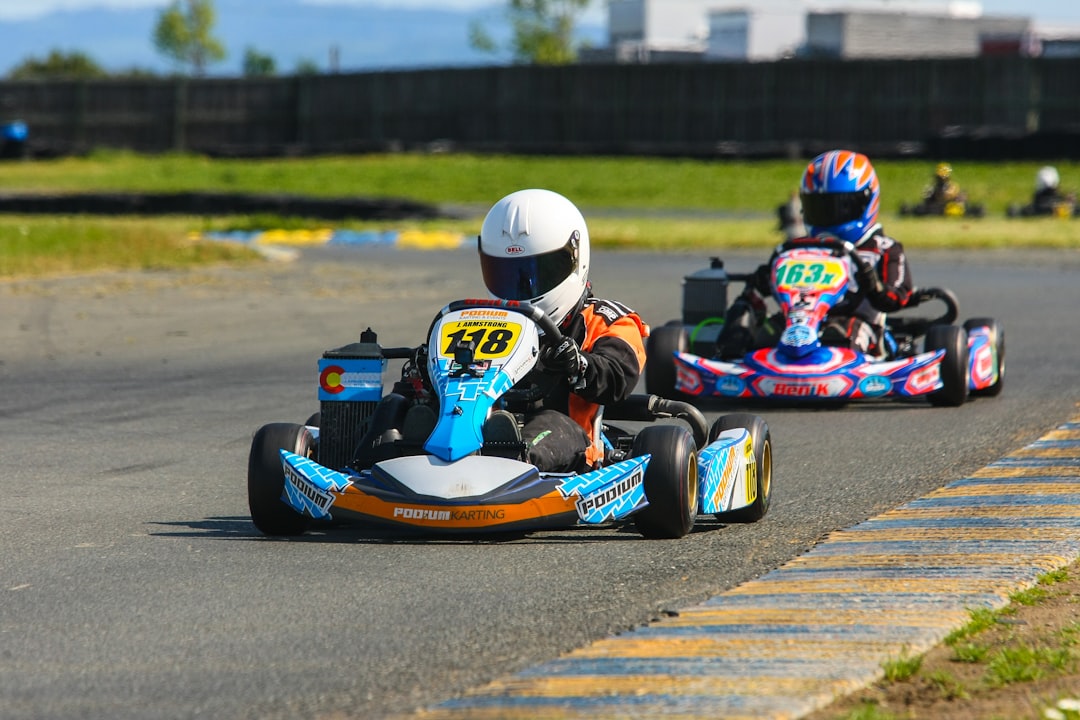
The best go kart for you depends on who is driving and where: a gas kart for a family property, an electric kart for a teen on smooth pavement, a battery-powered drift kart for a ten-year-old, or a pedal kart for a preschooler. This roundup is the broad map. It names one strong pick for each major type, using only what current Amazon listings state, and links to our type-specific roundups when you want a deeper shortlist. Our #1 pick is the TrailMaster Cheetah 8, a 208cc gas kart with a torque-converter drive, electric start and automotive-style seat belts that the listing says suits riders from youth to adult.
Part of our Buying a Go-Kart guide — explore the full guide →
As an Amazon Associate we earn from qualifying purchases.
How we compared: we compared 21 current Amazon go-kart listings, which cover 18 distinct karts once colour variants are merged, on what each listing states: engine or motor, top speed, rider age and weight limit, brakes, seating and restraints. A street motorcycle that turned up in the same searches was excluded. We did not test or ride these units, and prices and availability change.
| Product | Best for | Key features | Price | Buy |
|---|---|---|---|---|
| TrailMaster Cheetah 8 | Best overall gas go-kart |
| $2,649.00as of Oct 27, 2026 2:30 am EDT | Buy now →Check current price |
| Segway Ninebot Gokart Pro 2 | Best electric kart for teens and adults |
| $2,374.99as of Oct 27, 2026 6:45 am EDT | Buy now →Check current price |
| X-PRO Rover 110cc | Best two-seat youth off-road kart |
| $1,349.00as of Oct 27, 2026 9:54 am EDT | Buy now →Check current price |
| Qaba 24V Electric Go Kart | Best electric go-kart for kids |
| $220.99as of Oct 27, 2026 6:17 am EDT | Buy now →Check current price |
| Razor Crazy Cart Shift | Best first drift kart |
| $148.00as of Oct 27, 2026 5:28 am EDT | Buy now →Check current price |
| hauck Lightning Pedal Go Kart | Best pedal go-kart, ages 4 to 8 |
| $143.99as of Oct 27, 2026 6:17 am EDT | Buy now →Check current price |
Prices are Amazon’s listed prices as of the date and time shown and are subject to change; the price on Amazon at the time of purchase applies. As an Amazon Associate we earn from qualifying purchases.
The Best Go-Karts by Type
1. TrailMaster Cheetah 8 — Best Overall Gas Go-Kart
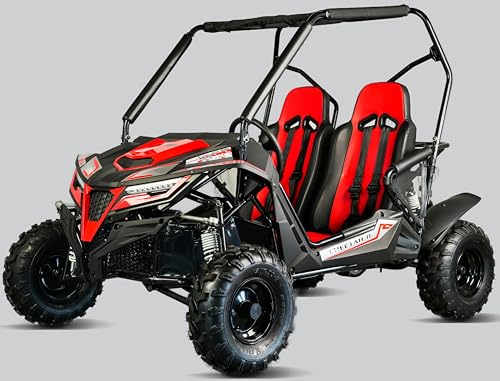
The largest stated engine on the shelf, a CVT drive, electric start and real seat belts in a youth-to-adult kart.
$2,649.00as of Oct 27, 2026 2:30 am EDT
Check price on AmazonWhy we like it
- 208cc, 7.5 HP engine, the biggest stated here
- Torque-converter CVT pulls away smoothly
- Push-button electric start, no pull cord
- Retractable 3-point belts like a car
- Canopy, fenders and cargo rack included
| Specification | Details |
|---|---|
| Rider range | Youth to adult, per title |
| Engine | 208cc horizontal OHV, 7.5 HP |
| Transmission | Torque-converter CVT |
| Top speed | Up to 20 mph |
| Brakes | Parking brake stated; service brake type not stated in listing |
| Rider weight limit | not stated in listing |
TrailMaster Cheetah 8 — 208cc 7.5 HP OHV, CVT, electric start, up to 20 mph, 3-point belts, canopy and cargo rack, about 79 x 51 x 56 in.
The biggest engine and the most car-like cockpit on the shelf
Five of the 18 karts we compared state a gas engine size in cc, ranging from 110cc to 208cc. The Cheetah 8 sits at the top of that range, and it is the only listing that states both a horsepower figure of 7.5 HP and a torque-converter CVT. A torque converter keeps the engine in its power band as speed builds, which is why it suits mixed family use: gentle off the line for a younger driver, still willing for an adult.
It is also the only kart on the shelf with retractable 3-point seat belts, and the only one listing a cargo rack. Several two-seat gas karts here use harnesses, which are arguably more secure in a rollover, but the automotive-style belts are quick to use for riders who hop in and out all afternoon.
The listing is short on detail where it matters. It gives no rider weight limit, no seat count and no service brake type beyond a parking brake, and its 20 mph top speed is lower than several 150cc karts here claim. Ask the seller about brakes and payload before buying, and read our best off-road go-karts roundup if trail capability is the priority.
Pros
- Largest stated engine, 208cc and 7.5 HP
- Smooth CVT drive and electric start
- Retractable 3-point seat belts
- Canopy, fenders and cargo rack
Cons
- No rider weight limit stated
- Service brake type not stated
- 20 mph is modest for the engine size
- Large footprint at about 79 in long
Check TrailMaster Cheetah 8 price on Amazon
2. Segway Ninebot Gokart Pro 2 — Best Electric Go-Kart for Teens and Adults

A fast, adjustable electric kart with four drive modes, a stated 15.5-mile range and third-party safety certification.
$2,374.99as of Oct 27, 2026 6:45 am EDT
Check price on AmazonWhy we like it
- Up to 26.7 mph in Race mode
- Frame fits riders 4 ft 2 in to 6 ft 2 in
- Eco, Sport, Race and Manual modes
- Certified to UL 2272 by TUV Rheinland, per listing
| Specification | Details |
|---|---|
| Age range | 14 and up |
| Rider height | 4 ft 2 in to 6 ft 2 in |
| Top speed | Up to 26.7 mph (Race mode) |
| Range | About 15.5 miles typical |
| Rider weight limit | not stated in listing |
| Kart weight | About 106 lb |
Segway Ninebot Gokart Pro 2 — ages 14+, 26.7 mph, four modes, about 15.5-mile range, UL 2272, 1.8 in ground clearance, about 106 lb.
The only electric kart here sized and certified for grown-ups
Of the 18 karts we compared, the Gokart Pro 2 is the only one that states an adult rider height range, and it is the only one on this shelf that names a battery-safety certification (UL 2272, tested by TUV Rheinland). For an electric kart that may be charged in a garage, that certification is worth more than any speed claim.
Its 26.7 mph Race mode trails only one 2000W off-road listing among the electric karts here, and that listing is muddled, calling itself gas-powered while describing a brushless electric motor. The Manual mode adds paddle shifters, simulated rev-matching and haptic feedback, which makes it the most race-flavoured listing on the shelf. With 1.8 inches of ground clearance, though, this is strictly a pavement kart; the listing also warns against riding in rain or snow and asks owners to store it indoors.
No rider weight limit is given, which matters for heavier adults. For more adult electric options, see our best electric go-karts for adults roundup.
Pros
- Up to 26.7 mph in Race mode
- Adjustable for riders up to 6 ft 2 in
- UL 2272 certification stated
- Four modes for learners and racers
Cons
- No weight limit stated
- Very low clearance, pavement only
- Not for rain, snow or outdoor storage
- Heavy at about 106 lb
Check Segway Ninebot Gokart Pro 2 price on Amazon
3. X-PRO Rover 110cc — Best Two-Seat Youth Off-Road Go-Kart

A smaller gas kart with an automatic gearbox, reverse, electric start and a rear hydraulic disc for two young riders.
$1,349.00as of Oct 27, 2026 9:54 am EDT
Check price on AmazonWhy we like it
- Automatic transmission with a reverse gear
- Rear hydraulic disc brake
- Two-seat bench with 4-point harnesses
- 16 in wheels, larger than typical 110cc karts
- Fuel gauge and LED headlight
| Specification | Details |
|---|---|
| Rider range | Youth, per title |
| Engine | 110cc Yinxiang, automatic with reverse |
| Brakes | Rear hydraulic disc |
| Seating | Adjustable 2-seat bench, 4-point harnesses |
| Top speed | not stated in listing |
| Assembly | Wheels, roll cage bars, seats, tank and battery to fit |
X-PRO Rover 110cc — 110cc automatic plus reverse, electric start, rear hydraulic disc, two seats with 4-point harnesses, 16 in wheels.
The gentlest gas engine on the shelf, with grown-up brakes
At 110cc, the Rover is the smallest of the five gas engine sizes stated on the shelf, which is exactly why it belongs in a family roundup: it is the gas option aimed at younger drivers rather than adults. An automatic gearbox means no clutch to learn, and reverse makes it easy to back out of a tight spot on a trail.
Braking is a strength. The listing specifies a rear hydraulic disc, and the two-seat bench comes with a 4-point harness for each rider, which lets a parent ride alongside a learner. The 16 inch wheels are larger than the listing says most 110cc karts use, helping it ride over rough ground.
The gaps: no top speed and no weight limit are stated, and it arrives needing real assembly, including the roll cage bars, gas lines and battery. Its bigger 125cc sibling leads our off-road roundup if older riders will share it.
Pros
- Small 110cc engine suits younger drivers
- Automatic with reverse, no clutch
- Rear hydraulic disc brake
- Two seats with 4-point harnesses
Cons
- No top speed stated
- No weight limit stated
- Substantial assembly required
- Gas engine needs fuel and upkeep
Check X-PRO Rover 110cc price on Amazon
4. Qaba 24V Electric Go Kart — Best Electric Go-Kart for Kids

A 24V kids kart with the highest stated top speed in its class, a soft start, a 5-point harness and a battery gauge.
$220.99as of Oct 27, 2026 6:17 am EDT
Check price on AmazonWhy we like it
- Two speeds, 3.7 mph or 11.2 mph
- Large 24V 9Ah battery, up to 60 minutes
- 5-point harness and low 5.1 in seat
- Battery display shows charge left
- Seat slides 2 in as kids grow
| Specification | Details |
|---|---|
| Age range | 6 to 12, riders 47.2 in and taller |
| Top speed | 3.7 mph low, 11.2 mph high |
| Motor | Twin 150W, rear-wheel drive |
| Battery | 24V 9Ah, up to 60 minutes |
| Restraint | 5-point harness |
| Rider weight limit | not stated in listing |
Qaba 24V Electric Go Kart — ages 6–12, twin 150W, 24V 9Ah, 3.7/11.2 mph, soft start, 5-point harness, steel frame, about 48 lb.
The widest speed spread among the kids electric karts
Eight of the 18 karts we compared are battery-powered karts for children, and seven of those state a top speed. The Qaba tops that group at 11.2 mph, yet its low setting of 3.7 mph is gentle enough for a first ride. That spread is what makes it a kart a six-year-old can start on and a twelve-year-old will not outgrow too quickly.
It is one of only two kids karts here with a 5-point harness, and the only one that mentions a battery display. Its 9Ah battery is also among the largest stated in the kids group. A soft start smooths the launch, which helps when the high-speed mode is unlocked.
No weight limit is stated, and the listing recommends smooth surfaces such as concrete, asphalt and brick. For age-by-age picks, see our best go-karts for kids by age roundup.
Pros
- Highest stated speed of the kids karts
- Gentle 3.7 mph learner mode
- 5-point harness and soft start
- Battery gauge and 9Ah pack
Cons
- No weight limit stated
- 11.2 mph needs close supervision
- Smooth surfaces only
- Music features add little
Check Qaba 24V Electric Go Kart price on Amazon
5. Razor Crazy Cart Shift — Best First Drift Kart
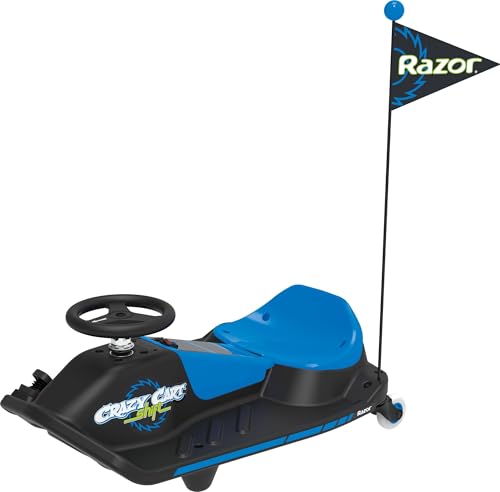
An automatic drift system, a hi-lo switch and the longest stated run time make this an easy first slide machine.
$148.00as of Oct 27, 2026 5:28 am EDT
Check price on AmazonWhy we like it
- Drifts automatically, both hands stay on the wheel
- Hi-lo speed switch, up to 8 mph
- Up to 80 minutes per charge
- Chainless hub motor, minimal upkeep
| Specification | Details |
|---|---|
| Age range | 6 and up |
| Top speed | Up to 8 mph |
| Motor | 90W hub motor |
| Battery | 12V sealed lead-acid, up to 80 minutes |
| Steering | 1:1 ratio |
| Rider weight limit | not stated in listing |
Razor Crazy Cart Shift — ages 6+, 90W 12V, up to 8 mph, about 80 minutes, automatic drift, rear casters, about 22 lb.
The longest stated run time, and drifting without a lever
The Shift states up to 80 minutes per charge, the longest run time of any electric kart on this shelf. Its trick is a simplified drift system: fixed, angled rear caster wheels let the back step out on their own, so a young driver learns throttle and steering without juggling a drift bar.
The hub motor has no chain, sprocket or tensioner to adjust, which suits families who do not want a maintenance routine.
The trade-offs are a modest 90W, 12V system, a heavier lead-acid battery chemistry and no stated weight limit. Older drivers who want a lever-operated drift should start with our best drift karts roundup.
Pros
- Longest stated run time, up to 80 minutes
- Automatic drifting is easy to learn
- Chainless hub motor
- Light enough to carry
Cons
- Modest 90W, 12V power
- No weight limit stated
- Lead-acid battery
- Smooth, flat surfaces only
Check Razor Crazy Cart Shift price on Amazon
6. hauck Lightning Pedal Go Kart — Best Pedal Go-Kart for Ages 4 to 8

A battery-free pedal kart with dual rear handbrakes, an adjustable bucket seat and a 110 lb limit.
$143.99as of Oct 27, 2026 6:17 am EDT
Check price on AmazonWhy we like it
- No charging, fuel or motor upkeep
- Handbrake acts on both rear wheels
- States a 110 lb rider limit
- Two seat positions for growing kids
| Specification | Details |
|---|---|
| Age range | 4 to 8 (about 90 to 110 cm tall) |
| Power | Pedals |
| Brakes | Handbrake on both rear wheels |
| Rider weight limit | 110 lb |
| Wheels | Plastic with rubber tread |
| Kart weight | About 21 lb |
hauck Lightning — ages 4–8, pedal-powered, dual rear handbrake, 2-position seat, 110 lb limit, about 38 x 20.5 x 21.7 in.
The only pedal go-kart on the shelf, and it states its limits
The Lightning is the only true pedal kart among the 18 karts we compared; the other battery-free option, the Razor Crazy Cart Shuffle, is a hand-propelled drift toy. Pedal power means the speed is set by the child, which keeps a four-year-old at a sensible pace without any limiter.
It is also one of 10 karts here that state a rider weight limit, at 110 lb, and the seat has two positions (44 cm and 51 cm seat to pedal). The handbrake works on both rear wheels rather than one.
The wheels are plastic with a rubber tread, not air-filled tyres, so it rides best on paths and driveways rather than rough lawns.
Pros
- Battery-free and always ready
- Child sets the speed
- Dual rear handbrake
- Stated 110 lb limit
Cons
- Plastic wheels, not pneumatic
- Best on smooth paths
- Outgrown by about age 8
- No adjustable steering
Check hauck Lightning Pedal Go Kart price on Amazon
How to Choose the Best Go-Kart for Your Rider
The right kart is matched to rider, terrain and goal, not to the highest number on the listing. Four questions settle almost every purchase: who is driving (age, height and weight), where it will run (pavement, grass, trails), what the goal is (casual fun, family rides, drifting, racing practice), and what the total cost of ownership looks like, including fuel or charging, parts and safety gear. Our how much a go-kart costs guide covers the full budget picture.
Answer those and the type picks itself. A young child points to a pedal kart or a speed-switchable 24V kart. A quiet neighbourhood and a teen who wants pace points to a pavement electric kart. A rural property and a family that wants to ride together points to a two-seat gas kart. A kid who wants to spin and slide points to a drift kart.
Gas vs electric
Gas karts deliver long run time, quick refuelling and the torque to climb and carry two riders, which is why the two-seat off-road karts on this shelf mostly use engines. They need fuel, oil changes, chain care and winter storage, and they are loud. Electric karts are quiet, nearly maintenance-free and deliver instant torque, but range is limited and batteries eventually need replacing. Pavement-only electric karts like the Segway also have very little ground clearance.
The Specs That Matter (and How to Read Them)
Top speed with a rider aboard. Listing speeds are best-case figures, usually measured with a light rider on flat pavement. Expect less with a heavier driver, on grass or uphill. For kids, a low-speed mode matters more than the headline number. Our go-kart speed explainer covers typical speeds by type.
Weight limits. Only 10 of the 18 karts we compared state a rider weight limit. If a listing is silent, ask the seller before buying for a larger teen or adult, because an overloaded frame, axle or motor wears out fast.
Engine cc and horsepower. On gas karts, cc indicates displacement; horsepower is the better comparison when listed. A 110cc engine suits younger drivers, while 150cc to 208cc engines suit teens, adults and two-up riding.
Motor watts vs voltage. On electric karts, voltage (12V, 24V, 36V and up) largely sets top speed, while watts indicate how hard the motor can pull. Amp-hours (Ah) indicate capacity, so a 24V 9Ah battery should run longer than a 24V 7Ah one under similar conditions.
Brakes. Hydraulic disc brakes give the most consistent stopping on fast or heavy karts. Pedal karts use handbrakes, ideally acting on both rear wheels. Treat a missing brake description as a question for the seller.
Frame and tyres. Steel tubular frames and pneumatic or all-terrain tyres belong on anything driven off pavement. Hard plastic or PP wheels are fine for driveways and are deliberately slippery on drift karts.
Go-Kart Safety Basics
Helmets, every ride. Kids riding pedal or electric karts should wear a properly fitted helmet. The American Academy of Pediatrics advises buying a helmet that meets the U.S. Consumer Product Safety Commission bicycle helmet standard and wearing it level, covering the top of the forehead. Teens and adults on gas or fast electric karts should step up to a full-face helmet.
Supervision and speed limiters. Start every child on the lowest speed setting and stay within sight. Restraints only work when fastened, so check harnesses and belts before every run.
Battery care. The CPSC urges consumers to use battery-powered ride products and batteries that are certified to the applicable voluntary safety standards. Charge on a hard surface, use the supplied charger and never charge unattended overnight.
Where You Can Ride Each Type
Go-karts are generally not street-legal. Pedal and small kids electric karts belong on private driveways, patios and paths with no traffic. Pavement electric karts such as the Segway need a large private lot, a paved track or an indoor venue. Gas and off-road karts are for private land or designated off-road areas, subject to local noise and land-use rules. If you are new to the sport, our go-karting beginner’s guide covers rental tracks and where to start.
Maintenance by Type
Pedal karts need little more than a chain check, tyre inspection and a tightened bolt or two each season. Kids electric karts need regular charging, including a top-up during long breaks, and a check of wiring and drift wheels for wear. Gas karts need the most attention: fresh fuel, oil changes, an air filter, chain tension and lubrication, brake fluid on hydraulic systems and draining the fuel before long storage.
Frequently Asked Questions
What is the best go-kart overall?
Is a gas or electric go-kart better?
What is the best go-kart for a young child?
How fast do go-karts on Amazon go?
Do go-karts need assembly?
Can a go-kart be driven on public roads?
Final Thoughts
The best go kart is the one that fits the driver and the ground they ride on. Pick the type first, then the model: gas for family off-road fun, electric for quiet pavement speed, 24V or pedal for younger kids, and a drift kart for sliding. When you want a deeper shortlist, our adult electric, off-road and drift roundups take over from here.