
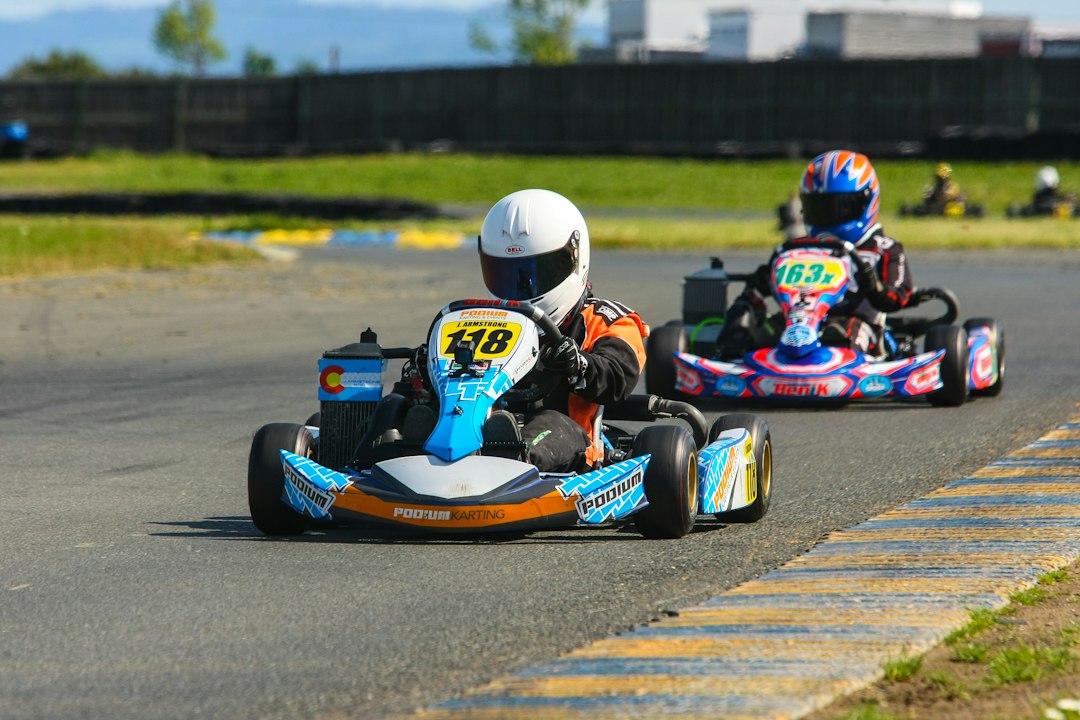
Chinese go karts for sale make up a large share of the budget recreational kart market. Many of the low-cost buggies, yard karts, and youth karts sold through dealers and online retailers are built in Chinese factories, sometimes under several different brand names. They can be good value, but quality, assembly, and parts support vary far more than with established premium brands. This guide explains what Chinese-made karts are, the common engine and model types, typical USD price ranges, how to tell a well-supported model from a risky one, what to inspect on arrival, and how buying from a local dealer compares with importing direct.
Part of our Buying a Go-Kart guide — explore the full guide →
What Are Chinese Go Karts?
The phrase usually refers to recreational karts manufactured in China and sold worldwide, either under the factory’s own brand or rebadged by importers and retailers. The same basic kart may appear under different names with different colors and stickers.
These karts typically use steel tube frames, plastic bodywork, small four-stroke engines, and automatic transmissions. They range from simple single-seat yard karts to two-seat buggies with roll cages and suspension. Electric kids’ karts from Chinese factories are also common.
Many reputable brands also manufacture some or all of their products in China, so country of origin alone does not tell you much. What matters is the build quality of the specific model, the importer’s quality control, and whether parts and service are available where you live.
Common Types and Engines
GY6-style 150cc karts. Many buggy-style karts use a GY6-pattern single-cylinder engine with a CVT. This engine design is widely produced, so parts are generally easy to find.
196cc to 212cc horizontal-shaft karts. Yard and off-road karts often use engines patterned after popular small utility engines, paired with a centrifugal clutch or torque converter. Our Predator 212 engine guide covers this engine family in detail.
110cc to 125cc youth karts. Smaller engines for children and teens, often with a throttle limiter and parent kill switch.
250cc to 300cc buggies. Larger adult two-seat karts with suspension, reverse, and sometimes liquid cooling.
Electric karts. Battery-powered kids’ and adult karts, from small 24V models to higher-voltage machines.
Best Go-Kart for the Money: our top 3 picks
| Product | Best for | Key features | Price | Buy |
|---|---|---|---|---|
| Zyliathor 212cc | Best value overall |
| $1,600.00as of Oct 26, 2026 5:54 am EDT | Buy now →Check current price |
| TrailMaster Cheetah 8 | Best-equipped utility kart |
| $2,649.00as of Oct 26, 2026 7:08 am EDT | Buy now →Check current price |
| esheno 150cc Two-Seater | Best two-seater for adults |
| $1,899.00as of Oct 26, 2026 5:54 am EDT | Buy now →Check current price |


Prices are Amazon’s listed prices as of the date and time shown and are subject to change; the price on Amazon at the time of purchase applies. As an Amazon Associate we earn from qualifying purchases.
Chinese Go Karts for Sale: Price Ranges Compared
| Type | Typical Engine or Power | Typical New Price (USD) | Typical Used Price (USD) |
|---|---|---|---|
| Youth kart | 110cc to 125cc or 24V to 36V | $600 to $1,500 | $300 to $900 |
| Single-seat yard kart | 196cc to 212cc | $800 to $1,800 | $400 to $1,100 |
| Mid-size buggy | 150cc to 200cc | $1,500 to $3,500 | $800 to $2,200 |
| Adult two-seat buggy | 250cc to 300cc | $3,000 to $7,000 | $1,500 to $4,500 |
Prices vary with region, freight, dealer setup fees, and market demand. Very low prices compared with these ranges often reflect minimal pre-delivery inspection, missing parts support, or both. For broader context, see how much a go-kart costs.
Quality: What Varies and Why
Factory quality is not uniform. The biggest differences between a good and a poor Chinese kart usually show up in a few areas.
Welding and frame finish. Look for consistent, complete welds, especially on suspension and steering mounts. Thin or porous welds are a warning sign.
Fasteners and assembly. Budget karts often arrive with bolts under-tightened, missing thread locker, or poorly routed cables. A thorough assembly check is essential.
Electrical systems. Wiring harnesses and connectors are a common weak point. Corroded or loose connectors cause many starting and charging problems.
Brakes and tires. Some models ship with basic brakes and hard tires. Upgrading these is often the first improvement owners make.
Documentation. Manuals may be brief or poorly translated. Better importers provide clear manuals, wiring diagrams, and parts lists.
How to Choose a Well-Supported Model
Buy from a seller with a parts department. The single biggest factor in long-term ownership is whether you can get parts. Ask the seller for a parts list and prices for common wear items such as brake pads, belts, and tires before you buy.
Favor common engines. Karts using widely produced engine patterns are easier to keep running, because replacement parts are available from many sources. Our guide to Chinese go-kart parts explains how to source and cross-reference components.
Ask about pre-delivery inspection. Dealers who assemble, inspect, and test-run karts before handover catch most factory issues.
Check the warranty terms. Understand what is covered, for how long, and who performs the work.
Read owner communities. Owner groups and forums often reveal common faults and fixes for specific models.
Confirm compliance. In the US, off-road vehicles and small engines sold to consumers are subject to emissions certification rules, with additional requirements in California. Reputable sellers can confirm a model’s status.
Local Dealer vs Direct Import
Buying from a local dealer or established online retailer costs more than buying direct from a factory, but you get a known seller, warranty support, and someone to call when something breaks. Direct import from overseas marketplaces can look cheaper, but freight, customs duties, port fees, and compliance requirements can erase the savings. Factories may also require minimum order quantities.
For most private buyers, a domestic seller is the safer route. Our guide to the best place to buy a go-kart compares buying channels in more detail.
Inspection Checklist on Delivery or Purchase
Whether new or used, go through the kart before the first drive. Check every nut and bolt on the steering, suspension, axle, and brakes. Confirm the brake works and the throttle returns fully when released. Check engine oil, which some karts ship without. Inspect tires for correct pressure and damage. Test lights and switches, and confirm the kill switch stops the engine.
On a used kart, add the usual checks: cold start, frame cracks, worn belts or chains, leaking shocks, and proof of ownership. Ask how the kart was stored and whether it has been modified.
Red Flags in Listings
Be cautious of listings that show only stock factory photos with no images of the actual kart. Vague descriptions such as “high power” or “racing kart” without an engine size, weight limit, or brake type usually signal a seller who knows little about the product. Prices far below the typical ranges above may mean the kart ships without engine oil, a battery, or proper inspection, or that the listing is not genuine.
Other warning signs include no physical business address, no phone contact, payment requested by wire transfer or gift card only, and no clear returns or warranty policy. For used karts, missing serial numbers, no proof of ownership, and a seller who refuses an in-person inspection are reasons to walk away.
Ownership Costs Beyond the Price Tag
Budget for setup, fluids, safety gear, and a few early upgrades. Many owners also replace the original battery, spark plug, and tires within the first season. Over the life of the kart, routine items such as belts, brake pads, chains, and filters add up. A kart that costs a little more up front but has affordable, available parts often ends up cheaper to own.
Common Upgrades After Purchase
Owners of budget karts often make a few improvements early. Better tires improve grip and ride. Upgraded brake pads or calipers improve stopping. Fresh, properly torqued fasteners with thread locker reduce vibration-related failures. A quality spark plug and air filter help the engine run reliably. Seat belts and helmets should be checked and upgraded where needed.
Pros and Cons
Chinese-made karts can offer excellent value, but buyers should weigh the trade-offs carefully.
Pros
- Low purchase price compared with premium brands
- Wide choice of sizes and styles
- Common engines with easy parts availability
- Good value when bought from a supportive dealer
Cons
- Build quality varies between factories and batches
- Assembly often needs checking and tightening
- Parts support depends on the importer
- Resale values are usually lower
Frequently Asked Questions
Are Chinese go karts any good?
Can I get parts for a Chinese go kart?
Is it cheaper to import a go kart directly from China?
What should I check on a new Chinese go kart?
Do Chinese go karts come with a warranty?
Why do the same karts appear under different brand names?
Final Thoughts
The best Chinese go karts for sale are the ones backed by a seller who inspects, supports, and stocks parts for them. Focus on build quality, common engines, and parts availability rather than the lowest price. For a shortlist of value-focused options, see our best cheap go-kart roundup.