
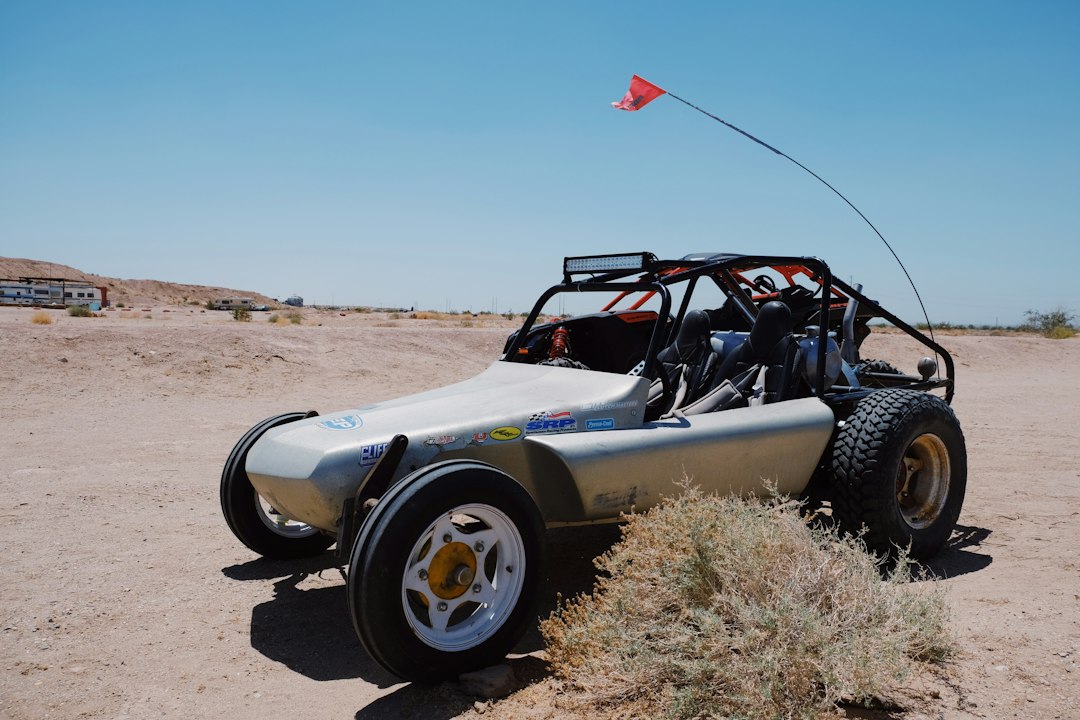
Shopping for a dune buggy go kart for sale means navigating a market that sits between yard karts and small UTVs. These off-road karts typically have a full roll cage, suspension, knobby tires and engines from 150cc to 300cc or more, and they are built to handle dirt trails, sand and rough property. Prices, quality and condition vary widely, from budget imports to well-built machines from established brands. This guide explains the main types, typical new and used price ranges, what to inspect, the red flags to avoid, where these karts are sold and how to pick the right size and power for your riders and terrain.
Part of our Off-Road Go-Karts guide — explore the full guide →
What Is a Dune Buggy Go-Kart?
A dune buggy go-kart is an off-road kart with a tubular frame and integrated roll cage, independent or swing-arm suspension, larger knobby tires and more ground clearance than a typical go-kart. Most use a gas engine with a CVT or torque converter, and many have seating for one or two riders.
The term overlaps with buggy and off-road kart, and some larger models blur into the UTV category. The key differences from a UTV are usually smaller size, simpler construction and lower prices. Our dune buggy vs go-kart comparison explains how the categories differ in more detail.
Types of Dune Buggy Go-Karts
Youth dune buggies have smaller frames, engines around 110cc to 150cc, speed limiters and often remote shut-off. They are sized for older children and young teens.
Single-seat adult buggies use engines from about 150cc to 300cc and focus on performance and handling for one driver.
Two-seat buggies are the most common adult format, with side-by-side seating, larger engines and often a cargo area. Many families choose two-seaters for shared rides.
Electric buggies are a growing segment, with high-voltage battery systems and quiet operation. They are well suited to properties where noise is a concern but have limited range compared with gas.
DIY and custom buggies are built from frame plans or kits and range from simple projects to high-performance builds.
The Best Off-Road Go-Karts: our top 3 picks
| Product | Best for | Key features | Price | Buy |
|---|---|---|---|---|
| X-PRO Rover 125cc | Best off-road kart overall |
| $1,459.00as of Oct 25, 2026 4:12 am EDT | Buy now →Check current price |
| Zyliathor 72V 3000W | Best electric for rough terrain |
| $2,800.00as of Oct 25, 2026 3:52 am EDT | Buy now →Check current price |
| Zyliathor 212cc Pro | Best gas power for trails |
| $1,600.00as of Oct 25, 2026 4:12 am EDT | Buy now →Check current price |


Prices are Amazon’s listed prices as of the date and time shown and are subject to change; the price on Amazon at the time of purchase applies. As an Amazon Associate we earn from qualifying purchases.
Dune Buggy Go-Kart Types Compared
| Type | Typical Engine | Typical Top Speed | Best For | Typical New Price Range |
|---|---|---|---|---|
| Youth buggy | 110cc to 150cc | 15 to 30 mph (often limited) | Older kids, young teens | $1,200 to $2,500 |
| Single-seat adult | 150cc to 300cc | 30 to 50 mph | Solo trail riding | $1,800 to $4,500 |
| Two-seat buggy | 150cc to 400cc | 30 to 55 mph | Families, shared rides | $2,500 to $7,000 |
| Electric buggy | High-voltage motor | 20 to 45 mph | Quiet properties | $2,500 to $8,000 |
Speed and price are typical ranges and depend heavily on brand, engine, gearing and features. Used prices are usually lower but depend on condition.
Prices: New vs Used
New dune buggy go-karts commonly range from about $1,200 for small youth models to $7,000 or more for larger two-seat machines. Budget imports sit at the low end, while established brands with better suspension, brakes and parts support cost more.
Used buggies are often 30 to 60 percent below new, depending on age and condition. Good used examples can be excellent value, but off-road karts work hard, and many have been ridden aggressively. Careful inspection matters more here than with most karts.
Budget for helmets, goggles, gloves and boots, plus transport, fuel, oil and maintenance parts. For wider kart pricing, see our go-kart cost guide.
What to Inspect Before Buying a Dune Buggy Go-Kart for Sale
Frame and roll cage. Check for cracked welds, bent tubes and rust, especially around suspension mounts and cage joints. A damaged cage compromises safety. Our roll cage guide explains what a sound cage looks like.
Suspension. Bounce each corner and look for leaking or worn shocks, loose bushings and bent A-arms or swing arms. Worn suspension makes the buggy harsh and unpredictable. See our off-road suspension guide for common wear points.
Engine. Start the engine cold if you can. Listen for knocking, smoke or hard starting. Check for oil leaks, and ask about maintenance and oil changes.
CVT or drivetrain. Check the belt condition, chain, sprockets and axle. Slipping, jerky engagement or grinding suggest worn components.
Brakes and steering. Test the brakes for firm feel and even stopping. Check for play in the steering and worn tie rod ends.
Tires and wheels. Look for cracked sidewalls, uneven wear and bent rims.
Electrical. Check lights, starter, kill switch and battery. Many buggies have electric start and lights that should work reliably.
Red Flags to Watch For
Be cautious if the seller cannot provide a title or proof of purchase. Off-road vehicles can be stolen, and proof of ownership protects you. Check the VIN or frame number where available.
Avoid buggies with welded repairs on the roll cage or suspension mounts unless done professionally. Watch for heavy rust, missing safety equipment such as belts and nets, and signs of serious crashes such as bent cages or misaligned wheels.
Be wary of very cheap listings for models that typically cost much more. They may hide major mechanical issues or questionable ownership.
Where Dune Buggy Go-Karts Are Sold
New buggies are sold through powersports dealers, kart dealers and online retailers. Dealers can offer assembly, warranty support and parts, which is valuable for buyers without mechanical experience.
Used buggies appear on online marketplaces, classifieds, powersports dealer trade-ins and local off-road clubs. Buying locally lets you test ride and inspect in person. For general buying tips, see our used go-karts for sale guide.
First Jobs After You Buy
Even a buggy that passes inspection deserves a baseline service before its first ride with you. Change the engine oil and replace the air filter, since off-road dust is the main enemy of small engines. Check the CVT belt and replace it if it shows glazing, cracks or flat spots, and clean and lubricate the chain if the buggy uses one.
Bleed or refill the brake fluid on hydraulic systems, check pad thickness and test the parking brake. Go over every suspension and steering bolt with a wrench, because vibration loosens hardware on off-road machines faster than on smooth-surface karts. Set tire pressures to the manufacturer recommendation and inspect valve stems.
Finally, confirm the seat belts latch properly, the side nets are secure and the kill switch works. Recording the date and hours of this service gives you a clear starting point for future maintenance.
How to Choose the Right Buggy
Match size and power to the riders. Youth buggies suit older children with supervision, while adult riders need a frame and engine sized for their weight. Two-seaters suit families and shared rides.
Consider terrain. Sand and dunes need more power and paddle or wide tires, while woodland trails reward compact size and good suspension. Hilly properties benefit from strong brakes and low gearing.
Check safety features: a full roll cage, seat belts or harnesses, side nets, a kill switch and, for youth models, speed limiters.
Finally, check parts support. Popular brands and engines are easier to maintain. Unique parts on unknown brands can make repairs difficult.
Pros and Cons
Dune buggy go-karts are capable off-road machines, but they come with trade-offs.
Pros
- Roll cage and suspension improve safety and comfort off-road
- Two-seat models allow shared family rides
- Cheaper and simpler than most UTVs
- Wide range of sizes from youth to adult
Cons
- Larger models need trailers for transport
- Off-road use wears suspension and drivetrain quickly
- Quality varies widely between brands
- Not street legal in most areas
Frequently Asked Questions
How much does a dune buggy go-kart cost?
How fast is a dune buggy go-kart?
What should I check on a used dune buggy?
Are dune buggy go-karts street legal?
Is a dune buggy better than a go-kart?
Can kids ride dune buggy go-karts?
Final Thoughts
A dune buggy go kart for sale can offer serious off-road fun for families and adults, but quality and condition vary widely. Inspect the frame, cage, suspension and drivetrain carefully, choose the right size for your riders and terrain, and budget for gear and upkeep. To compare current models, see our best off-road go-kart for adults roundup.