
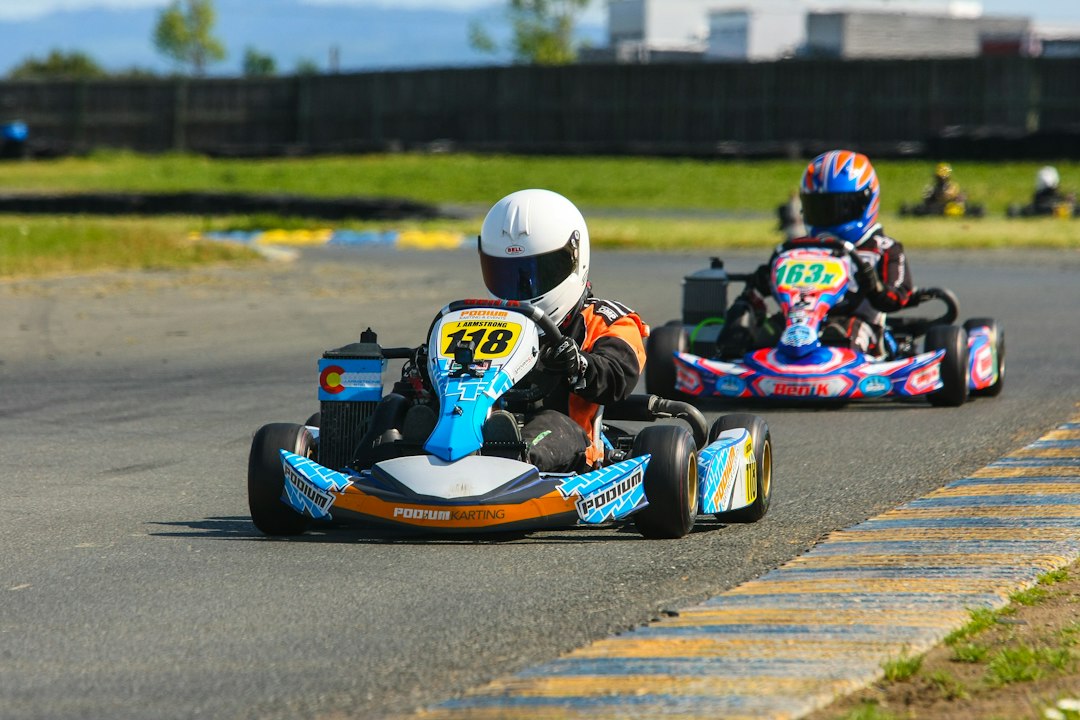
An electric ride on go kart sits in the space between a battery-powered toy and a true go-kart. Most are sold for young children, run on 6V, 12V, or 24V batteries, and are built from plastic bodies on light steel or plastic frames. Some look like miniature race karts; others are drift-style or pedal-kart shaped. This guide explains what separates a ride-on kart from a real electric go-kart, the main voltage and age bands, typical USD prices, how to choose one, battery care, and the safety points parents should check before the first drive.
Part of our Electric Go-Karts guide — explore the full guide →
What Is an Electric Ride On Go Kart?
The term “ride-on” comes from the toy industry. It describes battery vehicles a child sits in and drives, such as mini cars, tractors, quads, and karts. An electric ride-on kart is the kart-shaped version: low seat, open layout, four wheels, and usually a foot pedal for go and a steering wheel.
The key difference from a real kart is engineering scale. Ride-ons usually have plastic wheels or thin rubber-banded wheels, small brushed motors in the rear wheel hubs or gearboxes, and no separate mechanical brake. They stop by motor braking when the pedal is released. Real electric go-karts have steel frames, pneumatic or solid rubber tires, larger motors, and dedicated brakes.
If your child has outgrown toy-grade ride-ons, our guide to kids electric go-karts covers the next step up.
Types of Electric Ride-On Karts
6V toddler karts. Very slow and simple, often with a single forward speed. They suit toddlers who are just learning to steer and press a pedal.
12V ride-on karts. The most common category. Many have two speeds, a reverse switch, and sometimes a parental remote control. They suit preschool and early school-age children.
24V ride-on karts. Faster and usually larger, with better traction and more power for grass. They suit older children who can handle more speed. Our guide to the 24V electric go-kart covers this category in depth.
Drift-style ride-ons. These use slick rear wheels or caster wheels so the kart slides on smooth surfaces. They are fun on flat concrete but less useful on grass.
Hoverboard kart attachments. A seat frame that clips onto a self-balancing hoverboard turns it into a ride-on kart. Performance depends on the hoverboard itself.
Best Electric Go-Kart: our top 3 picks
| Product | Best for | Key features | Price | Buy |
|---|---|---|---|---|
| Segway Ninebot Gokart Pro 2 | Best overall for teens and adults |
| $2,499.99as of Nov 17, 2026 4:17 am EST | Buy now →Check current price |
| Zyliathor 72V 3000W | Most powerful for adults |
| $2,660.00as of Nov 17, 2026 10:34 am EST | Buy now →Check current price |
| Greenworks 60V Stealth 2-Seat | Best two-seat youth kart |
| $2,399.99as of Nov 17, 2026 11:04 am EST | Buy now →Check current price |


Prices are Amazon’s listed prices as of the date and time shown and are subject to change; the price on Amazon at the time of purchase applies. As an Amazon Associate we earn from qualifying purchases.
Ride-On Karts vs Real Electric Go-Karts Compared
| Feature | 6V/12V Ride-On | 24V Ride-On | Real Kids Electric Go-Kart |
|---|---|---|---|
| Typical age | Toddler to early school age | Early to mid school age | Varies by model, often older kids |
| Frame | Plastic or light steel | Plastic with steel subframe | Steel tube frame |
| Wheels | Hard plastic | Plastic or rubber tread | Pneumatic or solid rubber tires |
| Brakes | Motor braking | Motor braking, sometimes basic brake | Mechanical or electronic brake |
| Parental controls | Often a remote | Speed switch, sometimes remote | Speed limiter, sometimes kill switch |
| Typical USD range | About $100 to $300 | About $200 to $500 | About $300 to $1,000+ |
Treat these as general bands. Always use the manufacturer’s stated age range, weight limit, and top speed rather than the category alone.
Electric Ride On Go Kart Speed and Age Guide
Top speed rises with voltage, but gearing, wheel size, and rider weight matter too. Toddler 6V models are walking pace. Many 12V models offer a low setting near walking pace and a high setting a little faster. 24V models run quicker still. Check the listed speed for the specific model, because manufacturers vary.
Age guidance on the box is a minimum, not a target. A cautious or small child may be happier on a lower voltage for longer. A confident older child may be ready for a real kids’ go-kart. Our kids go-karts guide walks through age, speed, and safety choices in more detail.
How to Choose an Electric Ride-On Kart
Match size to the child. Check seat-to-pedal distance and the weight limit. A child should reach the pedal comfortably with a bent knee and hold the wheel without stretching.
Look for a speed lock or remote. For young children, a high-speed lockout or a parental remote that can stop the kart is valuable. It lets you build confidence gradually.
Consider the surface. Hard plastic wheels spin on wet grass and slopes. If your child will drive on lawns, look for rubber tread strips or larger wheels and higher voltage.
Check battery and charger details. Note battery voltage and capacity, charge time, and whether replacement batteries are easy to find. Sealed lead-acid batteries are common and affordable; some newer models use lithium packs.
Read assembly requirements. Most ride-ons arrive partly assembled. Check that clear instructions and all hardware are included and that parts such as steering columns are secured with proper fasteners.
Battery Care and Run Time
Run time depends on battery capacity, rider weight, terrain, and speed setting. Grass and slopes drain batteries much faster than flat pavement. Many manufacturers quote a run time range; real-world results are usually at the lower end on rough ground.
Charge the battery fully before the first use, following the manual’s initial charge time. Recharge after every use rather than leaving it flat. Avoid overcharging if the charger has no automatic cutoff. Store the kart indoors in winter and top up the battery every few weeks to prevent deep discharge, which shortens battery life.
Only use the charger supplied or one specified by the manufacturer. Mismatched chargers can damage batteries and create a fire risk.
Safety Checklist for Parents
Supervise young drivers at all times and keep them away from roads, driveways with traffic, pools, and steep slopes. A helmet is a good habit even at low speed, and closed-toe shoes protect feet near the wheels.
Before each ride, check that the steering is secure, the wheels are tight, and the seat is fixed. Make sure the forward and reverse switch is set correctly before the child presses the pedal. Teach that releasing the pedal is how the kart stops, and practice stopping in an open area.
Avoid modifying the battery or motor to increase speed. Toy-grade frames, wheels, and steering are not designed for higher speeds, and modifications can overheat wiring.
Assembly and First-Drive Tips
Lay out every part and fastener before you start, and follow the manual in order. Pay particular attention to the steering column and the wheel retaining clips or nuts, because these are the parts most likely to be installed loosely. Connect the battery only when assembly is complete, and make sure the connector is fully seated.
For the first drive, choose a flat, open area such as an empty patio or a short-cut lawn. Start on the lowest speed setting or with the parental remote in control. Let the child practice starting, steering around a few markers, and stopping by releasing the pedal. Move to the higher speed only once they can stop reliably and steer where they intend.
Agree on simple rules before every session: stay within a set boundary, no passengers unless the kart is designed for two, and stop when an adult says stop. Clear rules make the toy safer and more fun.
Maintenance
Keep the kart clean and dry. Store it under cover, because rain can enter switches and connectors. Check wheel retaining clips or nuts regularly; plastic wheels can wear quickly on concrete. Replace worn wheels, frayed wiring, and cracked plastic parts before they fail. If the kart slows significantly on a full charge, the battery is likely reaching the end of its life.
Pros and Cons
Electric ride-on karts are a great first driving toy, with clear limits.
Pros
- Low speeds suit very young drivers
- Parental remotes and speed locks add control
- Quiet and simple with no fuel
- Affordable compared with real karts
Cons
- Plastic wheels lose grip on wet grass and slopes
- Short run time on rough ground
- Children outgrow them quickly
- No dedicated mechanical brake on most models
Frequently Asked Questions
What age is an electric ride-on go-kart for?
Is a 12V or 24V ride-on kart better?
How long does the battery last?
Can adults ride an electric ride-on go-kart?
Do ride-on karts have brakes?
Can I make a ride-on kart faster?
Final Thoughts
An electric ride on go kart is a gentle introduction to driving for young children. Choose the voltage that matches age and confidence, look for parental controls, care for the battery, and supervise every ride. When your child outgrows a ride-on, compare options in our guide to the best electric go-kart for kids or the wider electric go-karts guide.