

The fastest go-karts for adults fall into four broad tiers: recreational yard karts that typically top out around 25–40 mph, performance electric karts that range widely and can reach 40–50+ mph at the top end, sprint racing karts commonly hitting the 60s and 70s on track, and shifter karts and superkarts that can exceed 100 mph on long road courses. Which one is right depends far more on where you will drive than on the top-speed number. This guide on fast go-karts for adults explains each tier, what it costs to buy and run, the gear you need, and how to choose without over-buying speed you cannot use.
Part of our Buying a Go-Kart guide — explore the full guide →
What Makes Fast Go-Karts for Adults Feel So Fast
Kart speed does not translate directly from a car. You sit a couple of inches above the pavement, with no bodywork around you and no suspension, so the ground rushing past makes modest speeds feel dramatic. Many first-time drivers are surprised at how intense 35–40 mph feels in an open kart.
Cornering adds to it. Racing karts on grippy tires generate high lateral loads — well beyond what most road cars produce — and with no suspension your neck, ribs, and arms absorb all of it. That is why experienced drivers often say a modest kart on a tight, technical track is more fun than raw straight-line speed. For a broader look at speeds across every kart class, see how fast go-karts go.
The Four Speed Tiers of Adult Karts
Speeds below are typical ranges, not guarantees. Gearing, track length, rider weight, engine tune, and class rules all move the number. Prices are approximate US ranges for new or good used equipment.
| Tier | Typical top speed | Typical machines | Approx. price | Where it belongs |
|---|---|---|---|---|
| Recreational | 25–40 mph | 196–212cc gas karts, mid-voltage electrics | $1,000–$3,500 | Private land, open lots |
| Performance electric | Wide range; top models 40–50+ mph | High-voltage adult electrics, electric race karts | $3,000–$15,000+ | Private land, tracks |
| Sprint racing | Roughly 50–75 mph | 4-stroke club karts, 100–125cc 2-stroke TaG karts | $3,000–$9,000 | Kart tracks |
| Shifter / superkart | 80–100+ mph; superkarts higher | 125cc gearbox karts, 250cc superkarts | $7,000–$20,000+ | Kart tracks, road courses |
Recreational (about 25–40 mph)
This is where most adults start. Gas karts with 196cc–212cc four-stroke engines, and many mid-range electric karts, fit here. Stock engines are often governed and geared for torque rather than top speed, which keeps them manageable on grass and gravel. Modified engines can go faster, but brakes, tires, and frames on budget karts are not always built for it.
Performance electric (wide range, up to 50+ mph at the top)
Electric karts deliver strong torque from a standstill, so even mid-speed models feel quick off the line. But most consumer adult electric karts are designed for far less than 50 mph. Genuine 50 mph electric performance belongs to high-voltage machines, electric race karts, and serious custom builds. If that specific target interests you, our guide to the electric go-kart for adults 50 mph explains what actually reaches it and what only claims to.
Sprint racing (roughly 50–75 mph)
True racing karts: rigid chassis, slick tires, and engines built to a class specification. Four-stroke club classes are the affordable entry point, while 100cc–125cc two-stroke touch-and-go (TaG) karts sit at the faster end. Top speed depends heavily on track layout and gearing, but cornering grip is where sprint karts truly separate themselves from recreational karts.
Shifter karts and superkarts (80–100+ mph)
Shifter karts use 125cc two-stroke engines with a multi-speed gearbox and front brakes, and they accelerate brutally. On long tracks they can pass 100 mph. Superkarts, with larger engines and aerodynamic bodywork, race on full road courses and are faster still. Both demand fitness, experience, and a serious maintenance budget. Our comparison of sprint vs shifter karts covers the jump in detail, and shifter kart top speed looks at the numbers more closely.
Best Go Kart for Adults: our top 3 picks
| Product | Best for | Key features | Price | Buy |
|---|---|---|---|---|
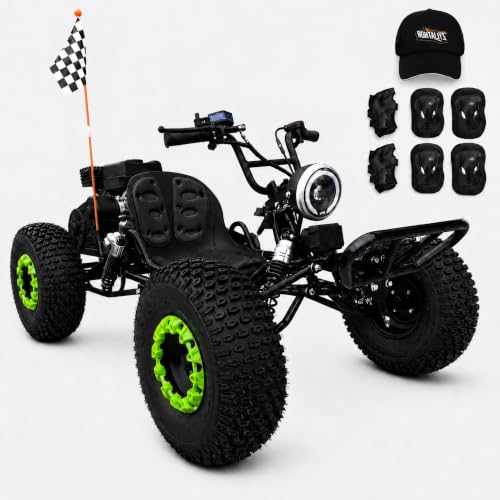
| esheno 150cc 2-Seater | Best overall gas kart for adults |
| $1,859.00as of Nov 19, 2026 12:09 pm EST | Buy now →Check current price |
| Zyliathor 72V 3000W | Best electric kart for adults |
| $2,660.00as of Nov 19, 2026 10:56 am EST | Buy now →Check current price |
| Zyliathor 212cc | Best solo off-road gas kart |
| $1,600.00as of Nov 19, 2026 12:09 pm EST | Buy now →Check current price |


Prices are Amazon’s listed prices as of the date and time shown and are subject to change; the price on Amazon at the time of purchase applies. As an Amazon Associate we earn from qualifying purchases.
Gas vs Electric for Speed
At the very top of the speed range, gas-powered shifter karts and superkarts still lead. In the recreational and mid-performance range, electric karts are competitive: instant torque gives them quick acceleration, and they run quietly with minimal routine maintenance. The trade-off is that sustained high speed drains batteries quickly, so run time at full throttle is often short, and high-voltage battery packs are expensive to replace.
Gas karts offer longer run times and quick refueling, plus a deep parts ecosystem, but they need regular engine care and are louder. Race engines in particular require periodic rebuilds at intervals set by the engine manufacturer or class rules.
What Fast Actually Costs
Speed scales with spend, and running costs scale faster than purchase price. A recreational kart is a one-time purchase with modest upkeep. A sprint racing kart adds tires that wear in a handful of sessions, engine servicing, track fees, entry fees if you race, and usually a trailer. Shifter programs multiply all of it.
A rough way to budget: plan your first season at the purchase price plus a meaningful additional amount for gear, tires, track time, and maintenance. Used racing karts are common and can be strong value, but have an experienced karter or shop look at the chassis for cracks or bends before you buy. For a full breakdown across kart types, see how much a go-kart costs.
Do You Need a License?
To drive on private property, a driver’s license is generally not required, though landowner permission and local rules on noise and off-road vehicles still apply. Rental venues set their own minimum ages and height requirements for adult karts.
Organized racing is different. Clubs and sanctioning bodies typically require membership and a competition license, and some faster classes expect experience in slower classes first. Requirements vary by country and organization, so check the rulebook for the series you want to join. Our guide to the go-kart racing license explains the usual process. Recreational and racing karts are not street legal, so public roads are off-limits.
How to Choose Your Speed Tier
Start with your venue. A shifter kart is wasted and dangerous in a backyard, while a yard kart is out of place at a racing circuit. If you drive on your own land, stay in the recreational or performance-electric tiers. If you have regular track access, a used sprint kart offers some of the best speed for the money in motorsport.
Be honest about experience. Rental karting builds useful skills, but stepping straight into a shifter is how drivers get hurt and equipment gets damaged. Most coaches recommend learning racecraft in a slower class first.
Check the whole machine, not just the motor. Fast karts need brakes, tires, steering, and a chassis rated for the speed. A modified engine on a budget frame is a common recipe for trouble.
Budget for running costs. The kart you can afford to run regularly beats the faster kart that sits in the garage.
Safety Gear Scales With Speed
At recreational speeds, a well-fitted full-face helmet, gloves, closed shoes, and eye protection are the minimum. As speed climbs, so does the list: an abrasion-resistant kart suit, a rib protector (sprint and shifter drivers commonly use one because the seat transfers cornering loads into the ribs), and a neck collar are standard at the track. Racing organizations specify which helmet certifications they accept, so check your series rules before buying. Replace any helmet after a significant impact.
Our kart racing gear complete guide covers what to buy and how to fit it.
Pros and Cons of High-Speed Karts
Pros
- Huge thrill for the money compared with most motorsport
- High cornering grip delivers sensations few road cars match
- Clear progression path from recreational karts to racing
- Electric options cut routine maintenance sharply
Cons
- Running costs rise steeply above the recreational tier
- Track-only karts need a trailer and circuit access
- Physically demanding at high speed with no suspension
- Fast budget karts often have brakes and frames that lag the engine
Frequently Asked Questions
How fast can adult go-karts go?
What is the fastest type of go-kart?
Are electric karts as fast as gas karts?
Do I need a license to drive a fast go-kart?
How much does a fast go-kart cost?
Is 30 mph fast for a go-kart?
Can a budget go-kart reach 40, 45, or 60 mph?
How fast do rental go-karts go at commercial tracks?
Where can adults drive the fastest go-karts?
How fast do superkarts and shifter karts go?
What is the fastest go-kart you can actually buy?
Final Thoughts
Fast go-karts for adults reward honesty about where and how you will drive. Recreational karts deliver plenty of fun on private land, performance electrics trade run time for instant torque, sprint karts are the best value route to real speed on a track, and shifters are something you work up to. Pick the tier that matches your venue and experience, budget for running costs and gear, and compare current models in our best go-kart for adults roundup.