
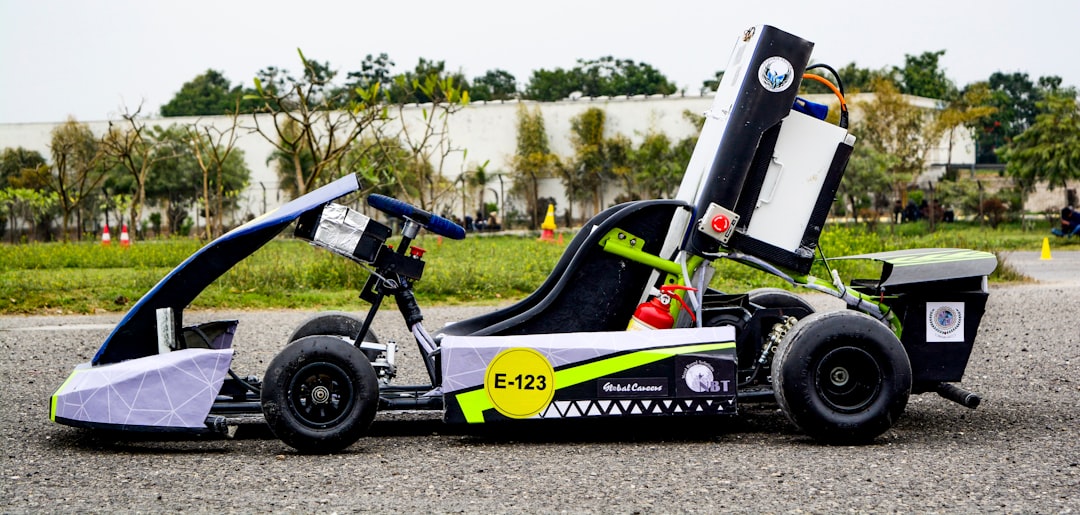
An electric go-kart for adults that reaches 50 mph exists, but it is rarer than the listings suggest. Most consumer adult electric karts are designed for roughly 15–30 mph. A genuine 50 mph with an adult on board usually takes a high-voltage system (often 72V or more), a brushless motor delivering well over 10 kW at peak, a lithium battery pack, and a chassis and brakes built for the speed. That points to electric race karts, a small number of performance models, and well-engineered custom builds. This guide explains the physics, what actually reaches 50 mph, what it costs, how to verify a claim, and the safety requirements at this speed.
Part of our Electric Go-Karts guide — explore the full guide →
What It Takes for an Electric Go-Kart for Adults to Hit 50 Mph
Top speed is a balance of power, voltage, weight, gearing, and aerodynamic drag. All of them have to line up, and drag is the one most buyers forget.
Air resistance rises with the cube of speed in terms of power required. A rough estimate for an open kart with an adult driver suggests something in the range of 5–8 kW is needed just to hold 50 mph on flat ground, before you account for acceleration, gradients, or drivetrain losses. To accelerate briskly to that speed, peak power usually needs to be considerably higher. That is why small hub motors and low-voltage systems cannot get there, regardless of what the box says.
- Voltage: Higher voltage allows a motor to spin faster and deliver more power with manageable current. Most genuine 50 mph builds run 72V or higher; 36V and 48V karts are generally built for lower speeds.
- Motor and controller: A brushless motor and controller rated for sustained multi-kilowatt output, with cooling to match.
- Battery: A lithium pack able to supply high current without excessive voltage sag. Capacity in kWh determines how long you can sustain that speed.
- Gearing: Sprocket ratios trade acceleration for top speed. A kart geared for 50 mph gives up some low-end punch.
- Weight: Rider weight matters. A speed achieved with a light rider may not be achievable with a heavier adult.
For how voltage classes compare more broadly, our 72V electric go-kart guide covers the high-voltage end of the market.
What Actually Reaches 50 Mph — and What Does Not
Not everything marketed as a fast adult electric kart is the same class of machine. Here is an honest breakdown.
Electric race karts. Purpose-built track karts with racing chassis, slick tires, and high-output drivetrains. Many are capable of 50 mph or more, though rental fleet versions are often electronically limited for safety. These are the most reliable route to real 50 mph electric performance, but they belong on a track.
Performance recreational electrics. A small number of high-voltage adult karts are engineered for speeds in this range. Verify the specifics model by model, because the category name alone tells you little.
Custom and conversion builds. Builders who fit a high-voltage motor, controller, and lithium pack to a strong kart chassis can reach 50 mph. Results depend entirely on component choice and build quality. Our go-kart electric conversion kit guide covers what is involved.
Mainstream consumer adult electrics. Most are designed for roughly 15–30 mph, and that is a sensible range for driveways, parking lots, and private land. They are not 50 mph karts.
Overstated budget listings. Low-cost karts advertising 50 mph without publishing voltage, motor power, and battery capacity are the ones to be wary of. Real-world speeds with an adult rider are commonly far lower than the headline.
The Best Electric Go-Karts for Adults: our top 3 picks
| Product | Best for | Key features | Price | Buy |
|---|---|---|---|---|
| Zyliathor 48V Shaft-Drive | Best overall for adults |
| $1,689.00as of Nov 18, 2026 8:53 am EST | Buy now →Check current price |
| Zyliathor 72V 3000W | Best for top speed and range |
| $2,800.00as of Nov 18, 2026 3:03 pm EST | Buy now →Check current price |
| Segway Gokart Pro 2 | Best for pavement and track driving |
| $2,499.99as of Nov 18, 2026 4:26 am EST | Buy now →Check current price |


Prices are Amazon’s listed prices as of the date and time shown and are subject to change; the price on Amazon at the time of purchase applies. As an Amazon Associate we earn from qualifying purchases.
See every pick compared: The Best Electric Go-Karts for Adults →
Fast Electric Kart Types Compared
Figures below are typical ranges based on how these categories are generally built. Always confirm a specific model’s tested speed and specifications with the manufacturer.
| Type | Typical voltage | Realistic top speed | Best for | Approx. price |
|---|---|---|---|---|
| Mainstream adult electric | 36–48V | Roughly 15–30 mph | Recreation, private land | $700–$3,000 |
| Performance recreational | 60–72V+ | Some models 40–50+ mph | Experienced hobbyists | $3,000–$8,000+ |
| Custom / conversion build | 48–96V | Varies widely; 50 mph possible | Skilled builders | $1,500–$5,000+ in parts |
| Electric race kart | Often high voltage | Commonly 50 mph or more | Track use, competition | $8,000–$20,000+ |
Cost of a 50 Mph Electric Kart
Real 50 mph performance is expensive because the battery, motor, and controller are the costliest components, and the chassis and brakes must be upgraded to match. A credible performance machine typically starts in the low thousands and climbs from there; electric race karts usually cost significantly more. A kart advertised at 50 mph for under about $1,500 rarely delivers it with an adult rider. Petrol alternatives are covered in our guide to a 50 mph go-kart for sale.
Ongoing costs are lower than gas in some ways — no fuel, oil changes, or engine rebuilds — but not zero. High-voltage lithium packs lose capacity over time and are expensive to replace, and tires and brake pads wear faster at high speed. For context across all kart types, see electric vs gas go-karts.
How to Verify a 50 Mph Claim Before You Buy
A headline mph number is marketing until the specifications back it up. Ask for:
- Nominal voltage, motor power, and battery capacity in kWh. A listing that hides these is a red flag.
- Test conditions. What rider weight, surface, and gradient was the top speed measured on?
- Brake specification. At 50 mph you want hydraulic disc brakes, ideally with good pad and rotor availability.
- Chassis and tires. A purpose-built kart chassis or a properly engineered frame, with tires rated for the speed.
- Run time at speed. Range figures quoted at moderate speeds will be much shorter at sustained top speed.
- Warranty and parts. Who services the battery and controller, and are replacements available?
Cross-check any model against our best electric go-karts for adults roundup before committing.
Battery Life and Run Time at Speed
Sustaining 50 mph draws several kilowatts continuously, so even a substantial lithium pack empties quickly at full throttle. As a rough illustration, a pack of around 2 kWh feeding 6–8 kW would last well under half an hour at sustained top speed, before allowing for acceleration and losses. Real track sessions mix braking and acceleration, so results vary. Keep packs within their recommended temperature range, use the charger the manufacturer specifies, and avoid storing them fully charged or fully empty for long periods.
Safety Requirements at 50 Mph
At 50 mph you are inches off the ground in an open vehicle. Safety gear is mandatory: a properly fitted full-face helmet rated for motorsport use, gloves, abrasion-resistant clothing or a kart suit, and ideally a rib protector and neck collar. Our best kart helmets guide covers suitable options.
Where you drive matters as much as what you wear. Use a kart track or a large private area with generous runoff, no fixed obstacles, and no traffic. Recreational go-karts are not street legal. Instant electric torque makes it easy to spin on loose or wet surfaces, so build up speed gradually, inspect tires and brakes before every session, and check battery connections and cooling regularly.
Is 50 Mph the Right Target?
For many adults, no. A well-built 25–35 mph electric kart is already exciting on private land and far more forgiving. Fifty mph makes the most sense if you have regular access to a track or a large, safe private course, the experience to handle the speed, and the budget for a machine built properly for it. If you want the broader picture across gas and electric options, our guide to fast go-karts for adults lays out every speed tier, and the electric go-karts complete guide covers the fundamentals. If 50 mph still is not enough, see our guide to an electric go-kart for adults at 70 mph.
Pros and Cons
Pros
- Instant torque gives strong, immediate acceleration
- Quiet operation suits noise-sensitive locations
- No fuel, oil changes, or engine tuning
- Genuine 50 mph models can rival many gas karts
Cons
- Few consumer karts genuinely reach 50 mph with an adult rider
- Real high-speed models are expensive
- High-voltage battery packs are costly to replace
- Run time at sustained top speed is short
- Requires serious brakes, safety gear, and a controlled venue
Frequently Asked Questions
Can an electric go-kart really reach 50 mph?
What voltage do I need for 50 mph?
How much does a 50 mph electric go-kart cost?
Are 50 mph electric karts street legal?
How long does the battery last at 50 mph?
Is an electric kart faster than a gas kart?
Final Thoughts
A true 50 mph electric go-kart for adults is a serious performance machine, not a typical backyard kart. Look for high voltage, a powerful brushless drivetrain, a lithium pack, hydraulic disc brakes, and a chassis built for the speed — and insist on published specifications. If a listing cannot back up its claim, assume it does not reach 50 mph with you on board.