
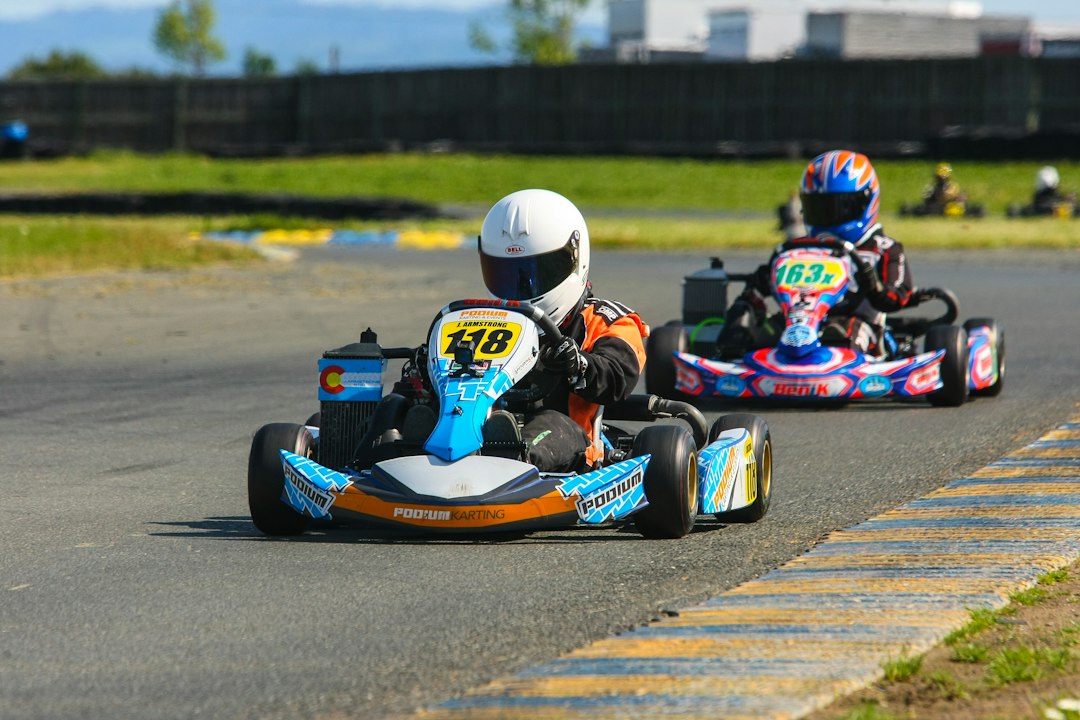
A go kart adjustable seat lets drivers of different heights use the same kart without unbolting and drilling the frame. It is common on recreational and two-seat karts, family yard karts, and rental fleets, and it is a sensible upgrade for any kart shared by a parent and a growing child. This guide explains how adjustable seats work, the main types, how they compare with fixed racing seats, typical USD costs, how to choose and install one safely, and the maintenance it needs. If you mainly need a racing seat for a single driver, a fixed seat is usually the better choice, and we explain why below.
Part of our Go-Kart Parts guide — explore the full guide →
What Is a Go Kart Adjustable Seat?
An adjustable seat is a kart seat that can move forward and backward, and sometimes change its backrest angle, without permanent changes to the frame. The most common design uses a pair of slider rails, similar to those in a car, with a lever or latch that locks the seat at set positions.
On most recreational karts the pedals and steering wheel are fixed. Moving the seat is the simplest way to change the distance between the driver and the controls, so it has a large effect on comfort and control. A driver who is too far away cannot press the brake firmly, and a driver who is too close cannot turn the wheel freely.
For an overview of seat materials, shells, and padding in general, see our main go-kart seat guide. This article focuses on adjustability and fit.
Types of Adjustable Go-Kart Seats
Seat on slider rails. A molded plastic or upholstered seat bolts onto two rails that slide in tracks fixed to the frame. A spring-loaded bar locks the position. This is the most common type on off-road and two-seat recreational karts.
Multi-hole bracket mounting. Some karts have seat brackets with several bolt holes. You move the seat by removing and refitting bolts. It is cheaper and very secure, but adjustment takes tools and a few minutes.
Reclining backrest seats. Some upholstered seats have an adjustable backrest angle as well as fore-aft travel. These suit larger recreational karts and buggies more than small yard karts.
Adjustable pedals instead of seat. Some karts keep the seat fixed and adjust the pedals. Pedal extenders and adjustable pedal assemblies achieve a similar result, which our guide to go-kart pedal extenders explains.
Best Go Kart Seats: our top 3 picks
| Product | Best for | Key features | Price | Buy |
|---|---|---|---|---|
| Unlimited Products carbon seat | Best overall racing seat |
| $185.00as of Oct 25, 2026 4:57 am EDT | Buy now →Check current price |
| YC Yier RA484 bucket seat | Best budget replacement |
| $75.99as of Oct 25, 2026 4:57 am EDT | Buy now →Check current price |
| GoPowerSports single seat | Best classic fun-kart seat |
| $89.95as of Oct 25, 2026 4:57 am EDT | Buy now →Check current price |


Prices are Amazon’s listed prices as of the date and time shown and are subject to change; the price on Amazon at the time of purchase applies. As an Amazon Associate we earn from qualifying purchases.
Adjustable vs Fixed Seats Compared
| Seat Setup | Adjustment Speed | Rigidity | Weight | Best For |
|---|---|---|---|---|
| Slider rails | Seconds, no tools | Good when latch is in good condition | Medium | Shared family and recreational karts |
| Multi-hole bracket | Minutes, with tools | Very good | Light | Karts shared occasionally |
| Reclining upholstered seat | Seconds | Good | Heavier | Larger buggies and two-seaters |
| Fixed racing seat | Not adjustable | Excellent | Lightest | Racing karts with one driver |
Why Racing Karts Rarely Use Adjustable Seats
On a racing kart the seat is part of the chassis. It is bolted directly to the frame and supported by seat stays, and its position affects weight distribution and how the chassis flexes. Racers move the seat in small, measured steps to tune handling, then leave it fixed.
A slider adds weight, some play, and a height increase that raises the center of gravity. Those trade-offs are acceptable on a recreational kart but not on a racing chassis. If you race, choose the correctly sized fixed seat; our karting seat guide covers sizing and mounting.
Go Kart Adjustable Seat Cost
A simple pair of universal slider rails generally costs about $25 to $70. A complete adjustable seat with rails, padding, and mounting hardware typically falls in the $80 to $250 range, depending on material and size. Upholstered reclining seats for larger karts and buggies can cost more.
Factor in hardware and fabrication if the rails do not match your frame. You may need flat bar, bolts, nyloc nuts, and possibly welded tabs. A shop can fabricate brackets for a modest labor charge if you do not weld.
How to Choose an Adjustable Seat
Measure the space. Measure the frame mounting area, the width between frame rails, and the clearance to the engine, fuel tank, and roll cage. The seat must not touch hot or moving parts at any position.
Check the travel. Count how much fore-aft travel you need by seating the shortest and tallest drivers. Most slider rails offer several inches of travel; confirm that both drivers fall within it.
Consider seat height. Sliders raise the seat. On a small kart, even a modest rise can make it feel tippy in turns and can bring the driver’s head closer to the roll cage. Choose a low-profile rail where possible.
Look at the locking mechanism. A sturdy latch that engages positively in each position is essential. Avoid rails that rely only on friction.
Match the seat belt setup. On karts with a roll cage and belts, the belt mounting points must suit every seat position. Our guide to go-kart seat belts explains correct anchoring.
How to Install a Go Kart Adjustable Seat
Start by removing the existing seat and cleaning the mounting area. Lay the slider rails on the frame and check that they sit parallel and level. If the rails do not line up with existing tabs, fabricate steel brackets or crossbars and bolt or weld them securely to the frame.
Bolt the rails to the frame with grade-rated bolts and locking nuts. Then fit the seat to the rails. Test the slider through its full travel, confirming the latch engages in every position and the seat cannot lift or rock.
Sit in the seat at each position and check reach to the pedals and steering wheel. Verify clearance from the engine, chain, exhaust, and fuel tank. Recheck all fasteners after the first ride, because new mounts can settle.
Setting the Right Seat Position
With the seat locked, the driver should be able to press the brake fully with a slight bend still in the knee. Arms should have a gentle bend at the elbow with hands on the wheel at a quarter to three. The driver’s back should rest against the seat back, not lean forward.
For children, set the position each time they drive. Kids change size quickly, and a seat set for a parent can leave a child unable to brake. Our kids go-karts guide covers age-appropriate setup and safety.
Adjustable Seats on Two-Seat and Off-Road Karts
Two-seat karts often have a bench or a pair of individual seats. Where the seats are separate, an adjustable driver seat is the most useful, because the passenger does not need to reach the controls. On a bench seat, adjustment usually comes from the pedals instead, since moving the whole bench affects both occupants.
Off-road karts add vibration, jumps, and dust. Slider rails on these machines take more abuse, so choose heavier-gauge rails, use locking hardware, and inspect them more often. A seat that rattles over rough ground is uncomfortable and tiring, and fatigue reduces control. Some owners add a padded cover or cushion to reduce vibration once the position is set correctly.
Maintenance and Safety Checks
Slider rails collect dirt and grit, especially on off-road karts. Clean them regularly and apply a light lubricant that will not attract too much dust. Check that the latch springs back firmly and that the locking teeth are not worn or rounded.
Inspect the mounting bolts and brackets for cracks or looseness every few rides. A seat that shifts under braking can push the driver into the steering wheel or away from the pedals, so treat any play as a reason to stop driving until it is fixed.
Pros and Cons
An adjustable seat solves a real problem for shared karts, but it is not right for every machine.
Pros
- Lets drivers of different heights share one kart
- Quick adjustment without tools on slider designs
- Improves reach to pedals and wheel for growing kids
- Universal rails fit many recreational frames
Cons
- Adds weight and raises the seat slightly
- Latches and rails can wear and develop play
- Not suitable for racing chassis
- May need fabricated brackets to fit some frames
Frequently Asked Questions
Can I add an adjustable seat to any go-kart?
How much adjustment do slider rails give?
Is an adjustable seat safe?
Should I adjust the seat or the pedals?
Do two-seat karts have adjustable seats?
Final Thoughts
A go kart adjustable seat is one of the most practical upgrades for a shared recreational kart. Choose low-profile rails with a positive latch, mount them on solid brackets, and set the position for each driver every time. For racing karts, stay with a correctly sized fixed seat and the broader advice in our main seat guide.