
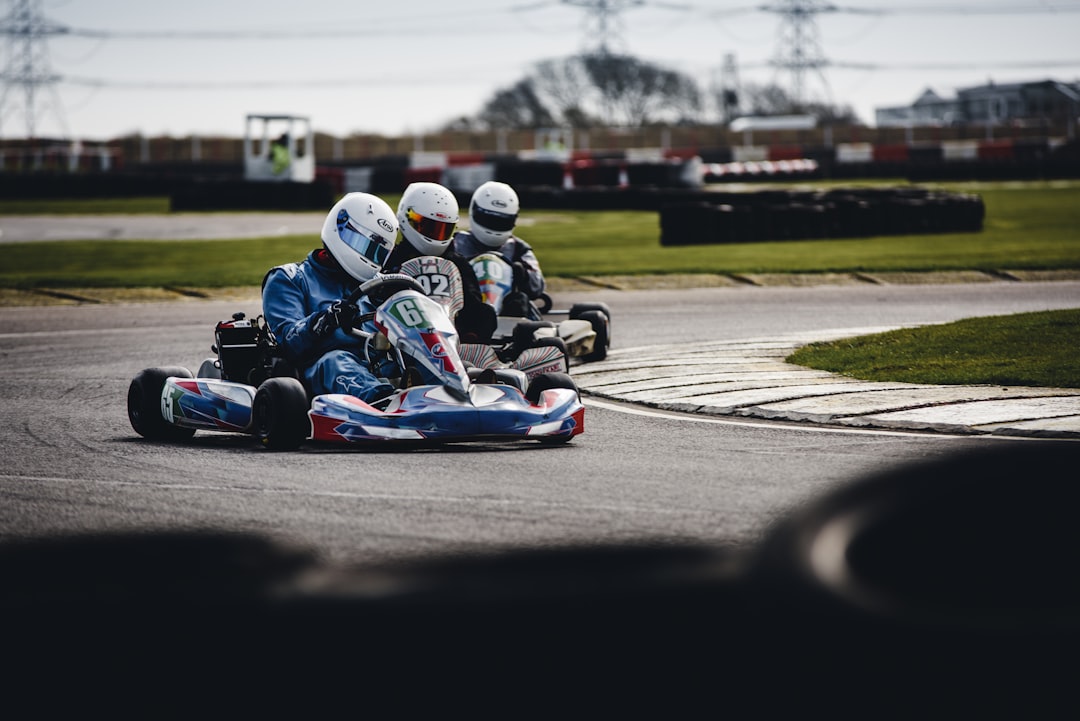
Proper go-kart boots are thin-soled, high-cut motorsport shoes that let you feel the pedals precisely while protecting your ankles from the chassis and the track. You need them as soon as you drive your own kart or race in a league. At rental tracks, closed sturdy shoes are usually enough. A good pair typically costs $80 to $250, has no expiry date and lasts until the sole or collar wears out. This guide covers how karting boots are built, the main types, what the rules usually require, how to get the fit right, what to spend, and how to make a pair last. If you already know what you want, our roundup of the best karting shoes compares current models.
Part of our Kart Racing Gear guide — explore the full guide →
What Are Go-Kart Boots?
Go-kart boots are motorsport footwear designed for a kart cockpit. That cockpit is a cramped, open space where your feet work the pedals with no power assistance and sit inches from the frame rails, steering column and floor tray. Three construction features set karting boots apart from street shoes.
A thin, flexible sole. Most karts have no brake booster and no power-assisted throttle linkage, so you control both pedals purely by pressure and small movements. A thin rubber sole passes that feedback to your foot. A cushioned running-shoe midsole absorbs it. Good karting soles also wrap a little way up the heel, because your heel rests on the floor tray and pivots there.
A protective upper. Uppers are usually suede, leather, synthetic microfiber or a mix of these, sometimes with mesh panels for airflow. Reinforced areas on the inside of the foot and the toe protect the spots that rub against the chassis and pedals.
A high cut with a secure closure. The collar rises over the ankle bone to support and shield the joint. Most designs combine laces with a hook-and-loop strap or a lace cover, so nothing loose can catch on a pedal or moving part.
Why Ankle Protection Matters in a Kart
A kart has no suspension, and the driver acts as part of the chassis. Through every corner you brace against the seat and floor through your legs and feet. Any contact, curb strike or spin sends a jolt through the pedals and steering column. Your ankles are also exposed. On the inside they rub against frame tubes and the steering column, and in an off-track moment they are close to the asphalt.
A high collar does not make your ankle rigid like a ski boot. It adds some lateral support and a layer of padding and abrasion resistance where you need it most. Drivers who switch from sneakers to proper boots usually notice less fatigue and fewer bruises after a long day before they notice any difference in pace.
Best Karting Shoes: our top 3 picks
| Product | Best for | Key features | Price | Buy |
|---|---|---|---|---|
| Sparco K-Pole | Best dedicated kart shoe |
| $112.18as of Oct 27, 2026 9:54 am EDT | Buy now →Check current price |
| Zamp ZR-30 | Best pedal feel with SFI rating |
| $67.43as of Oct 26, 2026 10:16 pm EDT | Buy now →Check current price |
| Track Armour SFI 3.3/5 | Best thin sole with ankle strap |
| $97.99as of Oct 26, 2026 10:16 pm EDT | Buy now →Check current price |


Prices are Amazon’s listed prices as of the date and time shown and are subject to change; the price on Amazon at the time of purchase applies. As an Amazon Associate we earn from qualifying purchases.
Types of Go-Kart Boots
High-top karting boots. This is the standard choice for club and national racing. The collar sits above the ankle bone, the sole is thin and the upper is built with kart cockpits in mind. Most brands that make karting suits and gloves also make boots in this style.
Mid-cut karting shoes. These are lighter and cooler, with a collar that ends near the ankle bone. They suit casual drivers and hot climates, but they protect the ankle less. Check that your series accepts them before you buy.
Car racing boots. Boots made for car racing share the thin-sole design and add fire-resistant materials certified to an FIA or SFI car-racing standard. They work well in a kart and are the right choice if you also race cars. They usually cost more, and their materials are chosen for fire resistance rather than for scraping against a kart chassis.
Wet-weather options. Mesh-heavy boots soak through quickly in the rain. Drivers who race all year often keep an older or leather-heavy pair for wet days, or they use waterproof overshoes. For more on rain kit, see our guide to the karting rain suit.
Go-Kart Boot Types Compared
| Type | Ankle protection | Ventilation | Best for | Typical price (USD) |
|---|---|---|---|---|
| High-top karting boot | High | Good | Most owner-drivers, club to national racing | $80–$250 |
| Mid-cut karting shoe | Moderate | Very good | Hot climates, casual and practice use | $60–$150 |
| Car racing boot (fire-rated) | High | Moderate | Drivers who race karts and cars | $120–$400 |
| Leather or wet-weather pair | High | Low | Rain races, cold seasons | $90–$250 |
These are typical street price ranges and they vary by brand, region and season. Junior sizes usually cost less than adult sizes.
What the Rules Usually Require
Unlike karting suits, karting boots generally do not carry a CIK-FIA homologation label. Most rulebooks instead require footwear that is closed and covers the ankle. International CIK-FIA events and many national championships follow that approach, and club series often copy it. A few series say more, and car racing boots certified to an FIA or SFI standard are normally accepted wherever karting boots are.
Always check the current rulebook for your club or championship before your first race. Officials do check footwear at scrutineering, and low-cut sneakers are a common reason new drivers get turned away. For the other items you will be checked on, see our complete kart racing gear guide.
How to Choose Go-Kart Boots
Fit comes before features. A karting boot should fit snugly through the heel and midfoot, with no heel lift and your toes close to the front without being crushed. It should feel tighter than a street shoe, because any movement inside the boot blurs your pedal inputs. Try boots on while sitting with your knees bent in a driving position, since your foot flexes differently when you stand.
Check the sole. Flex the boot by hand. It should bend easily at the ball of the foot, and the rubber should be thin enough that you can feel texture underneath it. Avoid thick lugs or tread that could catch on the pedal edge.
Match materials to your conditions. If you race in summer heat, look for perforated suede or mesh panels. If you race all year in a damp climate, leather or microfiber will dry faster and last longer. If you drive a lot each week, durability around the heel and the inside of the foot matters more than weight.
Think about what goes inside the boot. Thin, snug socks keep the fit precise. Thick athletic socks add cushioning between your foot and the pedal and undo the benefit of the thin sole. If you use an aftermarket insole, choose a flat, firm one. Soft gel inserts bring back the vagueness you were trying to remove.
For junior drivers, do not size up too far. Half a size of growing room is reasonable. A boot that is too big is less safe and harder to drive in, so it is better to replace it a season early. Our guide to kids kart racing shoes covers sizing for growing feet in more detail.
Check sizing for each brand. Karting boots are usually sold in EU sizes, and the fit varies a lot between brands. If you are ordering online, measure your foot length in millimeters, compare it with that brand’s size chart and check the return policy before you buy.
Cost: What You Get at Each Price Level
As a rough guide, entry-level karting boots run about $60 to $110. They have a suede or synthetic upper, a basic thin sole and simple padding. Mid-range pairs, about $110 to $180, usually add better heel support, more breathable panels and longer-lasting soles. Top-tier boots, about $180 to $250 or more, focus on lighter construction, a closer fit and refinements that serious racers value.
Boots have no expiry date, and you replace them when they wear out rather than at a set age. That makes their cost per season low compared with tires or engine rebuilds. For a beginner, a well-fitting mid-range pair is usually the best value. Spending more brings smaller gains than a better helmet or more practice time. If you are still deciding how to divide your budget, start with our beginners guide to go-karting.
How to Care for Karting Boots
Karting is a dirty sport. Rubber dust, brake dust, chain lube and fuel all end up on your footwear. Some simple habits make a big difference to how long boots last.
- Brush off dry dirt and rubber after each day at the track, while it is still loose.
- Spot-clean with mild soap and a damp cloth. Check the manufacturer care label before you machine-wash or fully soak them.
- Air-dry wet boots at room temperature, stuffed with newspaper. Radiators, dryers and direct sun can crack suede and leather and weaken the sole glue.
- Store them in a ventilated gear bag, away from fuel cans and chain lube, which damage stitching and rubber.
- Rotate in a second pair for rain days so your main pair is not soaked repeatedly.
Replace boots when the sole wears through at the heel, the collar padding collapses, the closure no longer holds firmly, or the reinforced areas wear open. How long that takes depends heavily on how often you drive. A weekly practice driver will wear through a pair much faster than someone who races a handful of club rounds a year.
Pros and Cons of Dedicated Go-Kart Boots
Dedicated boots are clearly worth it if you drive regularly, though they have some real drawbacks.
Pros
- High collar supports and shields the ankle where karts are hardest on it
- Thin flexible sole gives precise, repeatable brake and throttle control
- Reinforced areas hold up to rubbing against the chassis and floor tray
- No expiry date, so you replace them on wear rather than age
Cons
- Snug racing fit is not comfortable for long walks around the paddock
- Ventilated models soak through quickly in the rain
- Sizing varies between brands, which complicates online orders
- Not necessary for occasional rental karting
Frequently Asked Questions
Do I need special boots for go-karting?
Why are go-kart boots high-top?
Can I wear regular sneakers in a go-kart?
Are karting boots homologated like suits?
How should go-kart boots fit?
How long do go-kart boots last?
Final Thoughts
Good go-kart boots come down to three things: a thin sole you can feel the pedals through, a high collar that protects your ankle, and a snug fit that does not move. Get those right and the brand matters less than the marketing suggests. Look after them and a mid-range pair will serve you well for a long time. For current model picks at each budget, see our roundup of the best karting shoes. To see how boots fit into a full kit, read the kart racing gear guide.