
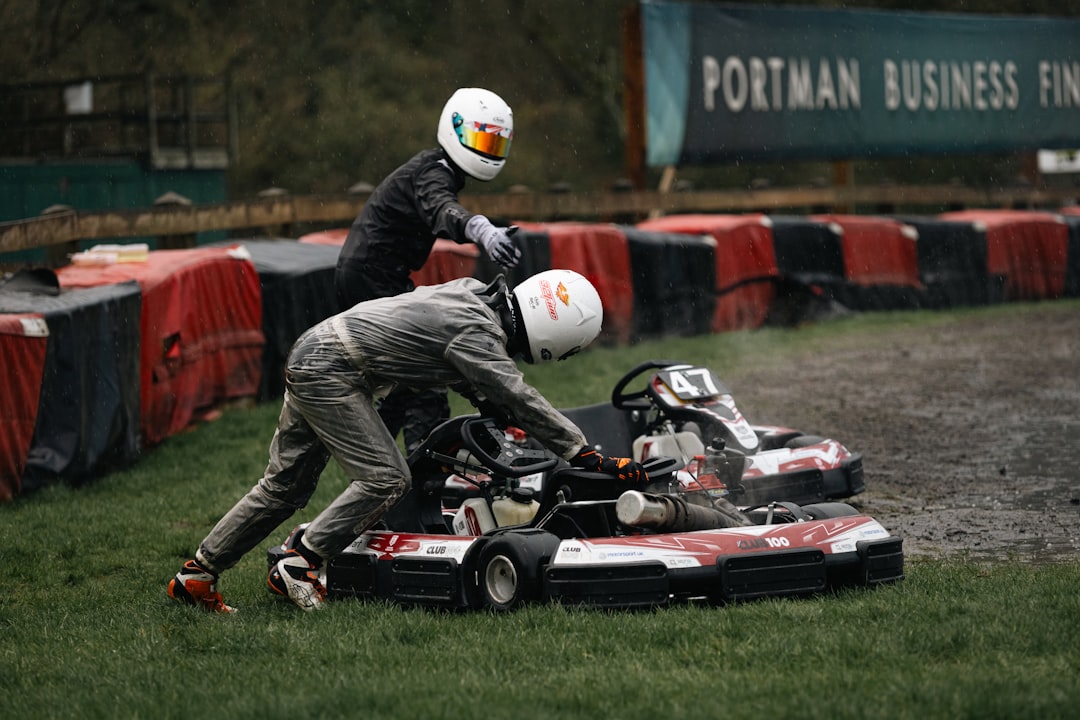
A karting rain suit is a lightweight, waterproof oversuit that you zip on over your normal race suit when the track is wet. It does not replace any safety gear; its job is to block tire spray and rain so you stay warm, dry, and focused for a full session. For most club racers, a good karting rain suit has sealed seams, a loose racing cut that fits over a rib protector, and snug closures at the wrists, ankles, and neck, and it typically costs somewhere between $40 and $200. This guide explains how rain suits work, what to look for, how to size one, and the supporting wet-weather kit (visor anti-fog, gloves, boot covers) that makes the suit worth having.
Part of our Kart Racing Gear guide — explore the full guide →
What Is a Karting Rain Suit?
A rain suit is a one-piece or two-piece shell made from waterproof material, usually PVC, PU-coated nylon, or coated polyester. It is cut generously so it slides over a full race suit, rib protector, and sometimes a neck brace, and it uses elastic or hook-and-loop closures to seal the openings.
Karts have no bodywork, no windshield, and no cockpit to shelter in. In the wet, the driver sits in a constant curtain of spray from their own tires and from every kart ahead. An unprotected race suit soaks through within a few laps, gets heavy, and pulls heat out of the body. Cold hands and forearms lose fine control first, which is exactly what you need most on a slippery track.
The rain suit also protects your main suit. Abrasion-resistant race suits are not cheap, and repeated soaking and muddy spray shorten their life. A modest oversuit is far cheaper than replacing a race suit early.
One point that matters: a rain suit is a weather layer, not protective equipment. It is not abrasion-rated, and it is not a substitute for a homologated suit where your class requires one. Check your club or sanctioning body’s rulebook, since some series have specific rules on what may be worn over the race suit.
How to Choose a Karting Rain Suit
Seams that stay sealed at speed. Water that would bead off fabric during a walk gets forced through stitch holes when it hits you at racing speed. Taped or welded seams are the single biggest difference between a suit that keeps you dry for a race and one that leaks within laps.
A racing cut, not a street cut. The suit should fit over all your gear without pulling across the shoulders when your arms are at full steering lock. Look for pre-shaped sleeves, a long back that stays tucked when seated, and enough room in the seat and knees to climb in and out of the kart.
Secure closures. Elastic or adjustable cuffs at the wrists and ankles, a front zipper with a storm flap, and a snug collar. Loose openings act as scoops and funnel water inside.
A cut that does not balloon. Baggy suits inflate with air on the straights, flap noisily, and can distract you. Tailored panels and adjustable cuffs reduce this. Some better suits include vents to cut condensation.
Durability where it counts. Reinforced seat and knee panels resist wear from the seat and the floor tray. Thin clear-PVC suits are best treated as consumables; they work, but they tear.
Visibility. Clear or bright suits keep race numbers, names, and sponsor patches visible, which matters if your class requires visible numbers or if sponsors expect to be seen.
Rain Suit Types Compared
| Type | Material | Seams | Typical price range | Best for |
|---|---|---|---|---|
| Budget clear suit | Thin clear PVC | Basic welded | Roughly $30–$60 | Occasional wet days, spare suit |
| Mid-range oversuit | Coated nylon or polyester | Taped main seams | Roughly $60–$120 | Regular club racing |
| Premium race oversuit | PU-coated fabric, often vented | Fully taped, storm flaps | Roughly $120–$250 | Frequent racers, travel events |
| Improvised street rainwear | Varies | Usually unsealed | $0–$40 | Emergencies only |
Prices vary by brand and region, so treat these as rough bands rather than quotes. The practical takeaway: a mid-range suit with taped seams covers most club racers well, and the premium tier mainly buys comfort, ventilation, and longevity.
Sizing and Fit: Try It Over Your Full Gear
Rain suits are sized to go over a race suit, so ordering by your street size usually ends in a suit that is too tight. A common approach is to go one or two sizes up from your normal clothing size, but brand charts vary, so check the manufacturer’s sizing guidance.
The only reliable test is a seated test. Put on your race suit, rib protector, and neck brace, then the rain suit, and sit in the kart. Turn the wheel to full lock both ways, reach the pedals, and lean forward as you would under braking. If the suit pulls tight at the shoulders or the back rides up to expose your race suit, size up. If there is so much excess fabric that it bunches around your elbows, try a smaller size or a better cut.
Leg length matters too. The ankles should cover the top of your boots when seated with your legs extended, or water runs straight in. If your suit is too long, adjustable ankle closures fix it far better than rolling the hems.
The Rest of the Wet-Weather Kit
The suit is the centerpiece, but these supporting items decide whether you can see, feel the controls, and stay warm.
Visor anti-fog. In the wet, fogging is often a bigger problem than rain on the outside of the visor. An anti-fog insert (the Pinlock-style lens that seals inside the visor) is the most effective fix if your helmet supports one. Anti-fog sprays and wipes work as a backup but need reapplying. Cracking the visor open slightly on the straights vents moisture, and a spare clean visor in the bag is cheap insurance. Our guide to karting helmets covers visor compatibility.
Gloves. Regular race gloves get slippery and cold once soaked. Options include dedicated wet-weather karting gloves with grippy palms, or thin waterproof liners under your normal gloves for warmth. Keep a dry pair for the next session. See our guide to karting gloves for fit and grip advice.
Boot covers and dry socks. Waterproof overboots or covers keep pedal feel consistent. Soaked boots get heavy and cold, and cold feet lose brake sensitivity. Fresh socks between sessions are the cheapest comfort upgrade in the paddock. Your kart racing shoes will also last longer if they are not soaked every wet weekend.
Neck and collar. Water running down inside the collar is miserable. A snug collar on the suit helps, and some drivers add a thin balaclava for warmth and absorption.
All of this fits into a broader gear plan (helmet, suit, gloves, shoes, rib and neck protection), which our complete kart racing gear guide covers piece by piece. For choosing the main suit underneath, see our guide to kart suits.
Wet-Race Technique: Making the Gear Pay Off
Staying dry keeps you sharp, but the real gain comes from driving to the conditions.
Find the wet line. The rubbered-in dry racing line often becomes the slipperiest part of the track in the rain. Many drivers move off it, using the wider, grittier surface that still offers grip, especially on corner entry and through the apex. Every track is different, so watch the quick drivers and experiment during practice.
Be smooth and early. Brake earlier and more gently, turn in progressively, and squeeze the throttle on exit. Abrupt inputs break traction instantly in the wet. Wet-compound tires and setup changes also play a big role; our racing go-kart tires guide covers the trade-offs.
Treat rain as practice. Wet sessions are some of the best car-control training available. Drivers who are comfortable in the rain often gain more relative positions than in the dry.
Prep the kart. Many racers protect the airbox intake from spray and check electrical connections before a wet session. Follow your engine and class rules on what is permitted.
Care, Drying, and Storage
After a wet session, rinse off grit if possible and hang the suit to drip-dry rather than balling it into the kart bag. Dirt and sand left on the fabric abrade the coating over time. Make sure the suit is fully dry before storing it to avoid mildew and sticking, and keep PVC suits away from heat sources, which can make them brittle.
Clean visors with a soft microfiber cloth and appropriate cleaner, never a shop rag, since grit scratches the surface and makes glare worse. Keep a sealed tub or bag in the trailer for wet gear so it does not soak the rest of your kit on the drive home.
Inspect the suit before each season. Check seam tape for peeling, look for splits at the crotch and knees, and test zippers. Small tears in PVC can sometimes be patched, but a suit that leaks at the seams is usually due for replacement.
Pros and Cons of Dedicated Wet-Weather Gear
Pros
- Keeps you warm and focused through full-length wet sessions
- Protects an expensive race suit from soaking, mud, and grit
- Clear or bright suits keep numbers and sponsors visible
- Packs small enough to live in the kart bag permanently
- Costs far less than most other gear upgrades
Cons
- Cheap PVC suits tear and may only last a season or two
- Poorly fitted suits balloon and restrict arm movement
- Adds heat and bulk on a cool but dry day
- Better suits with taped seams cost noticeably more
Frequently Asked Questions
What is a karting rain suit?
What size rain suit should I buy?
How do I stop my visor fogging in the rain?
Can I wear a regular rain jacket for karting?
How much does a full wet-weather karting kit cost?
Is a rain suit allowed in kart racing?
Final Thoughts
A karting rain suit is one of the cheapest, most practical items in a racer’s bag. Choose a suit with sealed seams and snug closures, size it over your full gear, and back it up with anti-fog for your visor, warm gloves, and boot covers. Keep it in your bag year-round, because the races you did not expect to be wet are exactly the ones where being prepared pays off.