
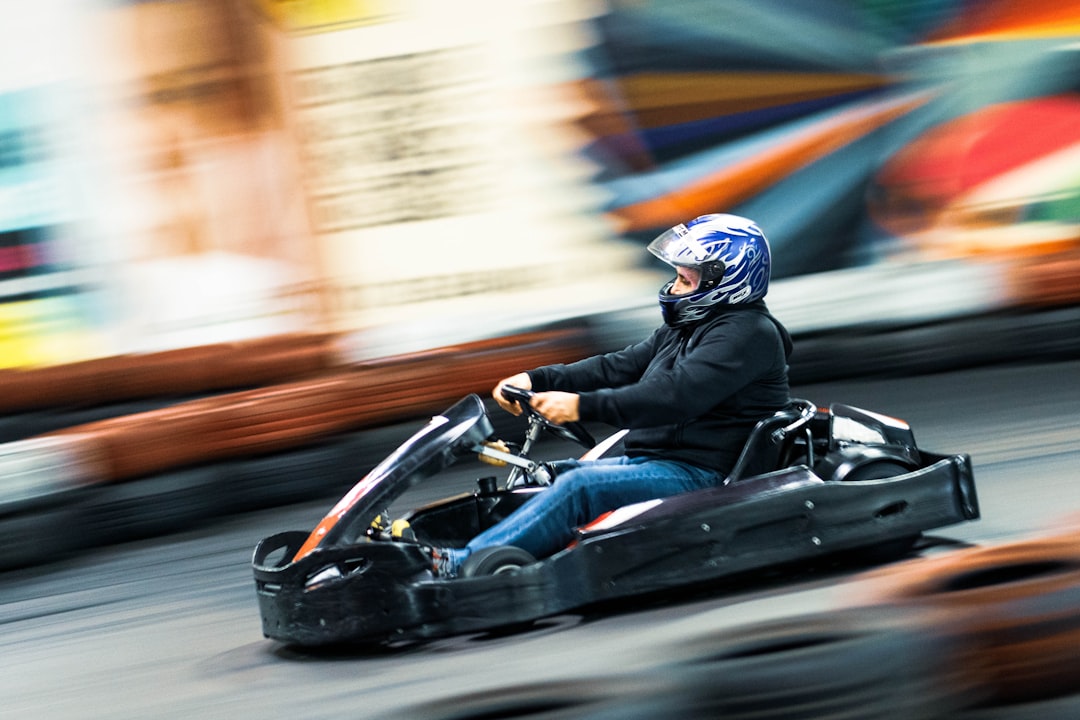
A good go-kart for adults has a frame, seat, pedals and brakes built for a full-size driver, and enough power to be fun at adult weight. For most buyers that means a recreational gas or electric kart rated comfortably above your body weight, typically costing about $1,500 to $4,000 new. If you plan to drive on dirt or grass, you need an off-road kart with suspension. If you want to race, skip recreational karts and look at a used sprint kart and a local club. This guide covers the main types, realistic speeds and prices, how to check fit and build quality, and the safety gear and upkeep that come with owning one.
Part of our Buying a Go-Kart guide — explore the full guide →
What Makes a Go-Kart Suitable for Adults
A go-kart for adults is not just a bigger kids’ kart. The differences that matter are structural: a longer wheelbase for stability, heavier-wall steel tubing, a seat wide and deep enough for an adult frame, pedals that adjust for leg length, and brakes sized for the extra mass and speed.
The word “adult” in a product listing does not guarantee any of that. Some karts sold as adult models are youth karts with a larger seat. Before you shortlist anything, find four numbers in the manufacturer’s specifications: rated weight capacity, wheelbase, recommended driver height range, and brake type. If a seller cannot or will not give you those, treat it as a warning sign.
Weight capacity deserves the most attention. Ratings for adult recreational karts commonly fall somewhere between about 220 and 350 pounds for single-seaters, with heavier-duty and two-seat models rated higher. Leave a margin above your own weight, since running a kart at its limit strains the frame, clutch and brakes. Our go-kart weight limit guide explains how those ratings work and why they vary so much.
Types of Go-Karts for Adults
Adult karts fall into a handful of categories, and the right one depends far more on where you drive than on the badge.
Recreational karts are the all-rounders. They usually have a small 4-stroke engine or an electric motor, a torque converter or centrifugal clutch, and a roll bar or cage on many models. They suit paved lots, private driveways and hard-packed dirt.
Off-road karts and buggies add ground clearance, suspension, knobby tires and usually a full cage. They are heavier and slower to turn on pavement but handle grass, gravel and trails. See our guide to the off-road go-kart for adults for that category in detail.
Electric karts trade fuel and engine maintenance for batteries and charging. They are quiet, deliver strong low-speed torque, and suit neighborhoods where noise matters. Our electric go-kart for adults guide covers battery voltage, range and charging.
Racing karts (sprint and shifter) have no suspension, sit inches off the ground and are built only for paved tracks. They are the most precise and, in the faster classes, the quickest karts you can drive. If competition appeals, read sprint vs shifter karts before buying anything.
Two-seat karts carry a passenger and need more power and stronger frames to do it. They suit families who want to share the drive rather than take turns.
Best Go Kart for Adults: our top 3 picks
| Product | Best for | Key features | Price | Buy |
|---|---|---|---|---|
| esheno 150cc 2-Seater | Best overall gas kart for adults |
| $1,899.00as of Oct 26, 2026 5:54 am EDT | Buy now →Check current price |
| Zyliathor 72V 3000W | Best electric kart for adults |
| $2,800.00as of Oct 26, 2026 4:54 am EDT | Buy now →Check current price |
| Zyliathor 212cc | Best solo off-road gas kart |
| $1,600.00as of Oct 26, 2026 5:54 am EDT | Buy now →Check current price |


Prices are Amazon’s listed prices as of the date and time shown and are subject to change; the price on Amazon at the time of purchase applies. As an Amazon Associate we earn from qualifying purchases.
Adult Go-Kart Types Compared
The figures below are typical ranges for new karts. Exact speeds and prices vary widely by model, engine or battery, gearing, driver weight and surface, so always check the manufacturer’s specifications for any kart you are considering.
| Type | Typical Top Speed | Best Surface | Suspension | Typical New Price (USD) |
|---|---|---|---|---|
| Recreational (gas or electric) | Roughly 20–40 mph | Pavement, hardpack | Usually none or basic | $1,200–$3,500 |
| Off-road / buggy | Roughly 25–45 mph | Dirt, grass, trails | Yes | $2,000–$6,000 |
| Two-seater | Roughly 20–40 mph | Flat land, trails | Often | $2,000–$5,000 |
| Sprint race kart | Class-dependent; often 50+ mph | Paved track only | None | $4,000+ new; much less used |
| Shifter race kart | Among the fastest karts | Paved track only | None | $7,000+ new; much less used |
How Much Does a Go-Kart for Adults Cost?
A quality recreational go-kart for adults typically starts around $1,200 to $1,500 and runs to about $3,500. Off-road and two-seat models often sit between $2,000 and $6,000. New race karts usually cost several thousand dollars before engine, tires and gear, which is why most new racers start with a used chassis.
Be cautious at the bottom of the market. Below roughly $800, most karts marketed to adults have thin frames, small brakes and limited weight ratings. Some are fine for lighter adults on smooth ground, but read the specifications closely.
The sticker price is only part of the cost. Budget for a helmet and gloves, a way to transport the kart, fuel or electricity, oil changes, tires, chains and brake pads. For a full breakdown of purchase and running costs across every category, see our hub guide on how much a go-kart costs.
How to Choose the Right Go-Kart
Work through these questions in order. Each one narrows the field.
1. Where will you drive? Surface decides the category. Pavement favors recreational or electric karts. Dirt, grass and slopes need off-road clearance and suspension. A race kart belongs on a sealed track and will be damaged on rough ground. Also confirm that you have somewhere legal to drive; recreational karts are not street-legal in most places.
2. Will you carry a passenger? If yes, buy a purpose-built two-seater with a weight rating that covers both people. Never add a passenger to a single-seat kart.
3. Gas or electric? Gas suits long sessions, remote land and quick refueling. Electric suits shorter sessions, noise-sensitive areas and owners who want minimal maintenance. Battery replacement is the big long-term cost on electric karts.
4. Does it fit you? Check the rated weight capacity, the stated driver height range, and whether the seat or pedals adjust. Tall drivers often struggle with knee clearance against the steering wheel. Sit in a kart before buying if at all possible.
5. Are the brakes matched to the speed? Hydraulic disc brakes are generally preferred on faster karts. Mechanical disc or band brakes can be adequate on slower recreational karts, but they need regular adjustment.
6. Can you service it? Parts availability matters more than most buyers expect. Karts built around common engines and standard chain, sprocket and tire sizes are cheaper and easier to keep running.
Gas vs Electric for Adult Drivers
Gas recreational karts commonly use small 4-stroke engines of roughly 200cc to 300cc and larger. They run as long as you have fuel, are easy to repair with widely available parts, and tend to suit larger properties. The trade-offs are noise, fumes, and routine maintenance such as oil changes, air filter cleaning and occasional carburetor work.
Electric adult karts typically run on battery systems from about 48V upward. They accelerate hard from a standstill, are quiet enough for suburban use and need far less mechanical upkeep. Run time depends on battery capacity, driver weight and driving style, and a full recharge often takes several hours. Battery packs age and eventually need replacement, which can be a significant expense.
Neither is universally better. Pick gas for range and remote land, and electric for convenience and low noise.
Safety Gear and Safe Driving
Adult karts can reach speeds where a crash causes real injury, so treat gear as part of the purchase. At minimum, wear a properly fitted full-face helmet, gloves, closed shoes and clothing that covers your arms and legs. For track use, clubs and tracks set their own helmet standards, often requiring a Snell-rated helmet; check the rulebook before you buy. Our kart racing gear guide covers helmets, suits, rib protectors and more.
Use the seat belt only on karts designed with a roll cage and belts; racing karts without a cage are not fitted with belts. Tie back long hair, avoid loose scarves or clothing near the axle and chain, and keep bystanders well clear of the driving area. Drive sober, in daylight, and on ground you have walked first.
Maintenance Basics
A little routine maintenance keeps an adult kart safe and reliable:
- Check tire pressure and condition before every session.
- Inspect brake pads and test braking before driving.
- Clean, lubricate and tension the chain regularly.
- Check bolts on the steering, spindles, seat and engine mounts.
- On gas karts, change oil per the engine manual and keep the air filter clean.
- On electric karts, follow the manufacturer’s charging and storage advice to protect the battery.
Store the kart in a dry place, and for gas karts use fuel stabilizer or drain the tank if it will sit for months.
Pros and Cons
Owning an adult kart is rewarding, but it is a bigger commitment than a toy or a rental session.
Pros
- Real speed and a frame built for adult weight
- Types to suit pavement, trails or racing
- Gas and electric options for different priorities
- Two-seaters let you share the drive
- Simple mechanicals that owners can learn to service
Cons
- Genuine adult karts cost more than many expect
- Needs private land or a track to drive legally
- Requires proper safety gear
- Cheap listings are often undersized youth karts
- Takes up storage space and needs a way to transport it
Frequently Asked Questions
How much weight can a go-kart for adults carry?
How fast do adult go-karts go?
Is a gas or electric go-kart better for adults?
Are cheap adult go-karts worth buying?
Can adults drive go-karts on the street?
What safety gear does an adult go-kart driver need?
Final Thoughts
Choosing the right adult kart comes down to matching the machine to your body, your surface and how you plan to drive. Confirm weight capacity and fit first, then choose a type for your terrain, and only then decide between gas and electric. When you are ready to compare specific models, our roundup of the best go-kart for adults is the place to start.