
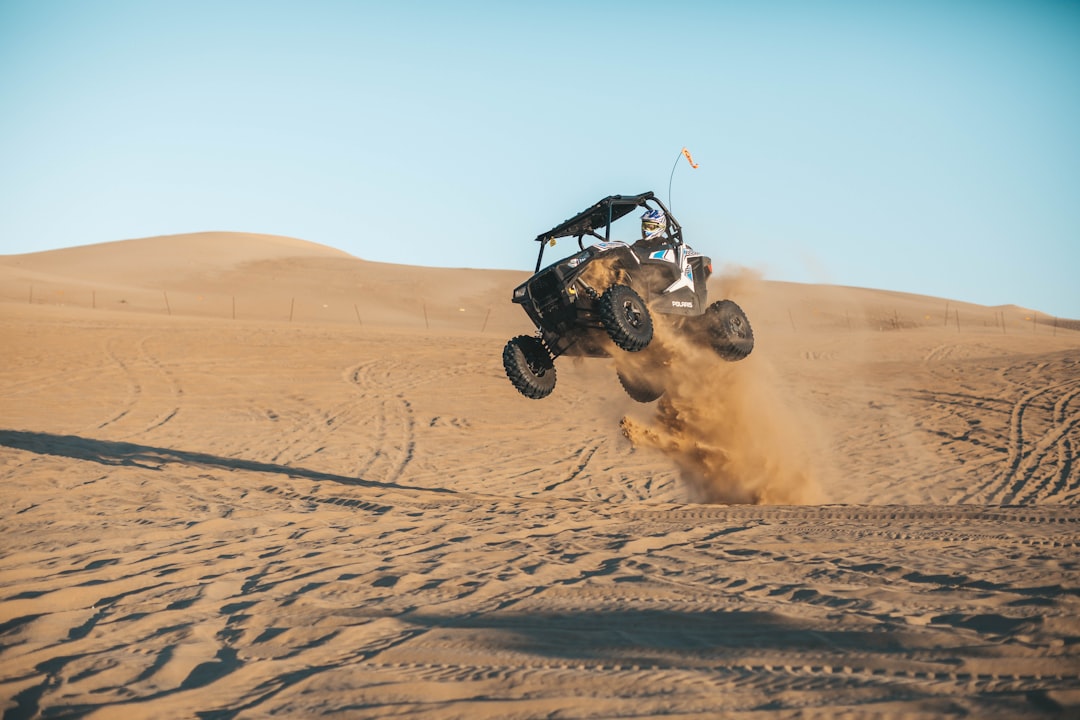
A go kart with roll cage trades the low-slung look of a race kart for something closer to a mini off-road buggy: a welded tubular structure that surrounds the driver and protects the head and torso if the machine tips or rolls. If you are shopping for a recreational off-road kart for rough terrain, a two-seater for a teen, or a faster adult machine, the cage is one of the first features worth understanding. This guide explains what a roll cage actually does, the types you will encounter, what they cost, and how to choose a kart where the cage is genuine protection rather than decorative tubing.
What Is a Go Kart with Roll Cage?
A go kart with roll cage is any kart fitted with an overhead protective structure of steel or chromoly tubing designed to keep the driver’s survival space intact during a rollover or side impact. Traditional sprint and rental karts have no cage at all because they sit inches off the ground and never leave flat pavement. Off-road and recreational karts sit taller, run at speed over uneven ground, and can flip, so a cage becomes meaningful safety equipment rather than styling.
The cage works alongside seat belts or a harness, a proper seat, and net or side bars. On its own it does little; the driver has to be held firmly inside the protected zone so their head never extends past the tubing. That combination of cage plus restraint is what separates a serious build from a toy that merely looks rugged.
A well-designed cage also protects against a second, underrated hazard: obstacles. On trails a bare kart offers no defense against a low branch, a fence post, or another vehicle, whereas an enclosing structure keeps those hazards away from the driver’s head and arms. That is why the cage should wrap the sides and not just arch overhead, and why side nets or door bars matter as much as the main hoop.
Types of Roll-Cage Go-Karts
Not all cages are equal, and the type usually tracks with how and where the kart is meant to be used. Understanding the categories keeps you from overpaying for capability you will not use or, worse, underbuying for terrain that demands more.
Recreational off-road karts are the most common, combining a small gas engine, knobby tires, and a full or partial cage for trails, fields, and dirt lots. Two-seater trail karts add a passenger seat and a longer wheelbase and are popular with families. High-speed adult karts pair bigger engines or electric drive with a stouter cage and harness for higher rollover energy. DIY and kit-built karts let you weld or bolt your own cage to a bare frame, where quality depends entirely on your tubing choice and welds.
Roll-Cage Kart Types Compared
| Type | Typical Speed | Cage Style | Best For | Price Range |
|---|---|---|---|---|
| Recreational off-road | 15-30 mph | Full or half cage | Trails, yards, casual fun | $1,200-$3,000 |
| Two-seater trail | 15-25 mph | Full cage, wide | Families, shared rides | $2,000-$4,500 |
| High-speed adult | 30-50+ mph | Reinforced full cage + harness | Experienced adult riders | $3,000-$7,000 |
| DIY / kit build | Varies | Builder-defined | Hands-on builders | $400-$2,500 in parts |
Cost and Considerations
Expect to spend $1,200 to $3,000 for a solid recreational off-road kart with a real cage, and $3,000 to $7,000 for a high-speed adult machine with a reinforced cage and racing harness. The cheapest “caged” karts online often use thin-wall tubing that flexes badly and will not hold shape in a genuine rollover, so treat sub-$800 adult karts with suspicion. If you are budgeting an off-road build from scratch, our guide to how much a go-kart costs breaks the numbers down further.
Beyond purchase price, factor in a quality helmet, replacement tires that wear fast on rough ground, and periodic checks of the welds and mounting bolts. A cage bolted to a weak frame is only as strong as its weakest joint, and vibration loosens hardware over time.
Running costs are easy to overlook. Off-road use is hard on axles, bearings, and tires, and the brakes take more abuse than on a paved kart. Set aside a modest maintenance budget each season and inspect the cage mounts after any hard hit; a bar that has shifted or a cracked weld quietly erases the protection you paid for. If you plan to run the kart often, buying one with a slightly overbuilt cage and frame usually costs less over time than repeatedly repairing a lightweight one.
How to Choose a Go-Kart with Roll Cage
Start with terrain and rider. A flat backyard needs far less than rocky trails, and a lightweight teen has different needs than a 200-pound adult pushing 45 mph. Match the engine and cage strength to the fastest, roughest use you realistically expect.
Inspect the tubing wall thickness and the welds where the cage meets the frame; continuous, clean welds beat spot tacks. Confirm the kart includes a real restraint, not just a lap belt, and that the seat holds you low enough that your helmet clears the top bar. For off-road use specifically, compare models in our roundup of the best off-road go-karts, and if speed is your goal, sanity-check expectations against how fast go-karts actually go. Beginners new to the hobby should also skim the complete beginner’s guide before buying.
Pros and Cons
A roll cage adds real protection and confidence off pavement, but it is not free of trade-offs. Weigh these before you commit.
Pros
- Genuine rollover and side-impact protection
- Enables safer off-road and higher-speed use
- Sturdier overall frame and mounting points
- Room for a proper harness and seat
- Adds a rugged, buggy-style look
Cons
- Heavier and slower than a bare sprint kart
- Cheap versions use flimsy, unsafe tubing
- Higher price than uncaged recreational karts
- Cage alone is useless without a real restraint
Frequently Asked Questions
Does a go-kart really need a roll cage?
Can I add a roll cage to a kart that does not have one?
Is a roll cage useless without a seat belt?
What tubing is used for a good roll cage?
Are caged go-karts street legal?
How fast can a roll-cage go-kart go?
Final Thoughts
A go kart with roll cage is the right call whenever you take a kart off smooth pavement or push into higher speeds, but only if the cage is built from proper tubing, welded to a strong frame, and paired with a real restraint. Skip the flimsy budget “caged” karts and buy protection you can actually trust. When you are ready to compare specific machines, start with our roundup of the best off-road go-karts.