
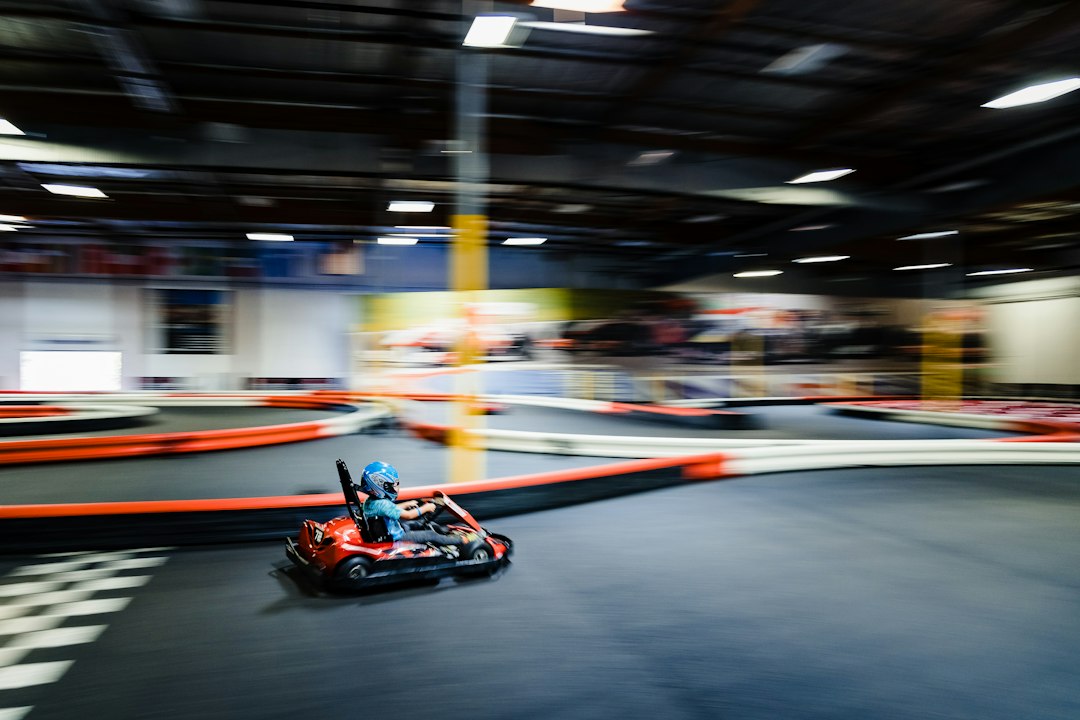
Learning how to overtake in karting is mostly about preparation, not bravery. Most clean passes are decided a corner or two before the move itself, when you get a better exit, build a run on the straight and arrive alongside before the braking zone. Karts are light, closely matched and draft strongly, so the driver who sets up the move well usually gets through without contact. This guide explains the main passing moves, when each one works, how to defend, what the rules generally expect, and the habits that turn a fast qualifier into someone who can actually make progress through a pack.
Part of our Kart Racing guide — explore the full guide →
Why Overtaking in a Kart Is Different
A racing kart has no suspension, no differential and very little weight, which means small mistakes cost a lot of time and the gap between drivers in the same class is often tiny. Engines in spec classes are closely matched, so raw power rarely creates a pass on its own. Instead, passes come from a better exit, a stronger draft or a rival who leaves a door open.
Karts also slipstream more than many people expect. Following closely on a straight reduces drag on the trailing kart, and in many classes that is enough to pull alongside before the next corner. That is why pack racing in karting can look so busy: the lead kart often punches a hole in the air for everyone behind.
Finally, the tracks are narrow and the corners come quickly. You have less time to plan, so the decision about where to pass needs to be made before you need it. If you are still learning the basic racing line, start with our guide to the karting racing line, because every passing move is a deliberate departure from it.
How to Overtake in Karting: The Core Principle
The single most useful idea is this: you pass on the exit of the corner before the place where the pass happens. If you leave a slow corner a little faster than the kart ahead, that speed advantage carries all the way down the following straight. By the end of it you can be alongside or close enough to draft past.
This often means giving up a little entry speed on purpose. Brake slightly earlier, turn in a touch later, get the kart rotated and straight sooner, and get back to full throttle before the driver ahead. Many drivers chasing a kart do the opposite and charge into the corner too hot, which ruins their exit and lets the leader escape.
The second principle is to arrive alongside, not behind. A pass is only really yours when your front wheels are level with the other driver at the turn-in point. Lunging from several lengths back is the most common cause of contact in club racing.
Types of Overtaking Moves
The late-brake pass. You pull to the inside on the straight and brake later than the driver ahead, taking the inside line into the corner. It works best at heavy braking zones after a long straight. The risk is that you overshoot the apex and get repassed on the exit, so brake hard and straight first, then turn. Our sibling guide to kart braking technique covers threshold braking and trail braking in more detail.
The switchback or cutback. When a rival dives up the inside, they usually run wide on the exit. You turn in later, cut back underneath them and use your better exit to come back past on the next straight. It is one of the most effective counters in karting.
The draft pass. You tuck in behind on a long straight, gain speed in the slipstream and pull out at the last moment to slingshot past. Timing matters: pull out too early and the drag returns before you are clear, pull out too late and you arrive at the braking zone without room.
The outside pass. Going around the outside is harder and riskier, but it can work in fast, open corners, especially when the next corner turns the other way and gives you the inside line. You need full commitment and a rival who leaves you space.
The over-under through a sequence. In a series of linked corners, you take a different line through the first corner so that you are on the inside for the second. This is common in chicanes and esses.
Pressure and the forced mistake. Sometimes the best pass is no move at all. Sitting close, showing your nose on the inside and outside, and making the leader defend every corner can push them into an error on their own.
Overtaking Moves Compared
| Move | Where It Works | Contact Risk | Key Skill |
|---|---|---|---|
| Late-brake pass | Heavy braking after a long straight | Medium to high | Braking control and judging the apex |
| Switchback | Slow corners after a rival dives inside | Low | Patience and a late apex |
| Draft pass | Long straights, closely matched classes | Low to medium | Timing the pull-out |
| Outside pass | Fast, wide corners before a change of direction | High | Commitment and trust in the other driver |
| Over-under | Chicanes and linked corners | Medium | Planning two corners ahead |
| Pressure | Anywhere, especially late in a race | Low | Consistency while following closely |
Step-by-Step: Planning a Pass
1. Study the driver ahead. Spend a lap or two following. Where do they brake early? Which corner do they exit slowly? Do they always defend the inside? Most drivers have one or two weak spots.
2. Pick your corner. Choose the corner where you are clearly faster on exit, or the braking zone where they are weakest. Commit to one plan rather than trying something everywhere.
3. Set up the exit. On the lap you plan to pass, sacrifice a little entry speed into the preceding corner and focus on getting to full throttle early.
4. Use the draft. Stay directly behind on the straight to close the gap, then pull out decisively.
5. Arrive alongside. Get your front wheels level with their sidepod or better before turn-in. If you are not there by the braking point, abort and try again next lap.
6. Finish the move. Brake in a straight line, hit the apex, and protect the exit. Expect a switchback and position yourself to cover it.
How to Defend Without Breaking the Rules
Defending well is part of overtaking well, because understanding it tells you what the other driver can and cannot do. The most common defensive tool is covering the inside before the braking zone. Moving toward the inside early forces the attacker to try the longer outside line.
Most sanctioning bodies and track rulebooks limit how much you can move. A common principle is one defensive move per straight, made before the braking zone, and no weaving or moving in reaction to the attacking kart. Blocking rules vary between clubs and series, so read the supplementary regulations for your event and listen to the drivers’ briefing.
A strong defense also protects the exit. If you defend the inside so hard that your exit is slow, the attacker simply switches back and drives past on the straight. Defend just enough to make the move difficult, then get back on the power.
Contact, Rules and Penalties
Karting is not a contact sport, even though light contact happens. Many tracks and series penalize avoidable contact, pushing a rival out of the way and moves that leave another driver no room. Some championships use detachable front fairings or bumper systems that can trigger penalties when they are knocked out of position, though the exact rules differ between sanctioning bodies such as CIK-FIA, national ASNs, WKA and SKUSA.
The general expectation is that the overtaking driver has to make the move safely, and the defending driver has to leave room once a kart is significantly alongside. Flag signals also matter: no passing is allowed under a waved yellow in a sector, and a blue flag tells you a faster kart is lapping you. Our guide to go-kart racing flags explains each signal.
When in doubt, check the current rulebook of the series you race in and the track’s own supplementary rules. They are the only authoritative source for what counts as an illegal move.
Setup and Equipment That Help Passing
A kart that is good over a single lap is not always good in traffic. Drivers who race in packs often want a kart that rotates well on entry and gets off the corner cleanly, because exit speed drives most passes. If your kart pushes on exit, you will struggle to set up moves; our sibling guide to kart understeer and oversteer explains how handling balance affects this.
Gearing also plays a role. Slightly shorter gearing can improve acceleration out of slow corners, while longer gearing may help on a fast track where drafting decides the race. Gearing changes are usually small steps, and the right choice depends on the track, class and conditions.
Finally, practice matters more than parts. Practice sessions with friends where you deliberately follow, attack and defend teach more about racecraft than any setup change.
Common Overtaking Mistakes
Lunging from too far back. If you are not close by the braking zone, the move rarely works and often ends in contact.
Forgetting the exit. Passing on the brakes only to be repassed on the straight wastes energy and tires.
Racing the driver instead of the track. Fixating on the kart ahead can make you miss braking points and apexes. Keep driving your own lines until the opportunity appears.
Trying the same move every lap. Predictable attacks are easy to defend. Vary your approach to make the leader guess.
Ignoring karts behind. A long battle for one position often lets the driver behind catch both of you. Sometimes a decisive pass, even if risky, is better than three laps of fighting.
For more race-day habits beyond passing, see our kart racing tips.
Pros and Cons of Aggressive Overtaking
Pros
- Gains positions early before the field spreads out
- Puts pressure on rivals and forces mistakes
- Builds confidence and racecraft quickly
- Can break up a train of karts in drafting classes
Cons
- Higher risk of contact and penalties
- Lunges can cost more places than they gain
- Wears tires and slows lap times during battles
- Rules on blocking and contact vary by series and track
Frequently Asked Questions
What is the easiest way to overtake in karting?
Is it better to pass on the inside or outside?
Can you bump another kart to pass?
How many times can you block in karting?
Why do I keep getting repassed after I overtake?
How do I practice overtaking?
Final Thoughts
Overtaking in karting is a skill that combines exit speed, drafting, timing and respect for the rules. Plan the move a corner early, arrive alongside before the braking zone and protect your exit, and most of your passes will stick. Once the racing line and braking feel natural, passing becomes much easier to learn. To build those foundations, start with our racing line guide and work outward from there.