
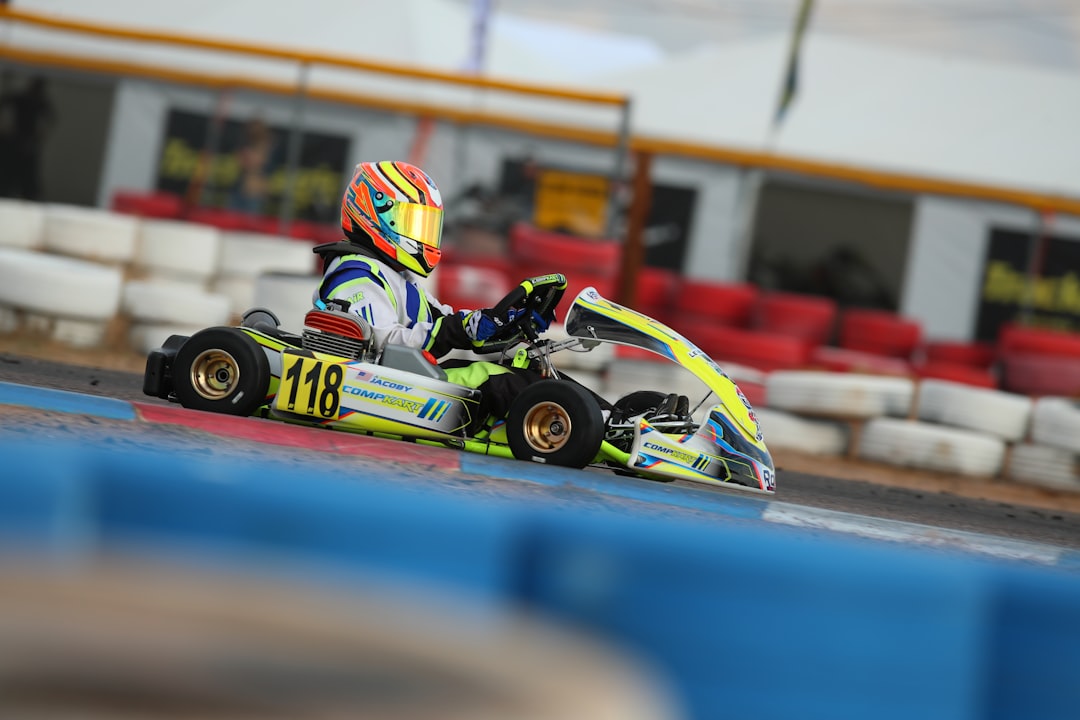
Indoor go-kart racing is arrive-and-drive kart racing at a covered commercial venue: you book a session, sign a waiver, borrow a helmet, and race a venue-maintained kart on a purpose-built track, with no license, ownership, or mechanical skill required. Most modern indoor centers run electric karts, sessions typically last 8 to 15 minutes, and a single race usually costs somewhere around $20 to $40. It is the easiest way for a complete beginner to try real wheel-to-wheel competition, and it is weatherproof and available year-round. This guide explains how indoor karting works, what your first visit looks like, the kart types you will meet, typical costs, safety, leagues, and how indoor racing compares with outdoor tracks.
Part of our Kart Racing guide — explore the full guide →
What Is Indoor Go-Kart Racing?
Indoor go-kart racing is a form of rental, or “arrive-and-drive,” karting held inside a building such as a converted warehouse or a purpose-built entertainment center. The venue supplies everything: the karts, the track, the timing system, the safety gear, and the marshals who run each session.
You pay for seat time by the race or by the package rather than owning any equipment. That makes indoor karting very different from club or competitive karting, where drivers buy, transport, and maintain their own karts. For the wider picture of how the sport is organized, see our hub guide to go-kart racing.
Because everything is managed and the conditions are controlled, indoor racing is predictable and repeatable. The track does not get wet, the karts are matched as closely as the venue can manage, and lap times are recorded electronically, so you can measure your own progress from visit to visit.
How Indoor Karting Works: Your First Session
Almost every indoor venue follows the same rhythm. Knowing it in advance takes most of the nerves out of a first visit.
Booking and check-in. Many venues let you book and complete the waiver online. On arrival you check in, and some centers create a driver profile so the timing system can track your laps across visits. A few charge a small one-time or annual profile or membership fee; check the venue’s website for its current terms.
Safety briefing. Staff or a video explain the flags, how passing works, what to do if you spin, and how the karts’ pedals behave. Electric karts deliver power instantly, so the briefing usually stresses gentle throttle at first.
Gearing up. You collect a helmet, and most venues provide a disposable head sock for hygiene. Some also offer neck collars. You will be asked to remove loose items and tie back long hair.
The race. Sessions are typically 8 to 15 minutes or a fixed number of laps. Formats vary: some are simple timed sessions where the fastest lap wins, while others use grid starts and finishing positions. At the end you get a results sheet or app readout with every lap time.
Between races. Most people book two or three sessions in one visit. The second session is almost always noticeably faster, because you have learned the layout and the braking points.
Types of Indoor Go-Karts
Indoor venues are dominated by electric karts today, because they produce no exhaust fumes in an enclosed space and run quietly. A few older centers still use gas karts with ventilation systems, but that has become uncommon.
Speeds depend heavily on the venue, the track length, and how the karts are set up. Many centers can adjust kart power remotely, offering slower settings for juniors and beginners and faster settings for experienced or league drivers. The figures below are typical ranges, not guarantees; ask the venue what its karts are set to.
| Kart type | Typical speed range | Who it suits | Notes |
|---|---|---|---|
| Adult electric (standard setting) | Roughly 25–45 mph | First-timers and casual drivers | Instant torque; most common indoor kart |
| Adult electric (fast or “pro” setting) | Upper end of the venue’s range | Regulars and league drivers | Often requires a qualifying lap time first |
| Junior electric | Speed-limited, often well under adult settings | Children who meet height and age minimums | Governed lower for safety |
| Two-seat (tandem) kart | Usually slower than adult karts | Parent with a young child, passengers | Not offered at every venue |
| Gas indoor kart | Varies by venue | Venues with older fleets | Increasingly rare indoors |
Even modest speeds feel dramatic when you are sitting a few inches off the floor with walls and barriers close by. For a fuller breakdown across every category of kart, see how fast go-karts go.
Indoor vs Outdoor Karting
Indoor and outdoor karting are both legitimate ways to race, but they deliver different experiences.
Track layout. Indoor tracks are usually shorter and tighter, with more corners per lap and fewer long straights. Some multi-level venues add ramps and bridges. Outdoor rental tracks tend to be longer and more flowing, with higher corner speeds.
Surface and grip. Indoor surfaces range from sealed concrete to purpose-made coatings, and grip varies a lot from venue to venue. Outdoor tracks are usually asphalt, and grip changes with temperature and weather.
Weather and availability. Indoor racing runs regardless of rain, heat, or cold. Outdoor tracks may close for bad weather or have seasonal hours.
Feel. Electric indoor karts pull hard from a standstill but may feel less raw than gas karts on a long outdoor straight. Many drivers enjoy both and switch depending on the season.
If you are weighing the two, our guide to go-kart rental covers how to choose a venue type and what to look for in a track.
How Much Does Indoor Go-Kart Racing Cost?
Indoor karting is priced per race or per package. In the US, a single adult session commonly falls somewhere in the $20 to $40 range, with big-city venues often at the top end. Junior sessions are frequently a little cheaper.
The per-race price usually drops if you buy a multi-race package, visit on weekday or off-peak hours, or join a membership program. Typical extras to budget for include:
- A one-time or annual driver profile or membership fee at some venues
- Head socks, if the venue charges for them
- Arcade, food, and drinks, which many entertainment centers bundle into packages
- Private events, birthday parties, and corporate packages, which are quoted separately and often priced per person
Prices change often and vary by region, so treat these as rough guides and check current rates online. For a broader look at what karting costs at different levels, see our guide to go-karting prices.
What to Wear and Bring
You do not need to buy any gear to try indoor karting. The venue supplies the helmet and usually a head sock.
- Closed-toe shoes are required almost everywhere. Flat, thin-soled sneakers give the best pedal feel.
- Comfortable clothing you can move in. Avoid scarves, long loose jackets, and dangling drawstrings that could catch.
- Tie back long hair and tuck it into the head sock or helmet.
- Remove loose jewelry and empty your pockets; many venues provide lockers.
- Gloves are optional. A thin pair can help grip if your hands sweat, but most first-timers skip them.
Our full guide on what to wear go-karting covers seasonal tips and what regulars eventually buy for themselves, usually starting with their own helmet.
Safety at Indoor Karting Venues
Indoor karting has a good reputation for safety because it is a managed environment, but it is still motorsport and minor bumps and bruises happen. Venues typically manage risk in several ways.
- Barriers. Tracks are lined with energy-absorbing barriers, often tire walls or plastic bumpers.
- Remote control. Many electric fleets let staff slow or stop all karts at once if there is an incident on track.
- Flags and lights. Marshals use flags or light boards to signal caution, slow down, or end the session.
- Height and age rules. Venues set minimum height and age requirements for junior and adult karts. These vary, so check before you bring children. Our guide to go-karting age requirements explains what is typical.
- Driving rules. Most venues prohibit deliberate contact and may remove drivers who ignore warnings.
Tell staff about any medical conditions, back or neck problems, or pregnancy before you drive. Most venues advise against karting in those situations, and the waiver usually says so.
Tips to Go Faster Indoors
Indoor tracks reward smoothness more than aggression. A few habits make a measurable difference to your lap times.
- Brake in a straight line, then ease off the brake as you turn in. Braking hard while turning tends to slide the kart.
- Be gentle with the throttle on corner exits. Electric karts deliver torque instantly, and too much power too early spins the rear.
- Use the whole track. Start wide, clip the inside of the corner, and let the kart drift back out on exit.
- Look ahead to the next corner rather than at the kart in front of you.
- Study your lap sheet. Consistency usually improves your best lap more than one heroic attempt.
For a deeper set of techniques, read our indoor karting tips guide.
Indoor Racing Leagues
Once single sessions start to feel routine, most indoor venues offer leagues. A league is a multi-week series with practice, qualifying, and points races against the same group of regular drivers. Some venues balance driver weight with ballast so results reflect driving rather than body size.
Leagues are the natural bridge between casual rental fun and serious racing. You learn racecraft such as defending, setting up passes, and managing a race, all without owning a kart. Formats, schedules, and entry costs vary by venue. Our guide to go-kart racing leagues explains how they are typically structured and how to pick one. If you wonder whether it counts, read is go-kart racing a sport.
Pros and Cons of Indoor Karting
Indoor karting is the easiest entry into racing, but it has real limits compared with outdoor and owner-driver karting.
Pros
- No ownership, license, or mechanical knowledge needed
- Weatherproof and open year-round
- All safety gear provided by the venue
- Timed laps give clear feedback on progress
- Leagues offer real competition without buying a kart
Cons
- Tracks are usually shorter and tighter than outdoor circuits
- Rental karts are speed-limited and vary slightly from kart to kart
- Grip and feel differ from outdoor gas karts
- Busy weekend slots can mean long waits between sessions
Frequently Asked Questions
How fast do indoor go-karts go?
Do I need a license for indoor go-kart racing?
How much does indoor go-karting cost?
What should I wear to indoor karting?
Is indoor go-kart racing safe for kids?
How long does an indoor go-kart race last?
Final Thoughts
Indoor go-kart racing is the most accessible on-ramp to motorsport: affordable per session, open in any weather, and welcoming to complete beginners while still offering genuine competition. Wear flat shoes, pay attention to the briefing, drive smoothly, and compare your lap sheets from session to session. If you get hooked, a league is the logical next step, and when you want longer circuits and higher speeds, our go-kart racing hub shows where the sport goes from here.