
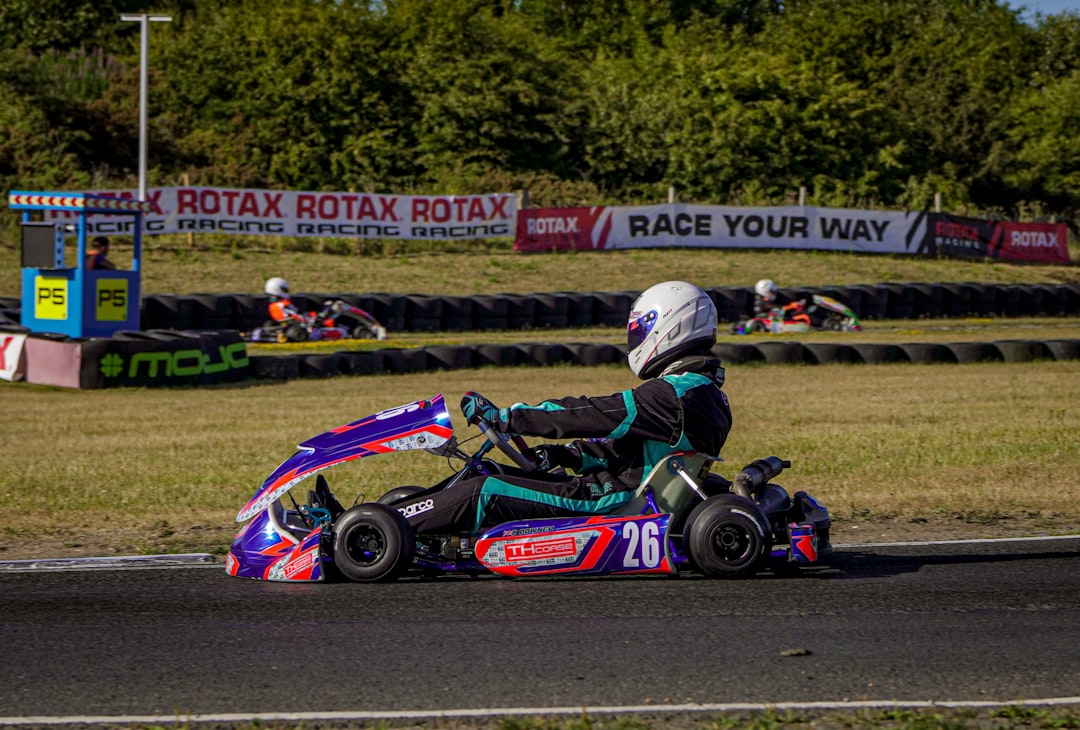
Ask any club racer what powers more organized karting worldwide than almost anything else, and the answer is the rotax kart engine — specifically the Rotax Max family of 125cc two-strokes. Built in Austria by BRP-Rotax, the Max platform pioneered the TaG (Touch-and-Go) concept: push a button, the engine starts, and you drive off with no push-start, no external starter, and no clutch pedal. Sealed engines, a tightly controlled spec, and a ladder of classes from kids to adults have made it the backbone of spec racing on every continent. Here is how the ecosystem works, what it costs, and how it stacks up against LO206 and shifter alternatives.
What Is a Rotax Kart Engine?
The core product is the Rotax 125 Max, a liquid-cooled 125cc two-stroke with electric start, an onboard battery, a centrifugal clutch, and a balance shaft that makes it far smoother than old-school direct-drive two-strokes. That combination defines TaG karting: touch the button and go. No push starts, no bump starts, no outside help on the grid.
Power delivery is deliberately broad rather than peaky. Where a tuned open two-stroke hits like a light switch, the Max pulls through a wide midrange, which is exactly what makes it raceable for a 13-year-old junior and a 45-year-old master on the same weekend. If two-stroke fundamentals are new to you, start with our 2-stroke go-kart engine guide and come back.
The other defining trait is the seal. Rotax race engines are assembled and sealed by authorized service centers, and the internals cannot legally be modified. Everyone races what is effectively the same engine, so the driver and chassis setup decide the result — not whoever spent the most on porting.
The Rotax Max Class Ladder
The genius of the platform is one engine architecture stretched across an entire racing career through restrictors, exhausts, and electronics:
Micro and Mini. Restricted versions of the 125 for the youngest racers, typically starting around age 7–8 for Micro and moving to Mini as kids grow. Power is held to single digits and the low teens respectively.
Junior. A less-restricted spec, generally in the low-20s horsepower range, for early-teen drivers stepping up in speed without a full senior engine.
Senior (Max/EVO). The full-power spec, roughly 28–30 hp, for drivers 15 and up. This is the class most adult club racers land in, and the one people usually mean by “Rotax Max.”
DD2. The flagship: a two-speed direct-drive engine with paddle shifting, no rear axle chain (the engine drives through an integrated gearbox), and the highest performance in the ecosystem — a halfway house toward a true shifter kart.
Because the classes share so much, a family can move a child from Micro through Senior swapping restrictor kits and top-end parts rather than whole engine programs. Regional and national winners can also qualify for the Rotax Max Challenge Grand Finals, a world final where organizers supply sealed engines — a genuinely unique carrot in club karting.
Rotax vs LO206 vs KZ Shifter Compared
| Platform | Type | Approx. power | Rebuild interval | Season running cost | Best for |
|---|---|---|---|---|---|
| Rotax Max (Senior) | 125cc TaG 2-stroke | ~28–30 hp | Top end ~40–50 hrs | $1,500–$4,000 | Serious spec racing, career ladder |
| Briggs LO206 | 206cc sealed 4-stroke | ~8–9 hp | Seasons, not hours | $500–$1,500 | Budget club racing |
| KZ shifter | 125cc 6-speed 2-stroke | ~45 hp | Top end ~10–15 hrs | $5,000–$10,000+ | Maximum performance |
| Rotax DD2 | 125cc 2-speed 2-stroke | ~32–34 hp | Similar to Max | $2,500–$5,000 | Shifter feel with TaG convenience |
The pattern is clear: Rotax sits squarely between the barn-door-simple LO206 and the maintenance-hungry KZ. Our shifter kart engine guide covers what that top rung really demands.
Cost and Ownership Considerations
A new sealed Senior Max package typically lands in the $4,000–$5,500 range before the chassis; clean used engines run $1,800–$3,500 depending on hours and seal status. Budget for a radiator, battery upkeep, and the Rotax-specific ancillaries that generic two-strokes skip.
Running costs are honest but not brutal. Plan on a top-end refresh roughly every 40–50 hours and a full rebuild at longer intervals, done by an authorized center to keep the seal intact — figure a few hundred dollars for a top end and near $1,000 for a full freshen. That is several times an LO206 budget and a fraction of a KZ program, which eats top ends in 10–15 hours.
Two ownership notes matter. First, the seal is the value: an engine with a broken or missing seal is a practice engine, priced accordingly. Second, spec evolution (carbureted Max vs the electronic EVO generation) affects class legality in some regions, so confirm what your local series runs before buying.
How to Choose Your Way Into Rotax
Start with your local grid, not the spec sheet. The best engine is the one 15 other karts at your club are running, because that is where the racing, the used parts, and the setup knowledge live. If your track is wall-to-wall LO206, buy the four-stroke and race; if the Rotax grid is deep, the Max is worth the premium.
Buy used engines through or with an authorized service center when possible — they can verify the seal, hours, and history. Pair the engine with a current-generation chassis, since the Max makes enough power to expose a tired frame. And if you are cross-shopping the whole market first, our overview of how much a go-kart costs puts full package prices in context.
Pros and Cons
The honest ledger on the Rotax ecosystem:
Pros
- Push-button TaG starting with no outside help needed
- Sealed spec engines keep racing about the driver
- Class ladder from age 7 to masters on one platform
- Worldwide parts, service centers, and deep used market
- Longer rebuild intervals than open two-strokes
Cons
- Several times the running cost of an LO206 program
- Sealed-engine rules mean authorized-center labor prices
- EVO and legacy spec differences complicate used buying
- Heavier and less raw than an open direct-drive two-stroke
Frequently Asked Questions
What does TaG mean in karting?
How fast is a Rotax Max kart?
How often does a Rotax kart engine need a rebuild?
Can I rebuild a Rotax race engine myself?
Is Rotax or LO206 better for a beginner?
What is the difference between Rotax Max and DD2?
Final Thoughts
The rotax kart engine earned its dominance the boring way: it starts every time, it lasts between rebuilds, and the sealed spec keeps the racing about talent instead of tuning budgets. It costs real money — more than an LO206, much less than a KZ — and that middle position is exactly why grids are full of them. Check what your local club actually races, verify the seal on anything used, and if the Rotax classes are healthy near you, it is one of the safest engine investments in karting.