

A 2 stroke go-kart engine completes its power cycle in two piston strokes — one crankshaft revolution — instead of the four strokes a 4-stroke needs. It uses ports in the cylinder wall rather than a valvetrain, and is lubricated by oil mixed into the fuel. The result is a light, simple engine that makes a lot of power for its size, which is why two-strokes dominate many competitive sprint karting classes. The trade-offs are more frequent rebuilds, the need to mix fuel correctly, more noise, and higher running costs. For racing, a two-stroke is often the right tool. For casual backyard driving, a 4-stroke is usually easier to live with.
Part of our Go-Kart Engines & Drivetrain guide — explore the full guide →
How a 2 Stroke Go-Kart Engine Works
A four-stroke engine uses separate strokes for intake, compression, power and exhaust. A two-stroke overlaps those events into two strokes by using the crankcase and ports in the cylinder wall.
- Upstroke: the piston compresses the fuel-air charge above it while drawing a fresh charge into the crankcase below it.
- Downstroke: the charge ignites and drives the piston down. Near the bottom, the piston uncovers the exhaust port, then the transfer ports, which push the fresh charge from the crankcase into the cylinder and help sweep out exhaust.
- No valvetrain: the piston itself opens and closes the ports, so there are no valves, camshaft or pushrods.
- Total-loss lubrication: oil is premixed into the fuel (or injected on some engines) and lubricates the crank, rod and piston as the mixture passes through.
- Tuned exhaust: an expansion chamber uses pressure waves to push escaping fresh charge back into the cylinder, boosting power in a particular RPM range.
Because a two-stroke fires once per revolution rather than once every two, it can make substantially more power than a four-stroke of the same displacement. That power-to-weight advantage is the core reason racers choose them.
Types of 2-Stroke Kart Engines
Two-stroke kart engines are grouped mostly by how they start, how they drive the axle, and how they control intake.
Direct-drive (no clutch). The engine is connected to the axle by the chain at all times, so the kart must be push-started and the engine stops when the kart stops. Some traditional sprint classes still use this layout. The KT100 is a well-known example.
TaG (Touch-and-Go). These engines have an onboard electric starter and a centrifugal clutch, so you can start and idle in the pits. TaG engines are common in club and national sprint racing. The Rotax Max family is one widely raced TaG platform.
Shifter (gearbox). Two-strokes with a multi-speed gearbox and a manual clutch. The KZ category uses 125cc six-speed engines. Shifters are the fastest and most physically demanding karts. See our shifter kart engine guide.
Intake designs. Kart two-strokes use piston-port, reed-valve or rotary-valve induction. Reed valves are common and give a broad, forgiving power band; rotary-valve and piston-port engines tend to suit particular classes and power characteristics. The rulebook for your class usually decides this for you.
Best Go Kart Engine: our top 3 picks
| Product | Best for | Key features | Price | Buy |
|---|---|---|---|---|
| maXpeedingrods MXR212R | Best overall 212cc |
| $149.99as of Nov 18, 2026 1:46 pm EST | Buy now →Check current price |
| maXpeedingrods MXR212E | Best electric start |
| $209.99as of Nov 18, 2026 1:46 pm EST | Buy now →Check current price |
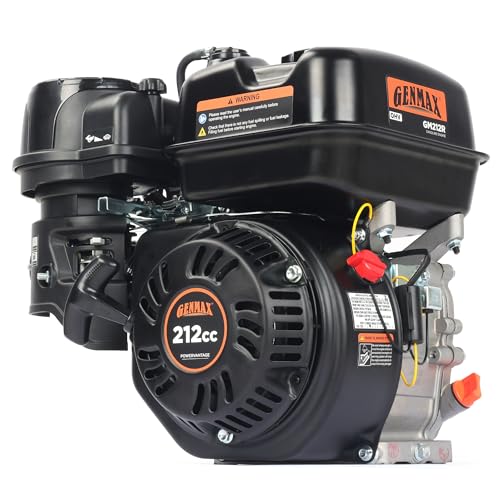
| GENMAX GM212R | Best support plan |
| $169.99as of Nov 18, 2026 1:46 pm EST | Buy now →Check current price |


Prices are Amazon’s listed prices as of the date and time shown and are subject to change; the price on Amazon at the time of purchase applies. As an Amazon Associate we earn from qualifying purchases.
2-Stroke Kart Engine Types Compared
This table compares engine categories, not specific products. Prices vary by brand, condition and region.
| Type | Starting | Clutch / gearbox | Typical use | Driver level |
|---|---|---|---|---|
| Direct-drive | Push start | No clutch, single speed | Traditional and vintage sprint classes | Beginner to intermediate |
| TaG | Onboard electric starter | Centrifugal clutch, single speed | Club and national sprint racing | Beginner to advanced |
| Junior and cadet engines | Varies by class | Usually clutch, often restricted | Youth classes | Kids and juniors |
| Shifter (KZ and similar) | Varies; often onboard or external | Manual clutch, multi-speed gearbox | Top-level and advanced sprint racing | Advanced |
For an overview of which engines fit which classes, see our kart racing classes guide.
2-Stroke vs 4-Stroke for Karting
Choosing between engine types is mostly about your goals.
Choose a two-stroke if you want maximum power-to-weight, plan to race in a two-stroke class, and are willing to follow a maintenance schedule.
Choose a four-stroke if you want lower running costs, longer intervals between rebuilds, simpler fueling and quieter operation. Four-stroke spec classes are also a popular, cost-controlled way into racing. Recreational karts with a front engine go-kart layout and older yard karts fitted with Tecumseh go-kart engines are typical four-stroke territory. Our 4-stroke engine karting guide covers that path.
Some tracks and neighborhoods also restrict noise. Two-strokes are generally louder, so check local rules and track sound limits if you plan to practice somewhere other than a race circuit.
Cost of a 2-Stroke Kart Engine
Two-strokes cost more to buy and run than recreational four-strokes. As typical USD ranges:
- Used race engines: often around $1,000 to $2,500, depending on platform, condition and how recently it was rebuilt.
- New TaG engine packages: commonly several thousand dollars once the starter, clutch, exhaust and carburetor are included.
- Shifter engines: typically at the top of the range because of the gearbox and higher performance.
Running costs are the part people underestimate. Top-end rebuilds (piston, rings and related parts) are a scheduled expense, and bottom-end rebuilds come around less often but cost more. Add premix oil, fuel, spark plugs, air filters, batteries for TaG starters, and any rebuild labor. Engine builders and manufacturers publish recommended service intervals in hours of running; track your hours and follow them.
For the bigger picture, see our how much karting costs per year breakdown.
How to Choose a 2-Stroke Kart Engine
- Start with your class rules. Most series specify exactly which engines are legal, often down to carburetor, exhaust and seals. Buy what your class allows.
- Look at what races locally. The engine your local club runs most will have the best parts support, the most experienced builders nearby, and the best resale value.
- Prefer easy starting if you are new. A TaG engine with an onboard starter is far more practical than a push-start direct-drive for most drivers.
- Match power to experience. Shifters are not beginner engines. A single-speed TaG or a restricted class engine is a better place to learn.
- Check the engine history. On a used engine, ask for hours since the last top-end and bottom-end rebuild, and who did the work.
Comparing specific models? Our best go-kart engine roundup covers popular options.
Buying a Used 2-Stroke Kart Engine
Many racers start with a used engine, and it can be good value if you buy carefully. A two-stroke’s condition depends heavily on how it was run and maintained, so ask questions before you pay.
- Ask for the service log. Hours since the last top-end and bottom-end rebuild matter more than the engine’s age.
- Find out who rebuilt it. A known engine builder’s work is easier to trust than an unknown home rebuild.
- Check legality. In sealed or spec classes, confirm the engine still meets the current rules and that any seals are intact if your class requires them.
- Look for damage. Check for cracked fins, stripped threads, scoring visible through the ports, and a smooth, consistent pull on compression.
- Confirm what is included. Carburetor, exhaust, clutch, starter, wiring and battery can add up quickly if missing.
If you are unsure, budget for a professional inspection or a fresh top-end right after purchase. It costs less than a seized engine on its first race day.
Maintenance and Fuel Mixing
A two-stroke rewards discipline. The most important habit is mixing fuel correctly: use the oil type and fuel-to-oil ratio the engine manufacturer or your class rules specify. Ratios differ between engines and oils, so never copy a number from a different platform. Too little oil risks seizure; too much fouls plugs and costs power.
Other key habits:
- Warm up gradually before running at full throttle.
- Read the spark plug to check jetting, and adjust for temperature, humidity and altitude.
- Keep the air filter clean; dirt entering a two-stroke wears the piston and rings fast.
- Inspect reed petals on reed-valve engines for chips or cracks.
- Log engine hours and rebuild on schedule rather than waiting for a failure.
- Store fuel properly; premixed fuel degrades over time, so mix in quantities you will use.
Safety Considerations
Two-stroke karts accelerate hard and run at high RPM. Wear proper karting safety gear, keep the chain guard in place, and make sure brakes, steering and throttle return work before every session. On direct-drive karts, be careful during push starts and keep hands and loose clothing away from the chain and axle. Handle fuel and oil away from ignition sources, and store premixed fuel in an approved container.
Pros and Cons
Pros
- Excellent power-to-weight ratio
- Mechanically simple with no valvetrain
- TaG versions start with the push of a button
- Strong club racing and parts support for popular platforms
- Thrilling, responsive power delivery
Cons
- Frequent scheduled rebuilds add running costs
- Requires correct premix of fuel and oil
- Louder and less fuel-efficient than a four-stroke
- Narrower power band demands more driver skill
- More expensive to buy and maintain
Frequently Asked Questions
Why do race karts use 2-stroke engines?
How often does a 2-stroke kart engine need rebuilding?
What is the difference between TaG and direct-drive?
What fuel mix does a 2-stroke kart engine use?
Is a 2-stroke engine good for beginners?
Are 2-stroke karts faster than 4-stroke karts?
Final Thoughts
A 2 stroke go-kart engine is a performance tool: light, powerful and well suited to sprint racing, but demanding in fuel mixing, jetting and scheduled rebuilds. Let your class rules and local racing scene guide the choice, start with a TaG engine if you are new, and budget for running costs, not just the purchase price. For a broader comparison of engine types, read our go-kart engine guide.