
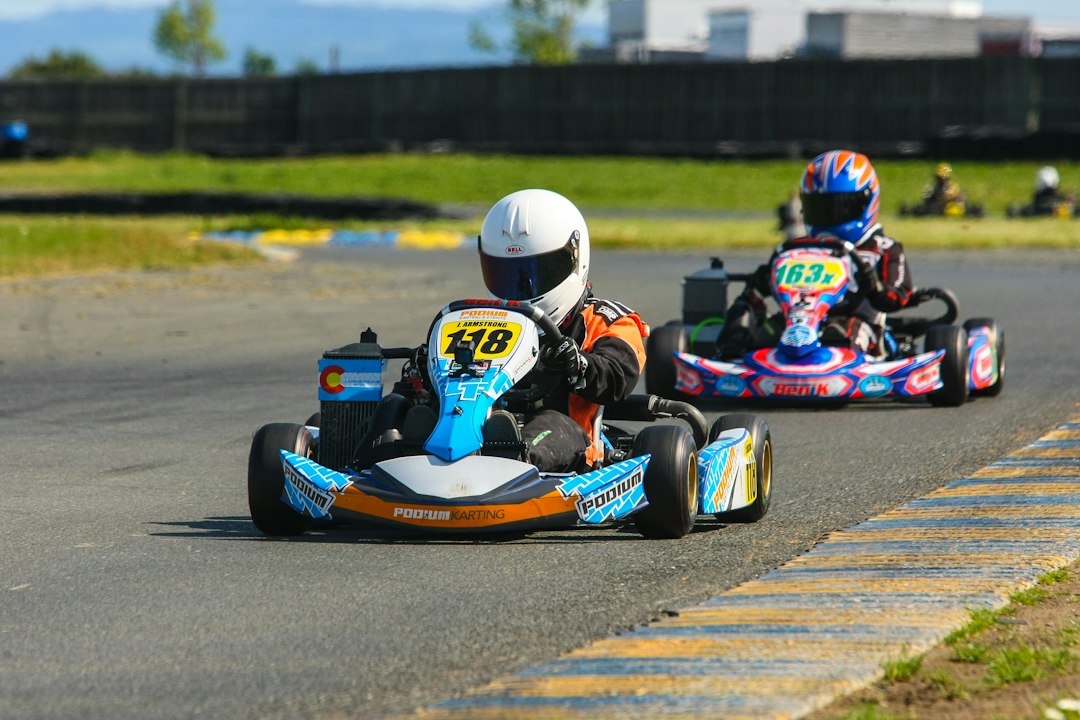
A small electric go kart is a compact, battery-powered kart sized for young children, small yards, driveways, or tight storage spaces. These karts are quiet, simple to start, and free of fuel and oil, which makes them a common first motorized kart for families. The category is broad, though, ranging from 6-volt ride-ons for toddlers to compact 36-volt karts that suit teens and light adults. This guide explains the main types and voltages, realistic speeds and run times, typical USD prices, how to choose the right size, and how to care for the battery so the kart keeps running well.
Part of our Electric Go-Karts guide — explore the full guide →
What Counts as a Small Electric Go Kart?
There is no formal definition, but the term usually covers electric karts with a short wheelbase, a single seat, and a modest battery and motor. They are designed to fit in a garage corner, fold or stand on end for storage, and run on driveways, paths, or flat lawns.
Small electric karts differ from full-size adult electric karts in power, weight limits, and speed. If you are looking for something faster or for a grown-up driver, our electric go-karts complete guide covers the whole range.
Types of Small Electric Go-Kart
Toddler ride-ons (6V to 12V). Low-speed plastic karts with a push-button throttle or foot pedal. Many include a parent remote control. They are designed for flat, smooth surfaces and very young drivers.
Children’s karts (24V). Steel or plastic frames with a foot pedal throttle and rear brake. These are the most common small electric karts for roughly ages 6 to 12. Our 24V electric go-kart guide covers this class in depth.
Compact teen and light-adult karts (36V). More power, larger frames, and higher weight limits while still being compact. Some offer adjustable frames so they fit both kids and smaller adults.
Drift and ride-on hybrid karts. Small electric drift karts with caster rear wheels slide rather than grip. They are fun on smooth concrete but less suited to lawns.
Hoverboard kart attachments. Frames that clip to a self-balancing board turn it into a seated kart. They are very compact but depend on the hoverboard’s battery and motors.
Best Electric Go-Kart: our top 3 picks
| Product | Best for | Key features | Price | Buy |
|---|---|---|---|---|
| Segway Ninebot Gokart Pro 2 | Best overall for teens and adults |
| $2,499.99as of Oct 25, 2026 3:54 am EDT | Buy now →Check current price |
| Zyliathor 72V 3000W | Most powerful for adults |
| $2,800.00as of Oct 25, 2026 3:52 am EDT | Buy now →Check current price |
| Greenworks 60V Stealth 2-Seat | Best two-seat youth kart |
| $2,399.99as of Oct 25, 2026 3:54 am EDT | Buy now →Check current price |


Prices are Amazon’s listed prices as of the date and time shown and are subject to change; the price on Amazon at the time of purchase applies. As an Amazon Associate we earn from qualifying purchases.
Small Electric Go Kart Types Compared
| Type | Typical Voltage | Typical Top Speed | Typical Driver | Typical Price (USD) |
|---|---|---|---|---|
| Toddler ride-on | 6V to 12V | Around 2 to 5 mph | Roughly ages 2 to 5 | $100 to $350 |
| Children’s kart | 24V | Around 8 to 12 mph | Roughly ages 6 to 12 | $250 to $700 |
| Compact teen kart | 36V | Around 12 to 15+ mph | Teens, light adults | $500 to $1,200 |
| Small drift kart | 24V to 36V | Around 6 to 12 mph | Older kids, teens | $300 to $900 |
| Hoverboard kart frame | Uses board battery | Depends on board | Older kids | $50 to $200 for frame |
Speeds and ages are approximate and depend on the specific model, driver weight, surface, and battery condition. Always check the manufacturer’s stated limits.
Speed, Range and Run Time
Speed rises with voltage and motor power. A 24V kart usually feels lively to a young child but is manageable for supervised use, while a 36V kart can reach speeds that need more experience and protective gear.
Run time depends on battery capacity, driver weight, terrain, and how hard the kart is driven. Many small karts with sealed lead-acid batteries offer somewhere in the range of 30 to 60 minutes of mixed driving, while lithium-ion packs often last longer and weigh less. Grass, hills, and heavier drivers all shorten run time. Treat manufacturer claims as best-case figures.
Charging typically takes several hours. If your child will drive often, a spare battery or a lithium upgrade, where the manufacturer supports it, can extend sessions.
How to Choose a Small Electric Go Kart
Size and weight limit first. The driver should reach the pedals with a slight bend in the knee and sit with the head below any roll bar. Check the maximum rider weight and choose a model with room to grow.
Match speed to experience. For beginners, choose a kart with a speed limiter or high and low speed settings. Parent remotes and emergency stop functions are valuable on toddler models.
Check the surface. Most small electric karts are designed for pavement and flat, short grass. If you have rough or sloped ground, look for air-filled tires and a stronger motor, or consider an off-road electric go-kart instead.
Look at the brake. Rear disc or band brakes are common. Some kids’ models stop automatically when the throttle is released, which is useful for very young drivers.
Consider battery type. Lead-acid batteries are cheaper but heavier and wear faster if left discharged. Lithium packs are lighter and longer-lasting but cost more to replace.
Think about storage. Measure where the kart will live. Some compact models fold or adjust in length, which helps in a small garage.
Small Electric vs Small Gas Karts
Parents often compare a small electric kart with a compact gas kart in the same size class. Electric karts are quieter, which matters in neighborhoods, and they start instantly with no pull cord or choke. There is no fuel to store, no oil to change, and no hot exhaust near small hands. Throttle response is smooth, and many models offer speed limiting that is easy to adjust.
Gas karts generally run longer, refuel in minutes, and cope better with hills and rough ground. They also need more maintenance and produce noise and fumes. For a young child driving on a driveway or flat yard, electric is usually the easier fit. For longer sessions on bigger property, gas may suit better. Our electric vs gas go-kart comparison goes into more detail.
Battery Care
The battery is the most expensive wear part on an electric kart. Charge it after every use, and do not leave it fully discharged, especially lead-acid types, which can lose capacity quickly if left flat. Use only the charger supplied or one approved by the manufacturer.
Store the kart indoors in cool, dry conditions. For long breaks, such as winter, follow the manual’s storage instructions, which often call for charging to a certain level and topping up periodically. Avoid charging in extreme heat or cold.
Maintenance
Small electric karts need little routine work, but a few checks keep them safe. Check tire pressure if they are air-filled, and look for worn tread. Inspect the chain or belt for slack and lubricate chains lightly. Test the brake before each session. Tighten loose bolts on the steering and seat, and keep wiring connections clean and dry.
If the kart suddenly slows or cuts out, a weak battery, a loose connector, or an overheated controller is often the cause. Let the system cool and check connections before assuming a major fault.
Safety Tips
Every driver should wear a helmet, and closed shoes are a must. Long hair should be tied back and loose clothing tucked in, so nothing can catch in the chain or wheels. Supervise young drivers, keep them away from roads, driveways with traffic, pools, and slopes, and use the slowest speed setting until they show good control. For more on safe first karts, see our kids go-karts complete guide.
Pros and Cons
A small electric kart is an easy first motorized kart, with some limits worth knowing.
Pros
- Quiet, with no fuel, oil, or exhaust
- Simple push-button or pedal start
- Compact and easy to store
- Speed limiters and remotes on many kids models
Cons
- Limited run time per charge
- Batteries are costly to replace
- Many models struggle on hills and long grass
- Children outgrow small models quickly
Frequently Asked Questions
How fast is a small electric go kart?
How long does the battery last on a small electric kart?
Can an adult ride a small electric go kart?
Is 24V or 36V better for a child?
Can small electric go karts drive on grass?
Can I replace the battery with a lithium pack?
Final Thoughts
The best small electric go kart is one sized to the driver, matched to your surface, and fitted with sensible speed controls. Look after the battery and it will reward you with years of quiet, low-maintenance fun. For a ranked list of current kids models, see our best electric go-kart for kids roundup.