
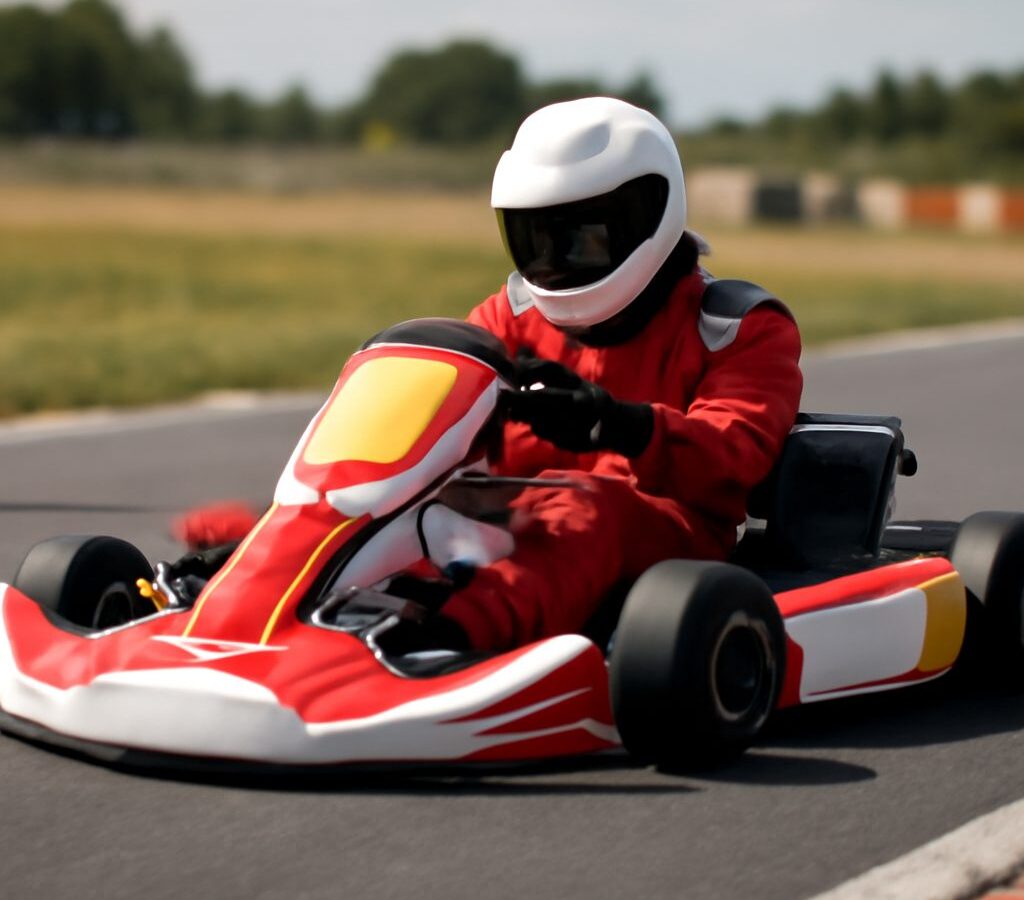
The 125cc go kart top speed depends entirely on which kind of 125cc kart you mean. A recreational 125cc buggy or kids kart typically runs somewhere around 20 to 35 mph. A single-speed 125cc two-stroke racing kart, often called a TaG kart, usually tops out somewhere in the 60s to mid-70s mph on a sprint track. A 125cc gearbox shifter kart is faster again, commonly reaching the 70s to high 80s on sprint circuits and more on long, fast tracks. The same displacement covers machines with several times the power of one another, and gearing, weight, track length and any restrictor or governor decide the final figure. This guide explains each type and why the numbers vary.
Part of our Go-Kart Engines & Drivetrain guide — explore the full guide →
125cc Go Kart Top Speed by Kart Type
“125cc” describes engine size, not performance. Three very different families share the label, and confusing them is the main reason you will see answers ranging from 25 mph to over 90 mph online.
Recreational and youth 125cc karts
These are buggy-style or yard karts with a small air-cooled four-stroke engine, usually paired with a CVT or a simple clutch. They are designed for older kids, smaller teens and casual riding. Many ship with a throttle limiter or restrictor that a parent can adjust, and the gearing favors torque for grass and dirt rather than top speed. Expect roughly 20 to 35 mph with the limiter fully open on firm ground, and less with it set low or on soft terrain.
TaG 125 racing karts (single-speed)
TaG stands for touch-and-go: electric start and a centrifugal clutch. Classes built around engines such as the Rotax Max and IAME X30 use a water-cooled 125cc two-stroke with a single fixed gear ratio, mounted on a light racing chassis with slick tires. Power output is commonly quoted in the mid-to-high 20s of horsepower, depending on engine and class rules, and the complete kart with driver typically weighs only a few hundred pounds. On most sprint tracks this produces top speeds somewhere in the 60s to mid-70s mph.
125cc shifter karts (gearbox)
Shifter karts add a sequential gearbox, usually six speeds, along with front brakes and a more powerful two-stroke. International KZ-category engines are commonly quoted at well over 40 horsepower. With multiple gears, the kart is not limited to one compromise ratio, so it accelerates harder and pulls a higher top speed on the same track. Sprint-track top speeds are commonly reported in the 70s to high 80s mph. Our 125cc shifter kart guide explains the package, and the shifter kart top speed guide covers the fastest end of the range.
| 125cc kart type | Engine and drive | Typical top speed range | Typical setting |
|---|---|---|---|
| Recreational or youth kart | Air-cooled four-stroke, CVT or clutch, often limited | About 20–35 mph | Backyard, trails, private property |
| TaG 125 racing kart | Water-cooled two-stroke, single fixed ratio | Roughly 60–75 mph on sprint tracks | Club and national sprint racing |
| 125cc shifter kart | Two-stroke with six-speed gearbox | Roughly 70–90 mph on sprint tracks | Advanced sprint racing |
| Gearbox 125 on a long, fast circuit | Same engine, taller gearing | Can exceed 90 mph | Long tracks and car circuits |
These are typical reported bands rather than fixed specifications. A specific kart’s speed on a given day depends on the factors below, and class rules can change permitted engines, carburetors and restrictors, so check your class rulebook for exact requirements.
Why Gearing and Track Layout Decide the Number
For racing karts, top speed is a setup choice rather than a fixed figure. At kart speeds the main limit is gearing: once the engine reaches its usable rpm ceiling in top gear (or the single gear on a TaG kart), the kart cannot go any faster on that straight.
Teams select a rear sprocket for each track. On a tight, twisty sprint track, they fit a larger rear sprocket for shorter gearing. The kart hits peak rpm earlier on the straights, so trap speed is lower, but it launches harder out of every slow corner and lap time improves. On a fast track with long straights, a smaller rear sprocket gives taller gearing and a higher top speed at the cost of some acceleration.
That is why the same TaG kart might reach the low 60s at one circuit and the mid-70s at another. Asking “how fast is a 125cc kart” without naming the track is a bit like asking how fast a car goes without saying whether it is in town or on a highway.
Weight, rules and restrictors
Racing classes set minimum weights for kart plus driver, and many junior classes use restrictors or exhaust and carburetor limits to reduce power. A junior class kart with a restrictor is noticeably slower than the senior version of the same engine. On recreational karts, the equivalent is the throttle limiter and conservative factory gearing. In every case, lighter total weight improves acceleration and helps the kart reach its gearing limit sooner.
Conditions and engine state
Air temperature, altitude and humidity change how much power a two-stroke makes, which is why racers adjust carburetor jetting from session to session. A fresh, well-jetted engine is faster than a tired one. Tire grip, track rubber and wind on the main straight also show up in the numbers.
Measurement method matters too. Trap speeds from a data logger with GPS or a wheel-speed sensor are the most reliable source. Phone apps and handheld radar can be off by a few mph, and quoted figures on forums are often the best run of the day rather than a typical lap. When you compare numbers, check how they were recorded and on which track.
Why 125cc Racing Karts Feel So Fast
Raw speed figures undersell the experience. Your seat is just above the track, there is no bodywork around you and no suspension in the conventional sense, and racing karts generate high cornering loads on sticky tires. A TaG kart at 70 mph feels very different from a road car at the same speed.
Shifter karts add front brakes and much stronger acceleration, which makes them physically demanding. They are typically recommended for drivers with sprint-kart experience. If you are deciding between the two racing families, our sprint vs shifter karts comparison covers the trade-offs in cost, effort and maintenance.
For a sense of the alternatives, four-stroke spec classes are generally slower than 125cc two-stroke classes but cheaper to run. Our LO206 kart top speed guide shows how one popular four-stroke class compares.
Choosing the Right 125cc Kart for Your Goal
Choose by purpose, not by the number on the engine.
- Casual riding or a first kart for a child or teen: a recreational 125cc kart with an adjustable limiter. It is relatively affordable, simple to maintain and much slower than racing machinery.
- Getting into wheel-to-wheel racing: a TaG 125 or a four-stroke spec class. A TaG kart delivers serious speed without the workload of a gearbox and teaches racecraft that carries up the ladder.
- Experienced drivers chasing maximum sprint pace: a 125cc shifter. Expect higher running costs, more frequent engine service and a steep physical learning curve.
Before buying any racing kart, find out which classes your local track actually runs, since that decides where you can compete. For a deeper look at the engines themselves, see our 125cc go-kart engine guide and the main go-kart engine hub. To compare 125cc speeds with every other category from rentals to superkarts, read how fast go-karts go.
Pros
- Racing 125s deliver serious speed from a small, light package
- Gearing can be tailored to suit each track
- TaG karts offer big pace without the complexity of a gearbox
- Recreational 125s give young drivers a manageable first step
Cons
- Quoted top speeds vary wildly because gearing changes everything
- Racing two-strokes need frequent rebuilds and careful jetting
- Shifter karts are physically demanding and costly to run
- Recreational 125s share little with racing 125s beyond displacement
Frequently Asked Questions
How fast is a 125cc go-kart?
Why do 125cc kart top speeds vary so much?
How fast is a 125cc kids go-kart?
Is a 125cc shifter faster than a 125cc TaG kart?
Which 125cc kart should a beginner choose?
Can a 125cc go-kart go 100 mph?
Final Thoughts
The honest summary of 125cc go kart top speed is that it ranges from about 20 mph to around 90 mph depending on the kart. Recreational karts sit at the bottom, TaG racing karts in the middle and shifters at the top, with gearing, weight, rules and track length setting the exact figure on the day. Decide what kind of driving you want first, then pick the 125cc kart that fits.