
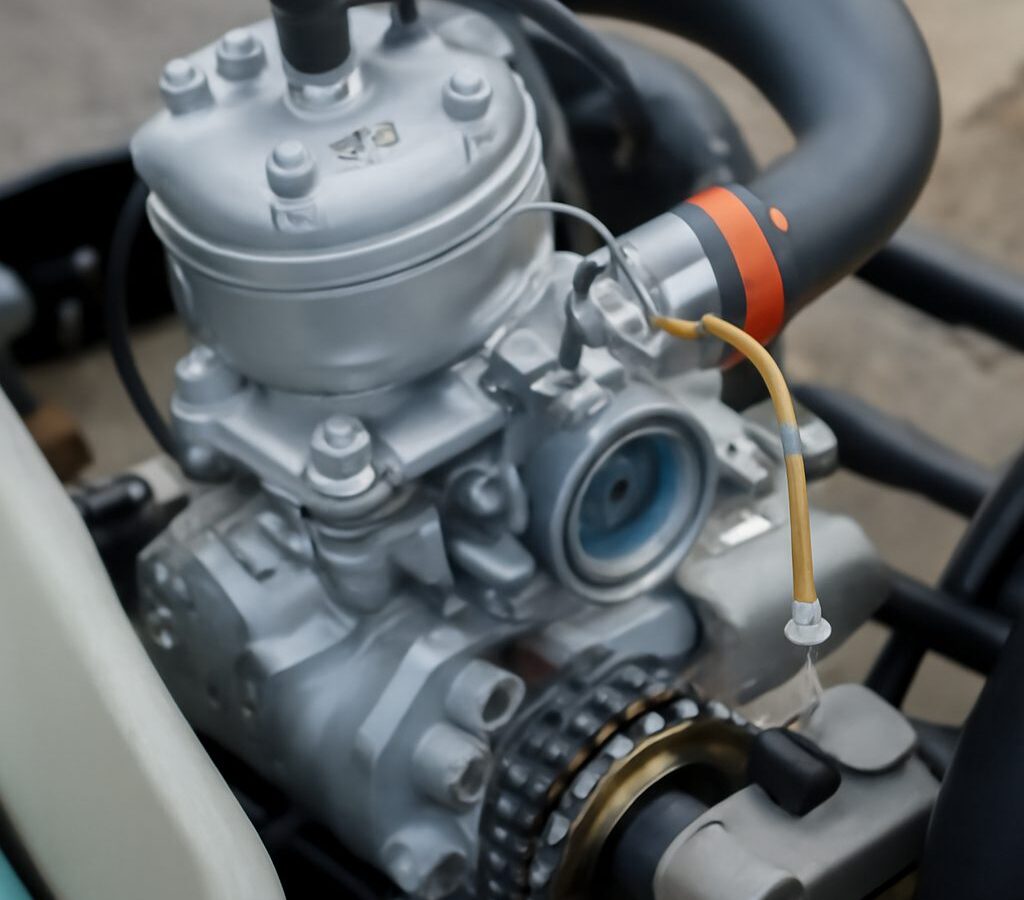
A 125cc go kart engine can mean three very different things: a liquid-cooled two-stroke TaG engine used in club and national sprint racing, a six-speed KZ shifter engine that powers the fastest sprint karts, or an air-cooled pit-bike four-stroke bolted to a backyard kart. Displacement alone says little about performance; output ranges from single-digit horsepower on a pit-bike four-stroke to the 40s on a shifter engine, so always check the manufacturer specification. For racing, choose the 125 class your local track runs. For backyard fun on a home-built frame, a four-stroke 125 or a standard clone engine is the safer choice. This guide compares every 125cc option, with costs, maintenance, and how to choose.
Part of our Go-Kart Engines & Drivetrain guide — explore the full guide →
What Is a 125cc Go-Kart Engine?
A 125cc engine displaces 125 cubic centimeters, but beyond that number the designs have little in common. In competition karting, 125cc is a premier displacement worldwide, used in both single-speed touch-and-go (TaG) classes and gearbox KZ shifter classes. In the recreational world, 125cc usually means a small horizontal four-stroke of the type found on pit bikes and small ATVs.
The architecture separates them. Racing 125s are liquid-cooled two-strokes built for maximum power per pound, while recreational 125s are air-cooled four-strokes built for low cost and easy running. Our guide to 2-stroke go-kart engines explains why two-strokes dominate the track, and our go-kart engine guide covers the wider range of engine types.
Types of 125cc Kart Engines
TaG two-strokes
Touch-and-go engines, from makers such as Rotax and IAME, are single-speed, liquid-cooled 125cc two-strokes with onboard electric start and a centrifugal clutch. Output varies by engine and class, typically from the low 20s to around 30 hp, and some classes use restrictors or sealed engines to keep competition close. These engines are the backbone of club and national sprint racing in many regions. Our Rotax kart engine guide covers one of the most widely raced TaG platforms.
KZ shifter 125s
KZ engines are liquid-cooled two-strokes with an integrated six-speed sequential gearbox. They are the most powerful 125s in karting, with output generally quoted in the 40s of horsepower, and they deliver ferocious acceleration. They demand real fitness, frequent maintenance, and a proper racing chassis with front brakes. See our breakdowns of the 125cc shifter kart and the KZ shifter kart before going down this road.
Pit-bike four-stroke 125s
The budget path. Horizontal-cylinder 125cc four-strokes, derived from classic small-motorcycle designs, are inexpensive and widely available. Most include a built-in multi-speed gearbox, with either a manual or semi-automatic clutch depending on the version. Output is modest, typically in the single digits, so they are often no faster than a standard 196–212cc clone setup, but the gearbox makes them engaging to drive. If you are building from scratch, our how to build a go-kart guide covers mounting and drivetrain basics.
Best Go Kart Engine: our top 3 picks
| Product | Best for | Key features | Price | Buy |
|---|---|---|---|---|
| maXpeedingrods MXR212R | Best overall 212cc |
| $149.99as of Oct 26, 2026 4:00 am EDT | Buy now →Check current price |
| maXpeedingrods MXR212E | Best electric start |
| $209.99as of Oct 26, 2026 4:00 am EDT | Buy now →Check current price |
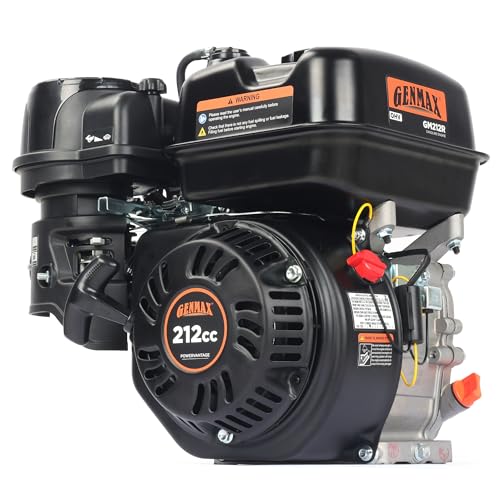
| GENMAX GM212R | Best support plan |
| $169.99as of Oct 26, 2026 4:00 am EDT | Buy now →Check current price |


Prices are Amazon’s listed prices as of the date and time shown and are subject to change; the price on Amazon at the time of purchase applies. As an Amazon Associate we earn from qualifying purchases.
125cc Go-Kart Engine Options Compared
| Engine type | Design | Typical power (approx.) | Typical top speed (gearing-dependent) | Typical cost (USD) |
|---|---|---|---|---|
| TaG two-stroke | Liquid-cooled, single-speed, clutch | Low 20s to ~30 hp | 60–70+ mph | $2,500–$5,000 new |
| KZ shifter 125 | Liquid-cooled, six-speed gearbox | Roughly 40s hp | 80–100+ mph | $4,000–$7,000 new |
| Pit-bike four-stroke 125 | Air-cooled, multi-speed gearbox | Single digits | 25–40 mph | $150–$400 |
| Used TaG or shifter | Varies by hours and history | Varies | Varies | $1,200–$3,500 |
These are rough ranges. Speed depends on gearing, track length, driver weight, and conditions, and output depends on engine version and class rules. For more on real-world speeds, see our 125cc go-kart top speed guide.
Cost and Considerations
On the racing side, the purchase price is only the entry fee. TaG engines need top-end refreshes at intervals set by the manufacturer, commonly measured in tens of hours of track time, plus full rebuilds less often. KZ engines generally need attention sooner when raced hard. Add two-stroke oil, coolant, carburetor jetting for changing weather, tires, and entry fees, and a racing season can cost several thousand dollars beyond the engine itself.
The pit-bike four-stroke flips that equation. Oil changes, a clean air filter, and an occasional valve-lash check are most of what it asks, and parts are cheap and easy to find. The trade-off is power: it delivers a small fraction of what the racing engines do.
Chassis matching matters. A TaG or KZ engine has no business on a yard-kart frame with a basic band brake. Those engines belong on racing chassis with hydraulic disc brakes and proper racing tires. Conversely, a racing engine is wasted, and quickly worn out, on knobby tires and gravel.
How to Choose a 125cc Go-Kart Engine
Start with where you will actually drive.
- Sanctioned sprint track: choose the engine your local club races. Running the region’s most common package means affordable used parts, shared tuning knowledge, and full grids. Check the club rulebook before you buy, because classes specify engines, restrictors, and seals.
- Experienced racers: move to KZ once you are consistent in a single-speed class. Most drivers get faster sooner in TaG, where they can focus on lines rather than shift points.
- Backyard or farm: a pit-bike four-stroke 125 or a standard clone engine is the honest pick. Our best go-kart engine roundup compares popular recreational engines.
Buying used? Ask for hour-meter readings and rebuild receipts. A TaG engine with a fresh top end and documented history is usually a better buy than a cheaper engine with no records. Check that the engine includes its radiator, exhaust, wiring loom, battery, and starter where applicable, because missing pieces add up quickly.
125cc Versus Other Common Kart Engines
It helps to place the 125 options against the engines most people compare them with. A standard 196–212cc clone four-stroke is the default recreational engine; it is cheap, torquey, and usually at least as quick as a pit-bike 125 on a yard kart, though without a gearbox. Four-stroke spec racing classes built around sealed clone-style engines offer low running costs and close racing, making them a popular first step before TaG.
Smaller two-strokes, such as 60cc and 100cc engines, power cadet and junior classes and some older senior formats. They are lighter and less powerful than a TaG 125 but share the same two-stroke maintenance rhythm. At the other end, 250cc superkart engines sit above KZ in outright speed and race on full-size circuits.
In short, the 125 tier is where karting gets serious. If you are unsure whether you need that level, a four-stroke class is a lower-cost way to build skills first.
Fuel, Oil, and Running Basics
Racing two-strokes run on gasoline premixed with two-stroke oil. The correct ratio depends on the engine and oil, and many classes specify both the fuel and the oil, so follow the manufacturer and the rulebook rather than a generic number. Mix accurately in a clean container and label it. Liquid-cooled engines need coolant checks and radiator tape or covers to manage temperature in cool weather.
Pit-bike four-strokes run on regular pump gasoline with oil in the crankcase. Change oil frequently, since these engines hold only a small quantity, and keep an eye on the clutch adjustment.
Maintenance Schedule
For a TaG or KZ engine, keep an hour log. Typical tasks include checking the spark plug and carburetor after each session, inspecting the clutch and chain, cleaning the air filter, and following the manufacturer schedule for piston, ring, and bearing replacement. Many racers send engines to a specialist builder for top-end and full rebuilds.
For a pit-bike four-stroke, change oil regularly, clean the air filter, check valve clearance at the intervals in the manual, and keep the chain and sprockets lubricated and aligned.
Safety
Racing 125s are fast and accelerate hard, so wear a full-face helmet rated for motorsport, a karting suit, gloves, and boots, and consider a rib protector and neck brace. Make sure your chassis, brakes, and steering are in good condition before every session. On any homemade kart, fit a kill switch, guard the chain, and test away from people and traffic.
Pros and Cons
The 125 class earns its popularity, but the racing variants ask a lot in return.
Pros
- Widest range of options of any kart displacement
- TaG engines offer serious speed with predictable rebuild schedules
- KZ shifters deliver the quickest sprint karting experience
- Pit-bike 125s are cheap, quiet, and easy to maintain
- Large parts and knowledge base worldwide
Cons
- Racing two-strokes need regular top-end rebuilds
- The 125 label says little about power without context
- Shifter engines demand fitness and mechanical skill
- Racing engines require a proper chassis, brakes, and tires
Frequently Asked Questions
How fast is a 125cc go-kart?
How much horsepower does a 125cc kart engine make?
Is a 125cc engine good for a beginner?
How often does a 125cc 2-stroke kart engine need a rebuild?
Can I put a 125cc racing engine on a homemade kart?
What fuel does a 125cc kart engine use?
Final Thoughts
A 125cc go kart engine can be a budget four-stroke for the backyard, a TaG two-stroke for club racing, or a KZ shifter for the quickest sprint karts. Decide where you will drive and how much maintenance you will genuinely do, then pick the family that fits. For racing, start with what your local club runs and confirm every spec in the rulebook before you spend.