
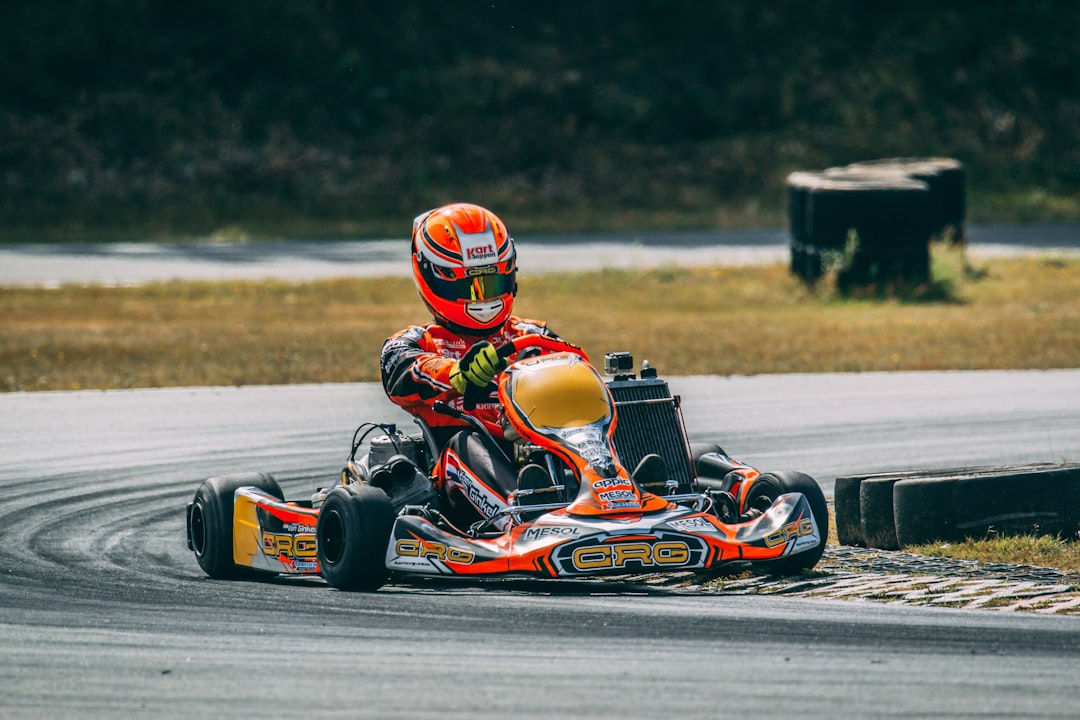
A custom go-kart suit is a karting suit with your own design, usually printed by dye sublimation. It can be cut to standard sizes or made to your body measurements. Most reputable manufacturers can build custom suits to the same CIK-FIA homologation as their stock suits, so a custom suit can be fully race-legal. You should confirm this in writing before you order. Expect to pay roughly $400 to $1,200 or more, and to wait several weeks from approving the artwork to receiving the suit. A custom suit is worth it if you have sponsors, race a full season, or do not fit standard sizes. A first-year club racer is usually better served by a stock suit. Below: how they are made, costs and timelines.
Part of our Kart Racing Gear guide — explore the full guide →
What Makes a Custom Go-Kart Suit Different?
Off-the-rack karting suits come in standard sizes, usually European numbers such as 46, 50 and 54, plus junior sizes. They are printed in the manufacturer’s stock colors. A custom suit changes one or both of those things.
Custom design on a standard size. This is the most common route. You choose the colors, layout, logos, name and flag, and the suit is built using the manufacturer’s normal size pattern.
Made-to-measure. The suit is cut from a set of body measurements, often a dozen or more, as well as carrying your own design. This helps drivers who fall between sizes, such as someone with a long torso and short legs or a lanky teenager.
Fit matters for practical reasons, not only looks. In a kart your arms reach forward, your torso twists against the seat and you brace through your legs. A suit that bunches at the shoulders, pulls across the back or rides up at the ankles becomes a distraction over a long race. For the basics of what any karting suit should do, see our guide to the kart suit.
Safety and Homologation: Custom Does Not Mean Exempt
Printing does not make a suit safer or less safe. The protection comes from the fabric, the construction and the standard it was tested to. In most sprint karting, rulebooks require a suit carrying a valid CIK-FIA karting homologation, an approved national equivalent, or in North America sometimes an SFI karting abrasion specification. That requirement applies to custom suits just as it does to stock ones.
Before you pay a deposit, ask the manufacturer which standard the custom suit will be homologated to. Also confirm that the label will be sewn in, and check that standard against your series rules. Homologation standards are updated from time to time, and series set their own cut-off dates for older labels. A stunning suit that fails scrutineering is an expensive lesson.
Karting suits are abrasion suits, not fire suits. If your class requires fire-rated clothing, a custom karting suit will not meet that requirement no matter how it is printed. Our guide to the go-kart fire suit explains the difference.
Best Kart Racing Suit: our top 3 picks
| Product | Best for | Key features | Price | Buy |
|---|---|---|---|---|
| Alpinestars KMX-9 V2 | Best overall CIK-FIA Level 2 suit |
| $154.98as of Oct 26, 2026 5:58 am EDT | Buy now →Check current price |
| K1 RaceGear GK2 | Best size range, juniors to adults |
| $159.99as of Oct 26, 2026 5:58 am EDT | Buy now →Check current price |
| K1 RaceGear Speed 1 | Best vented CIK suit |
| $169.00as of Oct 26, 2026 5:58 am EDT | Buy now →Check current price |


Prices are Amazon’s listed prices as of the date and time shown and are subject to change; the price on Amazon at the time of purchase applies. As an Amazon Associate we earn from qualifying purchases.
How Custom Suits Are Designed and Printed
Nearly all modern custom karting suits are made by dye sublimation. The design is printed onto transfer paper and then heat-pressed into the outer fabric before the suit is sewn together. The ink bonds with the fibers instead of sitting on top, so it does not crack or peel, and it adds no meaningful weight. Gradients, flags and detailed logos usually cost no more than a plain two-tone layout.
Some suits also add embroidered names or logos. Embroidery looks premium, but it adds stitching and stiffness. Check with the maker whether it affects the homologation and how it will be applied.
The process usually follows these steps:
- Brief and measurements. You send your design ideas, colors, logo files and either a standard size or a full set of measurements.
- Digital proof. The manufacturer sends a rendering of the suit from the front, back and sides.
- Revisions. Most orders go through one to three rounds of changes. Check every logo, spelling and flag before you sign off.
- Production. Printing, cutting and assembly, followed by delivery.
Supply vector logo files (AI, EPS, SVG or vector PDF) wherever you can. A low-resolution JPEG enlarged onto a chest panel will look worse in person than it did on screen.
Sponsor Placement That Works
If sponsors help fund your season, logo placement is part of what you deliver to them, not just decoration. The chest and upper arms appear in head-on grid photos, podium shots and interviews. The upper back shows in photos taken from behind the kart. The thighs read well when you are seated. Logos at belt level and below the knee are rarely seen.
Leave clear space around each logo and avoid crowding. A few large, clean logos usually do more for sponsors than a dozen small ones. Check your series rules as well, because some championships reserve areas of the suit for series partners or limit the size of certain logos. Many teams match the suit to their kart livery so the whole package looks like one brand. Our go-kart graphics kit guide covers the bodywork side.
Cost, Lead Times and Options Compared
The table below shows the main ways to get a race suit. Prices are typical USD ranges for homologated karting suits. They vary widely by brand, fabric, homologation level and options such as stretch panels or embroidery.
| Option | Typical price (USD) | Typical lead time | Fit | Design freedom |
|---|---|---|---|---|
| Off-the-rack stock design | $150–$500 | In stock | Standard size chart | None |
| Custom print, standard sizing | $400–$750 | Several weeks | Standard size chart | Full sublimation design |
| Made-to-measure custom | $600–$1,200+ | Several weeks to a few months | Built to your measurements | Full sublimation design |
| Team or multi-suit order | Often discounted per suit | Several weeks to a few months | Mixed | Shared team livery |
Lead times stretch before the main racing season, when manufacturers are busiest, so ordering in the off-season gives you a margin. Ask for a written delivery estimate and plan backward from your first race. Allow time for revisions and shipping as well.
How to Measure for a Made-to-Measure Suit
Measurement errors are the most common cause of disappointing custom suits. Remaking a suit is slow and rarely free. Follow the manufacturer’s own measuring guide, because each brand defines its measurements slightly differently. These habits help:
- Have someone else take the measurements while you stand relaxed in light clothing.
- Wear, or allow for, the gear that goes under the suit, such as a rib protector and base layer, since they add bulk around the torso.
- Use a soft tape that sits flat without pulling tight, and measure twice.
- For junior drivers, ask the maker how much growing room they recommend rather than guessing.
When Custom Is Worth It, and When It Is Not
A custom suit makes clear sense in three situations. The first is when sponsors expect visible branding. The second is when you race a full season or more, so the cost spreads over many race weekends. The third is when standard sizes do not fit your body.
It makes much less sense for a first-year club racer who may change class, sponsors or size within a year. A well-fitting homologated stock suit protects you just as well, and the money you save buys tires and practice time. To compare stock options, see our roundup of the best kart racing suits.
Parents face their own version of this decision. Children outgrow suits quickly, so most families stay with stock sizes until a young driver is racing seriously at regional level or above. Our kids karting suit guide covers sizing and growth allowance.
Pros and Cons of a Custom Go-Kart Suit
Weigh these before you send off your measurements and deposit.
Pros
- Made-to-measure fit improves comfort and freedom of movement
- Sublimation allows unlimited colors and logos at little extra cost
- Professional look supports sponsor relationships and team identity
- Solves sizing problems for drivers between standard sizes
Cons
- Usually costs well over a comparable stock suit
- Lead times of several weeks or more need planning around the calendar
- Resale value is poor because the design is personal
- Design or measurement mistakes are slow and costly to fix
Frequently Asked Questions
How much does a custom go-kart suit cost?
How long does a custom suit take to make?
Are custom karting suits homologated for racing?
What measurements do I need to provide?
Can I put any sponsor logo on my suit?
Is a custom suit safer than a stock suit?
Final Thoughts
A custom go-kart suit is the right choice when fit, sponsors or a long-term racing program justify the cost. It is an avoidable expense when you are one season into the sport and still working out where your racing is headed. Whichever way you go, confirm the homologation in writing, supply clean vector artwork, measure carefully and order early. To see where the suit fits in your full budget, read our kart racing gear complete guide.