

A drift trike for kids can be a great first taste of sliding, as long as size, power, and supervision are right. These low three-wheelers sit just above the ground, which makes them stable and hard to tip, but a trike that is too big, too fast, or ridden without a helmet can still lead to injuries. The short answer: choose a model rated for your child’s height and weight, start younger kids on pedal power, save speed-limited electric trikes for older and more coordinated kids, keep gas trikes for teens and adults, and treat a helmet and pads as part of the purchase. This guide covers sizing, types, safety gear, riding areas, costs, and how to choose.
Part of our Drift Karts & Drift Trikes guide — explore the full guide →
What Is a Drift Trike for Kids?
A kids drift trike is a scaled-down version of the adult machine. It has one rubber-tired front wheel that the child steers and usually pedals, and two rear wheels wrapped in hard plastic sleeves that let the back end slide. The rider sits low and slightly reclined, with feet forward on pedals or pegs.
The design suits children because the low seat keeps the center of gravity near the ground, so slides are easy to control at modest speeds. Kids models use smaller frames, smaller front wheels, and controls within a child’s reach. For a broader look at the machine and how it works, see our drift trike overview.
Kids drift trikes are different from kids drift karts, which have four wheels, a seat belt or bucket seat on some models, and usually an electric motor with rear casters. If your child is very young or you want more stability, a four-wheel drift kart may be the better fit. Our best drift karts for kids roundup compares those options.
Types of Kids Drift Trikes
Pedal drift trikes. The child pedals a crank on the front wheel. Speed is limited by the rider, there is no throttle to mismanage, and maintenance is minimal. This is the safest starting point and suits most younger riders.
Electric drift trikes. A battery and motor provide power through a throttle. Good kids and teen models include speed modes or a limiter, a brake, and a clear weight rating. They suit older children who already ride bikes confidently and can follow rules about where and how fast to ride. Our electric drift trike guide explains motors, batteries, and speed settings.
Gravity drift trikes. These coast downhill with no pedals or motor. Because a hill can build speed quickly and braking may be limited, gravity riding is better left to experienced teens and adults on closed, supervised slopes.
Gas drift trikes. Small engines bring more speed, noise, heat, and weight. They are not suitable for young children.
Best Drift Kart for Kids: our top 3 picks
| Product | Best for | Key features | Price | Buy |
|---|---|---|---|---|
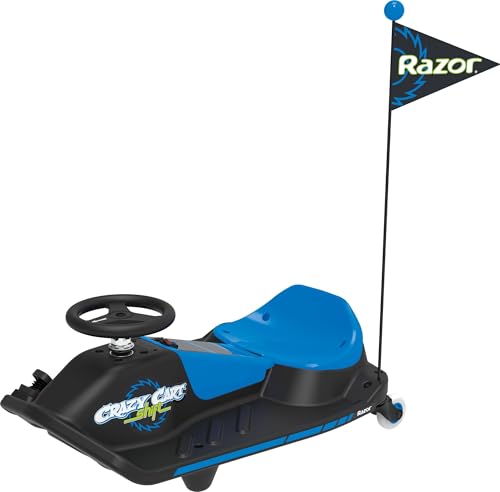
| Razor Crazy Cart Shift | Best overall drift kart for ages 6+ |
| $148.00as of Oct 27, 2026 5:28 am EDT | Buy now →Check current price |
| Razor Crazy Cart Sport | Best for skilled drifters aged 9+ |
| $379.00as of Oct 27, 2026 6:45 am EDT | Buy now →Check current price |
| Qaba 24V 9Ah Drift Kart | Best for longer drift sessions |
| $220.99as of Oct 27, 2026 6:17 am EDT | Buy now →Check current price |


Prices are Amazon’s listed prices as of the date and time shown and are subject to change; the price on Amazon at the time of purchase applies. As an Amazon Associate we earn from qualifying purchases.
Drift Trike for Kids: Age and Size Guide
Manufacturers rate trikes by age, height, and weight, and those ratings matter. Treat age as a starting point only; height, weight, and coordination are better guides. As rough orientation:
- Younger kids (roughly preschool to early elementary). Small pedal trikes or ride-ons with sliding rear wheels, at walking-to-jogging speeds.
- Middle childhood (roughly 8 to 12). Larger pedal trikes, and for confident riders, low-power electric trikes set to a low speed mode.
- Teens. Teen-rated electric trikes or compact adult pedal frames, depending on size and experience.
Always check the specific model’s stated age range, height range, and maximum rider weight. A child at the very top of a range has probably outgrown it; a child at the bottom may struggle to reach the pedals or steer.
A quick fit check: seated, your child should reach the pedals or foot pegs with a slight bend in the knee, hold the handlebars without stretching, and turn the front wheel fully in both directions without strain.
Kids Drift Trike Types Compared
| Type | Typical rider | Speed | Supervision | Typical price (USD) |
|---|---|---|---|---|
| Small pedal trike | Younger kids | Low, rider-limited | Close adult supervision | $60 to $200 |
| Larger pedal trike | Older kids and young teens | Moderate, rider-limited | Adult nearby | $100 to $350 |
| Speed-limited electric | Older, confident kids and teens | Moderate, set by mode | Close supervision, low mode first | $200 to $600 |
| Gravity or gas | Experienced teens and adults | Higher | Not recommended for children | Varies |
Prices are typical ranges and vary by brand, size, and build quality. Speeds vary by model, so check the maker’s stated top speed and speed modes.
Safety Gear for Kids
A properly fitted, buckled helmet on every ride is non-negotiable. Choose a helmet certified for cycling or skating, sized to your child’s head, and replace it after any significant impact. Our kids go-kart helmets guide explains fit and certification labels.
Beyond the helmet, dress your child in:
- Gloves. Hands are often the first thing to hit the ground in a spin.
- Elbow and knee pads. Cheap protection against scrapes.
- Long sleeves and long pants. More protection than shorts and t-shirts.
- Closed-toe shoes. Feet sit near the front wheel and pavement.
Tie back long hair and avoid loose clothing or laces that could catch in the front wheel or cranks.
Where Kids Should Ride
The riding area matters as much as the trike. Choose a flat, smooth, dry paved surface with plenty of space and no traffic: a private driveway, an empty private lot with permission, or a closed play area.
Avoid slopes, which build speed faster than a child can control; public roads and sidewalks with pedestrians; and wet or gritty pavement, where slides become unpredictable. Set clear boundaries before every session, and stay close enough to step in.
Weight Limits and Frame Care
Respect the weight limit printed on the trike. Overloading a kids frame flexes the tubing and stresses the welds, which can crack a chassis that was never designed for the load. A child near the limit has usually outgrown the frame’s geometry too, so it is time to move up a size. And never let an adult or older sibling ride a kids trike.
Check the trike regularly: look for cracks at welds, loose bolts, a wobbly front wheel, and worn rear sleeves. Sleeves wear with every slide and need replacing as a pair. Our drift trike wheels and tires guide explains how.
Cost of a Kids Drift Trike
Pedal kids trikes typically run about $60 to $350 depending on size and build quality. Speed-limited electric models for older kids and teens commonly land around $200 to $600. Add a helmet, gloves, and pads, which together often cost $50 to $150, and a spare set of rear sleeves.
Spend on fit, a sturdy frame, and good gear before features. A well-sized pedal trike with a helmet that fits is a better buy for a young child than a powerful electric model they will grow into. If you are considering a used trike, our drift trikes for sale guide covers what to inspect.
How to Choose a Drift Trike for Kids
- Measure your child. Compare height and weight against the model’s range, not just the age label.
- Match power to maturity. Pedal for younger and newer riders; speed-limited electric only for older, confident kids.
- Check the controls. On electric models, look for a speed limiter or low mode and a working brake.
- Check build quality. Look for clean welds, a stated weight rating, and replaceable sleeves.
- Buy the gear with the trike. Helmet, gloves, and pads before the first ride.
- Plan the riding area. Make sure you have somewhere flat, smooth, and traffic-free.
If you are weighing a drift trike against other ride-ons, our kids go-karts complete guide covers pedal karts, electric karts, and age-appropriate options, and the drift kart guide covers four-wheel sliders.
Pros and Cons of Drift Trikes for Kids
Kids drift trikes are stable and fun when sized right and used with gear and supervision.
Pros
- Low seat makes the trike stable and hard to tip
- Pedal models have no throttle to mismanage
- Affordable entry point for sliding fun
- Builds coordination and confidence
- Simple to maintain with replaceable sleeves
Cons
- Wrong size undermines safety and control
- Hands and feet sit close to pavement and wheels
- Needs a flat, smooth, traffic-free area
- Sleeves wear out and need replacing
- Gravity and gas trikes are unsuitable for children
Frequently Asked Questions
What age is a drift trike suitable for?
Are drift trikes safe for kids?
Should I buy a pedal or electric drift trike for my child?
What safety gear does a child need?
Is a drift trike or drift kart better for a young child?
What happens if my child goes over the weight limit?
Final Thoughts
A drift trike for kids is a stable, fun ride-on when you get three things right: fit, power, and gear. Size the trike to your child, start with pedal power, add a speed-limited electric model only when they are ready, and make the helmet part of every ride. Pick a safe, flat spot, stay nearby, and replace sleeves as they wear.