
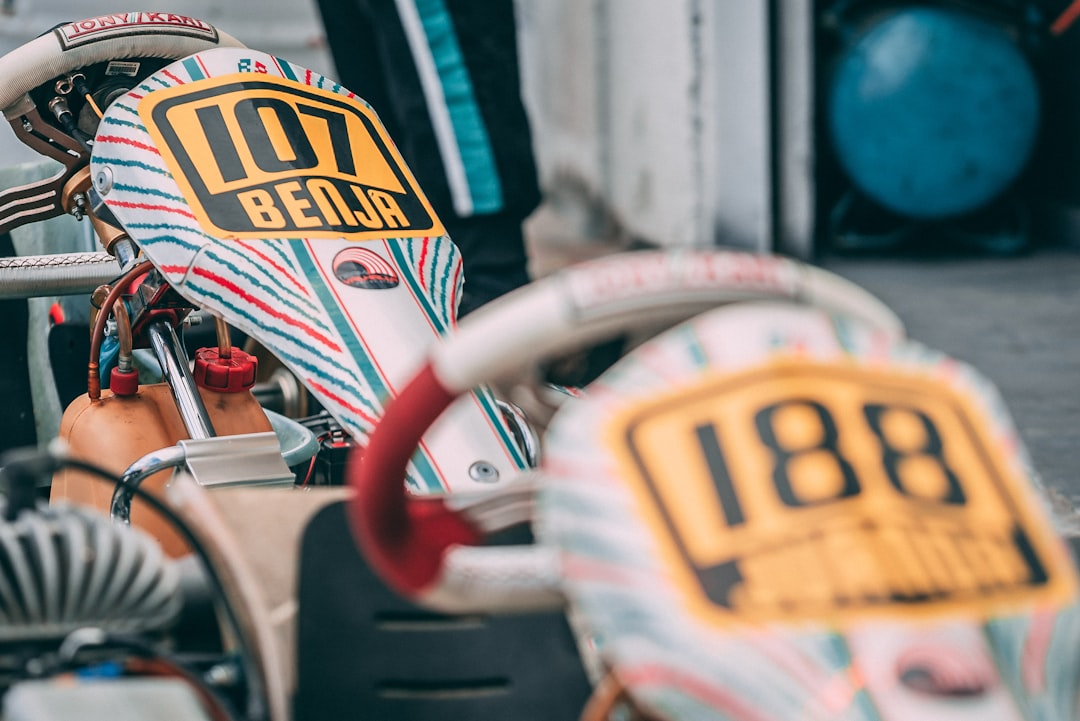
An electric racing go-kart is a competition-grade kart that uses a battery pack, controller, and electric motor instead of a two-stroke or four-stroke engine. It runs on a proper racing chassis, races on the same tracks, and rewards the same driving fundamentals, but it delivers instant torque, near-silent running, and far less engine maintenance. The catches are battery cost, limited stint length, and a smaller pool of classes than gas karting. This guide explains how an electric racing kart works, where you can actually race one, the main types, typical costs, and how to choose a kart that fits your rulebook and budget.
Part of our Electric Go-Karts guide — explore the full guide →
What Is an Electric Racing Go-Kart?
The term covers any electric kart built or set up for timed competition rather than casual riding. That ranges from the electric rental karts used in arrive-and-drive leagues to owner-run sprint chassis fitted with a purpose-built electric powertrain.
What separates a racing kart from a recreational electric kart is the chassis and the rules. A racing kart uses a rigid tubular chassis with no suspension, a sprint-style seat, adjustable front end, hydraulic brakes, and racing slicks. It is designed to be tuned and driven at the limit on a paved circuit. Recreational electric karts, by contrast, usually prioritize comfort, range, and ease of use; our electric go-karts complete guide covers that side of the market.
Electric karting has grown fastest indoors, where zero exhaust emissions make a real difference to air quality, and many indoor venues now run electric fleets. Outdoor club racing with owner-operated electric karts is growing too, but availability still varies a lot by region.
How an Electric Racing Kart Works
The powertrain has four main parts:
- Motor. Usually a brushless AC or permanent-magnet motor mounted where the engine would sit, driving the rear axle through a chain and sprocket.
- Battery pack. Lithium-ion cells in a protected enclosure, typically mounted low beside or behind the seat to manage weight distribution.
- Controller (inverter). Converts battery power into motor current according to throttle input, and enforces power limits, temperature protection, and sometimes selectable power maps.
- Battery management system. Monitors cell voltage and temperature, balances cells, and cuts power if something goes outside safe limits.
Most electric racing karts are single-speed: no clutch and no gearbox, just throttle and brake. Because an electric motor produces strong torque from zero rpm, the kart pulls hard off slow corners without the bog or slip a centrifugal clutch can introduce. Some systems also offer regenerative braking, which recovers a little energy and adds an engine-braking feel; whether it is allowed or adjustable depends on the class.
Gearing still matters. Changing the axle sprocket trades acceleration against top speed exactly as on a gas kart, and electric racers tune it per track. If you want to understand the ratio math, our how fast go-karts go guide covers the factors that set kart speed.
Heat and Energy: The Hidden Variables
A gas racer manages fuel load and tire wear. An electric racer manages energy and temperature.
A battery holds a fixed amount of energy, measured in kilowatt-hours. Driving at full power uses it faster, so race length, power settings, and pack size must be balanced. Many classes set power limits partly so that karts can finish a race distance without running out of charge.
Heat is the other limit. Cells, motor, and controller all lose efficiency when they get hot, and most systems progressively reduce power (derate) to protect themselves. A kart that feels strong in a cool morning session may feel softer in a hot afternoon heat. Good electric karts manage this with airflow, heat sinks, or active cooling, and good drivers learn to be smooth: abrupt throttle use and excessive wheelspin cost both energy and temperature margin.
Types of Electric Racing Go-Karts
Rental and league karts. Heavy, robust karts with bumpers and protective bodywork, run by a venue. Power is often detuned and can be adjusted centrally so every kart performs similarly. This is the easiest and cheapest way into electric racing, because you pay per session or per league round. Our indoor go-kart racing guide explains how these leagues work.
Owner-run sprint electric karts. A conventional sprint chassis with a purpose-built electric powertrain, raced in club or national electric classes. Several established kart and engine manufacturers have developed electric racing powertrains for this market, and some series supply a spec system so competitors race on equal hardware.
High-performance and shifter-equivalent electric karts. Higher-power systems aimed at experienced drivers, sometimes positioned as an electric alternative to gearbox shifter karts.
DIY electric conversions. Hobbyists fit brushless motors and lithium packs to used sprint chassis. These can be fast and fun for practice days, but they are rarely legal in sanctioned classes, and their safety depends entirely on the builder’s electrical knowledge.
Electric Racing Kart vs Gas Racing Kart
| Factor | Electric Racing Kart | Gas Racing Kart |
|---|---|---|
| Power delivery | Instant torque, single speed, very linear | Power band, clutch or gearbox |
| Session length | Limited by pack capacity and heat | Refuel in minutes |
| Engine maintenance | Minimal: no top-end rebuilds or carb tuning | Regular rebuilds, jetting, plugs |
| Noise and fumes | Near silent, no exhaust | Loud, exhaust emissions |
| Weight | Battery adds weight | Lighter powertrain |
| Class availability | Growing but limited by region | Wide, established classes everywhere |
| Typical new package cost | Often higher, battery is the big expense | Wide range by class |
Electric Racing Go-Kart Costs
Costs vary more in electric karting than in established gas classes, so treat these as broad USD ranges.
- Arrive-and-drive racing: individual sessions at electric venues commonly cost around $25 to $60, with league formats priced per round or season.
- New owner-run electric racing package: a chassis plus a purpose-built electric powertrain often starts in the high four figures and can run well into five figures for higher-power systems.
- DIY conversion: a used chassis plus motor, controller, and lithium pack might total a few thousand dollars, depending heavily on the battery.
The battery is the single largest long-term cost. Packs lose capacity gradually with cycles and age, and a replacement can be a significant fraction of the kart’s price. On the other side of the ledger, electricity is cheap compared with race fuel and oil, and you skip engine rebuilds. Whether total running costs come out lower than gas depends on how much you race and how long your pack lasts. For a broader budget picture, see how much a go-kart costs.
How to Choose an Electric Racing Go-Kart
Start with where you will race. If your local track only runs gas classes, an owner-run electric kart may be limited to practice days. If there is an electric league or class, its rulebook dictates the allowed powertrain, minimum weight, and safety equipment. Buy to the rules, not to a spec sheet.
Consider rental leagues first. For many drivers, a season of arrive-and-drive electric racing is the best way to learn race craft and decide whether ownership makes sense.
Check support and parts. A kart is only as good as the support behind it. Ask who services the controller and battery, how long parts take, and whether firmware updates are available.
Verify battery health on used karts. Ask for cycle counts or diagnostic data from the battery management system, and look for physical damage to the enclosure. A tired pack can turn a bargain into an expensive project.
Plan your charging. Find out what charger the system needs, how long a charge takes, and whether you can charge at the track. Some racers carry a spare pack where rules allow.
Weigh it against gas. If you want the widest choice of classes and a long racing future, compare options in our sprint vs shifter karts guide before committing.
Safety Gear and Electrical Safety
An electric racing kart reaches speeds comparable to gas sprint karts in many classes, so the driver gear is the same: a helmet meeting the standard your series requires, a karting suit, gloves, boots, and a rib protector or neck support as appropriate. Our kart racing gear complete guide walks through each item, and our best kart helmets roundup covers certified helmets.
Electric karts add electrical hazards. Racing packs operate at voltages that can be dangerous, so never open a battery enclosure or controller unless you are trained to do so. Use only the approved charger, charge in a ventilated area away from flammable materials, and know the emergency shutdown procedure for your kart. Track marshals and crews at electric events often follow specific procedures for damaged karts; follow their instructions after any crash.
Pros and Cons
Electric racing karts excel at torque and simplicity, while gas still leads on class choice and endurance.
Pros
- Instant torque and strong corner exits
- No clutch or gearbox, so beginners focus on lines and braking
- Minimal engine maintenance with no fuel or oil
- Quiet and emission-free, ideal for indoor venues
Cons
- Battery limits session length and performance fades with heat
- Packs are expensive and degrade over time
- Fewer classes and tracks than gas karting in most regions
- High-voltage systems need careful handling and charging
Frequently Asked Questions
Are electric racing go-karts faster than gas karts?
How long does an electric racing kart battery last per session?
How much does an electric racing go-kart cost?
Can I convert a gas racing kart to electric?
Do electric karts need different safety gear?
Is electric karting a good way to start racing?
Final Thoughts
The electric racing go-kart has moved past novelty into a credible way to compete, especially indoors and in league formats. Start by finding where you can race, buy to that rulebook, and treat the battery as the heart of the kart when budgeting. For the wider picture of battery-powered karts, return to the electric go-karts complete guide, and see go-kart racing for how to get into competition in any class.