
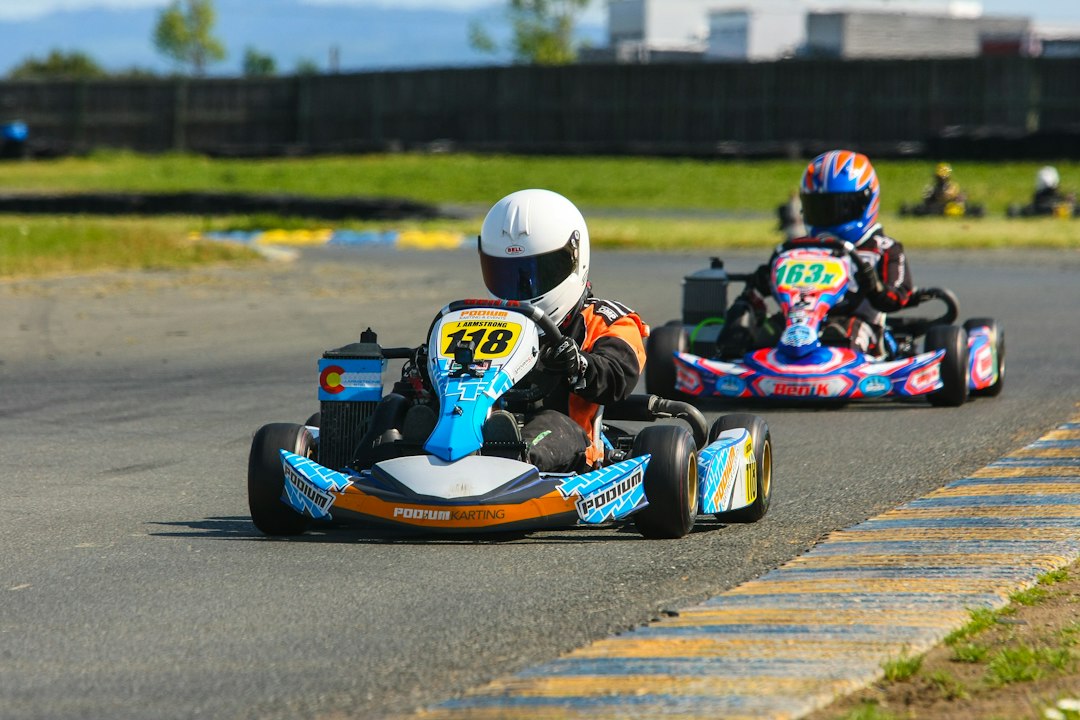
A full go kart kit gives you every major part needed to build a running kart in one box or crate: frame, engine, drivetrain, steering, brakes, wheels, seat, and the hardware to hold it together. It is the middle ground between buying a ready-built kart and sourcing every part yourself, and it is how many families and first-time builders get into DIY karting. The catch is that “full” means different things to different sellers. This guide explains what a complete kit should include, the main kit types, typical costs, how to choose one, what the build involves, and the gaps you may still need to fill.
Part of our Build a Go-Kart guide — explore the full guide →
What Is a Full Go Kart Kit?
A full kit is a package designed so that, once assembled, the kart is ready to run with no major parts missing. It differs from a frame kit, which supplies only the chassis, and from a partial kit, which might include frame and running gear but leave you to source the engine. Our general go-kart kits guide explains the full spectrum from bare frames to complete packages.
In practice, many “full” kits still leave out items such as fuel, oil, a battery for electric start, paint, or a chain guard. Always read the parts list carefully before buying, and ask the seller directly about anything not listed.
What a Full Kit Should Include
Frame. A pre-welded or bolt-together frame with mounts for engine, seat, steering, and axle.
Engine. Usually a small four-stroke engine, often in the 196cc to 212cc range for adult and teen karts. Some kits offer an electric motor and battery instead.
Drivetrain. A centrifugal clutch or torque converter, chain, sprockets, and a rear axle with bearings and hubs.
Steering. Steering wheel, column, tie rods, spindles, and front wheel hubs.
Brakes. A disc or band brake, plus pedal and linkage or hydraulic lines.
Wheels and tires. Four wheels with tires already mounted in many cases.
Controls and hardware. Throttle pedal and cable, seat, fasteners, and often a kill switch.
Best Go-Kart Kits, Frames & Engines: our top 3 picks
| Product | Best for | Key features | Price | Buy |
|---|---|---|---|---|
| Azusa Frame w/ Steering Hoop | Best go-kart frame |
| $612.69as of Oct 25, 2026 4:20 am EDT | Buy now →Check current price |
| YC Yier 29 in Live Axle Kit | Best kit to complete a frame |
| $465.99as of Oct 25, 2026 4:20 am EDT | Buy now →Check current price |
| TDPRO 32 in Rear Axle Kit | Best rear axle with kart tires |
| $764.99as of Oct 25, 2026 4:20 am EDT | Buy now →Check current price |


Prices are Amazon’s listed prices as of the date and time shown and are subject to change; the price on Amazon at the time of purchase applies. As an Amazon Associate we earn from qualifying purchases.
See every pick compared: Best Go-Kart Kits, Frames & Engines →
Types of Full Go Kart Kit
Bolt-together recreational kits. Pre-welded frame sections that bolt together, with a gas engine and simple running gear. These are the most common full kits and the easiest for beginners.
Weld-required kits. Supplied as cut and notched tubes that you weld together. They are cheaper and teach fabrication, but need welding equipment and skill.
Electric full kits. Include a motor, controller, battery, and wiring instead of a gas engine. Quieter and lower maintenance but often more expensive.
Kids’ full kits. Smaller frames with lower-power engines or motors and safety features suited to younger drivers.
Off-road full kits. Heavier frames, larger tires, and sometimes suspension or a roll cage.
Full Go Kart Kit Types Compared
| Kit Type | Build Skill | Typical Price Range | Typical Build Time | Best For |
|---|---|---|---|---|
| Bolt-together gas | Basic tools | $800-$2,000 | A few weekends | First-time builders |
| Weld-required gas | Welding needed | $500-$1,500 | Several weekends | Builders who want to learn fabrication |
| Electric full kit | Basic tools plus wiring | $1,200-$3,000 | A few weekends | Quiet neighborhoods, low maintenance |
| Kids full kit | Basic tools | $500-$1,200 | One or two weekends | Parent and child projects |
| Off-road full kit | Moderate | $1,200-$3,000 | Several weekends | Rough terrain use |
Prices are typical ranges and vary with engine choice, shipping, and component quality.
What a Full Go Kart Kit Really Costs
The kit price is the starting point. Budget extra for fuel and oil, a chain guard if not included, thread locker, paint or powder coating, a battery for electric start, and replacement parts that wear early. Then add safety gear: a helmet is essential for every driver. Our guide on how much it costs to build a go-kart breaks down these extras.
Compare the total with the cost of a ready-built kart of similar quality. Sometimes a full kit saves little money, and the real value is in the experience of building it.
How to Choose a Full Go Kart Kit
Size for the driver. Check the maximum driver weight and the range of driver heights the frame supports. A kit built for teens may not suit a tall adult.
Check the engine and parts sources. Kits built around common engines and standard axle and sprocket sizes are easier to repair and upgrade.
Read the instructions first. Ask for the assembly manual before buying, if possible. Clear diagrams and parts lists are a sign of a well-supported kit.
Look at the brakes. A disc brake is a better choice than a simple band or scrub brake for heavier or faster karts.
Think about the future. If you plan to add power later, choose a frame and brakes that can handle it. Our best go-kart kits and frames roundup compares popular options.
Building a Full Kit: What to Expect
Most builds follow the same order. Assemble the frame, then fit the rear axle and bearings, followed by the front spindles and steering. Mount the engine, fit the clutch or torque converter, and install the chain and sprockets with careful alignment. Add the brakes, throttle cable, seat, and wheels. Finally, check every fastener, adjust the chain and brakes, and test at low speed in a safe area.
Basic tools include a socket set, combination wrenches, Allen keys, screwdrivers, pliers, a torque wrench, and a straightedge for chain alignment. Our detailed how to build a go-kart guide walks through each stage.
Take your time. A rushed build is the most common source of problems, from loose steering components to misaligned chains.
Checking the Kit When It Arrives
Before you start building, unpack everything and check it against the parts list. Shipping damage and missing hardware are common, and it is much easier to claim a replacement on day one than halfway through the build. Lay parts out by system, such as frame, steering, drivetrain, and brakes, and count small fasteners into labeled containers.
Inspect the frame welds for cracks or obvious gaps and check that tubes are straight. Spin the engine over by hand to confirm it turns freely, and check that it shipped without oil, which is normal; you will need to fill it before the first start. Look at tires for cuts and wheels for bends. If anything looks wrong, photograph it and contact the seller before you assemble anything, as some sellers will not accept claims on parts that have been installed.
Finally, read the whole manual once before picking up a wrench. Many build mistakes come from fitting one part too early and having to dismantle it to reach another.
Common Gaps and Upgrades
Even good full kits often benefit from a few upgrades. Common improvements include a better seat or seat cushion, a chain guard, a more powerful brake, and an engine kill switch if one is not supplied. Some builders upgrade to a torque converter for smoother low-speed driving or add electric start for convenience.
Keep upgrades in proportion. Adding power without improving brakes and steering makes the kart less safe, not more fun.
Safety Considerations
A kit-built kart is only as safe as its assembly. Use thread locker where the manual specifies, check fasteners after the first few runs, and inspect welds if you built the frame yourself. Always wear a helmet and closed shoes, drive only on private property or approved tracks, and supervise younger drivers closely. Fit a seat belt only if the kart has a roll cage designed for it.
Pros and Cons
A full kit is a great project, but it is not right for everyone.
Pros
- All major parts arrive together in one order
- Learn how every system on the kart works
- Often cheaper than a ready-built equivalent
- Easier to repair because you built it
Cons
- Full can still leave out important items
- Build quality depends on your assembly
- Savings over ready-built karts may be small
- Needs space, tools and several weekends
Frequently Asked Questions
What comes in a full go kart kit?
How long does it take to build a full go kart kit?
Do I need to weld to build a full kit?
Is a full kit cheaper than buying a go-kart?
Can a full go kart kit be upgraded later?
Are full kits suitable for kids?
Final Thoughts
A full go kart kit is a satisfying way to get a running kart and learn how it works, as long as you check what is really included and budget for extras. Choose a kit that fits the driver, uses common parts, and has good brakes, then build it carefully. For more help comparing build options, read our DIY go-kart kit guide.