
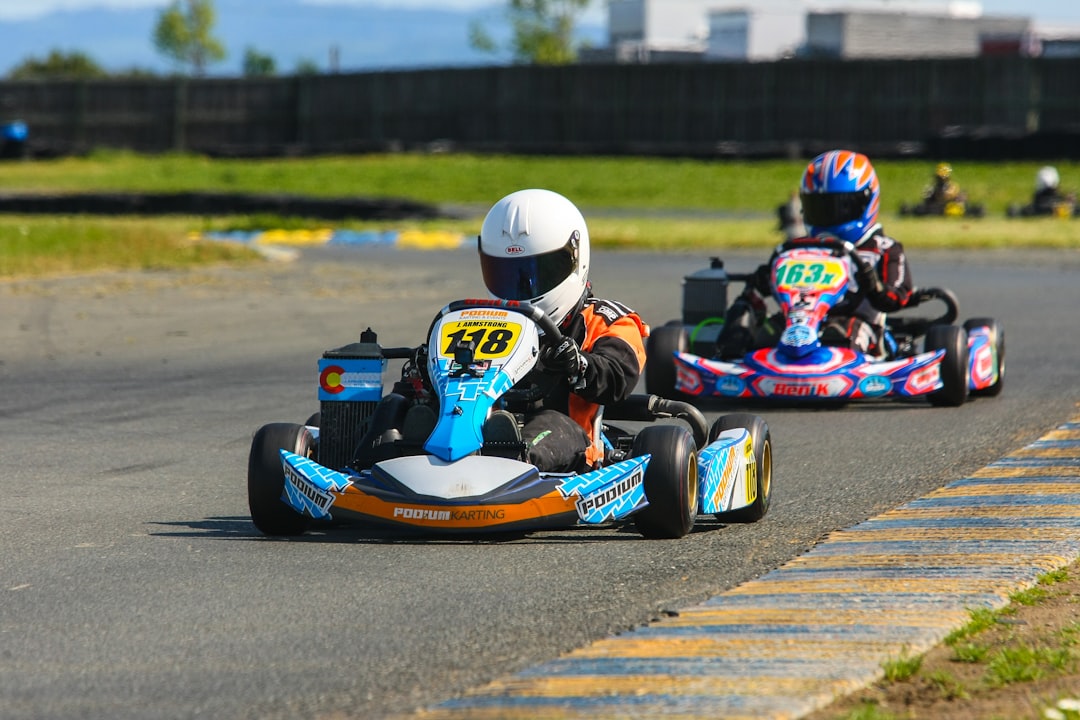
Ask about a go kart manual clutch in most karting circles and you will get a puzzled look, because the vast majority of karts run automatic centrifugal clutches or torque converters. But manual clutches absolutely exist in karting — you just find them in specific places: shifter karts, motorcycle-engine swaps, and ambitious garage builds where the driver wants full control over engagement. This guide explains how a hand- or foot-operated clutch actually works on a kart, where it belongs, why the centrifugal clutch still dominates yard karts, and what a manual conversion realistically involves before you commit wrenches and money to one.
What Is a Go Kart Manual Clutch?
A go kart manual clutch is a driver-operated clutch — usually a multi-plate wet or dry unit borrowed from motorcycle architecture — that connects and disconnects the engine from the drivetrain on command. Instead of engaging automatically at a preset RPM, the driver squeezes a lever (or presses a pedal) to disengage, selects a gear, and feeds the clutch back in to launch or shift.
Mechanically, the lever pulls a cable or actuates a small hydraulic slave, which compresses springs and separates a stack of friction and steel plates. Release the lever and spring pressure clamps the plates together, locking the crankshaft to the transmission input. It is the same principle as any motorcycle: engagement is entirely under the driver’s control, which puts smooth launches, clutch-kick corrections, and full engine braking on the table.
Contrast that with the automatic units most karts use. A centrifugal clutch uses spinning shoes that fling outward and grip a drum once the engine passes roughly 1,800–2,400 RPM — no driver input at all. A torque converter does a similar job with belts and variable pulleys. If you are weighing those two automatic systems against each other, our torque converter vs clutch comparison covers that battle in detail.
Where Manual Clutches Appear in Karting
Shifter karts. The purest example. A 125cc six-speed shifter kart uses a hand-lever-operated multi-plate clutch, primarily for launching from a standstill and smoothing downshifts. Once rolling, most upshifts happen with a quick throttle lift rather than a full clutch pull.
Motorcycle-engine karts. When builders drop a 250cc–600cc bike engine into a kart frame, the engine’s integrated manual clutch and sequential gearbox come along for the ride. The stock handlebar lever gets relocated near the steering wheel or converted to a foot pedal. Our guide to building a go-kart with a motorcycle engine walks through that whole swap.
Vintage and gearbox karts. Older gearbox classes and some European categories have always run manual clutches, and restorers keep those machines alive today.
DIY conversions. A small group of builders adapt manual clutches to single-speed yard karts, usually chasing controlled launches or just the fun factor. It can be done, but as we cover below, it is rarely the practical choice.
Manual vs Automatic Clutches Compared
| Clutch type | Driver input | Best application | Typical cost | Skill required |
|---|---|---|---|---|
| Manual multi-plate | Hand lever or pedal | Shifter karts, bike-engine builds | $150–$500 (plus gearbox engine) | High |
| Centrifugal clutch | None — automatic | Yard karts, kids karts, rentals | $20–$90 | None |
| Torque converter | None — automatic | Heavy or off-road karts | $90–$250 | None |
| Tunable racing dry clutch | Automatic, adjustable engagement | Sprint racing classes | $150–$400 | Tuning knowledge |
Why Centrifugal Clutches Dominate Yard Karts
There is a reason 95 percent of home-built karts run a $40 centrifugal unit. First, simplicity: bolt it to the crankshaft, connect the chain, done — no lever, cable, linkage, or driver technique required. Second, the engines themselves: the 196cc–212cc horizontal-shaft engines that power most yard karts have no transmission, so a manual clutch has nothing to shift; you would be adding driver workload with zero gearing benefit. Third, cost and maintenance: shoes and springs are cheap consumables, while a manual setup adds cables, pivots, and plates that all need periodic adjustment.
Automatic engagement is also a genuine safety feature for young or new drivers. Lift the throttle and the clutch disengages below stall speed, so the kart cannot easily stall, lurch, or run away during a panicked moment. For a single-speed kart, the honest engineering answer is that a manual clutch solves a problem you do not have.
Cost and Considerations
If you want a manual clutch, the affordable path is buying the whole system at once — meaning a complete engine that already has one. Used 250cc–450cc motorcycle or ATV engines with integrated clutch and gearbox typically run $300–$900, and everything inside is engineered to work together. Grafting a standalone manual clutch onto a clutchless small engine costs more in fabrication than the parts are worth.
Budget beyond the clutch itself: a lever or pedal assembly ($20–$60), a quality cable or a small hydraulic master and slave ($30–$120), mounting brackets, and the fabrication time to route everything so nothing binds at full steering lock. Shifter kart clutch rebuilds — friction plates, steels, and springs — commonly run $80–$200 per service, and hard launching accelerates wear dramatically.
Also weigh the frame. Motorcycle engines are taller and heavier than kart engines, and the chassis needs room for a shift linkage and clutch actuation. A stretched or purpose-built frame handles this far better than a bolt-on attempt; our guide on how to build a go-kart covers frame planning from the ground up.
Conversion and Setup Tips
Planning a manual setup? These fundamentals separate a crisp clutch from a frustrating one.
Mount the lever where your hand already is. A steering-wheel-adjacent paddle or lever beats a remote mount you have to reach for mid-corner. Foot-pedal conversions work but eat floor space most karts do not have.
Keep cable runs short and smooth. Every tight bend adds friction and mush. Route the cable in gentle curves, secure it every 8–12 inches, and lubricate it at each service.
Set free play correctly. Aim for roughly 2–3mm of free play at the lever. Too little and the clutch slips under power and burns plates; too much and it drags, making the kart creep and gears grind.
Adjust, ride, re-adjust. New cables stretch and new plates bed in. Recheck the engagement point after the first hour of running, then at every maintenance session.
Practice launches at low RPM first. Slipping the clutch at 3,000 RPM teaches control; dumping it at 8,000 RPM teaches you how to replace friction plates.
Pros and Cons
A manual clutch transforms how a kart drives — for better and worse.
Pros
- Full driver control over launches and engagement
- Enables real multi-gear acceleration with a gearbox engine
- Strong engine braking and clutch-kick control for advanced driving
- More engaging and skill-rewarding than automatic setups
Cons
- Steep learning curve and real stall risk for beginners
- Pointless on single-speed engines with no gearbox
- Adds cables and linkages that need regular adjustment
- Plates and springs wear fast with aggressive launching
Frequently Asked Questions
Do go-karts have manual clutches?
Can I put a manual clutch on a regular go-kart?
Is a manual clutch faster than a centrifugal clutch?
How do shifter kart clutches work?
How long does a manual kart clutch last?
Which is easier for a beginner, manual or automatic?
Final Thoughts
A go kart manual clutch makes sense in exactly the places you find it: shifter karts, gearbox classes, and motorcycle-engine builds where a real transmission gives the driver something worth controlling. For a single-speed yard kart, the humble centrifugal clutch remains the smarter, cheaper, more reliable answer. Know which lane your build lives in, set up the actuation properly, and the clutch — manual or automatic — will disappear into the background where good hardware belongs.