
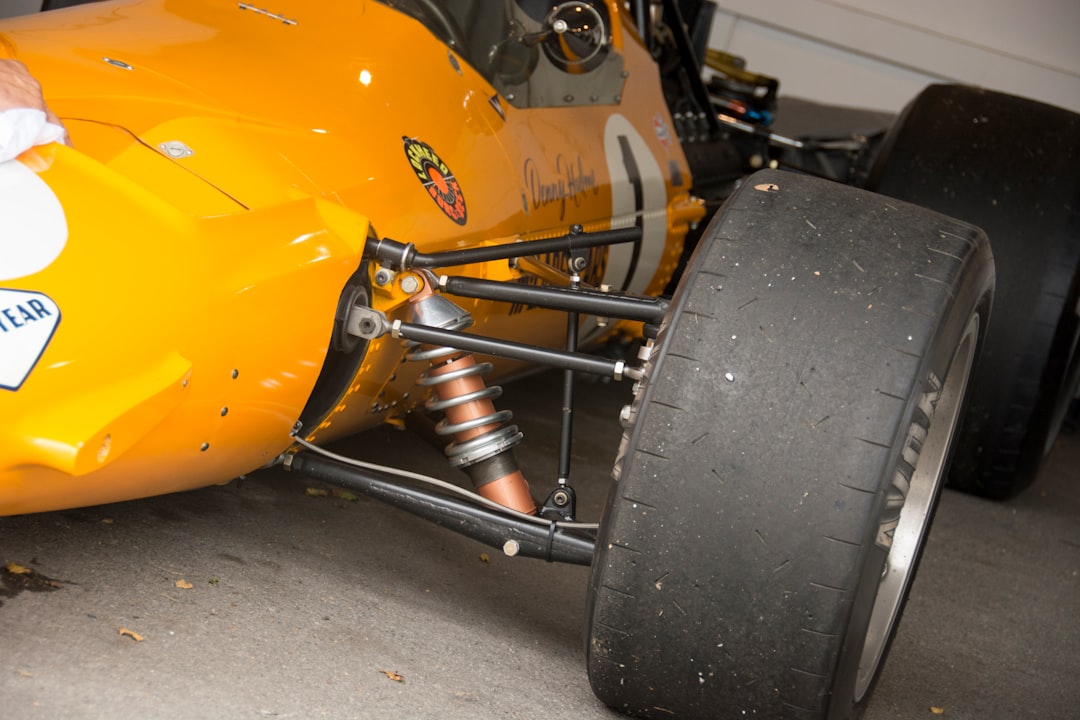
Go-kart wheel spacers move a wheel outward on its spindle, axle, or hub to widen the track, which is the distance between the left and right tires. On racing karts, spacers on the front stub axles and hub position on the rear axle are standard chassis adjustments. On yard karts, bolt-on spacers fix tire clearance problems and add stability. Spacers are cheap and quick to fit, but they also reduce how much stud or axle the wheel holds onto, so they have firm safety limits: keep full thread engagement on studs, keep rear hubs fully on the axle, and follow your chassis maker’s setup guidance. This guide covers spacer types, how track width affects handling, costs, installation, and those limits.
Part of our Go-Kart Parts guide — explore the full guide →
What Go-Kart Wheel Spacers Do
Every kart has a front track width and a rear track width, and changing either one changes how weight moves across the kart in a corner. A wider track gives the tires more leverage against the kart rolling onto its outside wheels, so the kart resists lifting a wheel. A narrower track does the opposite.
Spacers are the simplest way to make that change. On a racing kart, the front wheels slide on the stub axle, and spacer washers placed inboard or outboard of the wheel set its position. At the rear, keyed hubs clamp to the axle and can be moved along it, so rear track is usually changed by sliding the hubs rather than adding spacers.
On a yard kart with bolt-on wheels, a spacer is a flat disc that sits between the hub flange and the wheel, pushing the wheel out on its studs. That is a different kind of part with different risks, covered in the safety section below. If you are not sure which type of hub your kart uses, our go-kart wheel hub guide explains how to tell.
Types of Go-Kart Wheel Spacers
Front stub axle spacers. Machined washers that slide over the front stub axle. Racing karts usually come with a set, and you move them from one side of the wheel to the other to change front track. Common sizes are a few millimeters to tens of millimeters thick, depending on the chassis.
Rear hub positioning. On racing karts, loosening a rear hub, sliding it along the keyed axle, and clamping it again changes rear track without extra parts. The limit here is how far the hub can safely move before it runs short of axle.
Bolt-pattern spacers. Flat aluminum or steel discs drilled to match the wheel bolt pattern, used on yard and off-road karts. Thicker versions are often sold as adapters with their own studs, which avoids running the wheel nuts on short stud stubs.
Axle sleeve spacers. Tubes on a live axle that locate wheels, sprockets, brake hubs, and bearings side to side. They are positioning parts rather than track-width tuning parts, but they are often sold under the same name.
Best Go Kart Wheels: our top 3 picks
| Product | Best for | Key features | Price | Buy |
|---|---|---|---|---|
| WPHMOTO 5-Inch Slick Set | Best complete 5-inch set |
| $448.59as of Nov 18, 2026 8:14 am EST | Buy now →Check current price |
| ZARKO 4.10-6 Assemblies | Best 6-inch rear assemblies |
| $83.77as of Nov 18, 2026 8:14 am EST | Buy now →Check current price |
| CWTD 145/70-6 Front Kit | Best 6-inch front-end kit |
| $165.77as of Nov 18, 2026 8:14 am EST | Buy now →Check current price |


Prices are Amazon’s listed prices as of the date and time shown and are subject to change; the price on Amazon at the time of purchase applies. As an Amazon Associate we earn from qualifying purchases.
Spacer Types Compared
| Type | Kart style | How it changes width | Main use | Typical price |
|---|---|---|---|---|
| Front stub axle spacers | Racing kart | Moves front wheel on stub axle | Front track tuning | $10–$40 per set |
| Rear hub repositioning | Racing kart | Slides hub along axle | Rear track tuning | No cost with existing hubs |
| Bolt-pattern spacers | Yard and off-road kart | Adds thickness between hub and wheel | Clearance and stability | $15–$60 per pair |
| Hub-centric adapters with studs | Yard and off-road kart | Bolts to hub, wheel bolts to adapter | Larger width changes | $30–$90 per pair |
| Axle sleeve spacers | Live-axle kart | Locates parts on axle | Component positioning | $5–$20 each |
Prices are typical ranges and vary with size, material, and maker.
How Track Width Changes Handling
This part surprises many newcomers. On a racing kart, widening the rear track generally reduces rear grip. A kart has a solid rear axle with no differential, so it turns best when the inside rear tire unloads or lifts slightly in a corner. A wider rear track resists that, the inside tire keeps dragging, and the rear tends to slide. Narrowing the rear usually helps the inside wheel lift and lets the rear grip.
Racers use this deliberately. On a high-grip track where the kart hops or binds in corners, widening the rear can calm it down. On a low-grip track, narrowing the rear can help.
Front track changes affect turn-in and steering feel, but the direction and size of the effect varies between chassis designs. Most kart manufacturers publish a baseline setup and describe how their chassis responds to front width changes. Start from that baseline, change one thing at a time, and record the results.
On yard karts the picture is simpler. A wider track at both ends generally adds stability and makes the kart less likely to tip on slopes or in tight turns, which is often the goal on a recreational kart. It also makes the kart wider, so check that it still fits through gates and onto your trailer.
How to Fit Go-Kart Wheel Spacers
Front stub axle spacers (racing karts). Remove the front wheel, rearrange the spacers so the total stack stays the same and only the side changes, refit the wheel, and tighten the retaining nut to the maker’s specification. Keep left and right symmetrical unless your setup sheet says otherwise, and measure track width before and after.
Rear hub repositioning (racing karts). Loosen the pinch bolts, slide the hub to the new position, confirm the key is fully engaged, and tighten the bolts evenly to the hub maker’s torque specification. Measure from a fixed point on the frame or from the axle end on both sides so the change is equal.
Bolt-pattern spacers (yard karts). Clean the hub face and wheel face so the spacer sits flat. Fit the spacer, then the wheel, and tighten the nuts in a cross pattern to the specification for your studs. If the spacer leaves too little thread, fit longer studs first.
After any change, turn the steering lock to lock and check that the tires clear the frame, bodywork, brake parts, and chain. Then take a short, slow test drive and recheck every fastener.
Safety Limits for Go-Kart Wheel Spacers
Spacers are simple, but the limits are not optional.
Keep rear hubs fully on the axle. When you slide a racing hub outward, the whole hub bore should stay on the axle with the key fully captured. A hub clamped on only part of its length has less clamping area and more leverage working against it. If you need more width than the axle allows, the fix is a longer axle or different hubs, not more overhang. Follow the chassis maker’s guidance on minimum engagement.
Keep full thread engagement on studs. A common rule of thumb is that a nut needs thread engagement at least equal to the stud diameter, and in practice the stud should pass all the way through the nut. If a spacer leaves less than that, fit longer studs or use an adapter that has its own studs.
Use one solid spacer, not a stack. Stacked washers on bolt-pattern wheels add interfaces that can shift and let the nuts lose tension. One flat, parallel, machined spacer is safer.
Mind the bearings. Moving a wheel outward lengthens the lever arm on its bearings and spindle, which increases wear. Modest spacing on healthy parts is generally fine, but inspect bearings more often; our go-kart wheel bearings guide explains what to check.
Respect width rules. Racing classes often set a maximum overall kart width. Check your rulebook before widening a race kart.
Cost and Considerations
Spacers are among the cheapest parts in karting. Front spacer sets typically cost $10 to $40, bolt-on spacers $15 to $60 a pair, and moving racing hubs costs nothing. The indirect costs are longer studs, a longer axle if you run out of room, and the time to recheck clearances.
Quality matters. A spacer should be flat, parallel, and made from solid aluminum or steel. A warped or soft spacer can let the wheel work loose. Buy spacers that match your bolt pattern exactly and, where possible, center on the hub rather than relying on the studs alone.
If your goal is stability on a yard kart, consider whether wider wheels and tires would solve the problem better than spacers. Our go-kart tire sizes guide covers how width and diameter affect a recreational kart. For the axle side of the assembly, see our go-kart axle guide.
Pros and Cons of Go-Kart Wheel Spacers
Spacers earn their place in most toolboxes, with a few honest caveats.
Pros
- One of the cheapest chassis adjustments in karting
- Track width changes take minutes at the track
- Solve tire and chain clearance problems on yard karts
- Add stability to narrow recreational karts
Cons
- Reduce stud or axle engagement and become unsafe past their limits
- Warped or stacked spacers can let wheels work loose
- Wider rear track usually reduces rear grip on racing karts
- Thick spacers often need longer studs or adapters
Frequently Asked Questions
Do wheel spacers make a go-kart handle better?
Why does a wider rear track reduce grip on a racing kart?
How much spacer is safe on wheel studs?
How far can I slide a racing kart rear hub out?
Can I stack washers as go-kart wheel spacers?
Do spacers put extra load on bearings?
Final Thoughts
Used within their limits, go-kart wheel spacers are one of the best-value adjustments on any kart. Keep full thread engagement on studs and full axle engagement on racing hubs, tighten everything to the maker’s specification, change one thing at a time, and recheck clearances after every change. For more on the parts that work alongside spacers, see our go-kart parts guide.