
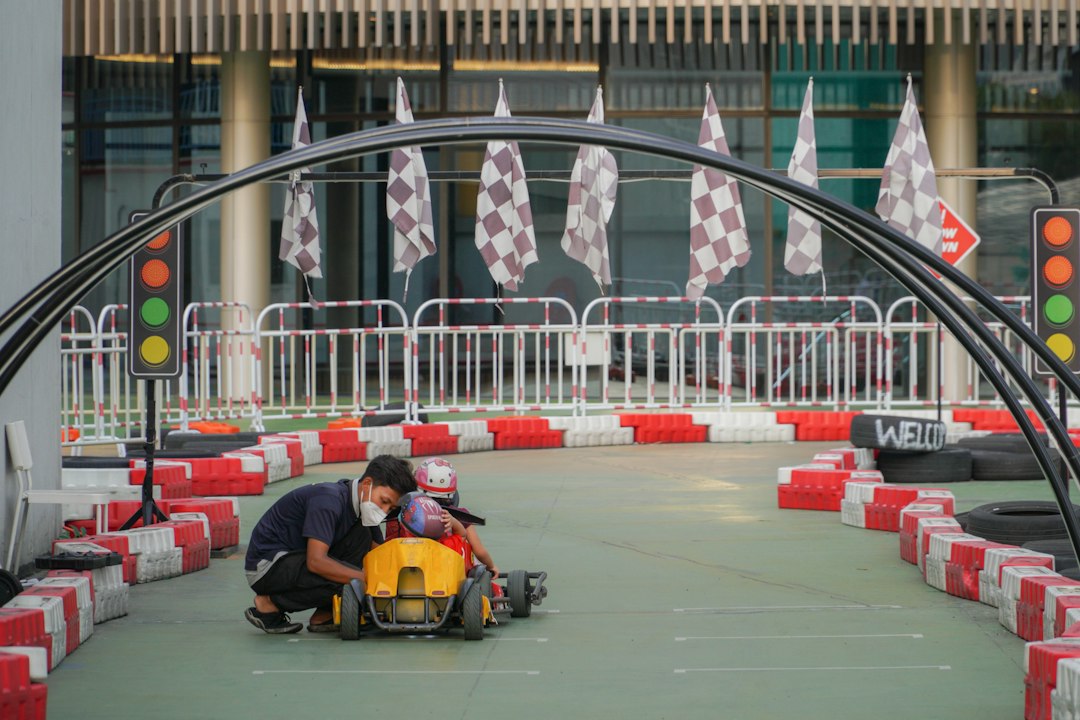
If you are planning a track visit with children, the first question is often how tall do you have to be to drive a go kart. There is no single legal answer. Each track sets its own minimum height, usually based on the karts it runs, and the number differs between junior karts, adult karts and two-seat passenger karts. Many rental venues set junior minimums somewhere around four feet and adult minimums closer to four and a half to five feet, but you must check with your venue. This guide explains why height limits exist, typical ranges by kart type, how racing differs, and what to do if you are very short or very tall.
Part of our Go-Karting for Beginners guide — explore the full guide →
How Tall Do You Have to Be to Drive a Go-Kart? The Direct Answer
Height requirements are set by tracks, not by a national law. A venue chooses a minimum based on its kart fleet, its insurance terms and the manufacturer guidance for each kart model. That means two tracks in the same town can have different rules.
As a broad pattern, many indoor and outdoor rental tracks in the US use figures in these ranges:
- Junior karts: commonly a minimum somewhere around 48 inches (about 4 feet or 122 cm), sometimes with a lower minimum age as well.
- Adult karts: commonly a minimum somewhere between about 54 and 60 inches (4 feet 6 inches to 5 feet), often alongside an age minimum.
- Passenger seats in two-seat karts: sometimes allowed for smaller children, often with their own minimum height, while the adult driver meets the adult rules.
Treat these as typical patterns, not guarantees. Always check the venue website or call before you go, because many tracks will not make exceptions at the counter.
Why Tracks Set Height Limits
Height limits exist for practical safety reasons, not to keep people out.
Reaching the pedals. A driver must press the brake fully and lift off the throttle quickly. If their feet barely touch the pedals, they may not be able to stop in time. Our guide on how to drive a go-kart explains pedal and steering technique.
Seat and belt fit. Rental karts with seat belts or harnesses need the belt to sit across the hips and shoulders properly. A driver who is too small can slide under or out of the belt.
Head position and protection. Some rental karts have roll bars or high seat backs. The driver’s head and helmet must sit in the protected zone, neither too low to see nor too high above the structure.
Steering control. Kart steering is direct and can be heavy. Drivers need enough reach and leverage to hold the wheel through corners and after a bump.
Age limits often run alongside height limits because judgment and reaction time matter as much as size. Our guide on how old you have to be to drive a go-kart covers age rules in detail.
Typical Height Ranges by Kart Type
| Kart Type | Typical Minimum Height | Who It Suits | Notes |
|---|---|---|---|
| Junior rental kart | Around 48 in (122 cm), varies by track | Older young children and preteens | Lower speed, often speed-limited |
| Adult rental kart | Around 54 to 60 in (137 to 152 cm) | Teens and adults | Usually paired with a minimum age |
| Two-seat passenger kart | Passenger minimum set by venue | Younger children riding with an adult | Driver must meet adult rules |
| Racing kart (owned) | Set by fit, not a track sign | Drivers fitted to the chassis and seat | Class age rules matter more than height |
These ranges are illustrative. Your venue’s posted requirement always takes priority.
Height Rules in Kart Racing
In organized kart racing, height is rarely a written rule. Instead, sanctioning bodies set classes by age, and in some cases by weight, and the kart is fitted to the driver. Youth classes use smaller chassis, and seats come in many sizes. Pedals can be moved, and the steering column can be adjusted.
Because of this, a small child who meets the age rule for a youth class can usually be fitted to a suitable kart even if they would be too short for an adult rental kart. Check your national body’s rulebook for class ages, and see our guide to go-karting age requirements for a broader overview.
If You Are Too Short
Being just under a minimum height is frustrating, but there are options:
- Look for junior or passenger sessions. Many tracks offer smaller karts or two-seat karts where a child can ride with an adult.
- Ask about seat inserts. Some venues provide cushions or seat inserts to move smaller drivers forward. Others do not allow them, so ask in advance.
- Consider pedal extenders on your own kart. For a privately owned kart, pedal extenders can bring the pedals closer, although they are usually not permitted on rental fleets.
- Try again later. Children grow quickly, and many families find a few months makes the difference.
Never try to get a child onto a kart by having them stand taller or wear thick shoes at the height check. The limits are there because staff know what their karts require.
If You Are Very Tall
Taller drivers face the opposite problem. Most tracks do not set a maximum height, but rental karts are designed around an average adult build. Drivers well over six feet may find their knees hit the steering wheel, their legs are cramped or their head sits higher than ideal.
Some practical tips:
- Ask staff for the kart with the most legroom; some fleets have adjustable pedals or seats.
- Wear thin-soled shoes for better pedal feel and more room.
- Tell staff if your helmet sits above any roll bar; they may suggest a different kart.
Weight can matter as well. Many venues publish weight limits, and our go-kart weight limit guide explains how these are applied.
Height and Home Go-Karts
For karts bought for home use, the manufacturer usually lists a rider age range, a maximum weight and sometimes a height range. Follow those limits. A child who cannot reach the brake firmly or who sits too low to see over the front should not drive the kart, even if it is technically within the age range. Adjustable seats and pedals help a kart fit a growing child longer.
When choosing a home kart for a growing child, look for a kart whose range covers both their current size and the next year or two of growth.
Preparing for Your Visit
A little planning avoids disappointment at the counter, especially with children who are close to a limit.
- Measure at home. Stand your child against a wall in the shoes they will wear and measure accurately. If they are within an inch or two of the posted minimum, call the track and ask how strictly they apply it.
- Check every requirement. Height, age and sometimes weight all apply. A child who meets the height rule may still be too young for a particular kart.
- Read the waiver in advance. Many venues require a parent or guardian to sign for minors, and some need this done online before arrival.
- Dress for the kart. Closed-toe shoes, no loose scarves or long untied hair, and comfortable clothing make the fit check easier. Our guide on what to wear go-karting covers the details.
- Book junior sessions. Junior-only sessions keep smaller drivers off track with adults, which many families prefer.
If your child does not meet the limit on the day, staff can usually suggest the passenger option or the nearest session they can join.
Pros and Cons
Height limits have trade-offs for families planning a visit.
Pros
- Help ensure every driver can reach the brake
- Keep belts and seats working as designed
- Junior and passenger karts widen access
- Clear rules reduce arguments at the counter
Cons
- Rules differ between tracks
- Children just under the limit miss out
- Tall drivers may find rental karts cramped
- Seat inserts are not always allowed
Frequently Asked Questions
Is there a legal minimum height to drive a go kart?
Can a 4 foot child drive a go kart?
Do tracks measure height at check-in?
Is there a maximum height for go karting?
Are height rules different for kart racing?
Can a shorter adult drive an adult kart?
Final Thoughts
How tall you need to be depends on the track and the kart, but the reasoning is consistent: drivers must reach the pedals, sit securely and stay protected. Call ahead, compare junior, adult and passenger options, and plan around age limits as well. For a full family planning overview, see our guide to go-kart rental.