
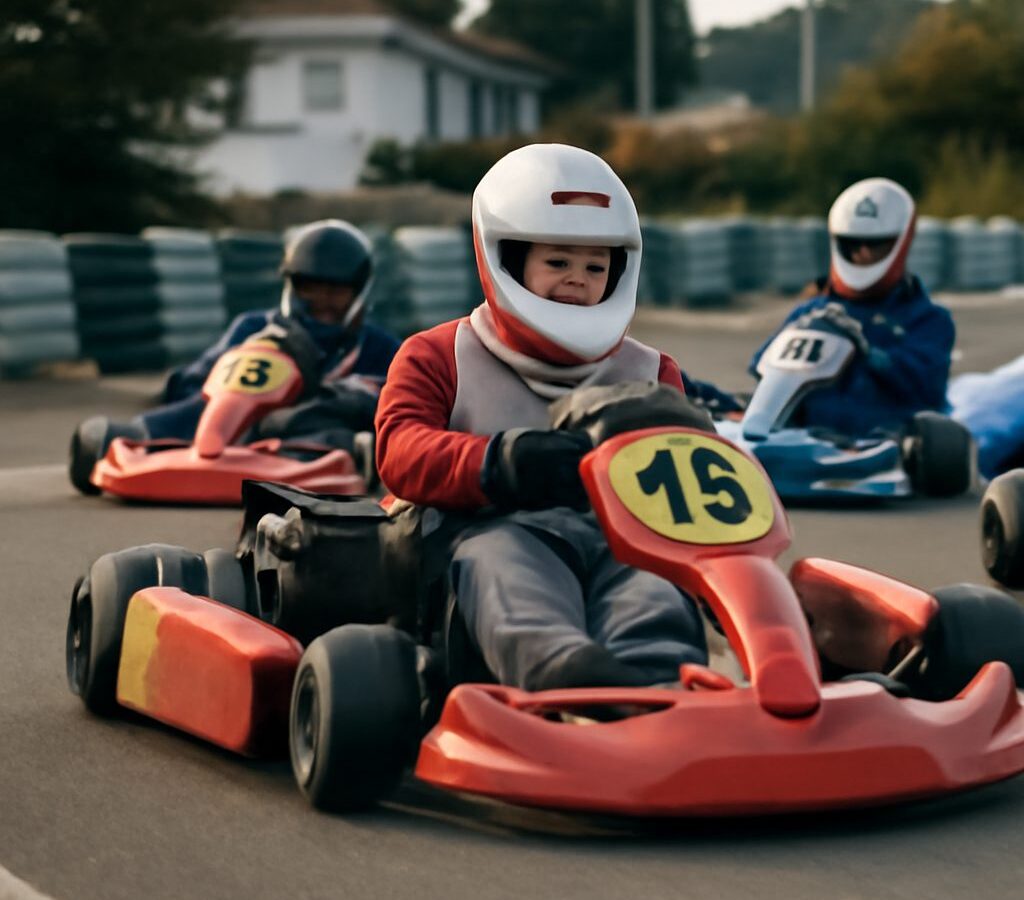
Go-kart racing in Japan means two very different things. The version most visitors search for is street karting: guided tours where tourists drive small, road-registered karts through city traffic in Tokyo, Osaka, and other cities, usually in a convoy behind a staff leader. The other is circuit karting, a serious national racing scene that has helped develop Japanese drivers who later reached Formula 1. If you are planning a trip, the short answer is this: street karting is legal and bookable, but you need a driving license that is valid in Japan, which for most tourists means an International Driving Permit arranged before you fly. This guide to japan go kart racing covers both worlds, the paperwork, safety, and costs.
Part of our Kart Racing guide — explore the full guide →
Japan Go Kart Racing: Two Very Different Experiences
It helps to separate the two from the start, because they share a name and almost nothing else.
Street karting is a sightseeing activity. The karts are modified so they can be registered for public roads, with lights, indicators, mirrors, and license plates. You drive at normal traffic speeds through busy districts, stop at red lights next to taxis and buses, and pose for a lot of photos. Nobody is racing anyone.
Circuit karting is the sport. It happens on private tracks, uses purpose-built karts with no road equipment, and ranges from casual rental sessions to national championships. This side of karting in Japan looks much like it does in Europe or the US, and it feeds the country’s junior motorsport ladder.
Most of the viral videos you have seen show the first. Most of the real racing happens in the second. Both are worth knowing about if you are interested in go-kart racing more broadly.
How Street Karting in Japan Works
Street kart tours became popular in Tokyo in the 2010s, and operators later appeared in other tourist areas. The format is broadly similar wherever you book:
- Check-in and license check. Staff verify your home license and permit before anything else. No valid paperwork means no drive, and reputable operators do not bend this rule.
- Briefing. You get a short explanation of the controls, hand signals, and local traffic rules, including that Japan drives on the left.
- Guided convoy. A guide leads a small group along a set route past well-known landmarks. You follow at a safe distance and obey traffic signals like any other road user.
- Photo stops. Many tours include stops for pictures, and some offer costumes or camera mounts as extras.
Tours typically last from about one to two hours. Speeds are modest by karting standards because you are moving with city traffic, but sitting a few inches off the road beside full-size vehicles makes it feel quick. The karts themselves are closer to street-legal go-karts than to race machinery: small engines, basic chassis, and road equipment bolted on.
Routes, vehicle specs, and rules vary by operator and city, and they can change as local authorities respond to complaints or incidents. Treat any route or price you see online as a guide and confirm directly with the operator when you book.
License and Permit Requirements for Tourists
This is where most trips go wrong. Street karts are registered motor vehicles, so you need the same driving authorization you would need to drive a car in Japan. In general terms:
Most visitors need an International Driving Permit (IDP) issued under the 1949 Geneva Convention, carried together with their home driver’s license. You must get it in your home country before you travel; it cannot be issued once you are in Japan. Permits issued under other conventions are generally not accepted.
Some countries use a translation instead. Drivers from a short list of places, which has included countries such as Germany, France, Switzerland, Belgium, and Monaco as well as Taiwan, use an official Japanese translation of their home license rather than an IDP. Check the current list with the Japan Automobile Federation (JAF) or your embassy, because it does change.
Residents follow different rules. If you live in Japan, an IDP is not a long-term substitute for a Japanese license, so residents should check their own status.
A home license on its own is not enough. Also check the operator’s own requirements: some ask for a minimum period of driving experience, set age limits, or refuse riders who have been drinking. Arrange the paperwork weeks before your trip rather than days.
The Costume Controversy and Trademark Case
Early tours leaned heavily on costumes based on famous video game characters, which is a big part of why the activity went viral. That led to a well-publicized legal dispute: Nintendo sued the best-known operator over trademark and copyright issues, and Japanese courts ruled in Nintendo’s favor, with the ruling upheld on appeal around 2020.
The practical result is that mainstream operators rebranded and moved to generic costumes such as animal onesies and original characters. Costumes are still part of the fun on many tours, but an operator heavily promoting protected characters is a reason to look more closely at who you are booking with.
Street Karting Safety: What to Know Before You Book
Street karting is legal, but it is not risk-free. You are driving a very small, very low open vehicle in dense city traffic, and other drivers may not see you easily. Japanese media and local residents have raised concerns over the years about accidents and congestion caused by kart convoys, and local rules have tightened in places.
A few points worth knowing:
- Helmets. The vehicle category used for these karts has generally not required helmets under Japanese law, so some tours run without them. If a helmet is offered, wear it. Our kart helmet guide explains why head protection matters even at modest speeds.
- Left-hand traffic. If you normally drive on the right, the first few intersections need full concentration. Follow the guide rather than improvising.
- Spacing and visibility. Keep a sensible gap, stay in the convoy, and assume larger vehicles cannot see you.
- Insurance. Ask what the operator’s insurance covers and whether your travel insurance covers driving activities abroad.
- Weather. Open karts offer no shelter, and wet roads reduce grip. Check the operator’s policy on rain and cancellations.
If you want speed rather than sightseeing, a circuit is the safer place to find it. The same goes for anyone curious about the general topic of street kart racing: actual racing belongs on a closed track.
Street Karting vs Circuit Karting in Japan
| Factor | Street karting tour | Circuit karting |
|---|---|---|
| Where | Public roads, guided convoy | Private kart tracks |
| Purpose | Sightseeing and novelty | Sport, practice, competition |
| Paperwork | License valid in Japan (often an IDP) | None for most rentals; racing license for competition |
| Speed | Moves with city traffic | Noticeably faster; depends on kart and layout |
| Helmet | Not always required by law | Standard at reputable tracks |
| Typical cost | Varies by operator and route; check current rates | Varies by track and session length |
| Best for | Tourists wanting a memorable city experience | Anyone who wants to actually drive a kart hard |
Japan’s Competitive Karting Scene
Beneath the tourist novelty sits a well-established racing culture. Japan has a national karting structure run under the country’s motorsport authority, regional championships, and a network of outdoor sprint circuits, including a kart course at the Suzuka Circuit complex. Japanese companies also have deep roots in the sport: Yamaha engines such as the KT100 became a staple of club karting far outside Japan, and Japanese tire makers have long supplied the karting world.
Karting is also the first step on the professional ladder there, just as it is in Europe. Japanese manufacturers have run young-driver development programs, and drivers including Kamui Kobayashi and Yuki Tsunoda raced karts in Japan before progressing through junior formulas toward Formula 1. For a young Japanese racer, karting is a serious training ground rather than a tourist activity. Our guide to professional go-kart racing explains how that ladder works internationally.
Can Tourists Drive at Japanese Kart Circuits?
Often, yes. Many circuits run rental sessions for walk-in or booked customers, and because driving happens on private property, a road license is usually not required. Expect to sign a waiver, follow a short briefing, and wear the provided helmet. Some tracks ask for advance booking, offer instructions mainly in Japanese, or limit sessions to certain days, so check before you travel.
The experience resembles a good outdoor go-kart rental session at home: timed laps, proper braking zones, and a chance to learn the racing line. If you have never driven a kart, a circuit session is also a much better introduction to how karts handle than a street tour.
Competitive racing is a different matter. Entering championship events requires a racing license and membership through the appropriate body, eligible equipment, and usually a team or entrant. That is a project for residents or long-stay visitors, not a holiday add-on.
Typical Costs
Prices vary by city, route length, operator, season, and extras, so treat any number as a rough guide. Street kart tours are generally priced as a premium tourist experience, often comparable to other guided activities in major Japanese cities, with add-ons for costumes, video, or longer routes. Circuit rental sessions are usually sold per session or per time block and tend to be cheaper per minute of driving than a tour, though you will need to get to the track, which is often outside the city center.
Before booking, confirm what is included: kart, fuel, insurance, helmet, costume, and photos are sometimes bundled and sometimes extra. Check cancellation terms too, especially in the rainy season.
Pros and Cons of Street Karting in Japan
Pros
- A memorable way to see famous city districts
- Guided convoy format with staff leading the route
- No racing experience needed
- Easy to combine with a circuit session for real driving
Cons
- Requires an IDP or approved translation arranged before travel
- Shares busy roads with buses, taxis, and trucks
- Helmets are not always mandatory
- Slow compared with circuit karting
- Routes and rules can change at short notice
Frequently Asked Questions
Do I need a license for street karting in Japan?
Can I get an International Driving Permit after I arrive in Japan?
Is street karting in Japan safe?
Can I still dress as video game characters on kart tours?
Can tourists drive at kart tracks in Japan?
Which Japanese F1 drivers started in karting?
Final Thoughts
Japan go kart racing is really two stories. Street karting is a novelty tour: legal, memorable, and dependent on having the right permit before you land. Circuit karting is the real sport, with a long history and a clear path toward professional racing. If you are visiting, do the tour for the experience and book a track session if you want to find out what karting actually feels like. New to karts altogether? Start with our complete beginner’s guide to go-karting.