
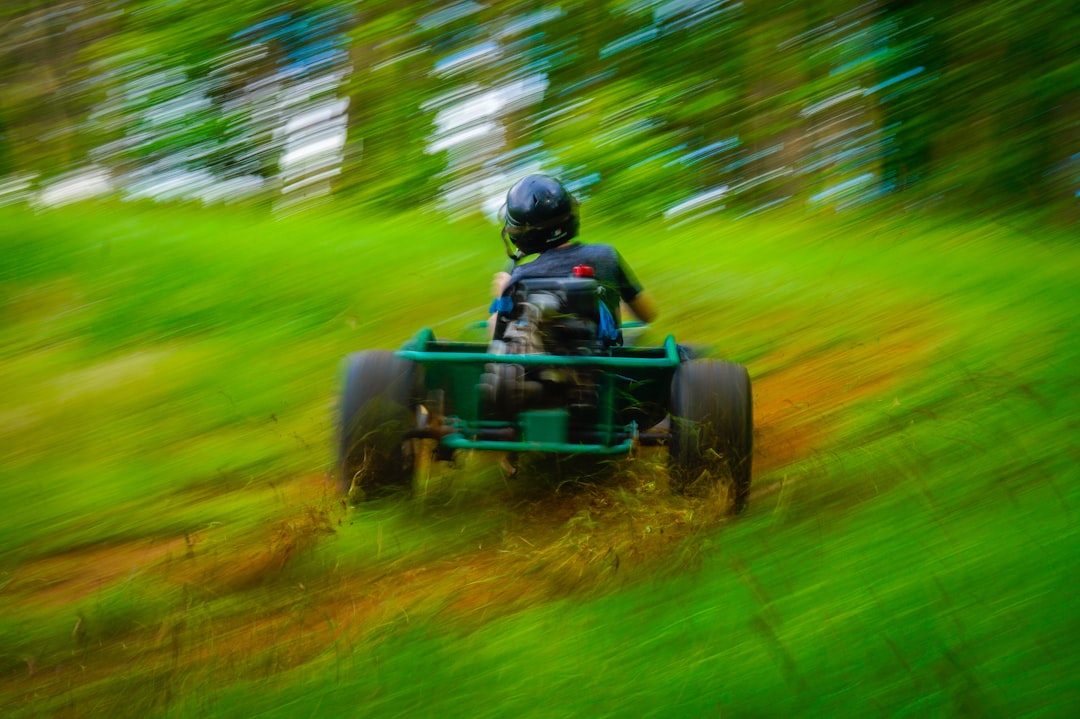
If you are shopping for an off road gas go kart, you are looking at the segment where gasoline still rules. While electric karts have taken over pavement and rental tracks, serious dirt work — long trail days, hills, mud, and two-up riding — remains gas territory, and for concrete reasons: range measured in hours instead of minutes, 5-minute refuels, and engines that deliver full torque all day regardless of battery temperature or charge state. This guide covers the 150–300cc buggy karts that define the class, why gas still owns the deep end of off-road, what the maintenance really costs you, and how to pick the right displacement for your terrain and riders.
What Counts as an Off Road Gas Go Kart?
The heart of the market is the buggy-style kart: a tubular steel frame with a roll cage, live rear axle or independent suspension, knobby tires, seat belts, and a rear-mounted four-stroke engine — usually a GY6-based 150cc or a 200–300cc single with a CVT automatic. One- and two-seat layouts are common, and curb weights run from about 350 to 700 pounds.
The class splits roughly into three tiers:
150cc karts are the family workhorses — 30–40 mph, cheap to buy and fix, happy on trails and pastures.
200cc karts add torque for hills, mud, and heavier adults while keeping costs modest.
250–300cc karts are the serious end: more suspension travel, stronger frames, 40–50+ mph capability, and enough grunt for aggressive terrain and two adults with gear.
If you are still deciding between categories and specific models, our roundup of the best off-road go-karts compares the leading machines side by side — this guide focuses on why and how to buy gas specifically.
Why Gas Still Owns Serious Off-Road
Three advantages keep gasoline on top away from pavement.
Range and refueling. A typical gas buggy carries 1 to 2 gallons and runs 1.5 to 3 hours per tank; a 5-minute jerry-can refuel puts you back out indefinitely. Electric off-roaders typically manage 30–60 minutes of hard trail use, then need hours on a charger — and there are no outlets at the trailhead. For all-day riding, this alone decides the debate.
Torque at weight. Off-road karts are heavy, and dirt, sand, and grades eat power. A gas engine delivers its full output for the entire session, hour after hour, where battery systems can taper output as cells heat up or discharge. Hauling a 600-pound two-seater with two adults up a sandy hill at hour three of a ride is exactly the job gas was built for.
Field independence. Gas karts can be revived miles from anywhere with a spare plug, a belt, and fuel. Electric karts are superb machines — our guide to off-road electric go-karts makes the case for them around the yard — but backcountry self-sufficiency is not their game yet.
Gas vs Electric Off-Road: The Honest Comparison
| Factor | Gas off-road kart | Electric off-road kart |
|---|---|---|
| Ride time | 1.5–3 hours per tank | 30–60 minutes per charge |
| Downtime | 5-minute refuel | 3–8 hours charging |
| Power delivery | Consistent all day | Strong but can taper with heat/charge |
| Maintenance | Oil, belts, plugs, carbs — regular | Minimal mechanical upkeep |
| Noise | Loud; neighbor and land-use issues | Near silent |
| Best use case | Trails, acreage, all-day riding | Backyard, short sessions, kids |
The pattern is clear: electric wins for short, quiet, low-maintenance backyard sessions; gas wins the moment distance, duration, or load enters the picture.
The Maintenance Reality
Gas ownership is a relationship, and pretending otherwise sells buyers a headache. Expect oil changes every 20–50 hours, CVT belt inspection and periodic replacement (belts are consumables, typically $15–$40), air filter cleaning after dusty rides, chain tension and lube on chain-drive models, valve checks on schedule, and carburetor attention whenever fuel sits more than a month. Winterizing matters: drain the carb or stabilize the fuel, or budget for a carb clean every spring.
None of this is difficult — GY6 and clone engines are famously simple, parts are everywhere and cheap, and a basic socket set handles most jobs. But it is real time: figure an hour of wrenching for every 5–10 hours of riding. If that ratio sounds miserable rather than satisfying, weigh the electric option honestly before buying.
Pros
- Hours of range with 5-minute refuels
- Full torque all day regardless of heat or charge level
- Cheap, universally available GY6 and clone parts
- Field-repairable far from power outlets
- Strong performance per dollar in the 150–300cc class
Cons
- Regular oil, belt, plug, and carb maintenance is mandatory
- Loud enough to create neighbor and land-use problems
- Stale fuel causes spring no-starts for careless owners
- Heavier than comparable electric karts
How to Choose Your Gas Off-Roader
Match displacement to riders and terrain. Teens and flat trails: 150cc. Adults, hills, or frequent two-up riding: 200cc minimum, 250–300cc if the terrain is aggressive.
Prioritize the frame and cage over the spec sheet. A solid roll cage, real seat belts, and quality welds matter more than a claimed top speed. Inspect gussets and welds on budget imports before the first ride.
Check parts support. GY6-powered karts and Honda-clone engines have the deepest parts ecosystems in powersports. An obscure engine saves $300 up front and costs you a summer waiting for a variator.
Budget beyond the sticker. Helmet, assembly (many karts ship crated and 80% assembled), fluids, and a battery tender belong in the real price.
Frequently Asked Questions
How fast do off-road gas go-karts go?
Are gas go-karts better than electric for off-road?
How long does a tank of gas last on a buggy kart?
What size gas kart does an adult need?
How much maintenance does a gas off-road kart need?
Are off-road gas go-karts street legal?
Final Thoughts
An off road gas go kart is still the right call for anyone who measures rides in hours and miles rather than laps of the backyard. The 150–300cc buggy class delivers range, torque, and fix-it-anywhere simplicity that batteries cannot yet match off-pavement — provided you accept the oil changes and belt swaps that come with it. Pick your displacement for your heaviest rider and roughest terrain, insist on a proper cage and mainstream engine, and you will get years of dirt out of it. Prefer silence and zero wrenching? Our electric off-road guide covers that lane — and the best off-road go-karts roundup ranks the top machines in both.