
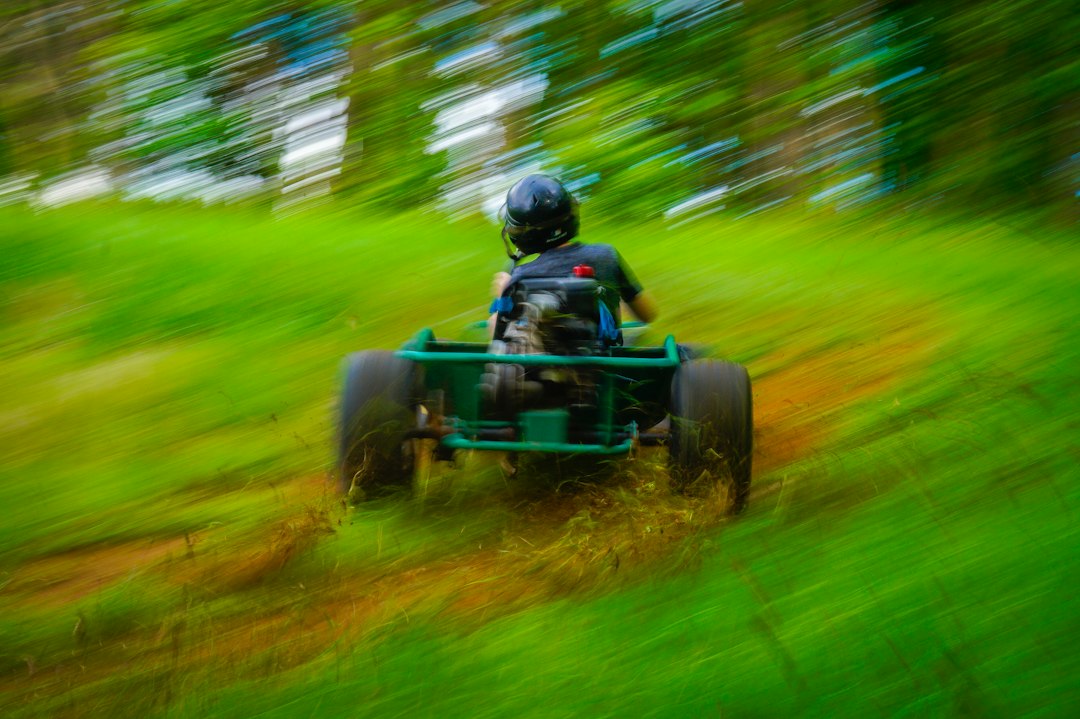
An offroad shifter kart combines a long-travel off-road chassis with a manual, multi-speed gearbox, usually borrowed from a motorcycle or a racing kart engine. The result is a machine that can pull hard out of slow, loose corners and still reach strong speeds on open dirt, with the driver choosing gears by hand or foot. These karts range from backyard builds with dirt bike engines to purpose-built crosskarts raced in organized series. This guide explains what an offroad shifter kart is, the main engine and chassis types, typical costs, how to choose or build one, how to maintain it and how it differs from neighboring categories.
Part of our Off-Road Go-Karts guide — explore the full guide →
What Is an Offroad Shifter Kart?
Most recreational off-road karts use a centrifugal clutch or a torque converter with a single gear range. A shifter kart instead uses a manual clutch and a sequential gearbox, so the driver selects the right gear for each section of track. On loose surfaces, this gives much finer control over wheelspin and lets the engine stay in its power band.
Off-road versions add the features you need for rough terrain: long-travel suspension, larger treaded tires, a full roll cage, more ground clearance and stronger axles and hubs. Many are built around motorcycle engines, where the engine, clutch and gearbox come as one unit. Our guide to go-karts with motorcycle engines explains that approach in depth.
Types of Offroad Shifter Kart
Crosskarts. Purpose-built racing machines with a full cage, long-travel suspension and motorcycle engines driving the rear wheels through a chain. They are raced on loose-surface circuits in several countries. See our cross kart racing guide for how the racing works.
Dirt bike engine builds. Home-built or small-manufacturer karts using engines from 125cc to 450cc dirt bikes or similar. Popular with builders because used engines are easy to find and come with a matched gearbox.
Shifter kart engines in off-road frames. Some builders fit a 125cc kart shifter engine to an off-road chassis. These engines are light and powerful but need more frequent maintenance than motorcycle engines designed for trail use.
Dirt oval shifter karts. Some dirt oval and dirt road course classes allow shifter engines in specialized chassis. These are closer to sprint karts than to long-travel off-roaders.
Offroad Shifter Kart Types Compared
| Type | Typical Engine | Suspension | Best Use | Maintenance Demand |
|---|---|---|---|---|
| Crosskart | Motorcycle engine, often 250cc to 600cc | Long travel, front and rear | Organized loose-surface racing | Moderate to high |
| Dirt bike engine build | 125cc to 450cc dirt bike engine | Varies with build | Private land and trail use | Moderate |
| Kart shifter engine in off-road frame | 125cc two-stroke kart shifter | Usually moderate travel | Short, intense sessions | High |
| Dirt oval shifter | 125cc kart shifter | Minimal, chassis flex | Prepared dirt tracks | High |
Engines and Gearboxes
The engine choice shapes everything else. Motorcycle engines are usually the most practical route because the clutch, gearbox and often the electric start are built in. Four-stroke dirt bike engines deliver strong low-end torque and are designed for dirt use, though they are heavier than kart engines.
Two-stroke engines, including kart shifter engines, are lighter and very responsive but have a narrower power band and need top-end service more often. Our guide to shifter kart engines covers the kart side in detail.
Shifting is typically done with a foot lever, a hand lever, or a paddle or button system linked by cable or rod. A hand-operated clutch lever on the steering wheel is common. Gearing changes through the final drive sprockets, just like on other chain-driven karts.
Chassis, Suspension and Safety
An offroad shifter kart needs a stronger frame than a sprint kart. A full roll cage is essential, along with a properly mounted racing seat, a multi-point harness and side protection. Long-travel suspension lets the wheels follow ruts and absorb landings, keeping the tires in contact with the ground.
For details on suspension designs, read our off-road go-kart suspension guide.
Drivers should wear a full-face helmet that meets current racing standards, along with neck protection, gloves, boots and protective clothing. Organized series publish specific safety requirements in their rulebooks.
Cost of an Offroad Shifter Kart
Prices vary widely depending on whether you build, buy used or buy new.
- Home build with a used dirt bike engine: often several thousand dollars once you include the frame, suspension, wheels, tires and safety gear.
- Used crosskart or off-road shifter kart: commonly from around $3,000 to $10,000 depending on engine, age and condition.
- New purpose-built crosskart: often well above $10,000, with racing-spec models higher still.
Running costs include tires, chains, sprockets, engine oil and service, suspension maintenance and fuel. If you are shopping, our cross kart buying guide has an inspection checklist.
How to Choose an Offroad Shifter Kart
Define your use. Racing in a series means choosing a chassis and engine legal for that class. Private land fun gives more freedom.
Match power to experience. A 250cc four-stroke is a common starting point for adults; big-bore engines can overwhelm new drivers on loose surfaces.
Check parts support. Popular motorcycle engines have widely available parts. Obscure engines can leave you stranded.
Inspect the cage and welds. Look for cracked welds, bent tubes and signs of past rollovers.
Check the gearbox and clutch. Shift through every gear with the engine running, listen for grinding and check for clutch slip under load.
Maintenance Basics
Off-road conditions are hard on machinery. After each outing, clean off mud and dust, check the air filter and service it often, inspect the chain and sprockets, and lubricate pivot points. Check suspension bushings and shocks for play and leaks. Follow the engine manufacturer’s oil change and valve check intervals, which are usually based on hours of use.
Keep an eye on the gearbox oil and clutch adjustment. A slipping clutch or worn shift forks will show up first as missed or jumping gears.
Learning to Drive a Geared Off-Road Kart
Driving with a manual gearbox on loose ground takes practice, even for experienced kart drivers. Start in an open, flat area and learn clutch engagement in first gear until pulling away smoothly becomes automatic. Practice upshifts on a straight before trying downshifts into corners.
On dirt, the gearbox becomes a traction tool. A higher gear in slippery sections softens the power delivery and reduces wheelspin, while a lower gear helps the kart rotate and drive out of tight turns. Many drivers find that being one gear higher than expected is faster on loose surfaces.
Build speed gradually, wear full safety gear from day one and never drive alone in remote areas. A rollover in a caged kart is survivable with a proper harness and helmet, but it still needs someone nearby to help.
How It Differs From Neighboring Categories
Compared with a standard off-road go-kart, an offroad shifter kart has a manual gearbox and usually much more power, which demands more skill. Compared with a road-racing shifter kart, it has suspension, treaded tires and a roll cage, and it is heavier and built for durability rather than lap time on asphalt. Compared with a UTV or side-by-side, it is lighter, lower and more focused on driving than carrying passengers or gear.
If you want off-road fun without the complexity of a gearbox, our guide to off-road go-karts for adults covers simpler options.
Pros and Cons
An offroad shifter kart offers a thrilling drive with some real demands.
Pros
- Manual gears give precise control on loose surfaces
- Motorcycle engines offer strong power and parts support
- Long-travel suspension handles rough terrain
- Crosskart racing offers organized competition
Cons
- More expensive than simple off-road karts
- Manual shifting adds a learning curve
- Off-road use increases maintenance
- High power can overwhelm beginners
Frequently Asked Questions
What engine is best for an offroad shifter kart?
Is an offroad shifter kart street legal?
How fast is an offroad shifter kart?
Can I convert my off-road kart to a shifter?
Is a crosskart the same as an offroad shifter kart?
Do offroad shifter karts need a lot of maintenance?
Final Thoughts
An offroad shifter kart is a step up in performance and commitment from a typical off-road go-kart. Choose an engine with good parts support, build or buy a chassis with a strong cage and suspension, and stay on top of maintenance. If organized competition appeals, start with our guide to crosskart racing.