
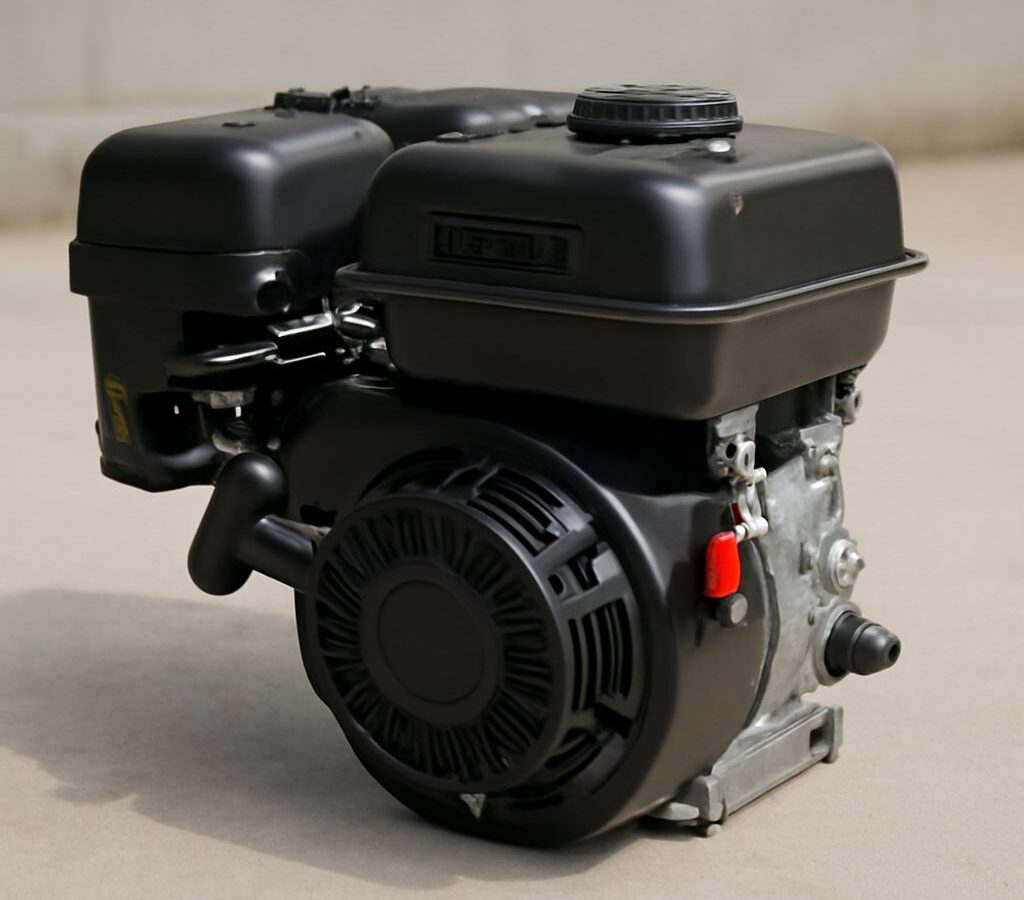
In the Predator 212 hemi vs non-hemi question, both engines are 212cc overhead-valve (OHV) singles with the same basic layout. The real difference is the cylinder head: the hemi uses a hemispherical-style combustion chamber, while the non-hemi uses a differently shaped chamber and head casting. In stock form they run and feel very similar, so for a casual go-kart or mini bike either one is fine. The choice matters once you start buying head-related performance parts, because heads, gaskets, valvetrain pieces and some cams are made for one version or the other. Buy the version your planned parts are designed for, and verify fitment before you order anything.
Part of our Predator 212 & Clone Engines guide — explore the full guide →
What Predator 212 Hemi vs Non-Hemi Actually Means
“Hemi” is shorthand for hemispherical combustion chamber. On the hemi version of the Predator 212, the chamber in the head is domed, and the valves sit in that dome. The non-hemi version uses a different chamber shape and a different head casting.
That is the whole distinction. Both versions are OHV engines: the camshaft sits in the crankcase and operates the valves through pushrods and rocker arms. Neither is a flathead, and neither is an overhead-cam design. Displacement, the horizontal-shaft layout and the general bottom-end architecture are shared.
Harbor Freight has sold both versions over the years, and which one you find on the shelf has changed over time. That history is why the question comes up so often in buying threads: two engines with the same name and nearly the same appearance can need different parts once you open the top end.
Does One Make More Power?
Not in any way you should base a purchase on. In stock, governed form the two versions perform very similarly, and a typical driver would not feel a difference on a kart. Any small variation between individual engines is often larger than the difference between versions.
Some builders prefer one chamber design for high-effort race builds, and you will see strong opinions on forums in both directions. Those preferences are usually about the parts and head work available for a given platform, not about a big built-in power advantage. Treat any claim of a large stock power gap with suspicion.
What actually changes performance is everything else: carburetion, exhaust, cam, gearing, clutch setup and, above all, tuning quality. A well-set-up non-hemi will outrun a poorly set-up hemi, and the reverse is equally true.
How to Tell Them Apart
From across the room, the two engines look almost identical. Use several checks rather than relying on any single one.
Check the item and model information. The label, packaging or product listing usually identifies the version or gives an item number you can look up. This is the easiest starting point for a new engine.
Look at the head casting and valve cover. The two heads are cast differently, and the valve cover and spark plug area look different when you compare them side by side. Parts vendors that sell version-specific heads often publish photo guides; compare your engine against one of those rather than a vague description.
Look inside if you can. With the valve cover off, or the head off during a rebuild, the chamber shape is obvious. This is the only check that removes all doubt.
Ask for photos when buying used. Request clear shots of the head, valve cover and label. A seller who cannot say which version it is should not be trusted to have documented the mods either.
Parts Fitment: Where the Difference Really Shows
The practical reason to care about hemi vs non-hemi is fitment. Because the heads differ, anything that touches the top end may be version-specific. Always confirm compatibility with the parts manufacturer before buying.
Parts that commonly need to match your version include:
- Cylinder heads and head gaskets — the most obvious version-specific items.
- Valvetrain parts — valves, rocker arms, pushrods, springs and retainers can differ, or be sold in version-specific kits.
- Camshafts — many are listed for both, but some cam and spring packages are designed around one head; check the listing.
- Intake and exhaust parts — most carburetors, intakes and headers are listed for both versions, but port and flange details are worth confirming.
Parts that are usually shared, though still worth verifying, include clutches and torque converters (which mount on the crankshaft), most flywheels, connecting rods, air filters and governor-removal parts. If you are planning a staged build, read our Predator 212 Stage 2 kit guide, since cam-and-spring kits are where version mismatches most often happen.
Hemi vs Non-Hemi Compared
This comparison covers the two versions as platforms, not specific products.
| Factor | Hemi | Non-Hemi |
|---|---|---|
| Valve layout | OHV (pushrod) | OHV (pushrod) |
| Combustion chamber | Hemispherical-style dome | Different chamber shape and head casting |
| Stock performance | Very similar to non-hemi | Very similar to hemi |
| Head and valvetrain parts | Must be hemi-specific | Must be non-hemi-specific |
| Crank-mounted parts (clutch, converter) | Generally shared | Generally shared |
| Availability | Depends on what is currently sold; check listings | Depends on what is currently sold; check listings |
| Best for | Builds using hemi-specific heads or kits | Builds using non-hemi parts, or stock use |
The takeaway: for stock or bolt-on use the two are effectively interchangeable. For a top-end build, the right version is whichever one your chosen parts and class rules are built around.
Racing Rules and the Version Question
If you plan to race, the rulebook decides for you. Some clubs and series run classes built around a specific engine version or a specific race engine, and technical inspection may check the head. Others allow either version with a parts list that applies to both.
Read the current rules for your class before buying, and ask the tech inspector if anything is unclear. Buying the wrong version for a spec class is an expensive mistake that no amount of tuning will fix. If you are considering Harbor Freight’s purpose-built racing engine, our Predator 212 Ghost guide covers how it differs from the standard engine.
Cost and Availability
Standard Predator 212 engines have generally been among the cheaper small engines you can buy new, typically in the low-to-mid hundreds of USD depending on sales and version. Prices change often, so check current listings rather than relying on old forum posts.
When one version is no longer in regular production, used or new-old-stock examples can carry a premium. Before paying extra to hunt down a particular version, ask whether your build actually needs it. If you are not buying version-specific heads or valvetrain kits, there is usually no reason to pay more.
Budget for the rest of the build too. Governor removal, a matched carburetor, an exhaust, and safety parts for higher RPM often cost as much as the engine itself. Our best Predator 212 upgrades roundup helps you prioritize that spending.
How to Choose Between Them
Work through these questions in order:
- Are you racing a class with an engine rule? Buy exactly what the rulebook specifies.
- Do you already own head or valvetrain parts? Buy the engine version those parts were made for.
- Do you plan a specific top-end kit? Check which version the kit supports, then buy to match.
- None of the above? Buy whichever version is available at a fair price. For stock use and common bolt-ons, both work well.
Whichever you choose, the most important performance decisions come later: gearing, carburetor tuning, and whether you remove the governor. If you do take the governor off, read our governor removal guide first.
Safety Note on Modified Engines
The version debate often comes up alongside plans to rev the engine harder. Stock cast flywheels and connecting rods are not intended for sustained RPM well above the governed limit, and failures at high RPM can be violent. Builders who remove the governor commonly fit a billet flywheel and billet rod, a flywheel cover, and stronger valve springs.
This applies equally to hemi and non-hemi engines. Follow the parts manufacturer’s guidance on RPM and match your clutch, chain guard and brakes to the speed the kart can now reach.
Pros and Cons
Pros
- Both versions are simple, durable OHV engines
- Stock performance is very similar, so either suits casual use
- Crank-mounted parts like clutches and converters are generally shared
- Strong aftermarket support exists for both platforms
Cons
- Head and valvetrain parts are version-specific and easy to mismatch
- Identifying a used engine can take some inspection
- Availability of each version has changed over time
- Race classes may require one specific version
Frequently Asked Questions
Is the Predator 212 hemi faster than the non-hemi?
Is the non-hemi a flathead or overhead cam engine?
How do I know which version I have?
Do hemi and non-hemi engines use the same clutch?
Can I put a hemi head on a non-hemi engine?
Which version should a beginner buy?
Final Thoughts
Predator 212 hemi vs non-hemi comes down to parts fitment, not a power gap. Both are OHV engines that perform very similarly out of the box. Let your class rules and your planned top-end parts decide which version to buy, and if neither applies, buy the one you can get at a fair price. For the full platform overview, specs and common build paths, start with our Predator 212 engine guide.