

Putting a snowmobile engine on go kart frames is a classic garage project. Used sleds are common in cold-climate regions, their two-stroke twins make far more power than a lawn-mower engine, and they arrive with a matching CVT clutch system already engineered for them. The catch is that a sled motor can easily overwhelm a light frame, its brakes, and its driver. This guide explains which snowmobile engines get swapped into karts, how the drivetrain and cooling work, what the build typically costs, how to mount and gear the engine, and the safety upgrades a high-power kart needs before it turns a wheel.
Part of our Go-Kart Engines & Drivetrain guide — explore the full guide →
Why Builders Put a Snowmobile Engine on a Go Kart
The appeal comes down to power per dollar. A tired snowmobile with a running engine can often be bought for less than a new high-output kart engine, and it comes with a carburetor or injection system, ignition, exhaust, and a continuously variable transmission (CVT) clutch pair. That means a builder gets a complete, matched powertrain in one purchase.
Snowmobile engines are also compact and light for their output. Most are two-stroke parallel twins or triples designed to rev high and deliver strong torque through the CVT, which suits the stop-and-go nature of yard and off-road driving. Older fan-cooled models are especially popular because they avoid the radiator plumbing a liquid-cooled engine requires.
The downside is that these engines were designed for a heavy machine with a long track, not a light kart on four small tires. Expect to rebuild much of the kart around the engine rather than simply bolting it in place. If you want a simpler swap, read our guide to a vertical shaft engine on a go kart.
Types of Snowmobile Engines Used in Karts
Fan-cooled two-stroke twins. Older 340cc to 500cc fan-cooled engines are the most common choice. They are relatively simple, self-contained, and produce enough power to make a kart very fast. The cooling fan and shroud must stay attached and unobstructed, which affects where the engine can sit.
Liquid-cooled two-strokes. Larger and newer engines, often 500cc to 800cc, are liquid-cooled and far more powerful. They need a radiator with airflow, since a snowmobile normally cools through heat exchangers that rely on snow being thrown onto them. These engines suit only purpose-built, heavily reinforced off-road machines.
Four-stroke snowmobile engines. Some modern sleds use four-stroke engines. They are heavier, more complex, and often tied to electronic control units and wiring harnesses that are hard to adapt. They are rare in kart builds.
Free-air engines. Some older and utility sleds used free-air cooled engines with fins and no fan. These rely on vehicle airflow and are prone to overheating at low kart speeds, so most builders avoid them or add forced cooling.
Best Go Kart Engine: our top 3 picks
| Product | Best for | Key features | Price | Buy |
|---|---|---|---|---|
| maXpeedingrods MXR212R | Best overall 212cc |
| $149.99as of Oct 26, 2026 4:00 am EDT | Buy now →Check current price |
| maXpeedingrods MXR212E | Best electric start |
| $209.99as of Oct 26, 2026 4:00 am EDT | Buy now →Check current price |
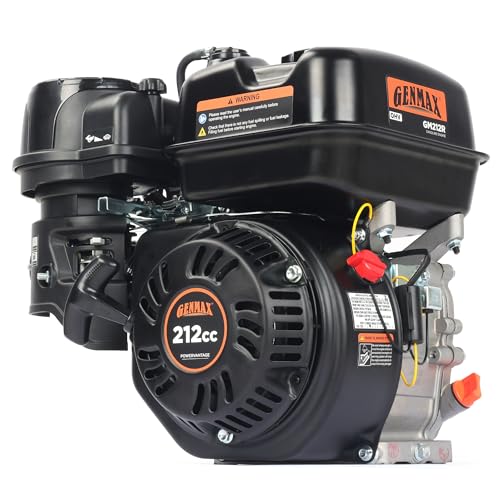
| GENMAX GM212R | Best support plan |
| $169.99as of Oct 26, 2026 4:00 am EDT | Buy now →Check current price |


Prices are Amazon’s listed prices as of the date and time shown and are subject to change; the price on Amazon at the time of purchase applies. As an Amazon Associate we earn from qualifying purchases.
Snowmobile Engine Options Compared
| Engine Type | Typical Size | Cooling Needs | Build Difficulty | Best Suited To |
|---|---|---|---|---|
| Fan-cooled twin | 340cc to 500cc | Keep fan and shroud clear | Moderate | Reinforced yard and off-road karts |
| Liquid-cooled twin or triple | 500cc to 800cc | Radiator and pump plumbing | High | Heavy-duty buggy-style frames |
| Free-air twin | 250cc to 400cc | Needs added airflow | Moderate | Experienced builders only |
| Four-stroke | Varies | Radiator plus electronics | Very high | Rarely practical |
Power output varies widely by model, year, and condition. Check the original manufacturer service manual for the specific engine rather than relying on forum figures, and assume a well-running twin will make several times the power of a typical small kart engine.
Drivetrain: Working With the Sled CVT
Most snowmobile swaps keep the original drive (primary) clutch on the crankshaft and the driven (secondary) clutch, connected by the factory belt. The secondary clutch normally sits on a jackshaft in the sled. In a kart, builders mount that secondary clutch on a new jackshaft supported by pillow-block bearings, then run a chain from a sprocket on the jackshaft to the rear axle sprocket.
Center distance between the two clutches matters. The belt length and clutch spacing were engineered together, so measure the factory center distance and offset before you cut any brackets. If the clutches are misaligned, belts wear quickly or fail. Many builders use the sled’s original engine mounts or a section of the sled chassis as a template.
Final gearing then comes from the jackshaft-to-axle sprocket ratio. Because the CVT already varies the ratio, the chain gearing sets the overall range: lower gearing helps acceleration and climbing, while taller gearing raises top speed. Start conservative and change gearing in small steps. Our jackshaft kit guide covers bearing and shaft choices for this kind of setup.
Frame, Brakes and Mounting Requirements
A typical yard-kart frame was built for engines making well under 15 horsepower. A snowmobile engine produces far more torque, vibration, and heat. Before installation, check the frame for wall thickness, weld quality, and bracing around the engine plate. Most successful builds use a heavy-duty off-road or buggy-style frame with a full roll cage.
Mount the engine on a solid plate with rubber isolators where the sled used them, since two-stroke twins vibrate. Make sure the exhaust pipe is supported and routed away from the driver, fuel lines, and tires. Tuned two-stroke pipes get extremely hot and can crack if they hang unsupported.
Brakes are usually the weakest point. A single mechanical band or drum brake is not adequate for a kart this fast. Hydraulic disc brakes on the rear axle, and ideally the front wheels, are a sensible minimum. Our guide to hydraulic brake kits explains how to size them.
Wiring, Fuel and Cooling
Older fan-cooled engines often run on a magneto ignition with a simple kill switch circuit, which makes wiring straightforward. Keep the kill switch within easy reach of the driver and add a tether kill switch if possible. Newer engines may need the factory ECU, sensors, and harness, which adds complexity.
Two-stroke engines need oil mixed with the fuel or an oil-injection system. If the sled had oil injection, either keep the pump and tank or convert to premix following the engine manufacturer’s guidance. Running a two-stroke without oil destroys it quickly.
For liquid-cooled engines, mount a radiator where it receives clean airflow, often with an electric fan, and bleed air from the system carefully. Monitor engine temperature during the first runs.
Cost of a Snowmobile Engine Kart Build
Costs vary widely depending on how much you already own. As a rough guide, a used running sled or engine with clutches typically ranges from about $300 to $1,500. A suitable heavy-duty frame or kit may add $500 to $2,500. Jackshaft, bearings, sprockets, and chain often run $150 to $400, and a proper hydraulic brake setup another $150 to $500. Tires, seat, steering, and safety gear add more.
Many complete builds land between $1,500 and $5,000 in parts. For a broader breakdown of build costs, see how much it costs to build a go-kart.
Step-by-Step Build Overview
1. Strip and test the engine. Run a compression test, check the crank seals, and confirm the engine idles and revs cleanly before removal. Two-stroke crank seals that leak cause lean running and seizures.
2. Measure the clutch geometry. Record center distance, offset, and belt part number from the sled.
3. Prepare the frame. Reinforce the engine area, add a jackshaft mount, and confirm rear axle strength.
4. Mount engine and jackshaft. Set clutch alignment first, then chain alignment to the axle.
5. Fit brakes, throttle, and kill switch. Use a throttle cable with a reliable return spring.
6. Test at low speed. Check temperatures, clutch engagement, belt tracking, and chain tension before driving hard.
Safety Considerations
A snowmobile-powered kart can reach speeds that make a crash serious. Use a full roll cage, a proper seat with a harness, a full-face helmet, and protective clothing. Guard the belt, clutches, and chain so clothing and fingers cannot get caught. Never ride these karts on public roads; check local laws, and our guide to street-legal go-karts explains why most karts do not qualify.
Keep younger or inexperienced drivers off high-power builds. Smooth, wide-open spaces with no traffic are the only appropriate places to test.
Pros and Cons
A snowmobile swap delivers serious performance, but it demands real fabrication skill.
Pros
- Very high power for the money
- Complete matched powertrain with CVT
- Fan-cooled engines are fairly simple
- Used sleds are easy to find in snowy regions
Cons
- Overwhelms light frames and basic brakes
- Two-stroke noise, smoke and fuel mixing
- Clutch alignment and jackshaft work take skill
- Liquid-cooled engines need radiator plumbing
Frequently Asked Questions
Can you put a snowmobile engine on a go-kart?
What size snowmobile engine is best for a go-kart?
Do I need to keep the snowmobile clutches?
How fast will a snowmobile engine go-kart go?
Will a snowmobile engine overheat in a go-kart?
Is a snowmobile engine kart street legal?
Final Thoughts
A snowmobile engine on go kart builds can produce one of the most exciting machines in the DIY world, provided the frame, brakes, and drivetrain are engineered for the power. Plan the clutch geometry first and treat safety as part of the build, not an afterthought. For the fundamentals of frame, steering, and drivetrain layout, start with our complete guide on how to build a go-kart.