
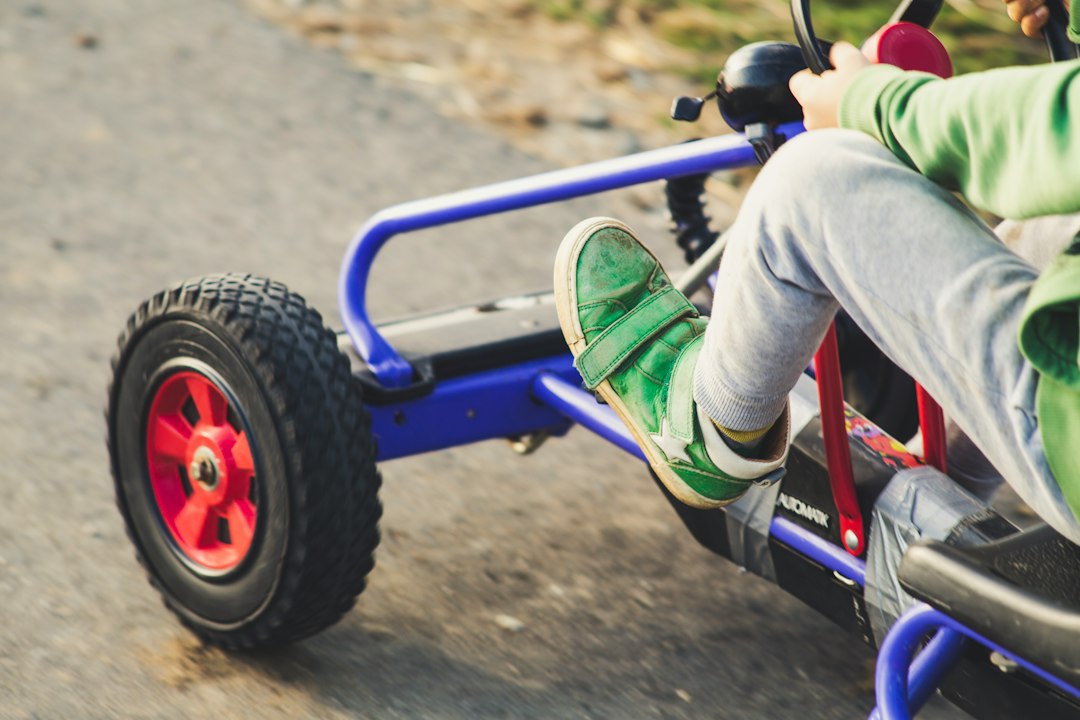
A go kart pedal return spring is a small, cheap part with a very big job. It pulls the throttle pedal back to idle the instant your foot comes off, and on many karts it also returns the brake pedal to its rest position. When it weakens, stretches or snaps, the result can range from a sloppy pedal feel to a throttle that stays open when you need it closed. This guide explains how pedal return springs work, how to diagnose spring problems, how to choose and fit a replacement, and the safety checks every kart should pass. The key rule throughout: the throttle must snap fully closed every time you lift off.
Part of our Go-Kart Parts guide — explore the full guide →
What a Go Kart Pedal Return Spring Does
Go-kart pedals pivot on a shaft or bolt near the floor pan. When you press the throttle pedal, it pulls a cable or rod connected to the carburetor or throttle body. When you release it, something has to pull the pedal back and close the throttle. That something is the return spring system.
Most karts actually rely on two springs working together. The carburetor has its own internal or external throttle return spring that closes the throttle plate. The pedal has a separate return spring that pulls the pedal back against its stop. Having both is a safety redundancy: if one fails, the other should still close the throttle. Our go-kart pedals guide explains the full pedal assembly in more detail.
On the brake side, a return spring pulls the pedal back so the brake does not drag. Hydraulic systems also have springs inside the master cylinder, while mechanical brakes often depend more heavily on an external pedal spring.
Types of Pedal Return Spring
Extension springs. The most common type on karts. These coil springs stretch between a hook on the pedal and a tab on the frame. They pull the pedal back when released. They are cheap and easy to replace.
Torsion springs. Wound around the pedal pivot, with legs that press against the pedal and the frame. They are compact and common on pedal assemblies from some kit makers.
Compression springs. Less common on karts, but found on some throttle linkages and inside brake master cylinders, where they push rather than pull.
Carburetor return springs. Not technically a pedal spring, but critical. These sit at the throttle shaft and close the throttle plate. A weak carburetor spring can make even a healthy pedal spring feel inadequate.
Best Go Kart Pedal Kit: our top 3 picks
| Product | Best for | Key features | Price | Buy |
|---|---|---|---|---|
| HOWBOW Big Pedal Kit | Best overall complete pedal kit |
| $24.99as of Nov 17, 2026 9:32 am EST | Buy now →Check current price |
| EOPOAYI Heavy Duty Pedal Kit | Best heavy-duty kit with stops |
| $21.99as of Nov 17, 2026 9:32 am EST | Buy now →Check current price |
| HOLATO Pedal Kit | Best for small kids karts |
| $17.99as of Nov 17, 2026 9:32 am EST | Buy now →Check current price |


Prices are Amazon’s listed prices as of the date and time shown and are subject to change; the price on Amazon at the time of purchase applies. As an Amazon Associate we earn from qualifying purchases.
Spring Types Compared
| Spring Type | Where Used | How It Works | Ease of Replacement | Common Failure |
|---|---|---|---|---|
| Extension spring | Throttle and brake pedals | Pulls pedal back | Easy | Stretches, hook snaps |
| Torsion spring | Pedal pivots | Twists around pivot | Moderate, pedal may need removal | Leg breaks, loses tension |
| Compression spring | Linkages, master cylinders | Pushes back when compressed | Varies | Fatigue, corrosion |
| Carburetor return spring | Throttle shaft | Closes throttle plate | Easy to moderate | Weakens, binds |
Symptoms of a Failing Return Spring
- Throttle pedal does not return fully. The pedal stays slightly down after release, or comes back slowly.
- Engine idles high or will not drop to idle. This often means the throttle is not fully closing, which may be a spring, cable or carburetor issue.
- Kart creeps forward at idle. On a centrifugal clutch kart, a slightly open throttle can push revs high enough to engage the clutch.
- Floppy or loose pedal feel. The pedal flops around with no resistance.
- Brake drags or pedal stays down. A weak brake return spring can cause pads to stay in light contact with the disc.
- Visible damage. Stretched coils with gaps between them, broken hooks or rust.
How to Diagnose the Problem
Before blaming the spring, rule out the other parts of the system. A pedal that does not return can be caused by several things.
- Engine off, inspect visually. Look at the spring for stretched coils, broken hooks and corrosion. Check it is still hooked onto both anchor points.
- Disconnect the cable at the carburetor. Work the pedal by hand. If it now returns crisply, the problem is likely in the cable or carburetor, not the pedal spring.
- Check the cable. Kinks, fraying and dry or dirty inner cables cause drag. Our guide to the go-kart throttle cable kit covers cable routing and replacement.
- Check the carburetor linkage. With the cable off, open and release the throttle at the carburetor. It should snap shut on its own. If it sticks, the throttle shaft or carburetor spring needs attention.
- Check the pedal pivot. A dry, rusty or bent pivot bolt can bind. Clean and lightly lubricate it, and check the pedal is not bent and rubbing the frame.
Only after these checks should you conclude the spring itself is the issue. Often it is a combination: a tired spring plus a slightly sticky cable.
Choosing a Replacement Spring
Match the original. The safest choice is a replacement from the kart or pedal kit maker. If unavailable, measure the old spring’s length, coil diameter, wire thickness and hook style.
Do not go too weak. A spring that is too light will not reliably close the throttle. A slightly stronger spring is generally safer than a weaker one, as long as the pedal is still comfortable to use.
Do not go excessively strong. An overly heavy spring tires the driver’s foot and can stretch the cable or wear the pivot faster.
Choose corrosion-resistant materials. Zinc-plated or stainless steel springs last longer, particularly on off-road karts exposed to water and mud.
If your pedals themselves are worn out, consider replacing the whole assembly. Our go-kart pedal kits guide covers complete replacements that come with springs.
How to Fit a Go Kart Pedal Return Spring
- Make it safe. Turn off the engine, remove the key or disconnect the spark plug lead, and let hot parts cool.
- Note the original setup. Photograph how the old spring is hooked, and note the anchor points.
- Remove the old spring. Use spring pliers or a spring hook tool to unhook it. Avoid prying with a screwdriver, which can slip.
- Fit the new spring. Hook one end to the frame anchor, then stretch the other end onto the pedal. Wear eye protection, since springs can fly off under tension.
- Check alignment. The spring should pull in a straight line without rubbing the frame, cable or other parts.
- Test by hand. Press and release the pedal repeatedly. It should return crisply to its stop every time.
- Test with the engine running. With the rear wheels off the ground on a stand, start the engine and confirm it drops quickly to idle when the pedal is released.
Pros
- Cheap part that is quick to replace
- Easy to inspect during routine checks
- Correct spring restores crisp pedal feel
- Dual springs add safety redundancy
Cons
- A failed spring can leave the throttle open
- Wrong strength can tire the foot or fail to close throttle
- Often confused with cable or carburetor problems
- Springs corrode on off-road karts
Safety Checks You Should Never Skip
A throttle that does not close is one of the most dangerous faults a kart can have. Before every session:
- Press and release the throttle pedal several times. It must snap back fully on its own.
- Check the throttle closes at the carburetor, not just at the pedal.
- Confirm the brake pedal returns fully and the brake is not dragging.
- Make sure the kill switch works and the driver knows where it is.
- Never drive with a missing, broken or stretched spring, even for a short run.
If a throttle ever sticks while driving, the driver should apply the brake firmly and use the kill switch. Our guide to go-kart brakes covers keeping the braking side of the system healthy.
Frequently Asked Questions
Why does my go-kart throttle pedal not come back?
Can I use any spring as a pedal return spring?
Do go-karts need two throttle springs?
How often should I replace a pedal return spring?
Why is my kart creeping forward at idle?
Is a stronger spring always safer?
Final Thoughts
A go kart pedal return spring costs very little, but it protects against one of the most serious failures a kart can have. Inspect it regularly, diagnose the whole throttle system when problems appear, and never drive with a weak spring. If your kart’s seating position makes the pedals awkward to reach, our guide to go-kart seat mounts explains how to set the seat correctly.