
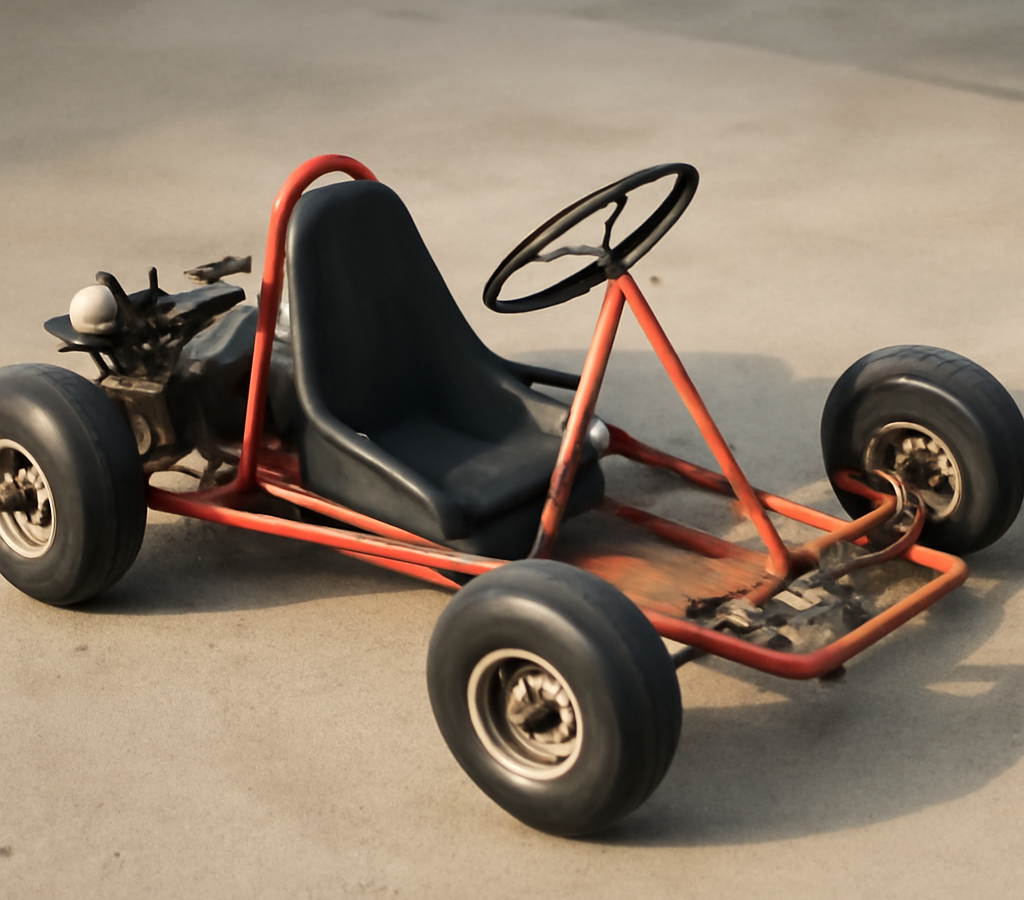
The Appeal of the Vintage Go-Kart
A vintage go kart is more than a toy from a bygone era; it is a rolling piece of motorsport history and, increasingly, a collectible worth restoring. From the chrome-and-steel backyard karts of the late 1950s to the wood-decked pedal cars that predate them, these machines capture an age when karting exploded across driveways and dirt lots. Collectors chase them for the craftsmanship, the nostalgia, and the satisfaction of bringing a rusted barn find back to life. Whether you want a display piece, a runner to enjoy on weekends, or an investment to hold, understanding what makes a vintage kart valuable and how to evaluate one will save you money and heartache. This guide covers the eras, the types, how to judge condition, and how to keep a classic on the road.
What Is a Vintage Go-Kart?
A vintage go kart is generally any kart built roughly between the mid-1950s and the early 1980s, the golden decades when karting grew from a homemade novelty into an organized sport. The very first karts appeared around 1956, cobbled together from surplus two-stroke engines and simple steel-tube frames. Within a few years, established manufacturers were turning out purpose-built machines with recognizable model names.
What sets a vintage kart apart from a modern one is usually the frame material, the engine, and the overall simplicity. Early frames were bent steel tubing without any suspension; engines were small West Bend, McCulloch, or Clinton two-strokes; and brakes were often a single band on the rear axle. That simplicity is exactly what makes them approachable to restore. If you are new to karting in general, our go-karting complete beginners guide provides useful background on how the sport and its machines evolved.
Types of Vintage and Collectible Karts
Not every classic kart is the same, and value varies widely by category.
Vintage racing karts are the sprint machines built for competition, often with documented race history and desirable engine brands. These command the highest prices when their provenance is clear.
Enduro and dual-engine karts from the 1960s and 70s used laid-back seating and, sometimes, two engines. They are prized for their period-correct look and are increasingly featured at vintage kart meets.
Recreational and “yard” karts were mass-produced for families rather than racers. They are the most common and affordable entry point for collectors.
Antique pedal karts predate engine-powered karts and overlap with the pedal-car hobby. They are collected as folk art and toys as much as vehicles.
Vintage Go-Kart Types Compared
| Type | Era | Typical Value | Collector Appeal | Restoration Effort |
|---|---|---|---|---|
| Vintage racing kart | 1957 to 1975 | $$$ to $$$$ | High, especially with race history | Moderate to high |
| Enduro / dual-engine | 1960s to 1970s | $$$ | High among enthusiasts | High |
| Recreational yard kart | 1960s to 1980s | $ to $$ | Moderate; nostalgia driven | Low to moderate |
| Antique pedal kart | Pre-1955 | $$ to $$$ | Crosses into toy collecting | Low; cosmetic focus |
How to Choose and Evaluate a Vintage Kart
Buy the frame first and the engine second. A straight, uncracked frame is the foundation of any restoration; a bent or heavily rusted chassis can cost more to fix than the whole kart is worth. Inspect the tube joints and welds for cracks, especially around the steering hoop and rear axle bearings.
Originality drives value. A kart with its correct period engine, seat, and hardware is worth far more than one rebuilt with modern parts, so weigh whether you want a museum-correct restoration or a reliable runner. Documentation, decals, and a known manufacturer name all add value.
Finally, set a realistic budget that includes the parts you cannot see yet: bearings, tires that have gone hard, seized throttle linkages, and gaskets. A “cheap” project can quietly become expensive. If your interest is really about driving rather than collecting, a modern platform such as those in our best electric go-karts for adults roundup may give you more seat time for the money.
Restoration and Maintenance
Start with a full teardown and catalog every part before you clean anything. Media-blast or hand-strip the frame, check it for straightness on a flat surface, and repaint or powder-coat in a period-correct color if authenticity matters to you.
Vintage two-stroke engines reward patience: fresh fuel lines, a rebuilt carburetor, a new spark plug, and a proper fuel-oil mix will revive most of them. Replace all wheel and axle bearings on principle, since 40-year-old bearings are rarely safe. Source hard-to-find parts through vintage kart clubs and online marketplaces, and take dated photos throughout so you can reassemble correctly. Because many classic karts have minimal brakes and no roll protection, drive them gently and treat them as the historical objects they are rather than track weapons. Understanding how these machines behave at speed, covered in our how fast do go-karts go guide, helps you keep a fragile classic intact.
Pros and Cons
Pros
- Genuine motorsport history and nostalgia
- Simple mechanics that are approachable to restore
- Strong and growing collector community
- Can appreciate in value when original and documented
- Rewarding hands-on hobby
Cons
- Parts can be scarce and expensive to source
- Minimal brakes and no modern safety features
- Original examples in good condition are rare
- Not ideal for regular hard driving
Frequently Asked Questions
What counts as a vintage go-kart?
Are vintage go-karts valuable?
Where can I find parts for a vintage kart?
Is it worth restoring an old go-kart?
Can I still drive a vintage go-kart?
What engines came on vintage go-karts?
Final Thoughts
A vintage go kart rewards patience and respect: buy a straight frame, prize originality, and budget for the parts you cannot see. Whether you want a concours-correct showpiece or a gentle weekend runner, the hobby offers a hands-on connection to karting’s earliest days that no modern machine can replicate. If your restoration sparks a broader interest in the sport, deepen your knowledge with our go-karting complete beginners guide, and when you want something new to actually drive hard, browse our best electric go-karts for adults roundup.