
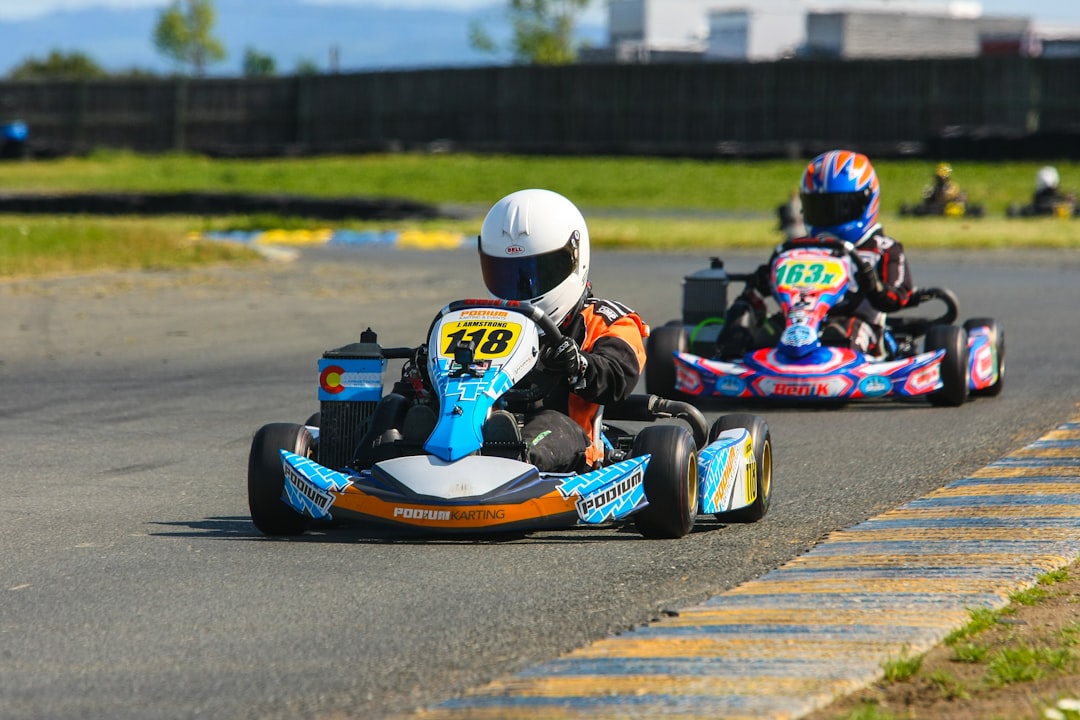
Karting is the motorsport of driving and racing go-karts: small, open-wheel vehicles with a low seat, a simple frame, and usually no suspension, raced on circuits designed for them. It ranges from a casual rental session at an indoor or outdoor track to organized club, national, and international championships. Karting is also widely regarded as the first step on the professional motorsport ladder, and most modern Formula 1 drivers started there. So, what is karting in practice? It is the most accessible form of real motorsport. This guide explains how karts work, where the sport came from, the main types of karting, what it typically costs, and how to start.
Part of our Go-Karting for Beginners guide — explore the full guide →
What Is Karting? A Definition
A kart is a small vehicle built on a tubular steel frame, called a chassis, with four small wheels, a steering wheel, brake and throttle pedals, and a seat mounted very close to the ground. Racing karts typically have no suspension; the chassis is designed to flex slightly, which helps the kart turn. Power comes from a small gasoline engine or, increasingly, an electric motor.
Because karts are light and sit so low, they feel fast and communicate grip directly to the driver. There are no driver aids, so steering, braking, and throttle control all come down to skill. That directness is why karting is such an effective training ground.
Speeds vary a great deal by type. Rental karts are usually limited to modest speeds, while high-performance racing classes are far quicker. Our guide to how fast go-karts go breaks the numbers down by category. If you want to understand the mechanics in more depth, see how go-karts work.
A note on spelling: you will see both kart and cart. In motorsport, kart is the standard spelling, a point our article on kart vs cart explains.
A Brief History of Karting
Karting is generally traced to Southern California in the late 1950s. The usual account credits Art Ingels, who worked at the race car builder Kurtis Kraft, with building a simple kart powered by a small two-stroke engine around 1956 and driving it in the Pasadena area. Interest grew quickly, small manufacturers appeared, and purpose-built tracks followed.
The sport spread to Europe and beyond in the late 1950s and 1960s, and international motorsport authorities created rules and championships. Over the following decades karting became established as the place where young drivers learn racecraft before moving to cars. Many famous champions began racing karts as children.
Types of Karting
Karting is a family of related activities rather than one. The best starting point depends on your goals, age, and budget.
Rental (arrive-and-drive) karting. You turn up at a commercial track, sign a waiver, borrow a helmet, and drive the track’s karts. Many venues run rental leagues with organized races. Indoor go-kart racing runs year-round, often with electric karts, while outdoor tracks tend to offer longer, faster layouts.
Sprint racing. The classic competitive form: short races on dedicated kart circuits using karts you own or lease. Sprint racing is organized into classes by age and engine, from young cadets to juniors, seniors, and masters.
Shifter karting. Karts with a multi-speed gearbox and more powerful engines. They are the fastest common kart category and more physically demanding. Our guide to sprint vs shifter karts explains the differences.
Endurance karting. Longer races, often for teams sharing a kart, that reward consistency, pit stops, and strategy. Many rental venues run endurance events, which makes them an affordable way to race.
Off-road and dirt karting. Karting on dirt ovals, trails, or private land, often with different tires and, on some machines, suspension.
Karting Disciplines Compared
The table gives a general comparison. Costs are typical USD ranges and vary by country, venue, class, and how much you travel.
| Discipline | Where | Equipment | Typical Cost to Take Part | Best For |
|---|---|---|---|---|
| Rental karting | Indoor and outdoor commercial tracks | Track-provided karts and helmets | Roughly $20 to $60 per session | First-timers, groups, casual fun |
| Rental leagues and endurance | Commercial tracks | Track-provided karts | Per event, often shared across a team | Competitive racing without owning a kart |
| Club sprint racing | Dedicated kart circuits | Owned or leased kart, personal gear | Several thousand dollars for a first season | Drivers ready to race seriously |
| Shifter karting | Kart circuits | Gearbox kart, personal gear | Usually more than single-speed classes | Experienced racers |
| Off-road karting | Dirt tracks, trails, private land | Owned off-road kart | Cost of the kart plus upkeep | Recreational riding |
Why Karting Is the Gateway to Motorsport
Karting teaches the core skills of racing: finding the racing line, braking consistently, managing grip, overtaking cleanly, and staying calm in traffic. Because karts are light and have no driver aids, mistakes are obvious and lessons are learned quickly.
It is also far cheaper than car racing, and young drivers can start early. Organized classes for children typically begin around age 5 to 8, depending on the country and series. That combination is why the vast majority of professional drivers came up through karting. Our guide to kids kart racing explains that pathway for families.
Karting is not only for future professionals. Plenty of adults race for fun in rental leagues and club series, and masters classes exist for older drivers. For many people it is simply the most affordable way to experience genuine wheel-to-wheel racing.
How Much Does Karting Cost?
Karting can cost as little or as much as you choose. A single rental session is usually the cheapest way in, typically somewhere in the range of a night out. Rental leagues add modest entry fees.
Owning a kart changes the picture. You need the kart itself, an engine, safety gear, a way to transport it, tires, fuel, spares, and race entries. A used club-level kart is usually the most cost-effective route, but running costs add up over a season, and national-level racing with travel costs much more. For realistic figures, see how much a go-kart costs.
Is Karting Safe?
Karting carries real risk, like any motorsport, but sensible precautions manage it well. Rental tracks provide helmets, use speed-limited karts, and run marshals and safety briefings. Competitive karting requires certified helmets, abrasion-resistant suits, gloves, and closed footwear, and many drivers add rib protection and neck braces.
Follow the track rules, tie back long hair, avoid loose clothing and scarves, and listen to the flags and marshals. Karts corner hard, so expect to feel it in your neck, arms, and core after a long session.
What You Need to Go Karting
For a rental session, very little. Wear comfortable, close-fitting clothes and closed-toe shoes, tie back long hair, and leave scarves and loose jewelry in the locker. The track usually supplies a helmet and often a disposable balaclava or helmet liner, though many regulars buy their own for hygiene and fit.
Club racing asks for more. Expect to need a certified helmet, a karting suit, gloves, and high-top racing shoes, and many drivers add a rib protector and neck brace. Check the rulebook for your series before buying, because helmet certification requirements change over time.
Beyond gear, the most useful things to bring are patience and an open mind. Ask experienced drivers for advice, watch the fast drivers’ lines, and treat every session as practice for the next.
How to Get Started in Karting
Book a rental session first. One session tells you more than any article. Go at a quieter time if you can, listen to the briefing, and focus on smooth, consistent driving rather than braking as late as possible.
If you enjoy it, try a rental league or endurance race next. That gives you real racing without the cost of owning a kart. If you want to go further, visit a local club race, talk to drivers in the paddock, and consider a used kart in a popular local class with good parts support.
Our complete beginners guide to go-karting walks through the whole journey, including gear, etiquette, and the most common first-session mistakes.
Pros and Cons of Karting
Pros
- One of the most affordable ways into real motorsport
- Teaches racecraft that transfers to other forms of racing
- Open to a wide range of ages with structured classes
- Rental sessions need no license or equipment
- Strong community at clubs and leagues
Cons
- Ownership costs rise quickly with tires, travel, and engines
- Physically demanding on the neck, arms, and core
- Outdoor racing depends on the weather
- Carries real risk of injury like any motorsport
Frequently Asked Questions
What exactly is karting?
Who invented karting?
Is karting a real motorsport?
How fast do karts go?
What age can you start karting?
Do I need a license to go karting?
Final Thoughts
Karting is motorsport at its most direct: a light kart, a low seat, no driver aids, and nothing between you and the track but your own judgment. It spans rental sessions, club racing, shifter classes, and the first career steps of most professional drivers, and it asks very little to begin. Book a rental session, see how it feels, and use our beginners guide when you are ready for the next step.