
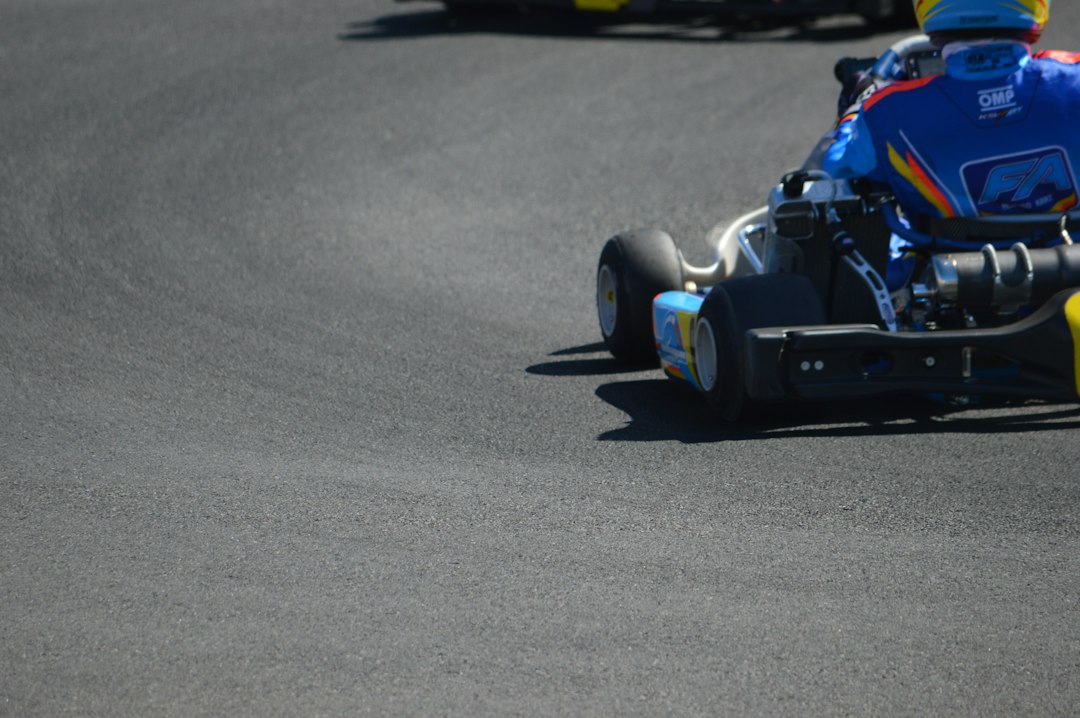
Finding a 50 mph go kart for sale is harder than the listings suggest. Plenty of sellers advertise high top speeds, but a kart that genuinely reaches 50 mph needs a strong engine or motor, correct gearing, a frame and brakes built for that speed, and a driver who knows how to handle it. Reaching that number is not the same as being safe or enjoyable at it. This guide explains which kinds of karts can actually reach 50 mph, what they typically cost new and used, what to check before buying, the warning signs in speed claims, and where these karts are sold.
Part of our Buying a Go-Kart guide — explore the full guide →
What Kind of Go-Kart Reaches 50 MPH?
A standard recreational kart with a 196cc or 212cc engine typically tops out around 20 to 35 mph in stock or lightly modified form. Reaching 50 mph requires substantially more power or very aggressive gearing, plus a chassis designed for it.
Karts that genuinely reach or exceed 50 mph usually fall into a few groups: racing karts with two-stroke engines, karts with larger four-stroke or motorcycle engines, high-voltage electric karts and heavily modified recreational karts. For a broader look at what drives speed across categories, see our guide to how fast go-karts go.
Types of 50 MPH Go-Karts
Two-stroke racing karts in classes such as 100cc and 125cc sprint can reach or exceed 50 mph depending on gearing and track. They are lightweight, sharp and demanding, built for tracks rather than yards.
Shifter karts are well beyond 50 mph, with gearboxes and powerful 125cc engines. They are serious race machines and not suitable for beginners.
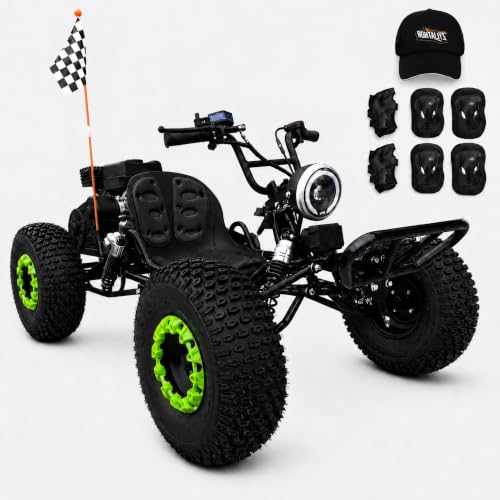
Large-engine recreational karts use 300cc or larger four-stroke engines or motorcycle engines, sometimes with CVT or manual transmissions. Some off-road buggies and adult karts in this category reach around 50 mph. Our go-kart with motorcycle engine guide explains how those builds work.
High-voltage electric karts with 72V systems or higher and powerful motors can reach 50 mph or more. Our 50 mph electric go-kart guide covers this category in detail.
Modified recreational karts with upgraded engines, governor removal, torque converters and taller gearing can approach 50 mph, but the chassis and brakes need matching upgrades.
Best Go-Kart for the Money: our top 3 picks
| Product | Best for | Key features | Price | Buy |
|---|---|---|---|---|
| Zyliathor 212cc | Best value overall |
| $1,600.00as of Nov 17, 2026 10:06 am EST | Buy now →Check current price |
| TrailMaster Cheetah 8 | Best-equipped utility kart |
| $2,605.00as of Nov 17, 2026 3:22 am EST | Buy now →Check current price |
| esheno 150cc Two-Seater | Best two-seater for adults |
| $1,799.00as of Nov 17, 2026 10:06 am EST | Buy now →Check current price |


Prices are Amazon’s listed prices as of the date and time shown and are subject to change; the price on Amazon at the time of purchase applies. As an Amazon Associate we earn from qualifying purchases.
50 MPH Go-Kart Types Compared
| Type | Typical Power Source | Where It Is Used | Skill Needed | Typical Price Range |
|---|---|---|---|---|
| Two-stroke sprint kart | 100cc to 125cc two-stroke | Kart tracks | Intermediate | $3,000 to $8,000 used |
| Shifter kart | 125cc gearbox two-stroke | Kart tracks | Advanced | $4,000 to $10,000+ used |
| Large-engine recreational kart | 300cc+ four-stroke or motorcycle engine | Private land, off-road | Intermediate | $3,000 to $8,000 |
| High-voltage electric kart | 72V+ motor and battery | Private land, tracks | Intermediate | $3,000 to $10,000 |
| Modified recreational kart | Built 212cc to 420cc engine | Private land | Intermediate | $1,500 to $4,000 |
These are typical ranges for complete karts. Prices vary widely by condition, brand and region.
Gearing, Weight and Real Top Speed
Top speed is not a fixed property of an engine. It depends on the balance between power, gearing, tire diameter, aerodynamic drag and total weight. A kart geared tall enough to reach 50 mph on a long straight may never get there on a short track, because it lacks the acceleration to use that gearing before the next corner.
Driver weight matters more on karts than on almost any other vehicle, because the driver can make up a large share of the total mass. A combination that reaches 50 mph with a light rider may fall several miles per hour short with a heavier one, especially on grass, dirt or an incline.
Tire size changes effective gearing too. Larger rear tires raise top speed and reduce acceleration, much like a smaller axle sprocket. When you compare listings, ask what tires, sprockets and driver weight were used for any quoted speed, so you are comparing like with like. Sellers who can explain the setup clearly are usually more trustworthy than those who quote a single headline number.
Is 50 MPH Safe in a Go-Kart?
At 50 mph, a kart covers more than 70 feet per second. Stopping distances grow, small steering inputs have large effects and mistakes happen quickly. That speed demands a chassis built for it, strong brakes, good tires and an experienced driver.
On a racing kart at a proper track, with runoff areas, barriers and marshals, 50 mph is routine for experienced drivers. On a backyard kart on uneven ground, the same speed can be dangerous. Recreational karts not designed for high speeds may have flexing frames, weak brakes and tires that overheat or come off the rim.
Safety gear becomes essential: a quality full-face helmet, gloves, a jacket or suit, boots, and for racing karts, rib protection. Our kart racing gear guide explains what to wear.
What to Check Before Buying a 50 MPH Go-Kart for Sale
Verify the speed claim. Ask how the speed was measured, with what gearing and with what rider weight. GPS readings on a flat surface are more trustworthy than speedometer or marketing claims.
Brakes. Look for hydraulic disc brakes sized for the kart. Mechanical brakes may not be enough at 50 mph.
Chassis. Check for cracks, repairs and flex. A frame designed for 25 mph can become unstable at twice the speed.
Tires and wheels. Make sure tires are rated for the speed and in good condition. Check rims for damage.
Engine or motor. For gas karts, ask about engine hours, rebuilds and modifications. For electric karts, check battery age, capacity and controller condition.
Steering and bearings. Play in the steering or worn bearings become more dangerous at speed.
Red Flags in Speed Claims
Be wary of recreational karts with small engines advertised at 50 mph or more without clear explanation. Big speed claims on small engines often assume extreme gearing, very light riders or downhill runs.
Watch for listings that mention governor removal without upgraded flywheels and connecting rods. Over-revving a stock engine to chase speed risks failure.
Avoid karts with obvious modifications to the chassis or brakes without documentation. Ask who did the work and how it was tested.
Where 50 MPH Go-Karts Are Sold
Racing karts are sold through kart shops, racing clubs, track notice boards and karting forums. High-performance recreational and electric karts are sold through powersports dealers, specialist retailers and online stores. Used karts appear on marketplaces and classifieds.
For general buying advice and seller types, see our go-karts for sale guide. Buying locally lets you inspect and test drive, which is especially important for high-speed karts.
How to Choose
Decide where you will drive. If you will drive at a track, a used two-stroke sprint kart in a popular class is often the best route to 50 mph. If you will drive on private land, consider a large-engine recreational kart or high-voltage electric kart with suspension and strong brakes.
Match the kart to your experience. If you have never driven a kart above 30 mph, build up gradually with track days or a less powerful kart first.
Budget for safety gear, maintenance and transport, not just the kart itself.
Pros and Cons
A 50 mph kart is thrilling, but it is a serious machine.
Pros
- Genuine high-speed thrills for experienced drivers
- Racing karts deliver precise, responsive handling
- Several routes to the speed including gas and electric
- Good used racing karts offer strong value
Cons
- Requires experience, strong brakes and quality gear
- Many recreational karts are not built for this speed
- Speed claims are often exaggerated
- Higher maintenance and running costs
Frequently Asked Questions
What go-kart can go 50 mph?
How much does a 50 mph go-kart cost?
Can a 212cc go-kart go 50 mph?
Is 50 mph fast for a go-kart?
Are 50 mph go-karts street legal?
Is an electric go-kart capable of 50 mph?
Final Thoughts
A 50 mph go kart for sale should be judged on more than a top speed claim. Check how the speed is achieved, whether the chassis, brakes and tires suit it, and whether your experience matches the machine. For the fastest options across categories, see our fastest go-kart guide.