
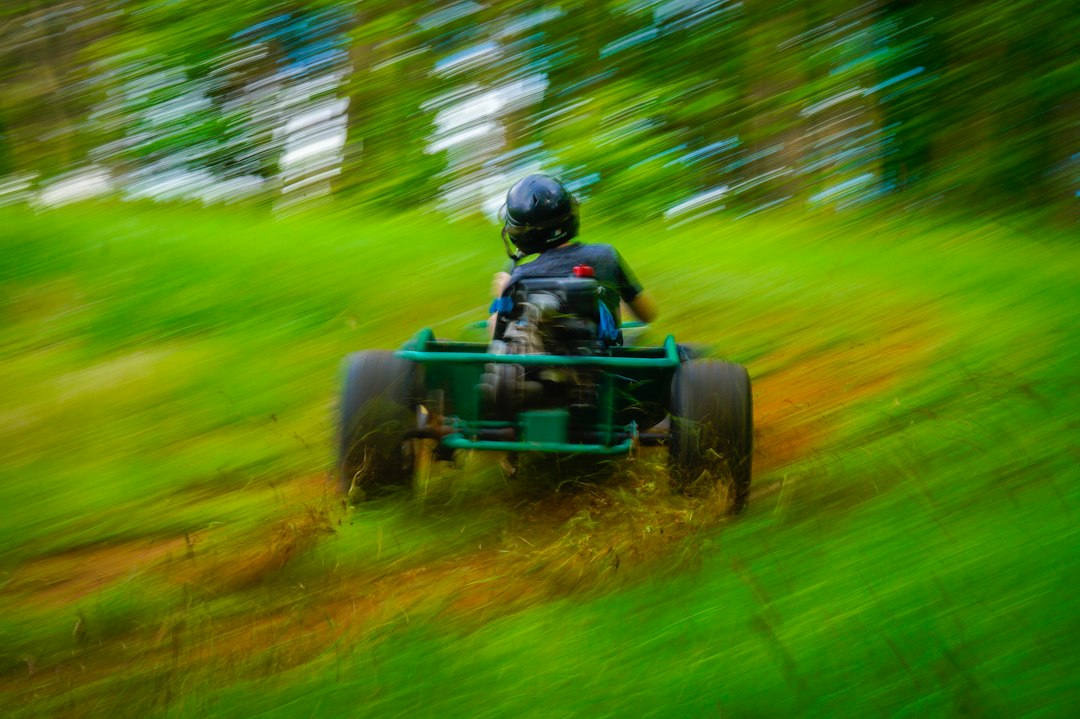
A big wheel go kart uses larger-than-normal wheels and tires to ride over grass, gravel, dirt, and rough ground that would stop a standard kart. Where a racing kart runs tiny 5-inch rims and a yard kart typically uses 6-inch wheels, big wheel karts step up to 8, 10, or even 12-inch rims with tall, wide tires. The result is more ground clearance, a smoother ride, and better traction on loose surfaces, at the cost of weight and a higher center of gravity. This guide covers what makes a kart a big wheel design, common sizes, how big wheels change speed and handling, typical prices, and how to choose or convert one.
Part of our Buying a Go-Kart guide — explore the full guide →
What Is a Big Wheel Go Kart?
There is no official definition, but the term generally describes a kart with tires noticeably taller than the 10 to 13-inch overall diameter common on pavement karts. Most big wheel karts run tires from roughly 16 to 22 inches tall on 7 to 10-inch rims, and many off-road buggies go larger still.
The name sometimes causes confusion with the classic plastic ride-on tricycle toys sold under the “Big Wheel” name. Those are children’s pedal toys, not karts. This guide focuses on motorized karts with oversized wheels. For pedal-powered options, see our guide to pedal go-karts.
Big wheels usually go hand in hand with other off-road features: a raised frame, suspension, a roll cage, and an engine with a torque converter for low-speed pulling power. Many models sold as off-road karts or mini buggies fit this description.
Types of Big Wheel Go Karts
Big wheel yard karts. These are simple rigid-frame karts fitted with larger tires, often 13 to 16 inches tall. They handle lawns and dirt paths better than standard karts without much added complexity.
Off-road karts with suspension. These combine 18 to 22-inch tires with independent front suspension and a rear swing arm or shocks. They are the most common big wheel design and suit trails and rough fields. Our off-road go-kart guide covers this category in depth.
Mini buggies and UTV-style karts. Larger machines with 10 to 12-inch rims and 22 to 25-inch tires, often with a cage, bench seat, and bigger engines. They blur the line between karts and small side-by-sides.
Electric big wheel karts. Battery-powered off-road karts increasingly use big tires too. Larger tires demand more torque, so motor and battery capacity matter.
Big Wheel Sizes Compared
| Setup | Typical Rim Size | Typical Tire Height | Ground Clearance | Best For |
|---|---|---|---|---|
| Standard yard kart | 5 to 6 in | 10 to 13 in | Low | Pavement and smooth lawns |
| Big wheel yard kart | 6 to 8 in | 13 to 16 in | Moderate | Grass and gravel paths |
| Off-road kart | 8 to 10 in | 18 to 22 in | High | Trails and rough fields |
| Mini buggy | 10 to 12 in | 22 to 25 in | Very high | Mud, sand and hills |
Tire sizes are written as height by width by rim diameter, for example 19×7-8 or 22×11-10. Our guide to go-kart tire sizes explains how to read these markings.
How Big Wheels Change Speed and Handling
Taller tires work like a taller gear. Each rotation of the axle covers more ground, so top speed rises if the engine can still reach its peak RPM. In practice, the added weight and rolling resistance of big knobby tires often cancel some of that gain, and acceleration usually suffers. Builders who fit big wheels to an existing kart often need to lower the gearing with a larger axle sprocket to restore acceleration.
Big wheels raise the center of gravity, which increases body roll and the risk of tipping in sharp turns. That is why most big wheel karts are built wider and fitted with roll cages and seat belts. Steering also becomes heavier because the larger contact patch resists turning.
On the plus side, big tires absorb bumps, roll over roots and rocks, and keep the frame from bottoming out. On loose surfaces their tread and volume provide grip that small tires cannot.
Cost of a Big Wheel Go Kart
Prices vary by size, engine, and features. As typical ranges, small big-wheel yard karts and youth off-road karts often cost $800 to $2,000. Adult off-road karts with suspension and a roll cage commonly run $1,500 to $4,000. Larger mini buggies can go higher. Used examples are widely available and often cheaper, but check suspension and frame condition carefully.
Converting an existing kart to bigger wheels typically costs $150 to $500 for tires, rims, and hubs, plus any spindle, axle, or sprocket changes. For a broader view of kart pricing, see how much a go-kart costs.
How to Choose a Big Wheel Go Kart
Match tires to terrain. Turf tires suit lawns, all-terrain knobby tires suit mixed dirt and gravel, and aggressive mud tires suit wet ground. Bigger is not always better on hard surfaces.
Look for suspension. Large tires help, but suspension makes a big wheel kart far more comfortable and controllable on rough ground.
Check the safety equipment. A roll cage, seat belts, and a speed limiter are worth having on any tall kart, especially for younger drivers.
Consider the engine. Big wheels need torque. A torque converter drive or a strong electric motor handles them better than a basic centrifugal clutch.
Measure storage and transport space. Big wheel karts are taller and wider, which affects trailers, truck beds, and garage space.
Converting a Kart to Big Wheels
Fitting larger wheels to a standard kart is possible but involves more than a tire swap. Check that the new tires clear the frame, seat, and body at full steering lock. Front spindles may need to match the new hub bore and bolt pattern. The rear axle diameter and hubs must also match. Re-gear for the larger diameter and confirm the brake still stops the kart effectively, since a taller tire increases the leverage acting against the brake.
A kart designed for small wheels may become unstable when raised, so lower speeds are wise until you know how it behaves.
Big Wheel Karts for Kids vs Adults
Youth big wheel karts usually pair smaller engines or electric motors with tires in the 16 to 19-inch range, a speed limiter, a roll cage, and adjustable pedals. They are built to be forgiving, with wide stances and modest top speeds. Parents should check the maker’s recommended age and weight ranges and supervise every ride, especially on slopes where a tall kart can tip.
Adult big wheel karts are larger, heavier, and faster. They often run engines from about 200cc upward with torque converters, plus full suspension and bigger brakes. Seat size, belt fit, and legroom matter more on adult models, since a cramped driver tires quickly on rough terrain. If two people will ride together, look at two-seat off-road karts with a bench seat and a frame rated for the combined weight.
In both cases, the bigger the tire and the higher the stance, the more important it is to slow down before turning and to avoid driving across steep slopes.
Maintenance Tips
Check tire pressures before each ride; low-pressure off-road tires are sensitive to small changes. Inspect wheel bearings and lug nuts often, since bigger tires put more load on them. Clean mud from suspension pivots and chains after wet rides, and grease fittings regularly.
Pros and Cons
Big wheels make a kart more capable off road, with some trade-offs on pavement.
Pros
- Rolls over bumps, roots and rocks
- More ground clearance for rough terrain
- Better grip on grass, dirt and mud
- Smoother ride than small-wheel karts
Cons
- Higher center of gravity and more rollover risk
- Heavier steering and slower acceleration
- Often needs regearing after conversion
- Takes more storage and transport space
Frequently Asked Questions
What size wheels are on a big wheel go-kart?
Do bigger wheels make a go-kart faster?
Can I put big wheels on a regular go-kart?
Are big wheel go-karts safe for kids?
Is a big wheel go-kart good on pavement?
Final Thoughts
A big wheel go kart is the right choice if you ride on grass, dirt, or trails rather than pavement. Choose tires for your terrain, prioritize suspension and a roll cage, and regear when you change tire size. To compare complete machines, browse our roundup of the best off-road go-karts.