
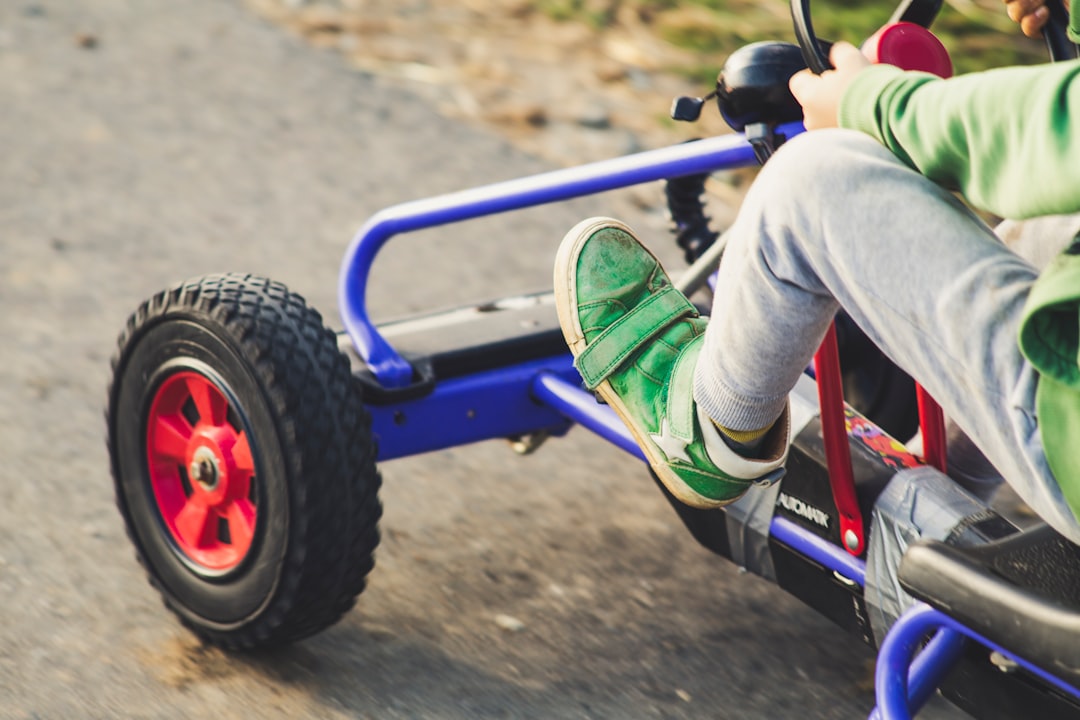
A pedal go-kart is a kart powered by the rider’s legs instead of an engine or battery. Pedals turn a chain or crank that drives the rear wheels, and the rider steers with a wheel and stops with a hand or foot brake. Most are made for children from roughly ages 3 to 12, though larger models carry teens and adults. Toy-grade karts often cost under $150, while durable steel-frame models typically run about $200 to $700. When choosing a pedal go-kart, focus on fit and adjustability, frame quality, tire type for your surface, and a reliable brake. This guide covers the main types, costs, sizing, safety and maintenance.
Part of our Kids Go-Karts guide — explore the full guide →
What Is a Pedal Go-Kart?
A pedal go-kart combines a low, stable chassis with bicycle-style propulsion. The rider sits low, pushes pedals in front of them, and power reaches the rear axle through a chain or a direct crank. There is no fuel, battery or motor, so the kart’s speed depends entirely on the rider’s effort and the slope of the ground.
Drivetrains vary. Basic karts use a fixed drive, where the pedals turn whenever the wheels turn, which allows pedaling backward to slow down or reverse. Better karts use a freewheel, so the rider can coast with their feet still. Some premium models offer a switchable freewheel, a reverse function or multiple gears to make hills easier.
Because the rider supplies all the power, pedal karts are a gentle way for children to learn steering, braking and judging speed before moving to a powered kart. Our kids go-karts complete guide explains how pedal karts fit into the progression to electric and gas karts.
Types of Pedal Go-Karts
Toy-grade pedal karts are light plastic-bodied karts for young children, often ages 3 to 6. They are affordable and easy to move, but plastic wheels and light frames wear quickly with daily use. See our guide to children’s pedal go-karts for options at this age.
Steel-frame pedal karts use a welded steel chassis, rubber or pneumatic tires, a freewheel and an adjustable seat or frame. They are heavier and pricier but can last through several children. Many cover a wide age range thanks to adjustable frames; our guide to the pedal go-kart for ages 8 to 12 covers the older end.
Off-road pedal karts add wider, knobby pneumatic tires and sturdier frames for grass, gravel and dirt. They need more effort to pedal but handle uneven yards far better.
Adult pedal karts are larger, with longer frames and higher weight ratings, built for teens and adults on smooth ground. Our adult pedal go-kart guide covers sizing for grown riders.
Multi-rider pedal karts seat two or more people, often side by side, and are common at resorts and rental lots. Our 4-person pedal kart guide explains how these work.
Best Cheap Go-Kart: our top 3 picks
| Product | Best for | Key features | Price | Buy |
|---|---|---|---|---|
| Aosom Kids Pedal Go Kart | Best overall budget go-kart |
| $142.49as of Oct 26, 2026 7:58 am EDT | Buy now →Check current price |
| STARRIVER 24V Drift Kart | Best entry-level electric kart |
| $299.99as of Oct 26, 2026 6:05 am EDT | Buy now →Check current price |
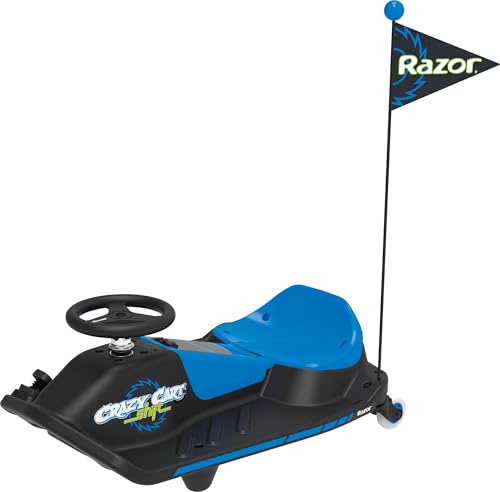
| Razor Crazy Cart Shift | Best simple 12V kart |
| $148.00as of Oct 26, 2026 5:22 am EDT | Buy now →Check current price |


Prices are Amazon’s listed prices as of the date and time shown and are subject to change; the price on Amazon at the time of purchase applies. As an Amazon Associate we earn from qualifying purchases.
Pedal Go-Kart Types Compared
Ages and prices below are typical ranges in USD. Always check the manufacturer’s height range, inseam guidance and weight limit for the specific model.
| Type | Typical Frame | Typical Rider | Durability | Typical Price |
|---|---|---|---|---|
| Toy-grade | Plastic body, light steel | About ages 3–6 | Low to moderate | $60–$150 |
| Steel-frame | Welded steel | About ages 4–12 | High | $200–$700 |
| Off-road | Reinforced steel | Older kids to adults | High | $300–$900 |
| Adult | Long steel frame | Teens and adults | High | $400–$1,200 |
| Multi-rider | Heavy steel | Families, rental fleets | Very high | Often $1,000+ |
How Much Does a Pedal Go-Kart Cost?
Pedal karts are the cheapest way into karting. Toy-grade models often sell for about $60 to $150. Steel-frame karts with pneumatic tires and a freewheel typically cost about $200 to $700, and off-road or adult models can run from about $300 to over $1,000.
The price gap usually reflects durability. A cheaper kart can be fine for occasional use by one young child, but steel-frame models generally last longer, adjust to fit growing riders, and keep some resale value. Running costs are close to zero; expect only occasional tires, brake parts and chain lubricant.
For a value-focused shortlist, see our roundup of the best cheap go-kart options. For how pedal karts compare with electric and gas karts on price, see our guide to how much a go-kart costs.
How to Choose a Pedal Go-Kart
Fit first. The rider should reach the pedals with a slight bend in the knee at full extension, without stretching. Measure the child’s height and inseam and compare them to the manufacturer’s range rather than going by age alone. An adjustable seat or sliding frame lets the kart grow with the rider.
Frame and weight limit. Check the maximum rider weight, and whether the kart can carry an adult if a parent may test or ride it. Welded steel frames resist flexing and cracking.
Tires. Hard plastic or solid rubber wheels are puncture-proof and fine on smooth pavement, but noisy and slippery on rough ground. Pneumatic tires give more grip and comfort and suit grass and gravel, though they can puncture.
Drivetrain. A freewheel is easier for most riders. A fixed drive allows reversing by pedaling backward. Gears or a low ratio help on slopes and grass.
Brakes. Look for a hand brake or foot brake that a child can operate easily and that actually stops the kart. Some cheap karts rely only on back-pedaling, which is less effective on slopes.
Extras that matter. A chain guard, a seat with a backrest, and a stable wide stance are worth more than decorative features. Some models accept add-ons such as trailers or passenger seats.
Pedal vs Electric vs Gas Go-Karts
Pedal karts are often the first kart a child owns, but they are not the only option. Electric karts add a motor and battery, giving more speed with less effort and usually including speed limiters for younger riders. Gas karts are faster still and suit older children and teens on larger properties, with more maintenance and noise.
Pedal karts win on cost, simplicity, quietness and safety. They also give children exercise and a gentle introduction to steering and braking. Their limits are speed and terrain: on grass or slopes, smaller riders can tire quickly. Many families start with a pedal kart around preschool age and move to an electric kart once the child is confident and wants more speed.
Sizing a Pedal Go-Kart for a Growing Child
Sizing is the most common buying mistake. A kart that is too big forces a child to stretch for the pedals, which makes pedaling and braking harder. A kart that is too small cramps the knees against the steering wheel.
Before buying, measure the child’s inseam while standing in shoes. Compare it to the manufacturer’s inseam or height range, and aim for a size near the middle of the range so there is room to grow. Adjustable seats or sliding frames add years of use. If possible, have the child sit in the kart and pedal a full rotation before you buy.
Pedal Go-Kart Safety
Pedal karts are slower than powered karts, but riders still sit low and can be hard for drivers to see. Common risks include collisions, tipping on slopes, and fingers or clothing caught in the chain.
- Have riders wear a properly fitted helmet; our guide to go-kart helmets for kids covers sizing.
- Ride on flat, open areas away from streets, driveways with traffic, pools and steep slopes.
- Supervise young children closely, especially near hills where the kart can pick up speed.
- Keep loose clothing, laces and long hair away from the chain and wheels.
- Consider a tall safety flag so drivers can see low riders.
- Check the brakes before each ride.
Maintenance Tips
Pedal karts need very little care, which is part of their appeal. Lubricate the chain periodically and adjust its tension if it sags. Keep pneumatic tires inflated to the pressure marked on the sidewall. Check and tighten bolts on the steering, seat and wheels every few weeks of regular use. Inspect brake components and replace worn pads or cables. Store the kart out of the rain to prevent rust on the chain and frame, and check the frame for cracks if the kart has been dropped or crashed.
Pros and Cons
Pros
- No fuel, battery or engine maintenance
- Quiet and suitable for yards and parks
- Teaches steering and braking at low speeds
- Provides real exercise
- Steel-frame models can last through several children
Cons
- Speed and range limited by rider effort
- Hard work on grass and slopes
- Toy-grade models can wear out quickly
- Riders sit low and can be hard for drivers to see
- Older kids may outgrow the thrill quickly
Frequently Asked Questions
What age is a pedal go-kart for?
Are pedal go-karts safe?
Can adults ride pedal go-karts?
Are pedal go-karts hard to pedal?
Should I buy a pedal or electric go-kart for my child?
How do you maintain a pedal go-kart?
Final Thoughts
A pedal go-kart is a simple, low-cost and low-risk introduction to karting. Choose by fit and adjustability first, pick tires that suit your yard, and put a working brake and a helmet ahead of extras. A well-built steel-frame kart can serve a family for years before a rider is ready for an electric or gas kart.