

A go kart engine mount is the plate or clamp assembly that holds the engine to the frame, and it does more than keep the engine from falling off. It sets chain alignment between the engine and axle sprockets, lets you adjust chain tension by sliding the engine, and has to resist drive torque and constant single-cylinder vibration. For most yard karts and DIY builds, the right answer is a stiff, slotted flat plate bolted to the frame; racing karts use clamp-on mounts that grip the chassis rails. A weak or poorly aligned mount throws chains, wears sprockets, and loosens hardware. This guide covers mount types, how to choose one, installation and alignment, and maintenance.
Part of our Go-Kart Engines & Drivetrain guide — explore the full guide →
What a Go-Kart Engine Mount Does
An engine mount has three jobs.
Hold the engine rigidly. The mount resists the torque reaction of the engine pulling on the chain, plus the shaking of a single-cylinder engine. If it flexes or loosens, the engine moves relative to the axle.
Align the drivetrain. The clutch or torque converter sprocket must sit in the same plane as the axle sprocket. Even a small lateral or angular error causes uneven chain wear, noise, and derailments under load.
Allow adjustment. Slotted holes or rail clamps let you slide the engine fore and aft to set chain tension, and shift it sideways for alignment, without cutting chain links or redrilling the frame.
Because every other drivetrain part depends on these three things, the mount is where a reliable kart starts. Our go-kart frame guide covers where the engine sits in the wider chassis design. For motor and battery builds, see our electric go-kart frame guide.
Types of Go-Kart Engine Mounts
Flat plate mounts. A flat plate, typically aluminum or steel, with slots for the engine’s base bolts and holes or slots for frame attachment. This is the standard choice for horizontal-shaft clone engines on yard karts and buggy-style builds. Plates are inexpensive, easy to drill for a different bolt pattern, and simple to adjust.
Clamp-on racing mounts. Used on sprint racing chassis, these consist of a lower cradle with caps that clamp around the frame rails and an upper plate the engine bolts to. They grip without drilling, slide along the rails for chain tension, and can be repositioned or swapped quickly. They must match the chassis tube diameter, which on racing frames is commonly in the high-20s to low-30s millimeters; check your chassis specification before ordering.
Angled racing mounts. Some racing mounts tilt the engine slightly rather than holding it flat. The angle affects how the engine and carburetor sit relative to the chassis and where the drive sprocket lands relative to the axle. Engine builders, chassis manufacturers, and class rules may specify or recommend a particular mount, so follow their guidance rather than picking an angle by feel.
Welded tab and bolt-through mounts. Common on homebuilt and off-road frames, these use tabs welded to the frame or bolts that pass through drilled frame members. Once tight they are very secure, but adjustment is limited to the slots you cut, and drilling frame tubes removes material. Keep holes small, away from welds, and use proper hardware.
Vertical-shaft engine mounts. Engines from lawn equipment have a downward-facing shaft and need a different arrangement, usually a plate with a cutout plus a right-angle drive or belt system. These builds are possible but more complicated.
Best Go Kart Engine: our top 3 picks
| Product | Best for | Key features | Price | Buy |
|---|---|---|---|---|
| maXpeedingrods MXR212R | Best overall 212cc |
| $149.99as of Nov 18, 2026 1:46 pm EST | Buy now →Check current price |
| maXpeedingrods MXR212E | Best electric start |
| $209.99as of Nov 18, 2026 1:46 pm EST | Buy now →Check current price |
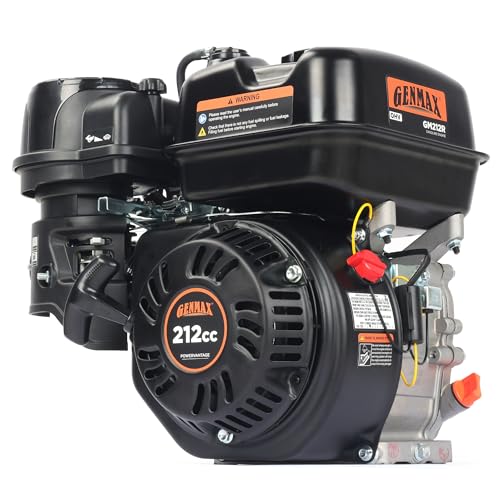
| GENMAX GM212R | Best support plan |
| $169.99as of Nov 18, 2026 1:46 pm EST | Buy now →Check current price |


Prices are Amazon’s listed prices as of the date and time shown and are subject to change; the price on Amazon at the time of purchase applies. As an Amazon Associate we earn from qualifying purchases.
Go-Kart Engine Mount Types Compared
Costs are typical USD ranges for the mount alone, before hardware, and vary by material and maker.
| Mount type | Attachment | Adjustability | Best for | Typical cost |
|---|---|---|---|---|
| Flat plate | Bolt-through, slotted holes | Moderate, limited by slot length | Yard karts with clone engines | $20–$60 |
| Clamp-on racing mount | Clamps around frame rails | High, slides along rails | Sprint racing chassis | $60–$200 |
| Welded tabs | Fixed to frame | Low | Scratch-built and off-road frames | Low materials cost; welding needed |
| Heavy-duty plate | Bolt-through, reinforced | Moderate | 420cc-class and larger singles | $40–$120 |
How to Choose a Go Kart Engine Mount
Match the engine bolt pattern. Most 196cc to 224cc horizontal-shaft clone engines share a common base pattern, so many plates are sold as fitting that engine family. Larger 301cc to 420cc engines usually need a different pattern. Measure your engine’s base bolt spacing and bolt diameter, or check the mount maker’s fitment list. If you run a Predator 212, a plate listed for that engine family is the simplest path.
Match the frame. Clamp mounts must match tube diameter and rail spacing. Plate mounts need flat, parallel surfaces or tabs to bolt to. Measure before buying.
Choose stiffness over weight. Thickness depends on material, engine size, and how the plate is supported. A plate that visibly flexes when you pull on the chain is too thin or poorly supported. For larger engines, a thicker or reinforced plate is worth the weight.
Leave room for adjustment. Slots should be long enough to set chain tension now and take up chain stretch later. If you plan to change sprocket sizes, allow extra slot length.
Plan the drivetrain clearance. A torque converter needs more width and depth than a centrifugal clutch. Check that the mount position leaves room for the clutch, the converter cover, and a chain guard.
If you are still choosing the engine itself, our best go-kart engine roundup compares common options, and the go-kart engine hub links every engine guide we publish.
Hardware and Cost Considerations
Mounts are inexpensive compared with what they protect. Budget for quality hardware alongside the plate: high-grade bolts (Grade 8 or metric 8.8 and up are common choices), hardened washers, and either lock nuts or thread locker. A torque wrench helps you tighten evenly and repeatably.
Aluminum plates resist corrosion and are lighter; steel plates are cheaper and stiffer for a given thickness. Either works if the plate is stiff enough and well supported. What you cannot tolerate is flex, because a plate that bows under chain load lets alignment change while you drive, even if it measures straight in the garage.
Installation and Alignment
Alignment is the whole job. A reliable method:
- Fit the mount to the frame and set the engine on it with the bolts snug but not tight.
- Install the clutch or torque converter and the axle sprocket.
- Hold a straightedge flat across the face of the axle sprocket and extend it forward to the engine sprocket. Both faces should touch the straightedge evenly.
- Slide or shim the engine sideways until they do, and check that the engine is square, not twisted, relative to the axle.
- Slide the engine fore or aft to set chain tension, commonly around 1/4 to 1/2 inch of free play at the midpoint.
- Tighten the bolts gradually in a cross pattern, then recheck alignment and tension, because tightening often shifts the engine.
Sight down the chain run when you are done. Any visible bend means the sprockets are out of plane. Our go-kart chain tension guide and sprocket kit guide cover those parts of the setup in more detail.
Managing Vibration
Single-cylinder engines vibrate, and vibration loosens fasteners. On karts, rigid mounting is the norm because it keeps the engine fixed relative to the axle and holds chain tension constant. Rubber isolation can reduce vibration felt in the frame, but it lets the engine move, which changes chain tension and alignment under load. If you use isolators on a high-vibration engine, choose firm ones designed for drivetrain loads and check chain behavior carefully.
For most builds, manage vibration at the source and in the hardware: a balanced clutch, straight sprockets, a healthy engine, thread locker or lock nuts on every mount fastener, and regular retorque checks.
Maintenance and Safety Checks
Check mount bolts after the first run or two on a new build, because hardware often settles. After that, include them in your routine go-kart maintenance: look for bolts that have backed out, fresh cracks around welds or bolt holes, elongated slots, and shiny marks that show the engine has shifted. Recheck chain alignment whenever you change sprockets or move the engine.
A loose engine can throw a chain at speed, which can lock the rear axle or strike the driver. Fit a chain guard, and never run the engine with the mount bolts loose.
Pros and Cons of Common Mount Choices
A good mount is cheap insurance, but each style involves trade-offs.
Pros
- Accurate alignment greatly extends chain and sprocket life
- Slotted plates make chain tension adjustment quick
- Clamp-on racing mounts reposition without drilling the frame
- Low cost compared with the drivetrain it protects
Cons
- Under-tightened clamp mounts can creep and throw chains
- Bolt-through designs limit adjustment and remove frame material
- Thin or unsupported plates flex under load
- Engine bolt patterns vary, so not every plate fits every engine
Frequently Asked Questions
What engine mount do I need for a clone or Predator 212 engine?
Can I bolt an engine directly to the frame?
How do I align the engine sprocket with the axle sprocket?
Why does my engine mount keep coming loose?
Should a go-kart engine mount use rubber isolation?
How thick should a go-kart engine mount plate be?
Final Thoughts
The engine mount decides how long your chain and sprockets last and whether the engine stays exactly where you put it. Choose a mount that matches your engine bolt pattern and frame, favor stiffness, align with a straightedge, and lock every fastener. Get the mount right before chasing more power, and the rest of the drivetrain will be ready for it.