

A go kart fuel tank on a recreational kart rarely gets attention until it cracks, leaks, or the engine starts starving for fuel halfway down the driveway. This guide is for owners and builders of yard, off-road and fun karts who need a replacement tank, a better mounting position, or a reliable fuel line setup. It covers the main tank types, how to size and mount one, why venting matters, which fuel line and inline filter to use, and the common faults that cause stalling and leaks. If you run a sprint or club racing kart, our separate guide to the racing go-kart fuel tank covers chassis-mounted race tanks and class rules.
Part of our Go-Kart Engines & Drivetrain guide — explore the full guide →
What a Go Kart Fuel Tank System Includes
On a fun kart the fuel system is simple, but every part matters. A typical setup includes:
- The tank, either the small tank fitted to the engine itself or a separate tank mounted on the frame.
- A vented cap or separate vent line that lets air in as fuel is used.
- An outlet fitting with a barb, often with a built-in shut-off valve.
- Fuel line running from the tank to the carburetor.
- An inline fuel filter to catch debris before it reaches the carburetor.
- A fuel pump on some setups, usually a pulse pump driven by crankcase pressure, when the tank sits lower than the carburetor.
Most small four-stroke engines used on karts, such as those covered in our go-kart engine guide, are designed for gravity feed: fuel flows down from a tank above the carburetor.
Types of Go-Kart Fuel Tanks
Engine-mounted tanks. Many horizontal-shaft engines, including the Predator 212, come with a tank bolted above the carburetor. This is the simplest option: short fuel path, reliable gravity feed and no extra brackets. The drawbacks are limited capacity and the fact that the tank sits close to the engine heat and in the way of some engine upgrades.
Frame-mounted plastic tanks. Many factory fun karts and off-road karts use a molded plastic tank mounted behind the seat or beside the engine. Plastic resists corrosion, does not rust inside, and molds into shapes that fit the frame. Replacement tanks are usually specific to the kart model.
Universal remote tanks. Aftermarket plastic or aluminum tanks sold for small engines, minibikes and karts. They come in a range of sizes with a cap, outlet fitting and often a shut-off valve, and are the usual choice for DIY builds and for replacing a cracked factory tank when the original is unavailable.
Metal tanks. Aluminum or steel tanks are durable and can be fabricated to fit, but steel can rust inside if left with water-contaminated fuel, and any welded tank must be leak-tested properly.
Racing tanks. Racing karts use slim tanks mounted between the driver’s legs on the chassis, with fittings and capacities governed by class rules. They suit race chassis rather than fun karts.
Best Go Kart Gas Tank: our top 3 picks
| Product | Best for | Key features | Price | Buy |
|---|---|---|---|---|
| JMCHstore 1 Gal Tank with Gauge | Best overall for Predator 212 Hemi |
| $33.98as of Nov 18, 2026 4:10 am EST | Buy now →Check current price |
| QYMOTO 196/212 Tank | Best stock-style 212 replacement |
| $24.99as of Nov 18, 2026 4:10 am EST | Buy now →Check current price |
| MTATCN 1.5 Gal 150-250cc Tank | Best for 150cc to 250cc karts |
| — | Buy now →Check current price |
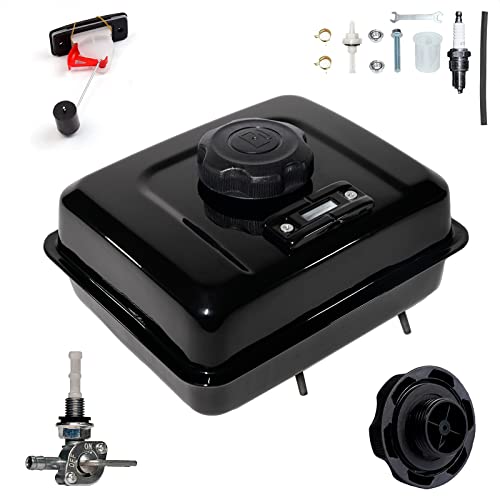


Prices are Amazon’s listed prices as of the date and time shown and are subject to change; the price on Amazon at the time of purchase applies. As an Amazon Associate we earn from qualifying purchases.
Go Kart Fuel Tank Types Compared
| Tank Type | Feed Method | Install Effort | Durability | Best For | Typical Price (USD) |
|---|---|---|---|---|---|
| Engine-mounted (stock) | Gravity | None | Good | Stock engines and simple builds | $20 to $50 replacement |
| Frame-mounted plastic (OEM) | Gravity or pulse pump | Low, model-specific | Good; can crack with age | Factory fun and off-road karts | $25 to $80 |
| Universal remote plastic | Gravity or pulse pump | Moderate | Good | DIY builds and replacements | $15 to $50 |
| Aluminum or steel | Gravity or pulse pump | Moderate to high | Very good | Custom builds | $40 to $150 |
| Racing chassis tank | Pulse pump | Moderate | Good | Sprint racing karts | See racing guide |
Prices are typical ranges for the tank. Add a few dollars to tens of dollars for fuel line, an inline filter, a shut-off valve and mounting hardware.
How to Choose a Replacement Tank
Capacity. Match the tank to how long you ride between fill-ups. Small engines are relatively thrifty, so a modest tank covers a typical yard session. A larger tank adds weight high up on the kart and leaves more fuel to go stale between rides.
Mounting position. For gravity feed, the bottom of the tank should sit above the carburetor inlet so fuel flows even when the tank is nearly empty. If that is not possible, plan for a pulse fuel pump.
Material. Look for tanks sold for gasoline use. Plastic tanks should be a fuel-rated material, not a general-purpose container.
Fittings. Check the outlet barb size, whether a shut-off valve is included, and whether the cap is vented. A tank with a built-in valve saves a separate part.
Heat and protection. Keep the tank away from the exhaust and muffler, and out of the path of debris thrown from tires and the chain.
Mounting a Go-Kart Fuel Tank
Mount the tank securely to the frame with brackets and straps or bolts, using rubber pads to reduce vibration. Vibration is the main cause of cracked plastic tanks and loose fittings on karts. The tank should not move at all when you push on it by hand.
Keep it clear of the exhaust, and route fuel lines so they do not touch hot engine parts or rub on sharp frame edges. Position the filler where you can refuel without spilling onto the engine. Think about crash damage too: a tank that hangs outside the frame rails is vulnerable in a rollover or a hit against a post.
Venting: Why the Engine Starves for Fuel
As fuel leaves the tank, air must replace it. If the vent in the cap is blocked, or a sealed cap is fitted to a tank that needs one, a vacuum builds up and fuel flow slows or stops. The classic symptom is an engine that runs fine for a few minutes, then stumbles and dies, and starts again after you loosen the cap.
Use the vented cap supplied with the tank, keep the vent clear of dirt, and, on off-road karts, consider a vent line with a check valve or a rollover-type vent to reduce spills when the kart tips. Never block a vent to stop fuel splashing; fix the cause instead.
Go Kart Fuel Line and Inline Filters
Line size. Small engines commonly use fuel line with an inside diameter around 3/16 inch or 1/4 inch, but this varies. Match the line to the barb on the tank outlet and carburetor inlet. A line that is too large leaks around the barb; one that is too small is hard to fit and can split.
Line material. Use hose sold as fuel line and rated for the fuel you use, including ethanol blends. Cheap clear tubing that is not rated for gasoline can harden, crack or swell. Replace any line that feels stiff, sticky or shows surface cracks.
Clamps. Small spring or screw clamps at each barb stop the line working loose with vibration. Do not overtighten screw clamps on soft line.
Inline filter. Fit a small inline fuel filter between the tank and the carburetor, with the flow arrow pointing toward the carburetor. It catches debris and flakes from old tanks before they block the carburetor’s tiny jets. Mount it where you can see it, and replace it when it looks dirty.
Shut-off valve. A valve in the line or on the tank lets you turn off fuel for storage, transport and carburetor work. It also stops fuel from seeping past the float into the engine when the kart is parked.
Routing. Keep the line as short as practical, with gentle bends and no kinks. Avoid low loops where air bubbles can collect, and keep it away from the exhaust.
Maintenance and Common Problems
Stale fuel. Gasoline degrades over time, especially ethanol blends, and leaves varnish that clogs carburetors. For storage longer than a few weeks, follow your engine manual: either add a fuel stabilizer or drain the tank and run the carburetor dry. Our go-kart maintenance guide covers seasonal storage.
Leaks. Check the tank seams, the outlet fitting and every clamp before riding. Fuel smell around a parked kart is a warning sign. Replace a cracked tank rather than trying to patch it.
Debris in the tank. Rust flakes, plastic shavings from drilling and dirt from fuel cans all end up in the filter or carburetor. Rinse new tanks before installing, and pour fuel through a clean funnel.
Engine dies after a few minutes. Check the vent first, then the filter, then the line for kinks or collapse. If the problem persists, the carburetor may need cleaning; see our Predator 212 carburetor guide for a typical example.
Fuel Safety
Refuel outdoors with the engine off and cooled down, away from sparks and open flame. Wipe up spills before starting. Store fuel in approved containers away from living areas, and never smoke near the kart while refueling. Carry a suitable fire extinguisher if you ride regularly, and keep children away from refueling.
Pros and Cons
Upgrading from the stock engine tank to a remote tank is a common change on fun karts. Here is how it balances out.
Pros
- Remote tanks add capacity for longer sessions
- Moves fuel away from engine heat
- Frees space for exhaust and intake upgrades
- Easy to add a shut-off valve and inline filter
Cons
- Needs careful mounting to avoid cracks and leaks
- Low tank positions may need a fuel pump
- Longer fuel lines add more joints that can leak
- Model-specific OEM tanks can be hard to find
Frequently Asked Questions
What size fuel line does a go-kart use?
Can a fuel tank sit lower than the carburetor?
Do I need an inline fuel filter?
Why does my kart die until I open the gas cap?
Can I use any plastic container as a go-kart fuel tank?
How do I store a kart with fuel in the tank?
Final Thoughts
A reliable go kart fuel tank setup comes down to a few basics: a fuel-rated tank mounted solidly above the carburetor, a clear vent, the right size fuel line with clamps, and an inline filter you can see. Get those right and most fuel-related stalls disappear. For other replacement components, see our go-kart parts guide.