

A small go kart engine is usually anything under about 150cc, from the 79cc to 100cc four-strokes found on kids’ karts and light builds to the compact two-strokes used in junior racing. Small engines are cheaper, lighter, quieter, and easier for young or new drivers to manage. They also limit speed, which is often the point. This guide explains which engine sizes count as small, the main types, how they compare on power and use, typical USD prices, how to choose one for your frame and driver, and the basic maintenance that keeps a small engine starting on the first pull.
Part of our Go-Kart Engines & Drivetrain guide — explore the full guide →
What Counts as a Small Go Kart Engine?
There is no official cutoff, but in the DIY and recreational world, small engines generally sit below the popular 196cc to 212cc horizontal-shaft class. That leaves engines from roughly 50cc up to around 150cc. Most are air-cooled, single-cylinder, horizontal-shaft four-strokes designed for pumps, pressure washers, and small equipment, then adapted to karts.
In racing, small engines also include junior and cadet two-strokes and small four-strokes used in classes for young drivers. Those engines are built or prepared to class rules, and the sanctioning body’s current rulebook defines what is allowed.
For an overview of every engine size and type, see our main go-kart engine guide.
Types of Small Kart Engines
Small utility four-strokes (around 79cc to 100cc). These are the most common small engines on kids’ karts and mini bikes. They are simple, reliable, and widely available with a 5/8-inch or 3/4-inch output shaft depending on the model. Power is modest, which suits younger drivers and small frames.
Mid-small four-strokes (around 120cc to 150cc). A step up in power for teenagers or lighter adults, these appear on some budget karts and buggies. Some are vertical-crank designs from older equipment, which need different mounting.
Small two-strokes. Two-stroke engines produce more power for their size and weigh less, but they need premixed fuel and more frequent maintenance. They are common in junior racing classes and some vintage karts.
Scooter-derived engines. Engines from small scooters, often with a built-in CVT transmission, show up in some mini karts and buggies. They are compact but bring their own mounting and wiring requirements.
Small electric motors. Not an engine, but often the alternative for a small kart. Low-voltage motors give smooth power and no fuel handling, at the cost of battery range limits.
Best Go Kart Engine: our top 3 picks
| Product | Best for | Key features | Price | Buy |
|---|---|---|---|---|
| maXpeedingrods MXR212R | Best overall 212cc |
| $149.99as of Nov 18, 2026 1:37 am EST | Buy now →Check current price |
| maXpeedingrods MXR212E | Best electric start |
| $209.99as of Nov 18, 2026 1:37 am EST | Buy now →Check current price |
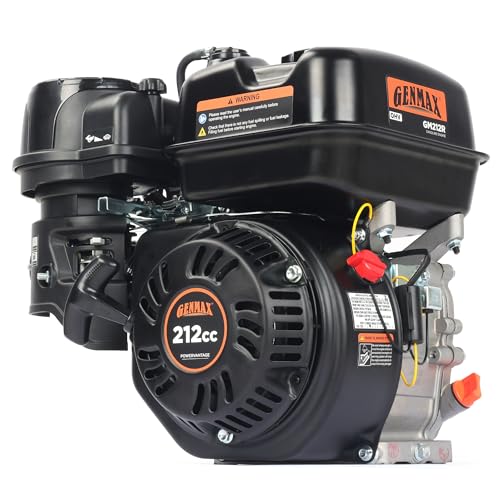
| GENMAX GM212R | Best support plan |
| $169.99as of Nov 18, 2026 1:37 am EST | Buy now →Check current price |


Prices are Amazon’s listed prices as of the date and time shown and are subject to change; the price on Amazon at the time of purchase applies. As an Amazon Associate we earn from qualifying purchases.
Small Engine Options Compared
| Engine Type | Displacement | Power Level | Maintenance | Typical Use |
|---|---|---|---|---|
| Utility four-stroke | ~79–100cc | Low | Low | Kids karts, mini bikes |
| Mid-small four-stroke | ~120–150cc | Low to moderate | Low | Teen karts, light adult builds |
| Small two-stroke | ~50–100cc | Moderate to high for size | Higher | Junior racing, vintage karts |
| Scooter engine with CVT | ~50–150cc | Low to moderate | Moderate | Mini karts and buggies |
Exact horsepower varies by manufacturer and model, and published ratings are measured differently between brands. Use the manufacturer’s specification sheet when comparing.
Small Go Kart Engine Prices
New small utility four-strokes commonly range from about $120 to $350, with branded commercial-grade engines at the upper end. Mid-small engines from 120cc to 150cc generally cost $200 to $500. Junior racing two-strokes, sold as class-legal packages, are considerably more expensive, often several hundred to over a thousand dollars.
Remember to budget for a clutch, chain, throttle cable, and engine mount plate. Our guide to used go-kart engines for sale covers what to check if you are buying second-hand to save money.
How to Choose a Small Go Kart Engine
Match power to the driver. A young or new driver benefits from a gentle engine. More power is not always better on a small frame with basic brakes.
Check the shaft size. Output shaft diameter decides which clutches and torque converters fit. Common small-engine sizes are 5/8 inch and 3/4 inch, but confirm with the spec sheet.
Check the mounting pattern. Bolt patterns vary. Compare the engine base with your frame’s mounting plate, or plan to fit an adapter plate.
Consider weight. On a small kart, a heavy engine on one side affects balance. Small engines usually weigh much less than full-size kart engines, which helps.
Look for parts support. Common engine families have wide aftermarket support for filters, carburetor parts, and pull starters. Obscure engines can be hard to keep running.
Think about upgrades. If the driver will grow, consider whether the frame can accept a larger engine later. Many owners eventually move to a 196cc or 212cc engine.
Gearing and Clutch Setup
Small engines have limited torque, so gearing matters. A centrifugal clutch with a small drive sprocket paired with a larger axle sprocket helps the kart accelerate from a stop. Too tall a gear ratio makes the engine bog and overheats the clutch. A torque converter can improve low-speed performance on heavier karts.
Use the chain size that matches your clutch and axle sprockets, typically #35 or #40/41 on recreational karts. Our go-kart clutch guide explains engagement speeds and sizing.
Mounting a Small Engine
Most small horizontal-shaft engines bolt to a flat steel engine plate welded or bolted to the frame. A plate with slotted holes lets the engine slide forward and back, which is how you tension the chain. Make sure the plate is thick enough not to flex under load; a flexing plate lets the chain loosen and misalign.
Line up the clutch sprocket with the axle sprocket using a straightedge before tightening the mounting bolts. Use lock washers or thread locker on the engine bolts, since small engines vibrate and bolts can back out. Keep the exhaust pointed away from the driver and fuel lines, and make sure the driver cannot touch the muffler while seated.
Route the throttle cable smoothly without tight bends, and confirm that the throttle returns to idle when you release the pedal. If the engine has a fuel shutoff, make it easy to reach for storage and transport.
Maintenance
Small four-strokes need regular oil checks and changes at the intervals in the owner’s manual, a clean air filter, and fresh fuel. Old fuel is the leading cause of hard starting, so drain the tank or use a stabilizer before storage. Check the spark plug for fouling, and keep the cooling fins clear of dirt and grass.
Two-strokes need the correct fuel-oil mix ratio from the manufacturer, careful carburetor tuning, and more frequent top-end inspections. Never run a two-stroke on straight gasoline.
Buying a Used Small Engine
Small engines turn up cheaply on old minibikes, pressure washers, and outgrown kids’ karts. Before buying, ask to see it start from cold. Listen for knocking, watch for blue smoke, and check that it idles smoothly once warm. Pull the dipstick and look for milky oil, which suggests water contamination, or very dark sludge, which suggests neglect.
Check that the pull starter retracts fully, the shaft spins without wobble, and the mounting base has no cracked bolt holes. Missing shrouds and air filters are a sign the engine may have ingested dirt. A cheap new engine is often a better deal than a tired used one that needs a carburetor, recoil, and gaskets.
Safety Notes
Even a small engine can injure fingers in an exposed chain. Fit a chain guard. Keep a throttle return spring on the carburetor so the throttle closes if the cable fails. For kids’ karts, consider a throttle limiter or governor that keeps speed sensible. Our kids’ go-karts guide covers age-appropriate speed and safety features.
Pros and Cons of Small Engines
Small engines suit specific jobs well and others poorly.
Pros
- Low purchase price and running cost
- Lightweight and easy to mount
- Gentle power suits kids and beginners
- Simple maintenance with common parts
Cons
- Limited speed for adult drivers
- Struggle with heavy frames and hills
- May be outgrown quickly as a driver improves
- Small two-strokes need premix and more upkeep
Frequently Asked Questions
What is the smallest engine for a go-kart?
Is a small engine enough for an adult?
Can I use a lawn mower engine on a go-kart?
How fast does a small go-kart engine go?
Are two-stroke small engines better than four-strokes?
How much does a small go-kart engine cost?
Final Thoughts
A small go kart engine is the right choice when the driver is young or new, the frame is light, and simplicity matters more than speed. Match the shaft size and mounting to your frame, gear it for acceleration, and keep up with oil and fuel. When the driver is ready for more, compare the 150cc engine options or the popular Predator 212 engine as the next step.