
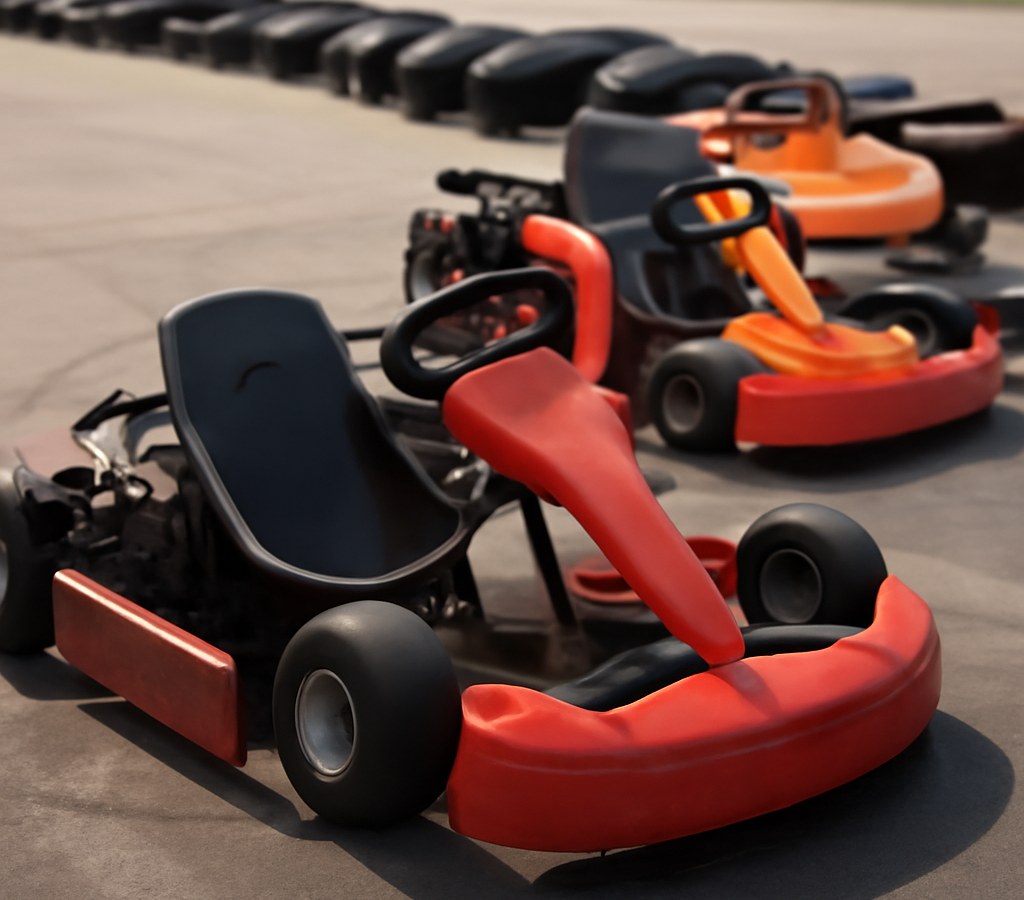
Buying go karts for kids means balancing fun against safety, and the single most important factor is matching the kart to the child’s age and size. A kart that is too fast or too big is genuinely dangerous, while one sized right gives a child years of confidence-building driving. This guide walks parents through how go karts for kids work, the main types by power source, what they cost, and the safety features that actually matter. By the end you will know exactly what to look for so your child gets a kart that fits today and keeps them safe.
What Are Go-Karts for Kids?
Go karts for kids are scaled-down karts with smaller frames, lower seats, speed limits, and safety features designed for young drivers, typically ages 3 to 12. Compared with adult karts, they have shorter wheelbases, lighter weight, capped top speeds, and often a parental control such as a remote speed limiter or emergency cutoff.
They come in pedal, electric, and gas versions. Pedal karts suit the youngest children, electric karts are the popular middle ground for controlled speed and quiet operation, and gas karts serve older kids who want more power. The right pick depends heavily on age, which is why we break it down by age in our best go-karts for kids by age guide.
It helps to think of these karts as a progression rather than a single purchase. A toddler starts on a pedal kart, building coordination and confidence with no engine at all. Around age six, a 24V electric kart with selectable speed modes lets them go faster as their skill grows without ever exceeding a limit you set. By nine or ten, a governed gas kart or a larger electric model rewards a competent young driver with real pace. Buying the stage that fits now, rather than the one they might reach in three years, is the single best safety decision a parent can make.
Types of Go-Karts for Kids
Kids’ karts split by power source and age band. Pedal karts are human-powered, ideal for toddlers and young kids building coordination. Electric karts use 6V–24V batteries with speed caps and parental cutoffs, perfect for elementary-age drivers. Gas karts (usually 79cc–200cc) offer more speed and run time for older kids and pre-teens under supervision.
The table below compares the main types of go karts for kids.
| Type | Typical Age | Top Speed | Parental Controls | Price Range |
|---|---|---|---|---|
| Pedal kart | 3–7 | Walking–5 mph | None needed | $80–$250 |
| Electric (6V–12V) | 3–6 | 3–8 mph | Remote cutoff common | $150–$400 |
| Electric (24V) | 6–10 | 8–15 mph | Speed modes + cutoff | $300–$800 |
| Gas (79cc–200cc) | 8–12 | 15–25 mph | Adjustable governor | $500–$1,500 |
Cost and Key Considerations
Go karts for kids range from about $80 for a simple pedal kart to $1,500 for a gas model built for pre-teens. Electric karts, the most popular category, run $150–$800 depending on voltage and features. Remember to budget for a properly fitted kids’ helmet, which is non-negotiable at any speed above walking pace.
The key considerations are all about fit and safety: the correct age and weight rating, a low top speed you can limit, and a parental cutoff or adjustable governor. Kids grow fast, so a kart with adjustable speed modes lasts longer. For the complete safety-first overview, including seat belts and roll bars, see our kids go-karts complete guide. For overall budgeting across kart types, our how much a go-kart costs guide helps.
Safety features are not an area to economize. On faster models, look for a roll bar or cage, a lap-and-shoulder belt rather than a simple lap strap, and a low seat that keeps the center of gravity down. A remote cutoff that lets a parent stop the kart instantly from a distance is invaluable for the youngest drivers, and an adjustable governor on gas karts lets you dial in a safe ceiling and raise it only as the child improves. Cheap karts that skip these features to hit a price point are exactly the ones to avoid, however tempting the sticker.
How to Choose go karts for kids
Start with age and size, not price. A three-year-old needs a pedal or 6V electric kart capped at a walking pace; a ten-year-old can handle a 24V electric or a governed gas kart. Match the seat height, pedal reach, and weight rating to your specific child, and never buy “to grow into” at the cost of a speed they cannot yet control.
Insist on safety features: a remote parental cutoff or adjustable governor, a proper seat belt, a low center of gravity, and, ideally, a roll bar on faster models. Choose electric for quiet, low-maintenance driving in a garage or driveway, and gas only for older kids with room to run. Always pair the kart with a certified kids’ helmet. Our best go-karts for kids by age roundup matches proven models to each age band.
Finally, plan for where the driving will happen. Electric karts are quiet and fume-free, so a driveway, a fenced backyard, or an empty cul-de-sac works well and keeps the child in sight. Gas karts are louder and produce exhaust, so they suit larger open spaces such as private land or a dedicated track, and never a garage. Whatever you choose, set clear rules from day one, no driving without a helmet, never near a road, and always with an adult watching, so that good habits form alongside the fun.
Pros and Cons
A kids’ kart is a big hit with children, but it comes with real responsibilities. Here is the honest balance.
Pros
- Builds coordination, confidence, and outdoor time
- Speed-limited models keep young drivers safe
- Parental cutoffs and governors add control
- Electric options are quiet and low-maintenance
- Adjustable models grow with the child
Cons
- Requires constant adult supervision
- Kids outgrow smaller karts quickly
- Faster gas models need open, safe space
- A proper helmet and gear add to the cost
- Cheap karts may skip key safety features
Frequently Asked Questions
What age can a child start driving a go kart?
How fast should a kids go kart go?
Are electric or gas karts better for kids?
What safety gear do kids need?
Should I buy a bigger kart for my child to grow into?
Do kids go karts have parental controls?
Final Thoughts
The best go karts for kids are the ones sized to your child today, with a top speed you can limit and safety features you can trust. Start with age and fit, insist on a parental cutoff or governor, and always add a certified helmet. Electric karts suit most younger kids, while gas models reward older children with room to drive. When you are ready to choose a specific model, our best go-karts for kids by age and kids go-karts complete guide will point you to the right one.