
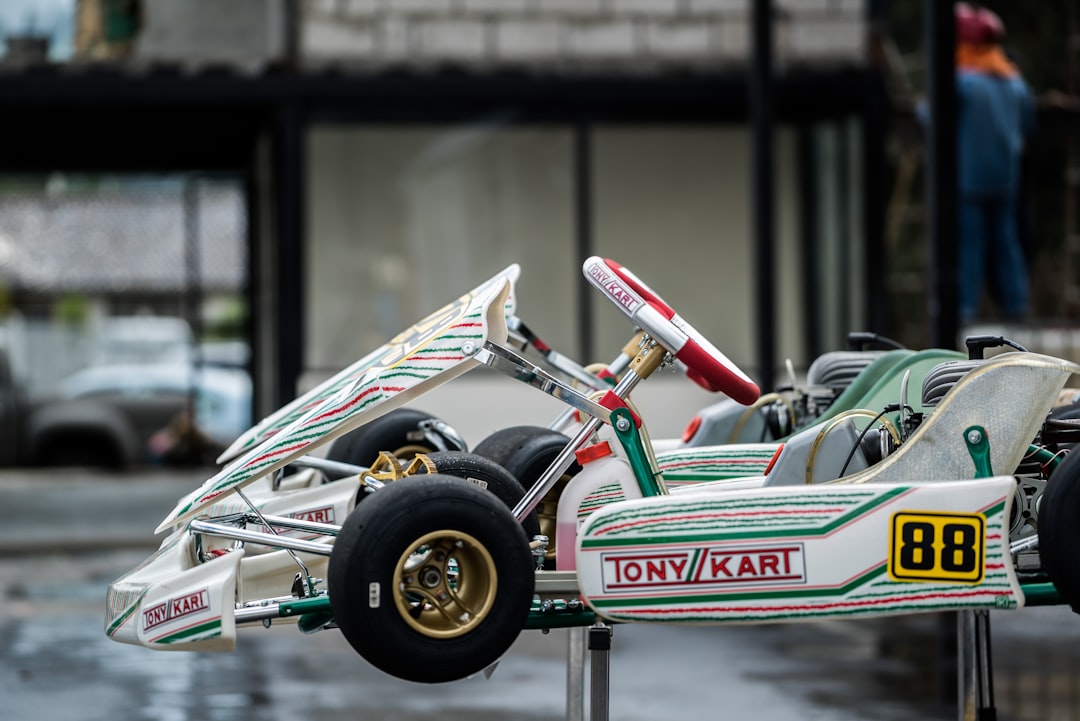
The story of vintage go kart brands is the story of karting itself. In the decades after the first backyard karts appeared in late-1950s California, dozens of American manufacturers sprang up to feed the boom — names like Rupp, Fox, Bug, Invader, and an early Margay among them. Each brand had a signature: a frame style, a racing pedigree, a dealer network, a look. Most were gone within a generation, which is exactly why their karts are chased today. This guide profiles the heritage makers, explains how collectors identify an unmarked frame, and covers which badges command the most attention at vintage meets.
Part of our Buying a Go-Kart guide — explore the full guide →
The Golden Age of Karting Brands
Karting exploded in the late 1950s and 1960s, and the early industry looked like the early automobile industry: small shops welding tube frames, bolting on chainsaw-derived two-strokes from suppliers like McCulloch and West Bend, and racing on parking lots and purpose-built sprint tracks. Barriers to entry were low, so brands multiplied — and consolidated or vanished just as fast when the first boom cooled.
That churn is what defines the vintage brand landscape. A maker might have produced karts for only a handful of years, in one region, with evolving designs and patchy records. Collectors today piece together identification from period catalogs, magazine ads, club knowledge, and surviving examples. It is closer to archaeology than parts-counter lookup — and it is half the fun.
This article is the history and identification reference. When you are ready to actually shop, our companion guide to vintage go-karts for sale covers where to find them, condition grading, and restoration budgets.
Notable Vintage Go Kart Brands
Rupp. Probably the most recognized name of the era, an Ohio manufacturer whose karts and minibikes became the aspirational machines of a generation. Rupp karts are known for solid construction and strong period styling, and the brand’s broader minibike fame keeps demand — and prices — consistently high. Rupp is the closest thing vintage karting has to a blue-chip badge.
Fox. Another midwestern powerhouse, famous for its go-kart line alongside minibikes. Fox karts earned a reputation for sturdy frames and wide distribution, meaning survivors turn up regularly and parts knowledge is comparatively good — a friendly entry point for new collectors.
Margay (early years). A St. Louis builder whose early karts are the collectible chapter of a company that went on to a long racing legacy. Early Margay sprint karts are prized for their racing pedigree, and their competition focus shows in lighter, more purposeful frame designs than yard-kart contemporaries.
Bug. A California maker with deep roots in the sport’s competitive side. Bug karts — the Sprint and related models are the ones enthusiasts mention most — are respected for handling and race history, and clean examples are a fixture at vintage karting events.
Invader. A distinctive name known for its unmistakable frame styling. Invader karts have a strong cult following precisely because they look like nothing else, and that visual identity makes them among the easiest vintage karts to identify at a glance.
The supporting cast. Dozens of other makers — regional shops and short-lived boom brands — built karts worth saving. An obscure badge in complete original condition can be more interesting to a collector than a rough example of a famous one.
Heritage Brands Compared
| Brand | Known for | Collector demand | Parts and info support | Identification difficulty |
|---|---|---|---|---|
| Rupp | Iconic styling, minibike crossover fame | Very high | Good — large community | Low |
| Fox | Sturdy frames, wide distribution | High | Good | Low–medium |
| Margay (early) | Sprint racing pedigree | High among racers | Moderate | Medium |
| Bug | Competition handling, California roots | High | Moderate | Medium |
| Invader | Unmistakable frame design | Cult following | Moderate — devoted niche | Very low |
| Obscure regionals | Rarity, local history | Variable | Poor — research required | High |
Identifying a Maker from Frame Features
Badges, decals, and serial plates disappeared decades ago on most survivors, so collectors read the metal itself. The tells, in rough order of usefulness:
Frame layout and tube work. Overall rail shape, the number and routing of frame tubes, and how the floor pan area is framed are the biggest fingerprints. Some makers ran distinctive perimeter shapes or signature kick-ups that identify a kart from across a swap meet.
Steering hoop and support design. The shape of the steering upright and its bracing varied widely between makers and changed across model years — a key detail for narrowing both brand and era.
Spindle, kingpin, and bracket details. Cast versus welded steering components, bracket shapes, and how the kingpin bosses were executed are hard-to-fake maker signatures. These parts also matter functionally; our go-kart parts guide explains the components if the terminology is new.
Seat, engine mount, and bumper style. Fiberglass bucket shapes, engine rail spacing (single versus dual engine mounts on enduro-style karts), and bumper loop designs all narrow the field.
Welds, plates, and stampings. Check under the frame rails and on steering components for part numbers or inspection stamps. Then confirm against period catalogs and vintage karting club archives — the communities around this hobby are generous with identification help when you post clear photos of these features. Beware of frankenkarts: decades of repairs mean many survivors wear parts from several makers, which is one more reason the used frame market rewards a trained eye.
Cost and Considerations: Which Brands Collectors Chase
Brand desirability follows three forces. Nostalgia: Rupp and Fox benefit from being the karts people wanted as kids, so demand outruns their actual rarity. Racing pedigree: early Margay and Bug karts draw the vintage racing crowd, who pay for competition history and period-correct sprint hardware. Distinctiveness: Invader proves that a unique look builds a following regardless of production numbers.
In practical money terms, a recognized brand in complete original condition typically brings a meaningful premium — often two to three times what a comparable unbranded frame fetches — and a correct period engine amplifies that further. Detailed price bands live in the buying guide, but the principle here is simple: the badge multiplies value only when the kart under it is genuine and complete. For perspective, even a premium vintage purchase usually costs less than a new performance kart — see how much a go-kart costs today.
How to Choose a Brand to Collect
Match the brand to your goals. Want strong community support and liquid resale? Start with Rupp or Fox — knowledge, reproduction parts, and buyers are easiest to find. Drawn to vintage racing? Early Margay and Bug put you on track at vintage karting events with genuine pedigree. Enjoy research and rarity? An obscure regional maker gives you a cheaper entry and the satisfaction of documenting something few others have.
Whatever the badge, apply the same discipline: verify the frame is genuinely that maker (post photos to club forums before paying brand money), prioritize completeness and originality over paint, and confirm a period engine’s presence — the engine is often worth as much as the kart. Some collectors instead build period-style tributes on generic frames, which our guide on how to build a go-kart can support — just represent them honestly when selling.
Pros and Cons of Chasing Heritage Brands
Focusing on the big names has real advantages and real costs.
Pros
- Strong communities and shared knowledge around famous makers
- Recognized badges hold value and resell faster
- Easier identification with abundant reference examples
- Racing-pedigree brands open doors to vintage karting events
Cons
- Famous names carry substantial price premiums
- Misidentified and rebadged frankenkarts are common
- Reproduction parts can blur originality on popular brands
- Obscure makers with equal quality get overlooked and overpriced research time
Frequently Asked Questions
What are the most collectible vintage go kart brands?
How do I identify what brand my old go-kart is?
Are vintage go-karts from famous brands worth more?
What engines did vintage go-karts use?
Is Margay still making karts?
Should I restore a branded vintage kart or keep it original?
Final Thoughts
Learning the vintage go kart brands — what Rupp, Fox, early Margay, Bug, Invader, and their contemporaries built and why it mattered — turns you from a hopeful bidder into an informed collector. Study frame features until you can read an unbadged chassis, lean on the club communities that keep this history alive, and let originality guide what you pay. Then take that knowledge shopping with our guide to vintage go-karts for sale, where the hunt actually begins.