

A 50cc go kart engine is the smallest common gas engine used in karting, and it powers most entry-level gas karts for young children as well as some mini karts and pocket-bike conversions. Small displacement keeps weight, noise and speed down, which is exactly why it suits beginners. This guide explains the main types of 50cc engines, the difference between two-stroke and four-stroke versions, typical speeds and prices in USD, how to fit one to a frame, and the maintenance that keeps it reliable. It also covers when a child is ready to move up from a 50cc kart to something bigger.
Part of our Go-Kart Engines & Drivetrain guide — explore the full guide →
What Is a 50cc Go Kart Engine?
The “50cc” figure refers to the engine’s displacement, the volume swept by the piston, which is about 50 cubic centimeters. Some engines sold in this class are actually 49cc, a size chosen in many markets to fit moped or small-engine categories.
In karting, 50cc engines turn up in three main places: children’s gas go-karts and quad-style karts, youth racing karts for the youngest age groups, and small homebuilt projects using engines from mini bikes, scooters or pocket bikes. Output is modest, so these engines are about learning control rather than outright speed. For a wider overview of compact engines, see our small go-kart engine guide.
Types of 50cc Engines
Two-stroke 50cc engines. These are light, simple and lively for their size. They run on a fuel and oil premix, rev freely, and have fewer moving parts than a four-stroke. They are common on pocket bikes, older children’s karts and youth racing karts. Our 2-stroke go-kart engine guide explains how they work.
Four-stroke 50cc engines. Usually horizontal-shaft or scooter-derived designs with separate oil in the crankcase. They are quieter, smoother and easier to start, burn straight gasoline, and need less fuel mixing. Many children’s recreational karts use them.
Scooter-style engines with CVT. Some small karts use an engine and continuously variable transmission unit from a scooter. These are automatic and smooth but more complex and bulkier to mount.
Youth racing engines. Some sanctioning bodies run classes for very young drivers using purpose-built small-displacement engines. The exact engines and rules vary by organization and country, so check the current rulebook of the body you plan to race with.
Best Go Kart Engine: our top 3 picks
| Product | Best for | Key features | Price | Buy |
|---|---|---|---|---|
| maXpeedingrods MXR212R | Best overall 212cc |
| $149.99as of Nov 17, 2026 1:03 pm EST | Buy now →Check current price |
| maXpeedingrods MXR212E | Best electric start |
| $209.99as of Nov 17, 2026 1:03 pm EST | Buy now →Check current price |
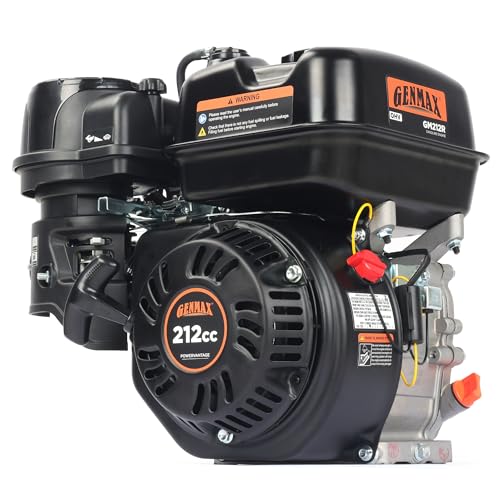
| GENMAX GM212R | Best support plan |
| $169.99as of Nov 17, 2026 1:03 pm EST | Buy now →Check current price |


Prices are Amazon’s listed prices as of the date and time shown and are subject to change; the price on Amazon at the time of purchase applies. As an Amazon Associate we earn from qualifying purchases.
50cc Engine Options Compared
| Engine Type | Fuel | Noise | Maintenance | Best For |
|---|---|---|---|---|
| Two-stroke 50cc | Premix gas and oil | Loud | Simple but frequent | Pocket bikes, older kids’ karts, youth racing |
| Four-stroke 50cc | Gasoline | Quieter | Oil changes, valve checks | Children’s recreational karts |
| Scooter engine with CVT | Varies | Moderate | Belt and variator service | Smooth automatic mini karts |
| Purpose-built youth racing | Per class rules | Varies | Specialist | Sanctioned youth karting |
How Fast Is a 50cc Go Kart Engine?
There is no single answer, because speed depends on gearing, tire size, driver weight, surface and whether the engine is restricted. Many children’s 50cc gas karts are set up for low speeds, often somewhere in the teens of miles per hour, and many include a throttle limiter or adjustable speed screw so parents can cap speed further.
Two-stroke engines generally feel livelier than four-strokes of the same size. Pocket-bike engines in a light kart can go faster than many parents expect, so always check the manufacturer’s stated top speed and use any limiter provided. Our go-kart speed guide puts 50cc karts in context with larger classes.
Typical 50cc Engine Prices
Replacement 50cc engines vary in price by type, brand and whether they are new or used. As a general USD guide:
- Budget new two-stroke or four-stroke engines: often from around $100 to a few hundred dollars.
- Branded replacement engines and complete engine assemblies: usually more, depending on what is included.
- Purpose-built youth racing engines: generally higher still, with rebuild costs to consider.
- Used engines: can be cheap but carry more risk; compression and condition matter.
Children’s 50cc gas karts sold complete tend to cost from a few hundred dollars up, depending on size, safety features and build quality.
How to Choose a 50cc Engine
Match the original. If you are replacing an engine on a factory kart, buy an identical or direct replacement. Mount pattern, output shaft size, drive type and throttle linkage must all match.
Two-stroke or four-stroke. Choose a four-stroke for quieter, simpler family use. Choose a two-stroke if you want lighter weight and livelier response, and are comfortable mixing fuel.
Check the starter. Pull starters are standard, but some small engines offer electric start. For young children, an easy-starting engine is a big help for parents.
Look for a speed limiter. An adjustable throttle limiter lets you keep speed appropriate for the driver’s age and skill.
Consider parts support. Choose engines with available carburetors, spark plugs, filters, gaskets and pull starters. Obscure engines can become impossible to repair.
Fitting a 50cc Engine to a Kart
Most 50cc karts use a centrifugal clutch on the engine output shaft driving a chain to the rear axle. When fitting an engine, make sure the clutch suits the engine’s shaft size and engagement speed, then align the clutch sprocket with the axle sprocket using a straightedge.
Set chain tension so there is a small amount of slack, connect the throttle cable so it returns fully to idle, and install the kill switch where the driver and a supervising adult can reach it. Check that fuel lines are routed away from hot exhaust parts and moving components.
Engine mount bolts should be secured with locking hardware and checked after the first runs. Use the manufacturer’s manual for torque values and setup instructions.
Maintenance Basics
Fuel. Use fresh fuel. For two-strokes, mix oil at the ratio stated in the engine manual; never guess. Old fuel is a leading cause of hard starting in small engines.
Air filter. Small engines suffer quickly from dirt. Clean or replace the air filter regularly, especially on dusty surfaces.
Spark plug. Check the plug for fouling and correct gap. Two-strokes foul plugs more often than four-strokes.
Oil. Four-strokes need regular oil checks and changes at the intervals in the manual.
Chain and clutch. Lubricate the chain, check tension, and inspect the clutch for wear and slipping.
Storage. For long storage, drain fuel or use a stabilizer, and store the kart dry.
Safety for Young Drivers
Most 50cc engines are installed in karts for children, so supervision matters as much as the engine. Follow the manufacturer’s minimum age guidance, use a properly fitted helmet, gloves and closed shoes, and drive only in open, flat areas away from roads, pools and obstacles. Check the brakes and kill switch before each session. Our gas-powered kids’ go-kart guide covers age-appropriate karts and safety features in detail.
When to Move Up from 50cc
As children grow, a 50cc kart can feel cramped and slow. Signs it is time to move up include the driver’s knees hitting the steering wheel, consistent confident control at the current speed, and interest in more challenging driving. The usual next step is a larger recreational engine or, for racers, the next age-based class. Our guide to the 100cc go-kart engine covers one common step up.
Pros and Cons
A 50cc engine is the right starting point for many young drivers, with clear limits.
Pros
- Low speed suits beginners and young children
- Light and compact for small frames
- Affordable to buy and run
- Simple designs are easy to service
Cons
- Limited power for heavier drivers or hills
- Two-strokes are loud and need premix fuel
- Cheap engines can have poor parts support
- Children outgrow 50cc karts quickly
Frequently Asked Questions
How fast does a 50cc go kart go?
What age is a 50cc go kart for?
Is a 50cc engine two-stroke or four-stroke?
Can an adult ride a 50cc go kart?
Why will my 50cc kart engine not start?
Can I put a 50cc engine on a homemade kart?
Final Thoughts
A 50cc go kart engine is about safe, manageable first experiences rather than speed. Choose between two-stroke and four-stroke based on noise, maintenance and feel, match any replacement to the original mount and drive, and keep fuel fresh. For a full picture of kart options by age, see our kids’ go-karts complete guide.