

A 10 hp go kart engine sits in the sweet spot between the common 6.5 hp starter engine and the big 15 to 20 hp engines that demand a heavily upgraded kart. Ten horsepower makes a single-seat yard kart properly quick, gives a two-seater enough pull to carry a passenger, and still works with many standard frames when the drivetrain is sized correctly. You can get there with a larger stock engine, a modified smaller engine, or a vintage engine rebuild. This guide covers the options, realistic speeds, the drivetrain parts that suit 10 hp, typical costs, and how to choose the right route for your kart.
Part of our Go-Kart Engines & Drivetrain guide — explore the full guide →
What Counts as a 10 HP Go Kart Engine?
Engine horsepower ratings vary by manufacturer and testing method, so “10 hp” is a rough class rather than an exact number. In practice, the category includes single-cylinder four-stroke engines of roughly 270cc to 310cc, older engines marketed as 10 hp, and modified 196cc to 224cc engines with performance parts.
Many small engine makers now quote torque or displacement rather than horsepower, partly because rating standards changed. When comparing engines, look at displacement, torque, and the intended use rather than headline horsepower alone. Our go-kart engine guide explains how engine specifications compare.
Ways to Get 10 HP
Larger stock engine. A 270cc to 310cc horizontal shaft engine typically delivers power around this level straight from the box, with good torque and long life. These engines are heavier than smaller units and often use a 1-inch crankshaft.
Modified 212cc-class engine. With a performance kit, such as a larger carburetor, header, camshaft, valve springs, and governor removal, a 196cc to 224cc engine can approach or exceed 10 hp. It keeps the lighter weight and 3/4-inch shaft but needs careful tuning and safety parts, such as a billet flywheel and connecting rod for higher RPM. Our guide to the Predator 212 stage 2 kit covers this approach.
Vintage 10 hp engines. Older engines from brands such as Tecumseh and Briggs and Stratton were sold in 10 hp ratings and still turn up in older karts. They can be rebuilt, but parts availability varies. Before buying one, confirm that pistons, gaskets, and carburetor parts are still available for that model.
Electric equivalent. Electric motors in the roughly 5 to 8 kW range deliver similar performance, with instant torque and no fuel, but need a suitable battery pack and controller.
Best Go Kart Engine: our top 3 picks
| Product | Best for | Key features | Price | Buy |
|---|---|---|---|---|
| maXpeedingrods MXR212R | Best overall 212cc |
| $149.99as of Oct 27, 2026 4:11 am EDT | Buy now →Check current price |
| maXpeedingrods MXR212E | Best electric start |
| $209.99as of Oct 27, 2026 4:11 am EDT | Buy now →Check current price |
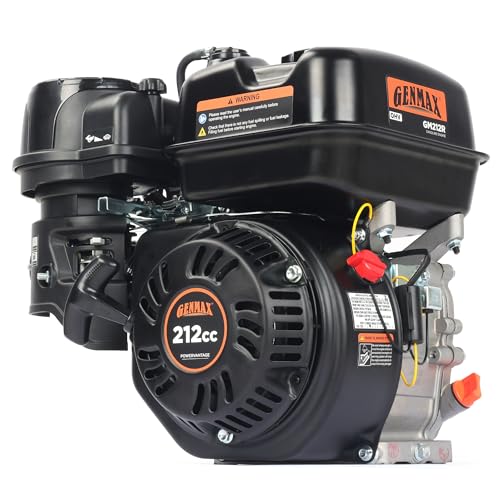
| GENMAX GM212R | Best support plan |
| $169.99as of Oct 27, 2026 4:11 am EDT | Buy now →Check current price |


Prices are Amazon’s listed prices as of the date and time shown and are subject to change; the price on Amazon at the time of purchase applies. As an Amazon Associate we earn from qualifying purchases.
10 HP Engine Options Compared
| Option | Typical Displacement | Crankshaft | Reliability | Best For |
|---|---|---|---|---|
| Larger stock engine | 270cc to 310cc | Often 1 in | High | Two-seaters and heavier karts |
| Modified 212-class engine | 196cc to 224cc | 3/4 in | Moderate, depends on build | Light single-seat karts |
| Vintage 10 hp engine | Varies | Varies | Depends on condition | Restorations and vintage karts |
| Electric motor | Not applicable | Motor shaft | High with good battery | Quiet, low-maintenance builds |
How Fast Is a 10 HP Go Kart?
Speed depends on gearing, weight, and tires. A light single-seat yard kart with around 10 hp and typical gearing often reaches roughly 35 to 45 mph, while taller gearing can push it higher on a long straight. A two-seater with two adults will usually be slower but still lively. For context, see our guide to how fast go-karts go.
Drivetrain Parts for 10 HP
Clutch. Choose a clutch rated for the engine’s power with a bore matching the crankshaft. Many 1-inch shaft engines need a 1-inch clutch; see our guide to the 1-inch go-kart clutch. A torque converter suits heavier or off-road karts.
Chain. A #35 chain can work at this power on light karts if in good condition, but many builders step up to #40, #41, or #420 for durability.
Axle and brakes. A 1-inch axle is a sensible choice. A good mechanical disc brake can work on light karts, but hydraulic disc brakes provide more confidence at higher speeds.
Frame. Most sturdy yard kart frames can handle 10 hp. Check the engine mount area and welds before installation.
Cost of a 10 HP Go Kart Engine
As typical ranges, a new 270cc to 310cc engine often costs $250 to $600. A 212cc engine plus a performance kit and safety parts may cost $300 to $700 in total, depending on how far the build goes. Vintage engines vary widely, from cheap non-runners to restored engines at collector prices. Budget for a suitable clutch, chain, and sprockets, which may add $100 to $250.
For a full budget picture, see how much it costs to build a go-kart.
How to Choose the Right 10 HP Option
Consider kart weight. Heavier karts and two-seaters benefit from the torque of a larger stock engine.
Consider reliability. A stock larger engine usually lasts longer than a highly modified small engine producing the same power.
Check the shaft size. Changing from a 3/4-inch to a 1-inch crankshaft means a new clutch or torque converter.
Measure the space. Larger engines are taller and wider. Check clearances for the air filter, exhaust, and fuel tank.
Think about the driver. Ten horsepower is plenty for teens and adults but too much for young children. Consider a governor or throttle limiter for less experienced drivers.
Installation and Break-In
Mount the engine on a flat plate with slotted holes for chain adjustment, using grade-rated bolts and locking hardware. Align the clutch and axle sprockets with a straightedge, set chain tension, and fit a chain guard. Fill the engine with oil before the first start, since many ship dry.
Follow the manufacturer’s break-in guidance, usually varying the throttle and avoiding long periods at full load, and change the oil early to remove break-in particles.
Upgrading From 6.5 HP
Many owners arrive at 10 hp after outgrowing a stock 6.5 hp engine. If your kart already runs a 212cc-class engine, the choice is between modifying it and swapping to a larger engine. Modifying keeps your existing clutch, mounts, and 3/4-inch drivetrain, but each step toward 10 hp raises engine speed and stress, and removing the governor without upgrading the flywheel and connecting rod is a real safety risk. A swap costs more up front and may require a new clutch and engine plate, but it keeps the engine closer to its designed operating speed.
As a rule of thumb, light single-seat karts suit the modification route, while heavier karts, two-seaters, and karts used by several family members are better served by a larger stock engine. If you want even more power, our guide to 20 HP go-kart engines covers the chassis upgrades needed.
Gearing a 10 HP Kart
Gearing is the main way to trade acceleration for top speed. With 10 hp, many builders start with a ratio similar to a 6.5 hp kart and then raise it gradually, since the extra torque can pull taller gearing. Off-road karts and two-seaters usually need lower gearing than light pavement karts. Change one sprocket at a time and note the effect on launch, clutch temperature, and top speed. Our go-kart sprocket guide explains how to calculate ratios.
Maintenance Tips
Check oil before every ride and change it at the intervals in the engine manual. Clean or replace the air filter regularly, especially on dusty ground. Inspect the spark plug, check valve clearances on schedule, and keep the cooling fins clean. Modified engines need more frequent checks of valve springs and fasteners.
Pros and Cons
Ten horsepower is a practical upgrade for many karts, with a few trade-offs.
Pros
- Noticeably quicker than a 6.5 hp engine
- Works with many standard yard kart frames
- Enough torque for two-seaters
- Wide choice of stock and modified options
Cons
- Larger engines are heavier and bulkier
- Modified small engines wear faster
- May need a new clutch for a 1 inch shaft
- Too fast for young or inexperienced drivers
Frequently Asked Questions
How fast is a 10 hp go-kart?
Can a 212cc engine make 10 hp?
What size clutch does a 10 hp engine need?
Is 10 hp enough for a two-seat go-kart?
Is a 10 hp go-kart safe for kids?
Final Thoughts
A 10 hp go kart engine delivers a big step up in fun without the major chassis upgrades a 20 hp swap demands. Choose a larger stock engine for reliability and torque, or a modified small engine for lighter karts, and match the clutch and chain to the power.