

The best go kart sprockets are the ones that match your chain pitch, axle bore and hub bolt pattern before anything else, and this roundup is built for DIY builders, drift trike owners and anyone refreshing a worn yard kart who needs to buy the right part the first time. Tooth count tunes acceleration versus top speed, but a sprocket that does not fit your chain or hub is just scrap steel. Our #1 pick is the GREHUA 48-tooth #40/41/420 sprocket and 1-inch hub kit, because it bundles the sprocket, hub, key and bolts that most Predator 212 style builds need in one box.
Part of our Go-Kart Engines & Drivetrain guide — explore the full guide →
As an Amazon Associate we earn from qualifying purchases.
How we compared: we compared 18 current Amazon listings for go kart sprockets and sprocket hubs on what each listing states: chain size, tooth count, center bore, bolt pattern, material and what comes in the box. We did not test or ride with these parts, and prices and availability change, so confirm the details on the listing before you order.
| Product | Best for | Key features | Price | Buy |
|---|---|---|---|---|
| GREHUA 48T Sprocket + Hub Kit | Best overall #40/41 kit |
| $34.99as of Oct 26, 2026 6:17 am EDT | Buy now →Check current price |
| YOXUFA #35 60T Sprocket + Hub | Best #35 chain hub kit |
| $31.99as of Oct 26, 2026 6:17 am EDT | Buy now →Check current price |
| Gekufa 60T 8-Hole Sprocket | Best 60T for bolt-on hubs |
| $25.49as of Oct 26, 2026 6:17 am EDT | Buy now →Check current price |
| Podoy 60T Live Axle Sprocket | Best direct-to-axle sprocket |
| $34.69as of Oct 26, 2026 8:02 am EDT | Buy now →Check current price |
| VCUJSUC 53T Split Sprocket | Best for quick gear changes |
| $36.99as of Oct 26, 2026 11:49 am EDT | Buy now →Check current price |
| Gekufa 48T 8-Inch Sprocket | Best 48T replacement |
| $26.99as of Oct 26, 2026 11:49 am EDT | Buy now →Check current price |
| GREHUA 1-Inch Hub 2-Pack | Best spare sprocket hubs |
| $32.99as of Oct 26, 2026 11:49 am EDT | Buy now →Check current price |
Prices are Amazon’s listed prices as of the date and time shown and are subject to change; the price on Amazon at the time of purchase applies. As an Amazon Associate we earn from qualifying purchases.
The Best Go Kart Sprockets Right Now
1. GREHUA 48T #40/41/420 Sprocket and Hub Kit — Best Overall

A 48-tooth #40/41/420 sprocket paired with a 1-inch keyed hub and the hardware to join them.
$34.99as of Oct 26, 2026 6:17 am EDT
Check price on AmazonWhy we like it
- Sprocket, hub, key and fasteners arrive together
- Fits the common 1-inch live axle with 1/4-inch keyway
- Listing gives bolt circle, center hole and OD
- Names Predator 212, GX160 and GX200 style builds
| Specification | Details |
|---|---|
| Chain size | #40, #41 and 420 |
| Tooth count | 48 |
| Hub bore / keyway | 1 inch bore, 1/4-inch key |
| Sprocket bolt pattern | 8 holes; 90 mm (3.54 in) bolt circle; 54 mm center hole |
| Material | 45# steel hub, steel sprocket |
| In the box | Hub, sprocket, key, 4 screws, 4 nuts |
GREHUA GR-LJG-CP48T — 48T #40/41/420 sprocket, 4 in OD hub, 1 in bore, 1/4 in keyway, 90 mm bolt circle
One of the few complete sprocket-plus-hub kits for #40/41 chain
Of the 18 on-topic listings we compared, only four put a sprocket and a hub or adapter in the same box, and just two of those are for #40/41/420 chain: this GREHUA kit and the Hoypeyfiy 48T hub kit. Most listings sell a bare sprocket and leave you to source a hub with a matching bolt circle, which is where many first-time builders go wrong.
GREHUA also lists the numbers you actually need to check fit: the 90 mm bolt-hole circle, the 2.13-inch center hole and the 1-inch hub bore. That makes it easy to compare against an old hub with a tape measure or calipers. The listing does note that you may need a jackshaft depending on your engine, which is a fair warning for anyone running a torque converter or a low-ratio setup.
What it does not state is a heat-treatment process or a weight figure, and 48 teeth is a middle-of-the-road ratio rather than a low-speed torque gear.
Pros
- Sprocket, hub, key and bolts in one kit
- Clear bolt circle and bore measurements
- Common 1 in axle and 1/4 in key
- Lightened 8-hole sprocket design
Cons
- 48T only; no tooth-count options here
- No heat-treatment claim
- May need a jackshaft on some engines
Check GREHUA 48T Sprocket + Hub Kit price on Amazon
2. YOXUFA #35 60T Sprocket and Hub Assembly — Best #35 Chain Hub Kit

A 60-tooth #35 sprocket with a 1-inch keyed hub, published bolt circle and full hardware for live-axle karts.
$31.99as of Oct 26, 2026 6:17 am EDT
Check price on AmazonWhy we like it
- Complete hub kit for lighter #35 chain drives
- Publishes bolt circle, center hole and bolt-hole size
- 60 teeth favors low-end pull on small engines
- Steel sprocket rather than aluminum
| Specification | Details |
|---|---|
| Chain size | #35 |
| Tooth count | 60 |
| Hub bore / keyway | 1 inch bore, 1/4-inch key, 3/4-inch hub length |
| Sprocket bolt pattern | 4 holes of 10 mm on a 74 mm (2.91 in) circle; 51 mm center |
| Overall diameter | 185 mm (7.28 in) |
| In the box | Hub, sprocket, key, 4 screws, 4 nuts |
YOXUFA YO-LJG03-60T — 60T #35 steel sprocket, 4-bolt 74 mm circle, 1 in bore hub with 1/4 in keyway
The only #35 listing that pairs a steel sprocket with a 1-inch keyed hub
Eight of the 18 on-topic listings are for #35 chain. Four of those are aluminum split sprockets, and only this YOXUFA set combines a steel #35 sprocket with a 1-inch live-axle hub. That suits classic yard karts and mini-bike-engine builds that run #35 chain on a 1-inch rear axle.
The listing is precise: 74 mm bolt circle, four 10 mm holes, 51 mm center hole and 7.28-inch overall diameter. Those four numbers are the whole fitment check for a 4-bolt #35 sprocket, so you can verify against your kart before ordering. It is clear that the hub is only for 1-inch live axles.
The limitation is chain size. #35 chain is lighter than #40/41, so it is better matched to smaller engines and lighter karts; heavier builds with modified engines usually step up to #40/41.
Pros
- Steel #35 sprocket with matching hub
- All key dimensions published
- Hardware and key included
- Good torque ratio for small engines
Cons
- Hub fits 1 in live axles only
- #35 chain is lighter duty than #40/41
- Single tooth count
Check YOXUFA #35 60T Sprocket + Hub price on Amazon
3. Gekufa 60T #40/41/420 8-Hole Sprocket — Best 60T for Bolt-On Hubs

A heat-treated 60-tooth sprocket with a 2-1/8 inch center bore and 8-hole pattern for hub-mounted rear axles.
$25.49as of Oct 26, 2026 6:17 am EDT
Check price on AmazonWhy we like it
- Heat-treated steel per the listing
- Eight 3/8-inch holes suit many common hubs
- Large 60T for torque on heavier karts
- Listing tells you exactly what is excluded
| Specification | Details |
|---|---|
| Chain size | #40, #41 and 420 (not #35) |
| Tooth count | 60 |
| Center bore | 2-1/8 inch |
| Bolt pattern | 8 x 3/8-inch holes |
| Outside diameter | 9-3/4 inch |
| In the box | Sprocket only; no hub or bolts |
Gekufa 60T — #40/41/420, 2-1/8 in bore, 8 x 3/8 in holes, 9-3/4 in OD, heat-treated steel
A big-diameter sprocket that warns you about wheel clearance
At 9-3/4 inches across, this is one of the two largest sprockets on the shelf (the Podoy 60T states the same OD). A sprocket this size gives strong pull on a heavier kart, but it also hangs closer to the ground, and the listing rightly asks you to check clearance and bolt pattern before ordering.
The 2-1/8-inch center bore and 8-hole pattern are aimed at the widely used bolt-on hub style, so this is a sprocket for someone who already has a hub on the axle and wants a different ratio or a fresh set of teeth. It is sprocket-only: no hub, bolts or chain.
Pros
- Heat-treated steel
- Clear bore, OD and hole sizes
- Strong low-end ratio
- Wide #40/41/420 compatibility
Cons
- Sprocket only, no hardware
- Large OD reduces ground clearance
- Not for #35 chain
Check Gekufa 60T 8-Hole Sprocket price on Amazon
4. Podoy 60T Live Axle Sprocket — Best Direct-to-Axle Sprocket

A keyed 1-inch bore 60-tooth sprocket that slides straight onto the axle with two set screws, no hub needed.
$34.69as of Oct 26, 2026 8:02 am EDT
Check price on AmazonWhy we like it
- Mounts directly on a 1-inch keyed axle
- Two pre-installed set screws at 90 degrees
- Heat-treated medium-carbon steel, plated finish
- Names Yerf-Dog and Murray kart fitment
| Specification | Details |
|---|---|
| Chain size | #40, #41 and 420 |
| Tooth count | 60 |
| Bore / keyway | 1 inch, 1/4-inch keyway |
| Outside diameter | 9-3/4 inch |
| Material | Heat-treated medium-carbon steel, electroplated |
| In the box | Sprocket with set screws; axle key not included |
Podoy 60T — 1 in bore with 1/4 in keyway, #40/41/420, 9-3/4 in OD, two set screws, key not included
One of only two keyed-bore sprockets on the shelf
Just two of the 18 listings are sprockets with their own 1-inch keyed bore: this Podoy and the BEROEA 60T. Everything else bolts to a hub. A direct-mount sprocket is simpler and has fewer parts to loosen, which is why many older yard karts use them.
The trade-off is flexibility. Changing ratio means sliding the sprocket off the axle, and the listing says the 1/4-inch key is not included, so budget for one. Podoy also includes a sensible note that final ratio depends on the front sprocket, tire size and engine.
Pros
- No hub required
- Set screws pre-installed
- Heat-treated and plated steel
- Lists the original-fit karts
Cons
- Axle key sold separately
- Ratio changes mean pulling the sprocket
- Large 9-3/4 in diameter
Check Podoy 60T Live Axle Sprocket price on Amazon
5. VCUJSUC 53T #35 Split Sprocket with Adapter — Best for Quick Gear Changes

An aluminum two-piece #35 sprocket with a hub adapter so you can change gearing without removing the axle.
$36.99as of Oct 26, 2026 11:49 am EDT
Check price on AmazonWhy we like it
- Split design swaps on without pulling the axle
- Includes an aluminum hub adapter
- Six bolts and nuts in the box
- Light aluminum for mini-bike-engine karts
| Specification | Details |
|---|---|
| Chain size | #35 |
| Tooth count | 53 |
| Type | Two-piece split sprocket |
| Material | Aluminum alloy sprocket, forged aluminum adapter |
| Bolt circle / bore | not stated in listing |
| In the box | Sprocket, adapter, 6 screws, 6 nuts |
VCUJSUC AMZWZ-BD11067 — 53T #35 aluminum split sprocket with hub adapter and 6-bolt hardware
The only split sprocket on the shelf that ships with an adapter
Four of the 18 listings are aluminum split sprockets, all for #35 chain, and this is the only one that includes a hub adapter. That matters because split sprockets usually need a matching mini-bike style hub; the related VCUJSUC 65T listing even warns you may need a universal hub.
Split sprockets are popular with builders who experiment with gearing, since you can try a 53T, then a 60T or 65T, without removing wheels and bearings. The catch is that the listing does not state bolt-circle or bore dimensions, so compare with photos and your existing hub. Aluminum also wears faster than steel, so check teeth more often.
Pros
- Change ratio without removing the axle
- Hub adapter included
- Light aluminum
- Hardware included
Cons
- No bore or bolt-circle numbers stated
- Aluminum wears faster than steel
- #35 chain only
Check VCUJSUC 53T Split Sprocket price on Amazon
6. Gekufa 48T 8-Inch Heat-Treated Sprocket — Best 48T Replacement

A heat-treated 48-tooth #40/41/420 sprocket with 2-1/8 inch bore and dual-size 8-hole pattern.
$26.99as of Oct 26, 2026 11:49 am EDT
Check price on AmazonWhy we like it
- Holes sized for both 3/8 and 5/16-inch bolts
- Heat-treated steel per the listing
- Smaller 8-inch OD keeps more ground clearance
- 48T suits a higher top-speed ratio
| Specification | Details |
|---|---|
| Chain size | #40, #41 and 420 |
| Tooth count | 48 |
| Center bore | 2-1/8 inch |
| Bolt pattern | 8 holes, 3/8 and 5/16-inch diameters |
| Outside diameter | 8 inch |
| In the box | Sprocket only |
Gekufa 48T — #40/41/420, 8 in OD, 2-1/8 in bore, 8-hole dual-size pattern, heat-treated steel
Dual bolt-hole sizes widen hub compatibility
This is the only sprocket on the shelf whose listing states two mounting-hole sizes, 3/8 and 5/16 inch, which helps it line up with more hubs. Paired with the 60T Gekufa above, it lets a builder with a 2-1/8-inch bore hub switch between a torque ratio and a speed ratio while keeping the same bolt-on style.
Like the 60T, it is sprocket-only. The listing does a good job of reminding buyers that final speed depends on the front sprocket, tire size and engine, not just the rear tooth count.
Pros
- Fits 3/8 or 5/16 in hub bolts
- Heat-treated steel
- Better clearance than 60T sprockets
- Clear dimensions
Cons
- No bolts or hub included
- 48T may feel soft on heavy karts
- Bolt circle not stated
Check Gekufa 48T 8-Inch Sprocket price on Amazon
7. GREHUA 1-Inch Bore Sprocket Hub 2-Pack — Best Spare Sprocket Hubs
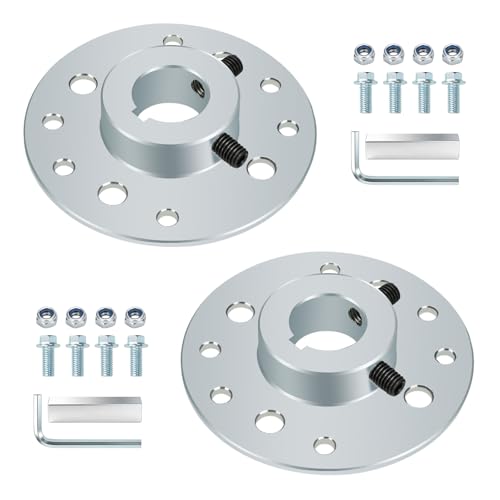
Two 1-inch bore, 1/4-inch keyway sprocket hubs with keys, bolts and wrenches for builders and spares.
$32.99as of Oct 26, 2026 11:49 am EDT
Check price on AmazonWhy we like it
- Two hubs, keys and hardware in one pack
- Standard 1-inch bore and 1/4-inch keyway
- Multiple holes accept different sprocket patterns
- 45# steel construction per the listing
| Specification | Details |
|---|---|
| Bore / keyway | 25.4 mm (1 inch), 1/4-inch key |
| Hub OD | 102 mm (4.01 inch) |
| Material | 45# steel |
| Sprocket included | No |
| In the box | 2 hubs, 2 keys, 8 screws, 8 nuts, 2 wrenches |
GREHUA GR-LJG05-2PCS — two 1 in bore sprocket hubs, 1/4 in keyway, 4 in OD, full hardware
A hub is half of every bolt-on sprocket upgrade
Two listings on the shelf are hubs without a sprocket, and this is the one that ships as a pair. A spare hub lets you pre-mount a second sprocket with a different tooth count, so a ratio change at the track becomes a quick axle-side swap.
The multiple mounting holes are meant to accept different sprocket patterns, but the listing does not publish the bolt-circle diameters, so check them against your sprocket before relying on a fit.
Pros
- Two hubs with keys and bolts
- Standard 1 in axle fit
- Lets you pre-mount spare gearing
- Wrenches included
Cons
- No sprocket included
- Bolt circles not stated
- Only for 1 in keyed axles
Check GREHUA 1-Inch Hub 2-Pack price on Amazon
How to Size a Go Kart Sprocket: Measure Before You Buy
Every listing on this shelf says some version of the same thing: measure your old part and compare. That is not boilerplate. Sprockets are not universal, and four measurements decide whether one fits. Write them down before you shop, and match them line by line against the listing.
1. Chain pitch (size)
Chain size is the first filter. Go karts mostly use two families:
- #35 chain has a 3/8-inch pitch and is common on small yard karts, mini bikes and lighter drives.
- #40, #41 and 420 chain share a 1/2-inch pitch. #41 is a lighter-duty version of #40, and 420 is the motorcycle-style designation. Sprockets on this shelf that list one usually list all three, but the chain itself should match the roller width of your sprocket teeth.
Read the number stamped on a chain side plate, or measure center-to-center between three rollers and halve it. A #35 sprocket will not run a #40 chain and vice versa. Larger bikes and some axle kits use 530 chain, which is a different size again.
2. Tooth count and gear ratio
Divide the rear sprocket teeth by the front (clutch or torque converter) teeth to get the ratio. A 60T rear with a 12T clutch is 5:1; a 48T rear with the same clutch is 4:1. A higher ratio means stronger acceleration and hill pulling but a lower top speed; a lower ratio does the opposite. Tire diameter changes the result too, so a kart on bigger tires feels taller-geared with the same sprockets. Change gearing in small steps and, on a kid’s or beginner’s kart, err toward the lower-speed ratio. Our guide to go kart clutches explains the front half of that equation.
3. Center bore or axle bore
There are two mounting styles:
- Direct-mount sprockets have a bore sized to the axle (usually 1 inch with a 1/4-inch keyway) and lock on with set screws.
- Bolt-on sprockets have a large center hole (2 inch, 2-1/8 inch or metric sizes like 51 or 54 mm) that slips over a hub.
Measure your go kart axle diameter with calipers and check the keyway width. Then, for bolt-on sprockets, measure the hub’s pilot diameter that the center hole sits on.
4. Bolt pattern
Count the mounting holes, measure their diameter, and measure the bolt circle (center of one hole to the center of the hole directly opposite). Common patterns include four, six and eight holes. Of the sprockets on this shelf, the GREHUA kit states a 90 mm bolt circle and the YOXUFA states 74 mm, which shows how much patterns vary. If the listing does not give a bolt circle, compare its photos and dimension chart closely or choose a kit that includes the hub.
5. Outside diameter and clearance
A big rear sprocket lowers ground clearance and can touch the frame, brake or a rock on a dirt track. The 60T #40/41 sprockets here are 9-3/4 inches across; the 48T options are around 8 inches. Check the space between your axle and the ground before you jump several sizes.
Steel vs Aluminum, Solid vs Split
Steel sprockets, especially heat-treated ones, outlast aluminum and are the default for heavier karts and dirt use. Aluminum sprockets are lighter and are mostly sold in split form for #35 chain, which makes gear changes fast. They wear sooner, so inspect the teeth for hooking or sharp tips more often.
Split sprockets are bolted as two halves around the hub, so you can change gearing without pulling the axle. Solid sprockets are simpler and stiffer. If you only set the ratio once, solid steel is the better long-term choice.
Installation and Chain Alignment
- Clean the axle and keyway, then fit the key before sliding on the hub or sprocket.
- Align the chain line. Lay a straightedge across the face of the clutch sprocket and rear sprocket; they should sit in the same plane. A misaligned chain wears teeth unevenly and can throw the chain.
- Tighten set screws and bolts evenly. Some builders add thread locker on hub bolts.
- Set chain tension so there is a small amount of slack, roughly a half inch of up-and-down play at the midpoint, rather than a bar-tight chain.
- Replace chain and sprocket together when the old chain is stretched. A worn chain chews up new teeth quickly.
A chain guard is worth fitting on any kart, particularly one children will ride, because exposed chains and sprockets can catch clothing, hair and fingers. Keep long hair tied back and laces tucked in, and always switch the engine off before touching the drive.
Maintenance and When to Replace
Lubricate the chain with a chain-specific lube after washing or riding in dust and mud, and wipe off excess so grit does not stick. Inspect sprocket teeth every few rides. Replace the sprocket when teeth look hooked, thin or sharp-tipped, or when the chain rides up the teeth under load. Check set screws and hub bolts for looseness regularly, since a loose hub can wobble and shear its key. For broader upkeep, see our go kart parts overview and the brake guide, as many rear hubs also carry the brake drum or disc.
Frequently Asked Questions
What size sprocket does a go kart use?
Can a #40 sprocket run a #41 or 420 chain?
Does a bigger rear sprocket make a go kart faster?
Do I need a hub with my sprocket?
How do I measure a sprocket bolt pattern?
Should I replace the chain when I replace the sprocket?
Final Thoughts
Pick a sprocket by fit first, ratio second. If you are building from scratch or are unsure about your hub, a complete kit like the GREHUA or YOXUFA removes most of the guesswork. If you already have a hub, the Gekufa sprockets give you a 48T and a 60T in the same bolt-on style. Planning a full build? Start with our DIY go kart kit guide and the engine guide so your drivetrain parts all match.