
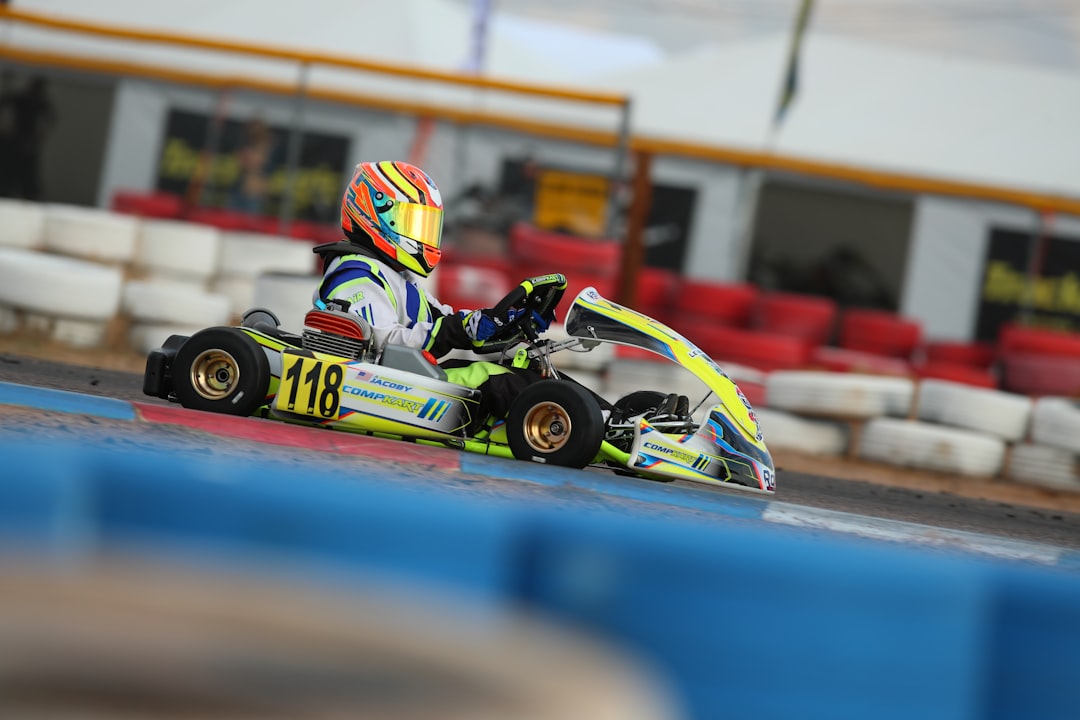
Ask most people to picture karting and they imagine sprint karts on smooth asphalt — but across the American Midwest and South, dirt kart racing is the bigger grassroots scene by a wide margin. Every weekend, hundreds of clay ovals from an eighth-mile to a quarter-mile long fill their pits with flat karts sliding sideways at 50 to 70 mph. It is one of the cheapest ways to go real wheel-to-wheel racing in the United States, and for many families it is the first rung on the oval-racing ladder. This guide covers how the sport works, the classes you will find, how dirt setup differs from pavement, and how to get started at your local track.
What Is Dirt Kart Racing?
Dirt kart racing is oval-track competition on prepared clay or dirt surfaces using flat karts — low-slung, uncaged chassis that look similar to sprint karts but are purpose-built for ovals. Races run counterclockwise on banked or flat bull rings, typically 1/8 to 1/4 mile around, often at the same facilities that host late models and sprint cars earlier or later in the evening.
The defining skill is throttle control on a surface that changes lap by lap. A tacky, freshly watered track offers huge grip; two heat races later it can go dry-slick and force drivers to search for moisture up against the cushion. Unlike road-course karting, where the racing line is fixed, dirt rewards drivers who can read the surface and move around.
Most of the national structure comes from sanctioning bodies and big money races — events like large winter and summer nationals draw hundreds of entries — but the heart of dirt kart racing is the weekly local show: heat races to set the lineup, then a feature, all done in one evening.
Dirt Kart Racing Classes
Class structures vary by track, but almost every program is built around a few pillars.
Box stock / clone classes. The entry point. Sealed or tightly regulated 196–212cc four-stroke clone engines (the same family covered in our Predator go-kart engine guide) making roughly 6.5–9 hp. Rules police carburetion, cam, and clutch to keep costs down, and classes are split by driver age and weight — junior classes often start at age 5 with restricted engines.
Predator classes. Many tracks now run dedicated Predator 212 classes because the engine is cheap (around $150–$200 new) and widely available. Stock-appearing rules keep a competitive engine under $500, which is why these classes routinely draw the biggest fields.
Animal and flathead classes. Purpose-built racing four-strokes making 10–15 hp in stock trim, raced under national tech rules. These are a step up in cost and speed.
Open and modified classes. Built four-strokes and two-strokes with far looser rules — open clones can exceed 20 hp, and unrestricted open classes on a fast quarter-mile will see 70+ mph. This is where engine builders earn their keep.
Dirt Setup vs Pavement Setup Compared
A flat kart shares DNA with a sprint kart, but the setup philosophy is different because the kart only ever turns left and the grip level constantly changes.
| Setup element | Pavement sprint kart | Dirt oval flat kart |
|---|---|---|
| Tires | Slicks, equal circumference | Soft compound dirt tires, often grooved or siped, staggered sizes |
| Stagger | None (symmetrical) | Right rear larger than left rear to help the kart rotate left |
| Weight distribution | Roughly balanced left/right | Offset — commonly 55–60% left-side weight |
| Cross weight | Minimal tuning factor | Primary tuning tool for forward bite and turn entry |
| Tire prep | Generally prohibited or unnecessary | Compound conditioning and durometer tuning are a core skill where legal |
| Track evolution | Grip builds predictably with rubber | Surface goes from tacky to dry-slick within one night |
Stagger, cross weight, and tire selection do on dirt what caster and track-width changes do on asphalt. If tire science interests you, our racing go-kart tires guide explains compounds and durometers in more depth.
Cost and Considerations
Cost is dirt karting’s biggest selling point. A used, race-ready clone or Predator flat kart typically sells for $1,000–$2,500, and a brand-new rolling chassis runs $2,500–$4,000 before the engine. Weekly running costs are modest: entry fees of $20–$40, a few gallons of fuel, chain lube, and tires that can last multiple race nights in stock classes.
A realistic first-season budget for a box stock class is $2,500–$4,500 including kart, safety gear, spares, and entries. Open classes change the math — a competitive built engine alone can cost $2,000–$4,000, and soft tires get consumed quickly.
Safety gear is non-negotiable even at the entry level: a Snell-rated full-face helmet, abrasion-resistant suit or jacket, gloves, high-top shoes, and a neck collar or youth-appropriate head-and-neck restraint. Flat karts have no cage, so your gear is your protection. Karts that do carry cages on dirt belong to a related but separate discipline — see our outlaw kart racing guide for the caged, winged side of the sport.
Getting Started at a Local Dirt Track
Start by finding your nearest track — search for karting programs at local clay ovals or dedicated kart bull rings, and read their rulebook before buying anything. Class rules differ enough between tracks that buying the wrong engine spec is the most common rookie mistake.
Then follow a simple path: visit on a race night and walk the pits, ask which class has the biggest car count (big fields mean cheap used equipment and helpful competitors), buy a proven used kart from within that class, and enter your first practice night before your first race. Most tracks and veteran racers are genuinely welcoming to newcomers who ask questions.
Dirt karting is also a legitimate development path. Plenty of oval-racing professionals started in flat karts or outlaw karts as kids, and the throttle control learned on dry-slick clay translates to every discipline. If your ambitions lean toward the sport’s top level, our guide to professional go-kart racing maps the broader ladder, while drivers who prefer turning both directions can explore outdoor go-kart racing on sprint tracks.
Pros and Cons
Dirt karting delivers a huge amount of racing per dollar, with a few trade-offs worth knowing up front.
Pros
- One of the cheapest forms of real wheel-to-wheel racing in the US
- Huge track network across the Midwest and South with weekly shows
- Stock classes keep engines cheap and tech simple
- Teaches elite throttle control and racecraft on changing surfaces
- Family-friendly pit culture with classes from age 5 up
Cons
- No roll cage on flat karts, so safety gear carries the load
- Track prep and stagger add a tuning learning curve
- Open classes escalate engine costs quickly
- Clay means constant cleaning and maintenance
- Rules vary track to track, complicating travel racing
Frequently Asked Questions
How fast do dirt karts go?
What is the difference between a dirt kart and an outlaw kart?
How much does it cost to start dirt kart racing?
What engine do dirt karts use?
What is stagger on a dirt kart?
Can kids race dirt karts?
Final Thoughts
Few motorsports offer as much seat time per dollar as dirt kart racing. A used clone kart, a rulebook, and a $30 entry fee get you three or more races in a single Saturday night, on tracks that teach car control faster than any smooth surface can. Start in the biggest stock class at your local clay oval, learn to read the track before you chase horsepower, and if the caged-and-winged side of the sport calls to you later, the outlaw kart ranks are the natural next step.