

A drift kart for kids is a low, compact ride-on built to slide sideways on purpose, usually by running hard, low-grip caster wheels at the rear instead of rubber tires. Choosing the right one comes down to four things: the type (electric, pedal or gravity), your child’s weight and height against the stated limits, the drift mechanism and speed controls, and whether parts such as rear casters and batteries are easy to replace. Most electric kids’ drift karts are 24V or 36V machines that typically cost $250 to $700. This buying guide explains each type, how to size one correctly, the features worth paying for and the red flags to avoid.
Part of our Drift Karts & Drift Trikes guide — explore the full guide →
What Is a Drift Kart for Kids?
A kids’ drift kart steers with the front wheel or wheels and rolls on slick rear casters that swivel or slide with very little resistance. When the driver turns sharply, shifts their weight or pulls a drift lever, the rear end breaks loose and the kart slides or spins. Because this happens at low speed with the seat close to the ground, children get the sensation of drifting without the speeds involved in grip karting.
Drift karts are a different tool from a standard kids’ go-kart. A grip kart is designed to stick to the ground and corner cleanly; a drift kart is designed to rotate. For the wider category, including adult machines, see our drift kart hub.
This page is about choosing and buying one. Once you have a kart, our companion guide on the drifting go-kart for kids covers how to teach a child to drift safely, which surfaces work and how to supervise.
Types of Drift Karts for Kids
Electric caster drift karts
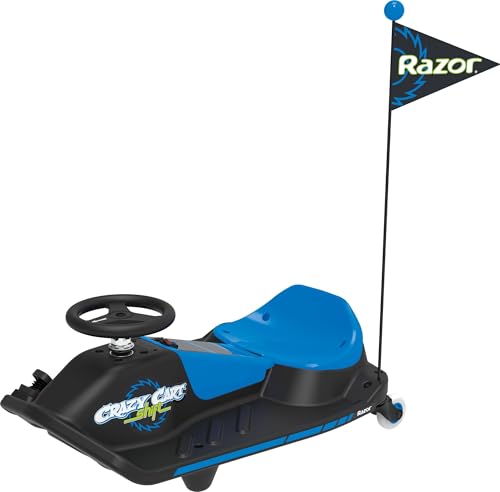
The most common type. A battery-powered front-wheel or rear-wheel drive unit is paired with swiveling rear casters. Many have a hand-operated drift lever or bar that changes how the rear behaves, and some have two speed modes. The Razor Crazy Cart family is the best-known example of this layout.
Mini electric spinners
Small, low-voltage ride-ons for younger children that spin and slide at walking-to-jogging pace. They are more of a spinning toy than a true drift kart, but they are a gentle introduction. Our mini drift kart guide covers this size class.
Larger electric drift karts
Longer frames, higher weight limits and more powerful motors for older kids and young teens. Some use a more conventional kart layout with slick rear tires or sleeves instead of casters. Speed and power vary a lot between models, so check the manufacturer’s age rating closely. Our electric drift go-kart guide covers this end of the market.
Pedal and gravity drift karts
No battery. The child pedals, pushes off or rolls down a gentle slope, then slides on the rear casters or sleeves. Cheaper and maintenance-free, but they offer less control over speed on slopes and less sustained sliding on flat ground. Drift trikes are a related option; see our drift trike for kids guide.
Best Drift Kart for Kids: our top 3 picks
| Product | Best for | Key features | Price | Buy |
|---|---|---|---|---|
| Razor Crazy Cart Shift | Best overall drift kart for ages 6+ |
| $148.00as of Oct 27, 2026 5:28 am EDT | Buy now →Check current price |
| Razor Crazy Cart Sport | Best for skilled drifters aged 9+ |
| $379.00as of Oct 27, 2026 6:45 am EDT | Buy now →Check current price |
| Qaba 24V 9Ah Drift Kart | Best for longer drift sessions |
| $220.99as of Oct 27, 2026 6:17 am EDT | Buy now →Check current price |


Prices are Amazon’s listed prices as of the date and time shown and are subject to change; the price on Amazon at the time of purchase applies. As an Amazon Associate we earn from qualifying purchases.
Kids Drift Kart Types Compared
Ages, speeds and prices are typical ranges, not specifications for any particular model. Always confirm the manufacturer’s age, height and weight limits.
| Type | Typical Age Range | Power | Typical Speed | Typical Price | Main Trade-off |
|---|---|---|---|---|---|
| Mini electric spinner | 3-7 | Low-voltage battery | Slow | $100-$300 | Outgrown quickly |
| Electric caster drift kart | 6-14 | 24V-36V battery | Roughly 5-12 mph | $250-$600 | Needs smooth pavement |
| Larger electric drift kart | Older kids and teens | 36V and up | Varies widely | $500-$1,000+ | More speed, more supervision |
| Pedal or gravity drift kart | 5-12 | Child-powered or slope | Rider or slope dependent | $80-$250 | Less sustained sliding |
How to Size a Drift Kart for Kids
Size matters even more on a drift kart than on a grip kart, because the driver has to hold their position while the kart rotates. Check these points against your child, not the age on the box:
- Weight limit: keep your child comfortably under the stated maximum. Overloading a caster kart reduces control and stresses the frame.
- Height range: many manufacturers publish a minimum and maximum rider height. Children below the minimum may not reach the pedals; those above it may not fit their knees under the steering.
- Adjustable frame or seat: some models have an extendable frame or sliding seat, which can add years of use.
- Pedal and lever reach: your child should operate the throttle, brake and drift lever without leaning or stretching.
- Seat position: a low, supportive seat keeps the center of gravity down and helps the rider stay planted in a spin.
If two children of different sizes will share the kart, size it for the smaller one and make sure the larger one is within the weight limit, or consider two different karts.
What to Look for When Buying
Drift mechanism
Some karts slide only through steering input and weight shift; others have a drift lever or bar that changes rear grip on demand. A lever gives the driver more control over when the slide starts, which helps learning. Fixed-caster designs are simpler but less adjustable.
Speed modes and controls
Look for at least two speed settings and, ideally, a way to lock the lower one. A reliable brake, separate from simply lifting off the throttle, is essential. A clearly placed power switch helps you stop the kart quickly.
Battery type, run time and charge time
Sealed lead-acid batteries are cheaper but heavier and slower to charge, and they lose capacity over a few seasons. Lithium batteries cost more but are lighter and usually last longer. Manufacturer run-time figures are best case, as rider weight and constant spinning drain batteries faster.
Replaceable wear parts
Rear casters wear as they slide, and they are the main consumable. Before buying, confirm that replacement casters, batteries, tires and chargers are sold by the manufacturer or readily available.
Frame and build quality
Drift karts take repeated sideways loads. A steel frame, solid welds, a stable wide stance and no sharp edges near the rider are good signs. Avoid listings with no stated weight limit, no brand or no parts support.
Noise and where you live
Electric drift karts are quiet, but casters sliding on concrete make noticeable noise. That rarely matters in a driveway, but it can on shared surfaces.
What a Kids Drift Kart Costs
Expect roughly $100 to $300 for mini spinners and pedal models, $250 to $600 for mainstream electric caster drift karts, and more for larger, faster machines. Budget extra for:
- A properly fitted helmet, gloves and knee and elbow pads, since spins and the occasional tip are part of drifting. Our go-kart helmets for kids guide covers sizing.
- Replacement rear casters as they wear.
- A replacement battery after a few seasons of regular use.
For model-level recommendations, see our roundup of the best drift karts for kids.
Buying New vs Used
Because children outgrow drift karts quickly, the used market is busy, and a lightly used kart can be good value. The main risk is the battery. A kart that sat uncharged for months may have a pack that no longer holds a charge, and replacing it can cost a meaningful share of the purchase price. When buying used:
- Ask how old the battery is and whether it was kept charged in storage.
- Test a full run if you can, watching for a sharp loss of power.
- Check rear casters for flat spots, cracks or wobble.
- Inspect the frame, especially around the steering and caster mounts, for cracks or bends.
- Confirm the brake, power switch and speed selector all work.
- Make sure the charger is included and matches the battery.
New karts cost more but come with a warranty and a fresh battery, which is the safer choice if you are unsure what to look for.
Red Flags to Avoid
- No published weight limit or age range
- No brake other than releasing the throttle
- No way to buy replacement casters or batteries
- Exaggerated speed claims with no voltage or motor information
- Exposed chains, sharp edges or loose wiring near the rider
Pros and Cons of a Drift Kart for Kids
Pros
- Sliding fun at low speeds and close to the ground
- Builds steering, reaction and car-control skills
- Electric models are quiet, clean and cheap to run
- Compact enough to store in a garage corner
Cons
- Needs smooth, flat, traffic-free pavement to work well
- Rear casters wear and need periodic replacement
- Fixed-size frames can be outgrown quickly
- Spins and tips make protective gear essential
Frequently Asked Questions
What age is a drift kart for kids suitable for?
How fast do kids drift karts go?
Electric or pedal drift kart for a child?
Do drift kart wheels wear out?
What should I look for in a kids drift kart?
Can a drift kart be used on grass or gravel?
Final Thoughts
The best drift kart for kids fits your child now, has lockable speed modes and a real brake, and uses parts you can replace. Size it by weight and height, budget for helmet and pads, and confirm you have smooth, traffic-free pavement before you buy. Then read our drifting go-kart for kids guide for how to teach those first slides safely.